
 Save 15% on your 1st Autoship learn more

 Email us
 Live Chat
 FAQs
FAQs





Introduction
You finally sit down on the sofa after a long walk only to notice your dog looks less like a show champion and more like a magnet for the backyard. There is a dried leaf stuck in the "feathers" on their back legs. A small, tight knot is forming right behind their ear. If you have a long-haired dog, you know that their beautiful coat is a full-time job.
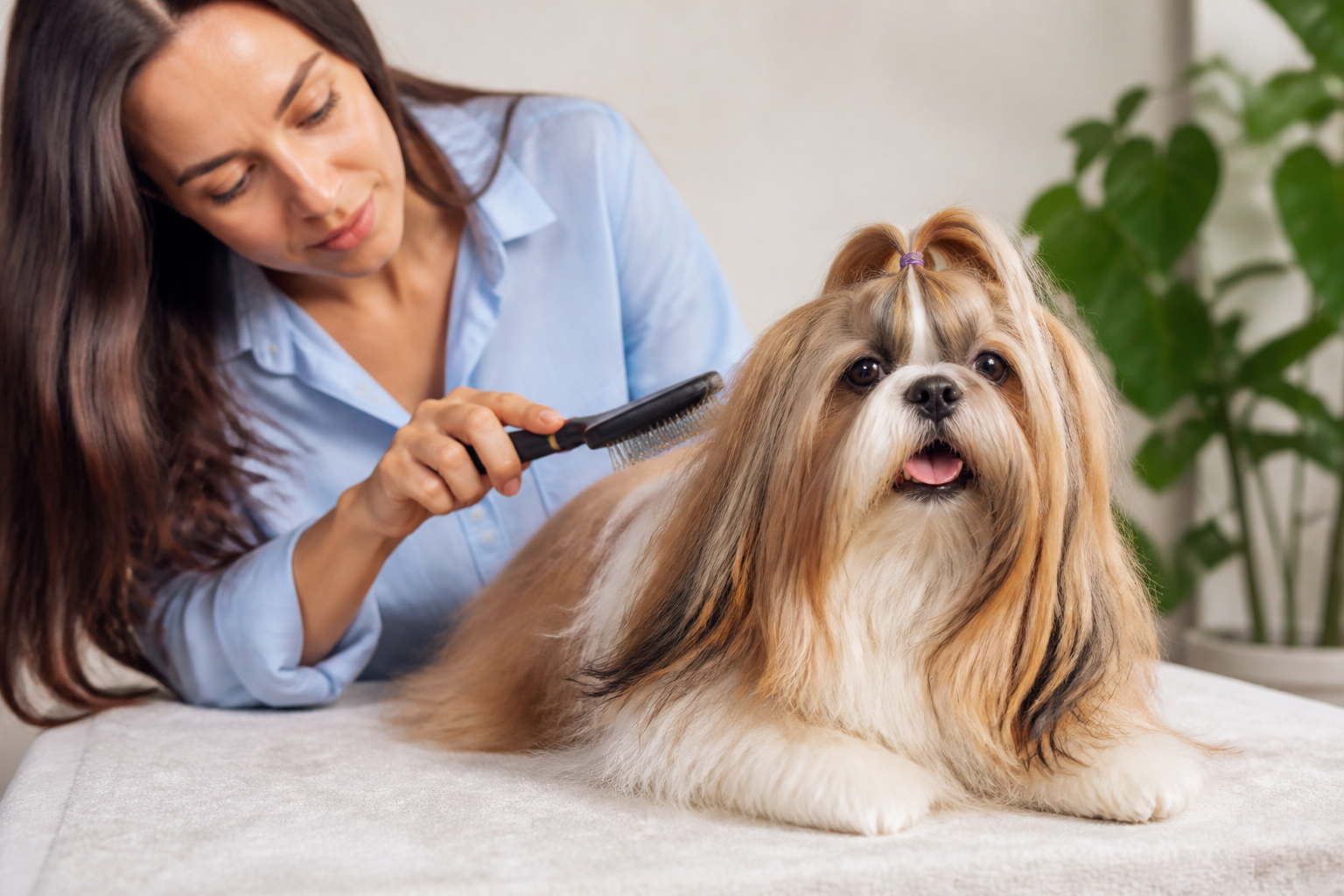
At BaxterBoo, we see pet parents every day who are overwhelmed by the thick undercoats and silky strands of their shaggy companions. Brushing a long-haired dog is not just about vanity. It is a vital part of their physical health. This guide covers the essential tools, the professional "line brushing" technique, and how to handle stubborn mats without causing your dog pain. Our goal is to help you turn a potentially stressful chore into a calm bonding routine.
Quick Answer: Brushing a long-haired dog requires a technique called line brushing. You must lift the hair and brush from the skin outward in layers to ensure you reach the undercoat where mats form. Use a slicker brush for general grooming and a metal comb to check for hidden tangles.
Understanding the Long-Haired Coat Types
Not every long-haired dog has the same type of fur. To brush your dog effectively, you first need to identify which category their coat falls into. Long hair generally comes in three varieties.
The Silky Coat
Dogs like Yorkshire Terriers, Maltese, and Afghan Hounds have silky coats. This hair is often very similar to human hair. It grows continuously and does not have a thick, fuzzy undercoat. While these dogs shed less, their fine strands tangle very easily. They require daily brushing to prevent thin, "spider web" mats from forming near the skin.
The Double Coat
This is the most common type for breeds like Golden Retrievers, Border Collies, and Newfoundlands. They have a long, protective outer coat and a soft, dense undercoat. The undercoat is what usually causes trouble. It sheds heavily twice a year. If you do not brush deep enough to reach that lower layer, the dead hair gets trapped against the skin and forms massive clumps.
The Curly or Woolly Coat
Poodles and Doodles fall into this category. Their hair is curly and grows in tight spirals. When this hair sheds, it does not fall to the floor. Instead, it gets caught in the surrounding curls. This leads to matting that can quickly become "pelted" if ignored. For additional guidance, read this guide on how to groom a dog with curly hair.
Key Takeaway: Long hair usually means more frequent grooming. Identify if your dog has a silky, double, or curly coat to choose the right strategy for their specific needs.
Essential Tools for Long-Haired Grooming
You cannot groom a long-haired dog with a standard plastic brush from the grocery store. You need tools that can penetrate several inches of fur to reach the skin. You can find brushes, combs, and dematting tools in our dog brushes and combs collection.
- Slicker Brush: This is the workhorse of dog grooming. It has a flat or slightly curved head with rows of thin wire pins. It is excellent for removing loose hair and breaking up small tangles.
- Metal Finishing Comb: Often called a "greyhound comb," this tool has long metal teeth. It is the only way to verify that you have actually removed every knot. If the comb cannot pass through the fur from skin to tip, there is still a mat.
- Undercoat Rake: For double-coated dogs, a rake is essential. It has long, blunt T-shaped pins that reach past the guard hairs to pull out dead undercoat before it mats.
- Pin Brush: This looks like a human hairbrush with metal pins. It is gentler than a slicker brush and is great for finishing a silky coat or for dogs with very sensitive skin.
- Demating Tool: These have sharpened blades designed to cut through a knot. Use these with extreme caution to avoid nicking the skin.
For a brand-specific option, explore our selection of BASS Brushes, including slicker, bathing, and detangling brushes.
The Professional Line Brushing Technique
The biggest mistake pet parents make is "surface brushing." This is when you run a brush over the top of the coat. It makes the dog look fluffy, but it leaves mats hidden underneath. Line brushing is the solution.
Step 1: Start at the bottom. / Begin at the dog's rear legs or the base of their tail. It is easier to work from the bottom up and back to front.
Step 2: Lift the hair. / Use your non-dominant hand to push the long hair upward. You should be able to see a "line" of bare skin.
Step 3: Brush the exposed hair. / Use your slicker brush to brush down from that line of skin. Work in small, one-inch sections.
Step 4: Move the line. / Drop a small amount of the hair you were holding up. Create a new line of skin and brush that section.
Step 5: Check with a comb. / After you finish an area, run your metal comb through it. If it catches, go back with the slicker brush.
Vet Tip: If you discover skin redness, hot spots, or parasites like fleas and ticks during your brushing session, consult your veterinarian. Our pet pharmacy offers prescription medications and other pet health products for dogs.
Managing Sensitive Areas
Some parts of a long-haired dog are more prone to matting than others. These areas are often more sensitive to the touch, so you must be extra gentle.
Behind the Ears
The hair here is often very fine and soft. Friction from the ears moving or from a collar rubbing causes quick matting. Use a small slicker brush or a metal comb here daily. Always place your thumb between the brush and the dog's ear leather to prevent accidental scrapes.
The "Trousers" and Tail
The long hair on the back of the legs and the tail catches everything from burrs to mud. These areas have thick fur that hides mats well. Ensure you are line brushing the tail from the base to the tip. Do not forget the "armpits" where the legs meet the body. Friction in these spots causes some of the most painful mats for dogs.
The Sanitary Area
Long hair around the rear and belly can trap urine or feces. This leads to skin infections and discomfort. While you can brush these areas, many owners prefer to keep this hair trimmed short for hygiene.
Bottom line: Focus extra attention on the ears, armpits, and tail, as these high-friction areas mat the fastest.
How to Handle Mats Safely
If you find a mat, do not reach for the scissors immediately. Cutting a mat out often results in a trip to the vet for stitches because dog skin is very thin and can easily get pulled into the knot.
First, apply a detangling spray to the knot. Let it sit for a few minutes to lubricate the hair shafts. Use your fingers to gently pull the mat apart from the outside in. Never pull the hair away from the skin, as this is painful. Instead, hold the base of the hair near the skin with one hand to "anchor" it while you work on the knot with the other.
If the mat is too tight for fingers, use the end tooth of your metal comb to pick at it. If you must use a dematting tool or clippers, move slowly. You can also consider a long-hair de-shedding brush for managing loose undercoat between grooming sessions. If the matting is "pelted" (tight against the skin over a large area), it is time to visit a professional groomer. Shaving a pelted dog is a technical task that can be dangerous for an amateur.
Key Takeaway: Always brush your dog before giving them a bath. Water acts like a glue on mats and will cause them to tighten and shrink as they dry, making them nearly impossible to remove.
Keeping Your Dog Calm During Grooming
A grooming session should not be a wrestling match. If your dog is not used to being brushed, start with very short sessions. Aim for two minutes of brushing followed by a high-value treat.
Keep your movements slow and predictable. If you hit a small tangle, do not yank. Stop, give the dog a pat, and then gently work through it. Many dogs find the sensation of a pin brush or a rubber curry brush soothing. You can use these "easy" tools to start the session before moving to the more intensive slicker brush.
If your dog shows signs of extreme stress or aggression, do not force the issue. This could lead to a negative association with grooming that lasts a lifetime. You may want to discuss calming supplements or behavioral strategies with your vet.
- Keep treats within reach at all times.
- Use a non-slip mat so your dog feels secure on the floor or table.
- Talk to your dog in a low, soothing voice throughout the process.
- Take breaks if you or the dog become frustrated.
Health Benefits of Regular Brushing
Brushing is about more than just looking good. It is a vital health check. As you move through the coat, you are feeling for lumps, bumps, or skin changes that might otherwise go unnoticed under all that fur.
Regular brushing also distributes natural oils across the skin and hair. This keeps the coat shiny and prevents the skin from becoming dry and itchy. For double-coated breeds, removing the dead undercoat allows for better air circulation. This helps the dog regulate their body temperature and prevents overheating in the summer.
If your dog has chronic skin allergies, regular brushing can help remove environmental allergens like pollen or dust from their fur. This may reduce the frequency of flare-ups.
Bottom line: Brushing is a proactive way to monitor your dog's physical health and keep their skin comfortably aerated.
When to See a Professional
Even with the best home routine, most long-haired dogs benefit from professional grooming every six to eight weeks. Professionals have high-velocity dryers that can blow out dead undercoat much more effectively than a hand brush. They can also perform sanitary trims and nail grinds that keep your dog tidy between full haircuts.
If you find that your dog's coat is consistently matting despite your best efforts, ask your groomer for a "puppy cut" or a "teddy bear clip." Keeping the hair at a manageable length of one to two inches can significantly reduce the time you spend brushing each day.
For bathing and coat-care ideas before or after grooming, see these dos and don'ts for bathing your dog.
Summary of Brushing Success
Caring for a long-haired dog is a commitment to their comfort. By using the right tools and the line brushing technique, you can keep their coat beautiful and mat-free. Remember that consistency is better than intensity. Brushing for ten minutes every day is much more effective than a two-hour marathon session once a month.
- Use a slicker brush and a metal comb as your primary tools.
- Always use the line brushing method to reach the skin.
- Never bathe a matted dog, as it makes the knots worse.
- Check high-friction areas like the ears and armpits daily.
- Reward your dog frequently to build a positive association.
We invite you to explore our dog grooming collection to find the perfect brushes and combs for your dog's specific coat type. If your dog needs specialized skin care or prescription preventives, our pet pharmacy is available to support your pet's wellness journey. You can also set up an order through our Autoship programme for favorite grooming sprays and treats, while learning more about the MVP Rewards programme.
FAQ
How often should I brush my long-haired dog?
Most long-haired dogs require brushing at least three to four times a week. However, if your dog has a very fine, silky coat or a curly coat that mats easily, daily brushing is highly recommended. Frequent, short sessions are easier on both you and your dog than waiting for tangles to become major problems.
What is the best way to get a mat out without hurting my dog?
Always start by applying a detangling spray to the mat to loosen the hair. Use your fingers to gently pull the knot apart. If that does not work, use a metal comb to pick at the edges of the mat. Hold the base of the fur near the skin to prevent pulling on the dog's sensitive skin while you work.
Why does my dog get mats even though I brush them every day?
You are likely "surface brushing," which means you are only reaching the top layer of the coat. Mats usually form close to the skin where loose undercoat gets trapped. To fix this, use the line brushing technique to ensure your brush reaches all the way down to the skin in every section.
Can I use a human hairbrush on my long-haired dog?
While a human pin brush can be used for a quick surface tidy, it is rarely effective for deep grooming. Human brushes are not designed to penetrate thick undercoats or break up canine tangles. Investing in a quality slicker brush and a metal grooming comb will make the process much faster and more comfortable for your pet.






