
 Save 15% on your 1st Autoship learn more

 Email us
 Live Chat
 FAQs
FAQs





Introduction
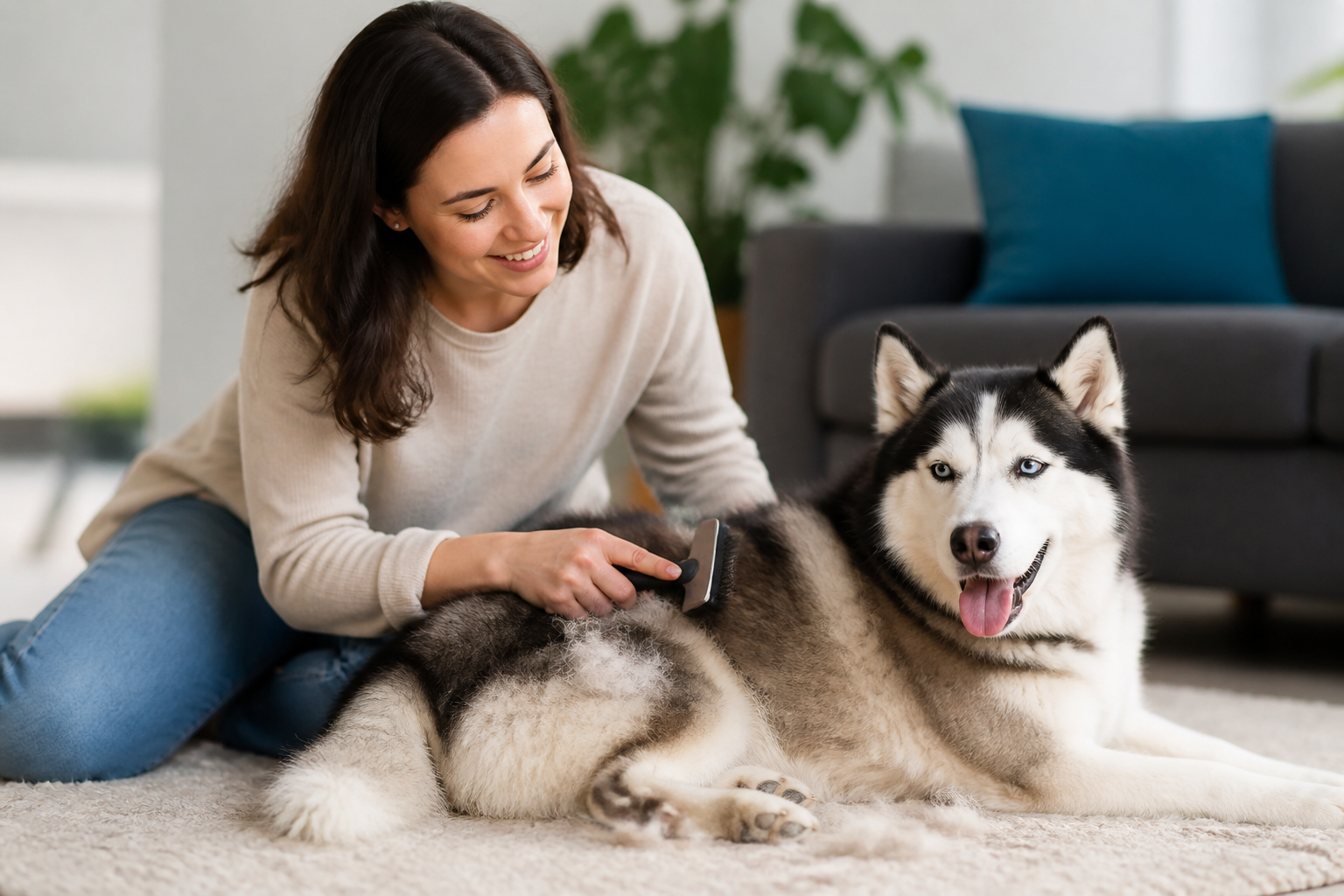
If you have ever watched a literal tumbleweed of fur roll across your hardwood floor just minutes after vacuuming, you likely have a double-coated dog. Many breeds like Golden Retrievers, German Shepherds, and Huskies have a thick, soft layer of fur beneath their outer coat that sheds constantly. Brushing out this undercoat is not just about keeping your house clean. It is essential for your dog's skin health and temperature regulation. At BaxterBoo, we see many pet owners who feel overwhelmed by the sheer volume of fur their dogs produce. This post will walk you through the correct tools and techniques to manage that fuzzy layer without damaging the guard hairs. You will learn how to safely remove loose fur and prevent painful mats. Proper undercoat maintenance is the key to a happy, comfortable pet and a hair-free home.
Understanding the Double Coat
To brush an undercoat effectively, you first need to know what it is. A double coat consists of two distinct layers. The outer layer is made of primary hairs, also called guard hairs. These are longer, coarser, and usually water-resistant. They provide the color and structure of the coat. Beneath those guard hairs sits the undercoat. This layer is made of secondary hairs that are short, soft, and dense. The undercoat acts as insulation. It keeps the dog warm in the winter and cool in the summer by trapping a layer of air against the skin.
Because the undercoat grows and dies much faster than the guard hairs, it sheds frequently. This process reaches a peak during the spring and fall. We often call this "blowing the coat." If you do not remove this dead hair, it gets trapped under the topcoat. This leads to several problems. Trapped fur can form dense mats that pull on the skin. It can also trap moisture and heat, leading to "hot spots" or fungal infections.
Quick Answer: Brushing out a dog's undercoat requires a specific tool like an undercoat rake or a de-shedding tool. You must work in sections, lifting the topcoat to reach the dense fur underneath. Regular maintenance prevents matting and helps your dog regulate their body temperature.
Essential Tools for the Job
You cannot reach a thick undercoat with a standard plastic brush or a fine-tooth comb designed for humans. You need specialized equipment that can penetrate the topcoat without scratching the skin. Having the right kit makes the process faster and more comfortable for your dog. Our dog brushes and combs include undercoat rakes, slicker brushes, and de-shedding tools for different coat types.
The Undercoat Rake
This is the most important tool for double-coated breeds. An undercoat rake has one or two rows of long, metal tines. These tines are designed to go past the guard hairs and pull out the loose, fuzzy undercoat. Look for a rake with rounded tips so you do not irritate the skin. We recommend choosing a rake that matches the length of your dog's coat.
The Slicker Brush
A slicker brush has a flat or slightly curved head with rows of thin, wire pins. These pins are great for grabbing loose hair on the surface and breaking up small tangles. It is a perfect tool for finishing the job and smoothing the coat after you have used the rake.
De-Shedding Tools
Tools like the FURminator collection are very popular for a reason. They have a fine-toothed blade that reaches through the topcoat to grab loose undercoat hair. However, you must use these with a light touch. If you press too hard or use them too long in one spot, you can accidentally cut the guard hairs or cause "brush burn" on the skin.
Detangling Spray and Conditioners
Dry hair is more likely to break or snag. Using a pet-safe detangling spray can help the tools glide through the fur. If your dog's skin seems dry or irritated after a grooming session, our pharmacy offers various skin and coat supplements. These products, available through our partnership with Pet's Choice, help support a healthy skin barrier from the inside out.
Key Takeaway: Always use tools specifically designed for undercoats, such as rakes or slicker brushes. Human brushes or cheap plastic combs will not reach the dense layer of fur where shedding starts.
The Line Brushing Technique
Most people make the mistake of brushing only the top of the dog's back. This leaves the thickest part of the undercoat untouched near the skin. The best way to ensure you get everything is a method called line brushing.
Step 1: Start at the bottom. Begin at the dog's legs or the base of the tail and work your way up.
Step 2: Lift the fur. Use one hand to push a section of the hair upward, exposing the skin and the base of the fur.
Step 3: Brush the "line." With your other hand, use your rake or slicker brush to brush the hair downward from the skin to the tips.
Step 4: Move up. Once that line is clear of loose fur, move your hand up about an inch and create a new line. Repeat the process until you reach the top of the dog's back.
This method ensures that every inch of the undercoat is addressed. It is particularly effective for high-shed areas like the "pants" on a Golden Retriever or the thick neck ruff on a German Shepherd. For more guidance on brushing from the roots outward, see our guide to grooming a dog with curly hair.
Vet Tip: If you notice your dog's skin is red, bumpy, or has an unusual odor during brushing, consult your veterinarian. These can be signs of a skin infection or allergies. Our pharmacy carries FDA-approved treatments for various skin conditions if your vet provides a prescription.
Managing Mats and Tangles
When an undercoat is neglected, it will eventually mat. Mats are clumps of dead hair that have become hopelessly intertwined with live hair. They usually start in high-friction areas like behind the ears, under the armpits, or where the collar sits.
Never try to pull a mat out with a standard brush. This is painful and can cause your dog to fear grooming sessions. Instead, use a de-matting tool or a metal comb from our grooming tools collection.
- Apply a detangling spray directly to the mat and let it sit for a few minutes.
- Hold the base of the mat with your fingers so you aren't pulling directly on the skin.
- Use the edge of a de-matting rake to gently pick at the edges of the clump.
- Work from the outside of the mat toward the center.
If a mat is too tight or sits right against the skin, do not try to cut it with scissors. Dogs have very thin skin, and it is incredibly easy to accidentally cut them. In these cases, it is safer to have a professional groomer or a vet use electric clippers to remove the mat.
Bathing and the Undercoat
Many owners think a bath will wash away the shedding hair. While water helps loosen the fur, it can actually make things worse if you do not brush the dog first. If you put a matted, double-coated dog in a tub, the mats will soak up the water like a sponge and tighten as they dry. This makes them almost impossible to remove.
Always brush your dog thoroughly before the bath. Once they are in the tub, use a high-quality shampoo and conditioner. Conditioning is vital for double coats because it helps the hair slide past each other rather than tangling. After the bath, drying is the most important step. A high-velocity dryer is a favorite tool of professional groomers. The force of the air literally blows the remaining loose undercoat right out of the follicle.
If you do not have a high-velocity dryer, towel dry your dog as much as possible. Then, use a hair dryer on a cool setting while continuing to brush. Never let a double-coated dog "air dry" completely without brushing, as this is when the most tangles form. Our dog shampoo and conditioner selection can help you prepare for bath time.
Bottom line: A bath is only effective for shedding if you brush the dog both before and after the water hits the coat.
Why You Should Never Shave a Double Coat
When the summer heat hits, it is tempting to think that shaving your dog will keep them cool. For a double-coated dog, this is one of the worst things you can do. Shaving a double coat removes the insulation that protects them from the heat. Without that protective layer, your dog is at a much higher risk for heatstroke and sunburn.
Furthermore, the undercoat and guard hairs grow back at different rates. Often, the soft undercoat grows back faster, while the guard hairs may take months or years to return. This can result in a patchy, fuzzy coat that tangles even easier than before. In some senior dogs, the guard hairs may never grow back properly at all. This condition is sometimes called coat funk or post-clipping alopecia.
Instead of shaving, focus on a deep de-shedding session. Removing the dead undercoat allows air to circulate through the guard hairs, which is how the dog naturally stays cool. If you are worried about your dog's comfort in the heat, we offer various cooling vests and mats that are much safer than a shave.
Making Grooming a Positive Experience
Brushing out an undercoat can take a long time, especially for large breeds. If your dog is not used to it, they may become impatient or anxious. It is important to build a positive association with the grooming tools.
- Keep sessions short at first. Brush for five or ten minutes, then stop.
- Use high-value treats. Give your dog something special that they only get during grooming.
- Stay calm. Your dog can pick up on your frustration. If you are tired of brushing, take a break and come back later.
- Pick the right time. Brush your dog when they are already tired, such as after a long walk or a play session.
Regular maintenance is much easier than one massive session every few months. If you spend ten minutes every other day with a slicker brush, you will prevent the deep mats that require hours of work.
Special Care for Wire-Coated Breeds
Some dogs have a double coat that is also "wire-haired," like many Terriers. These coats are unique because the dead hair does not always fall out on its own. It stays trapped in the follicle. If you only use a standard brush on these dogs, the coat will eventually lose its texture and color.
For these breeds, groomers often use a technique called hand-stripping. This involves gently pulling out the dead hairs by hand or with a stripping knife. It sounds painful, but when the hair is in the "blown" stage, it comes out easily without hurting the dog. This keeps the follicles healthy and allows the new, wiry coat to grow in. If you are not comfortable hand-stripping, a carding tool can help remove some of that dead undercoat while leaving the topcoat intact.
Key Takeaway: Wire-coated dogs require different maintenance than soft-coated breeds. Stripping or carding is often necessary to keep their skin healthy and their coat texture correct.
Monitoring Skin Health During Brushing
Brushing is the perfect time to perform a "home health check." Because you are moving through the hair in sections, you can see the skin clearly. Watch for signs of trouble that might be hidden by thick fur.
Check for fleas and ticks, especially in the warm undercoat areas. Look for any new lumps, bumps, or scratches. If you find something concerning, take a photo and contact your vet. For ongoing skin issues like seasonal allergies that lead to itching and coat loss, BaxterBoo can help. We provide access to prescription diets and medications through our pharmacy partnership to help manage chronic skin conditions.
Regular grooming reduces the amount of dander and allergens in your home as well. This makes life more comfortable for the humans in the house who might suffer from pet allergies. Keeping the undercoat clear is truly a win-win for everyone.
Keeping Your Tools Clean
To get the best results, you must take care of your grooming tools. A brush clogged with old hair cannot grab new hair effectively.
- Remove hair from your brushes after every session. You can use a comb to pull hair out of the pins of a slicker brush.
- Wash metal tools with warm, soapy water occasionally to remove oils and dander.
- Dry them thoroughly to prevent rust.
- Check the pins on your slicker brush and the tines on your rake. If they become bent or sharp, replace the tool to avoid scratching your dog's skin.
We carry a wide variety of replacement tools and grooming supplies to ensure you always have what you need for a successful session. Our Frequent Buyer Program is a great way to earn rewards on the brands you use most often for your dog's care.
Conclusion
Brushing out a dog's undercoat is a vital part of being a double-coated dog owner. By using the line brushing technique and the right tools like an undercoat rake, you can manage shedding and keep your dog comfortable in any weather. Remember to never shave a double coat and always be gentle when dealing with mats. Regular grooming sessions are not just about aesthetics. They are an opportunity to bond with your pet and monitor their overall health.
- Use an undercoat rake for deep fur removal.
- Never shave a double-coated breed.
- Brush before and after bathing.
- Check the skin for lumps or pests during every session.
Bottom line: Consistent undercoat maintenance prevents matting and helps your dog stay cool naturally.
For all your grooming needs, from rakes and slicker brushes to detangling sprays and skin supplements, browse our full selection of dog grooming supplies. You can also save on your regular orders by signing up for our Autoship programme, which ensures you never run out of the essentials while earning you a free MVP Gold membership.
FAQ
How often should I brush out my dog's undercoat?
For most double-coated breeds, a thorough brushing once or twice a week is enough to keep shedding under control. During "coat blowing" season in the spring and fall, you may need to brush them daily to keep up with the volume of fur. Regular maintenance prevents the undercoat from compacting and forming mats against the skin.
Does brushing the undercoat hurt the dog?
If you use the correct tools and technique, brushing should be a relaxing experience for your dog. Always use an undercoat rake with rounded tips and never pull hard on a tangle or mat. Using a detangling spray and working in small sections makes the process much more comfortable.
Can I use a regular human hairbrush on my dog?
Human hairbrushes are not effective for dog undercoats because the bristles cannot reach through the dense outer layer. They often just slide over the top of the fur, leaving the shedding undercoat trapped underneath. It is best to invest in a dedicated undercoat rake or slicker brush designed for pets.
What should I do if my dog has a very large, tight mat?
If a mat is tight against the skin or too large to brush out safely, do not use scissors to cut it. It is very easy to accidentally slice a dog's thin skin. Instead, use a specialized de-matting tool or consult a professional groomer who can safely shave the mat out with electric clippers.






