
 Save 15% on your 1st Autoship learn more

 Email us
 Live Chat
 FAQs
FAQs





Introduction
You reach down to pet your dog and feel a thick, stubborn knot behind their ear. Or perhaps you have simply noticed that your favorite black leggings are now permanently coated in a layer of tan fur. These are the moments when every pet owner realizes that a generic brush from a big-box store might not be cutting it. At BaxterBoo, we know that the right tool does more than just make your dog look good. It prevents painful skin pulling, reduces the amount of fur on your furniture, and serves as a vital health check. This post covers the specific brush designs available for every coat type, from sleek Pugs to fluffy Doodles. Understanding the mechanics of wire pins, natural bristles, and rubber nubs is the first step toward a happier, healthier pet.
Quick Answer: The best brush for your dog is determined primarily by their coat length and density. Short-haired dogs need bristle or rubber brushes to move oils and remove surface fur. Long-haired or double-coated dogs require slicker brushes and undercoat rakes to reach through the topcoat and prevent deep matting.
Understanding the Primary Types of Dog Brushes
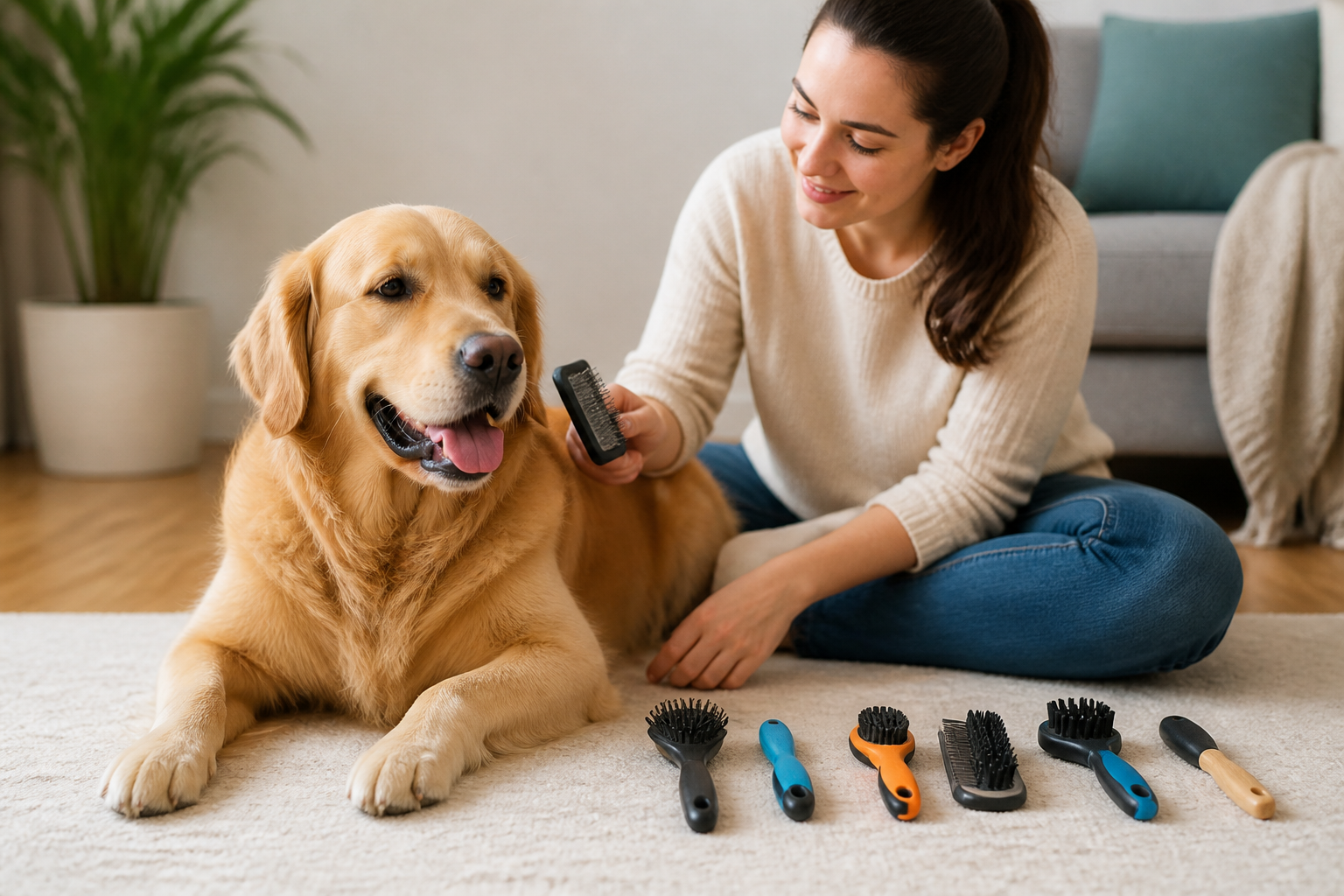
Choosing a brush is not about the color or the brand name. It is about the "engine" of the brush, which is the part that actually touches your dog. There are five main categories of brushes used in home grooming. Each one serves a distinct purpose. Explore our dog brushes and combs to compare tools for different coat types.
The Slicker Brush
A slicker brush is perhaps the most versatile tool in your grooming kit. It features a flat or slightly curved head with rows of thin, short wire pins. These pins are usually angled or "hooked" to help them grab onto loose hair and tangles without scratching the skin.
This brush is the gold standard for dogs with medium to long hair or curly coats. If you have a Golden Retriever, a Cocker Spaniel, or a St. Bernard, the slicker brush will be your daily workhorse. It is designed to pull out loose fur and break up minor tangles before they turn into hard mats. A product such as the Master Grooming Tools Ergonomic Slicker Dog and Cat Brush is designed for brush-outs, mat removal, and undercoat work.
Key Takeaway: Always use a light touch with a slicker brush. The wire pins are effective but can cause "brush burn" if you press too hard against the skin.
Bristle Brushes
Bristle brushes are the traditional choice for dogs with short, smooth coats that shed frequently. These brushes use clusters of natural or synthetic bristles packed tightly together. They do not reach deep into a coat. Instead, they work on the surface.
The primary job of a bristle brush is to remove dust, dirt, and loose surface hair. It also stimulates the skin to produce natural oils. As you brush, these oils are distributed along the hair shaft, giving your dog a healthy, glossy shine. Breeds like Pugs, Boxers, and Italian Greyhounds benefit most from this tool.
Pin Brushes
A pin brush looks very similar to a standard human hairbrush. It usually has an oval shape and long, flexible metal pins with rounded tips. While these are common, they are often misunderstood. A pin brush is not a heavy-duty detangler.
Think of a pin brush as a finishing tool. It is excellent for fluffing the coat after you have already removed the tangles with a slicker brush. It is also a gentle option for dogs with very long, silky hair, such as Afghan Hounds or Maltese, as it is less likely to break the delicate hair strands.
Undercoat Rakes
If you own a "heavy shedder" like a German Shepherd, Husky, or Malamute, a standard brush will never be enough. These dogs have a double coat consisting of a harsh outer layer and a soft, dense undercoat. An undercoat rake is designed to bypass the top layer.
These tools have one or two rows of long, sturdy metal teeth. They reach deep into the fur to pull out the dead "wool" of the undercoat. This is especially important during "blowing coat" season in the spring and fall. Using a rake can reduce the amount of fur in your home by a significant margin.
Rubber Brushes and Curry Combs
Rubber brushes, like the Kong ZoomGroom, are fantastic for short-haired dogs and pets who are nervous about grooming. These tools have soft rubber nubs instead of pins or bristles. They act like a magnet for loose hair while providing a deep tissue massage. They are also waterproof, making them the perfect tool for scrubbing shampoo into the coat during bath time. For additional brush and bath options, browse our grooming tools.
Selecting the Tool Based on Your Dog's Coat
To find the right brush, you must first identify your dog’s specific coat type. Using a rake on a Greyhound is useless, and using a bristle brush on a Chow Chow is like trying to mow a lawn with a pair of scissors.
Short and Smooth Coats
Dogs like Labradors, Beagles, and Great Danes have hair that lies flat against the body. They do not get mats, but they do shed.
- Best Tools: Rubber curry brushes and medium-stiff bristle brushes.
- Goal: Remove loose hair and distribute skin oils.
Long and Silky Coats
Yorkshire Terriers and Setters have hair that can grow quite long and fine. It tangles easily and can break if handled roughly.
- Best Tools: Pin brushes and soft slicker brushes.
- Goal: Detangle without breaking the hair shaft.
Double Coats
Huskies, Collies, and Pomeranians have that thick, "stuffed animal" feel. The undercoat is the source of most shedding.
- Best Tools: Undercoat rakes and firm slicker brushes.
- Goal: Reach the skin and pull out the dead undercoat.
Curly and Wooly Coats
Poodles and Doodles have hair that does not fall out when it dies. Instead, it gets trapped in the curls, leading to massive mats very quickly.
- Best Tools: Long-pinned slicker brushes and metal combs.
- Goal: "Line brushing" to ensure no mats are forming at the skin level.
Vet Tip: If you find a mat that is tight against the skin, do not try to cut it out with kitchen scissors. It is very easy to accidentally cut the dog's skin. Use a specialized de-matting tool or consult a professional groomer to safely shave the area.
The Secret Weapon: The Metal Grooming Comb
Regardless of which brush you choose, your kit is not complete without a simple metal grooming comb. Often called a "Greyhound comb," this tool has wide teeth on one end and fine teeth on the other. A Coastal Safari Long Hair Shedding Dog Comb can be used as part of a long-hair grooming routine.
The comb is your "verification tool." After you think you have finished brushing your long-haired dog, run the metal comb through the fur from the skin outward. If the comb snags, you have a hidden tangle that the brush missed.
Step 1: Brush the dog thoroughly with your chosen slicker or pin brush.
Step 2: Starting at the rear of the dog, use the wide-toothed side of the comb to check for snags.
Step 3: If you find a snag, go back to the slicker brush to gently work it out.
Step 4: Once the wide teeth pass through easily, repeat the process with the fine-toothed side.
How to Introduce Grooming to a Sensitive Dog
Not every dog loves the feeling of a brush. If your pet hides when they see the grooming kit, you may need to restart the relationship with these tools. We see many owners struggle with this, but a slow approach usually wins.
First, let the dog sniff the brush while it is sitting on the floor. Place a high-value treat on top of the brush. This creates a positive association. Second, touch the dog with the back of the brush (the non-pin side) while giving them praise. Only when they are relaxed should you attempt a single, gentle stroke with the bristles.
For puppies, start this process during their first week home. Use a very soft bristle brush or a rubber mitt. Even if they do not "need" brushing yet, they are learning that being handled and touched by tools is a normal part of life.
Key Takeaway: Keep grooming sessions short. Five minutes of happy brushing is much better than thirty minutes of a dog struggling to get away.
Health Benefits of Regular Brushing
Grooming is more than just a beauty routine. It is a vital part of preventative health care. When you brush your dog regularly, you are performing a "hands-on" inspection of their entire body. This allows you to catch issues before they become emergencies.
While brushing, look for:
- Ticks or fleas hiding in the dense fur.
- Strange lumps or bumps under the skin.
- Redness, hot spots, or flaky skin.
- Dry, brittle hair which can sometimes indicate nutritional deficiencies.
If you notice your dog is itching excessively or has developed a rash, a brush won't fix the underlying problem. You should consult your veterinarian to rule out allergies or infections.
Our pharmacy at BaxterBoo offers a wide range of FDA-approved medications through our partnership with Pet's Choice. If your vet prescribes a medicated shampoo or an allergy treatment, our dog pharmacy can help you manage those ongoing health needs. Managing skin health from the inside out often makes the physical act of brushing much easier and more comfortable for your pet.
Bottom line: Brushing is your best opportunity to spot early signs of skin infections, parasites, or new growths.
Advanced Grooming Tools and Features
As you shop for the right brush, you will notice several extra features. Some are gimmicks, but others are genuinely helpful for the home groomer.
Self-Cleaning Slicker Brushes
Many modern slicker brushes have a button on the back. When you press it, the pins retract into the brush head, leaving the mat of fur on a flat surface for easy removal. This saves time and prevents you from accidentally pricking your fingers while cleaning the brush.
Ergonomic Grips
If you have a large dog like a Great Pyrenees, you might be brushing for forty minutes at a time. A brush with a cheap, thin plastic handle will cause hand cramps. Look for handles with rubberized, ergonomic grips. Your wrists will thank you.
Specialized De-Shedding Tools
Brands like Furminator have created tools that use a fine, toothed metal edge to reach under the topcoat and "grab" loose hair. These are highly effective but must be used with caution. Because the edges are precise, over-brushing the same spot can lead to skin irritation or thinning of the coat.
Building Your Grooming Kit at BaxterBoo
At BaxterBoo, we have been helping pet owners find the right gear since 2006. We carry over 500 trusted brands, including names like Kong and RC Pets, to ensure you have access to the same tools the professionals use. Our warehouse in Vernon Hills is stocked with everything from basic bristle brushes to professional-grade undercoat rakes.
When you are ready to build your kit, consider these essentials:
- A primary brush suited to your dog's coat type.
- A metal "verification" comb.
- A rubber brush for bath time.
- High-quality treats to keep the experience positive.
You can earn up to 5% back on these purchases through our MVP Rewards programme. If you find a brand of grooming wipes or detangling spray you love, our Autoship programme can keep your supplies stocked while saving you money on every order.
Managing Shedding and Skin Health
Brushing is the external solution to shedding, but internal health plays a massive role too. A dog with a poor diet will often have a brittle coat that sheds more than usual. High-quality food rich in Omega-3 fatty acids can strengthen the hair follicle and improve skin elasticity.
We carry premium food brands like Acana, Orijen, and Stella and Chewy's that focus on these nutritional needs. If your dog has specific sensitivities, we also offer prescription diets through our pharmacy partnership.
Vet Tip: If your dog's shedding increases suddenly or they develop bald patches, this could indicate a thyroid issue or a skin infection. Always check with your veterinarian if you notice a dramatic change in coat quality.
Step-by-Step: The Perfect Brushing Session
To get the most out of your tools, follow this routine once or twice a week.
Step 1: Check for large mats. Use your fingers to feel for any hard knots, especially in "friction areas" like the armpits and behind the ears.
Step 2: Apply a detangling spray if your dog has long hair. This lubricates the hair and allows the brush to slide through more easily.
Step 3: Brush in the direction of hair growth. Start at the head and work your way back to the tail.
Step 4: Use "line brushing" for thick coats. Part the hair with one hand so you can see the skin, then brush that specific section.
Step 5: Reward your dog. Give them a treat halfway through and another at the end to make sure they enjoy the process.
Bottom line: A systematic approach ensures you don't miss hidden tangles and keeps the dog calm throughout the process.
Summary of Brush Benefits
| Brush Type | Primary Benefit | Best Dog Breed Examples |
|---|---|---|
| Slicker | Removes mats and loose fur | Golden Retriever, Doodle, Spaniel |
| Bristle | Adds shine and removes surface dirt | Boxer, Pug, Beagle |
| Undercoat Rake | Pulls out dense, dead undercoat | Husky, German Shepherd, Lab |
| Pin Brush | Gentle finishing and fluffing | Yorkie, Maltese, Shih Tzu |
| Rubber Brush | Massages and removes short hair | French Bulldog, Great Dane |
Finding the right brush is one of the simplest ways to improve your dog's daily life. It reduces the discomfort of tangles, keeps their skin healthy, and keeps your home a little cleaner. Whether you are looking for a heavy-duty rake for a shedding Husky or a soft brush for a new puppy, choosing a tool designed for their specific coat makes all the difference.
Explore our full collection of dog grooming tools and health supplies today. Don't forget that our MVP Rewards program and Autoship options make it easy to keep your grooming kit updated. If your grooming routine reveals any skin concerns, remember that the BaxterBoo pharmacy is here to help with FDA-approved treatments delivered straight to your door.
FAQ
How often should I brush my dog?
Most dogs benefit from being brushed at least two to three times a week. However, long-haired breeds or dogs prone to heavy shedding may need daily brushing to prevent mats and keep the fur under control. Short-haired breeds can often go a week between sessions, though frequent brushing will help reduce the amount of hair found on your furniture.
Can I use a human hairbrush on my dog?
While a human pin brush might look similar to a dog pin brush, it is generally not recommended. Human brushes are designed for human hair density and scalp sensitivity. Dog brushes, especially slicker brushes and rakes, are specifically engineered to reach through thick fur and handle the unique texture of canine coats without causing discomfort.
What should I do if my dog has a very large mat?
If you find a large or tight mat, do not pull on it with a standard brush, as this can be very painful. Try applying a detangling spray and gently picking the mat apart with your fingers or the end of a metal comb. If the mat is too close to the skin, it is safest to have a professional groomer or veterinarian remove it to avoid cutting the dog's skin.
Why is my dog still shedding so much after I brush them?
Brushing removes loose hair, but it doesn't stop the natural shedding process. If you are using a bristle brush on a double-coated dog, you likely aren't reaching the undercoat where the shedding originates. Switching to an undercoat rake or a slicker brush can often solve this problem by removing the dead hair before it falls out on its own.






