
 Save 15% on your 1st Autoship learn more

 Email us
 Live Chat
 FAQs
FAQs





Introduction
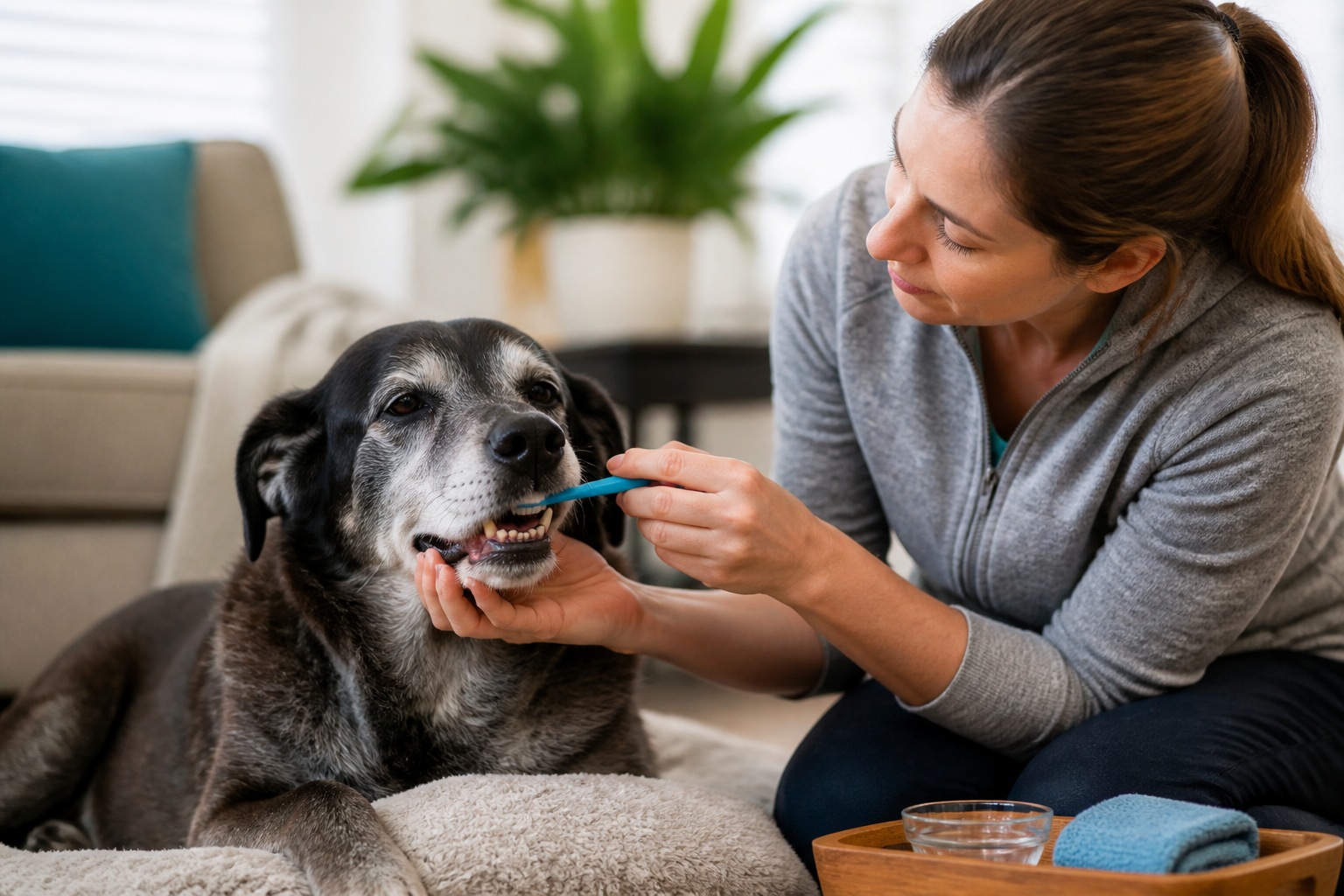
You notice a sharp, unpleasant smell when your senior dog leans in for a morning nuzzle. It is easy to assume that bad breath is just a natural part of a dog getting older. However, foul odors often signal underlying dental disease that can impact your dog's heart, liver, and kidneys. At BaxterBoo, we want to help you navigate the unique challenges of caring for an aging pet's mouth. This guide explains how to clean an old dogs teeth using gentle methods that respect their sensitive gums and potential mobility issues. We will discuss the best tools for the job, how to introduce a routine to a senior dog, and when it is time to seek professional veterinary help. Maintaining oral hygiene is one of the most effective ways to support your dog’s longevity and daily comfort.
Quick Answer: Clean an old dog's teeth by using a soft-bristled brush or finger cloth and dog-specific toothpaste daily. Supplement brushing with dental chews and water additives to reduce plaque. If your dog has heavy tartar or loose teeth, a professional veterinary cleaning is the safest next step.
Why Senior Dental Health Is a Priority
As dogs enter their golden years, their immune systems often become less efficient at fighting off oral bacteria. Plaque is a soft film that forms on the teeth after eating. If you do not remove it, plaque hardens into tartar within about 48 hours. Tartar is porous and provides a perfect home for bacteria to multiply. In older dogs, this bacteria can easily enter the bloodstream through inflamed gum tissue.
This process can lead to systemic health issues. The bacteria from the mouth often settle in the heart valves or the filtering systems of the kidneys and liver. For a senior dog already managing age related changes, this extra strain on the organs is dangerous. Keeping the mouth clean is not just about fresh breath. It is a vital part of protecting their vital organs and extending their quality of life.
Pain is another major factor. Dogs are experts at hiding discomfort. A senior dog might stop playing with toys or start eating more slowly. Owners often mistake these signs for the dog simply slowing down due to age. In many cases, the dog is actually suffering from chronic dental pain. When you clean their teeth and address gum issues, you often see a surge in their energy levels and appetite. For more warning signs, read about how to recognize hidden dental problems in dogs.
Signs Your Senior Dog Needs Dental Attention
Before you start a cleaning routine, you must assess the current state of your dog's mouth. Senior dogs are more prone to cracked teeth and receding gums. You need to know if you are dealing with simple plaque or a situation that requires a vet.
Check for these indicators of dental trouble:
- Red, swollen, or bleeding gums
- Heavy brown or yellow crust on the teeth
- Excessive drooling or dropping food while eating
- Pawing at the mouth or rubbing the face on furniture
- Loose or missing teeth
- A sudden preference for wet food over kibble
If you see these signs, a standard brushing routine might be painful. You should never try to force a toothbrush onto a dog with inflamed gums. This can create a negative association with grooming. It can also cause bacteria to enter the bloodstream more quickly if the gums bleed during the process.
Vet Tip: If your senior dog has visible tartar or bleeding gums, consult your veterinarian before starting a home brushing routine. They may need a professional cleaning or antibiotics to handle an active infection safely. Always mention any changes in eating habits during your senior wellness exams.
A Step by Step Guide to Brushing Older Teeth
Introducing a brushing routine to an older dog requires patience. If they have gone years without it, they may be skeptical of you touching their muzzle. You must move slowly to build trust.
Step 1: Let them taste the paste.
Put a small amount of dog-specific toothpaste on your finger. Let your dog lick it off. Most dog pastes are flavored like poultry or beef to make them taste like a treat. Do this for a few days without trying to touch their teeth.
Step 2: Desensitize the gums.
Once they like the taste, gently rub your finger along their gums while they lick the paste. Start at the front and move toward the back. Keep these sessions very short. Aim for 30 seconds at first.
Step 3: Introduce a finger brush.
A finger brush is often less intimidating than a long-handled toothbrush. It allows you to feel the pressure you are applying. Continue using the paste and move in small, circular motions along the gum line.
Step 4: Transition to a soft toothbrush.
If your dog is comfortable with the finger brush, you can move to a soft-bristled dog toothbrush. These are angled to reach the back molars. Focus on the outside of the teeth, as this is where the most tartar builds up. A complete option such as the Virbac C.E.T. Pet Oral Hygiene Kit includes a finger brush, dual-ended toothbrush, and enzymatic toothpaste.
Step 5: Reward the behavior.
Always follow a brushing session with a reward. This could be a favorite toy or a healthy dental chew. You want your dog to look forward to the routine.
Key Takeaway: Consistency is more important than perfection. Brushing for 60 seconds every day is much more effective than a deep cleaning once a month.
Choosing the Right Tools and Paste
You must never use human toothpaste on a dog. Human formulas often contain xylitol, which is a sweetener that is highly toxic to dogs. They also contain foaming agents that are meant to be spit out. Since dogs swallow the paste, these agents can cause upset stomachs.
Look for enzymatic toothpastes. These contain enzymes that help break down food particles and bacteria even after you stop brushing. Brands like Nylabone or Virbac offer options that are formulated specifically for canine digestion. You can compare brushes, toothpaste, wipes, and other supplies in our dog dental care category.
The type of brush matters for a senior dog. Older dogs often have thinner gum tissue. Use the softest bristles you can find. If a brush is too irritating, a piece of clean gauze wrapped around your finger can also work. There are also dental wipes available that are pre-treated with cleaning solutions. These are excellent for dogs that absolutely refuse a brush.
At BaxterBoo, we carry a wide variety of dental kits designed for different mouth sizes. Small dogs often have crowded teeth, which makes them more prone to decay. For them, a tiny brush is essential. Large breeds might do better with a dual-headed brush that cleans the top and bottom of the tooth at the same time.
Dental Chews and Treats for Seniors
Brushing is the gold standard, but dental chews provide helpful mechanical cleaning. As a dog chews, the texture of the treat scrapes against the surface of the tooth. This helps rub away soft plaque before it can harden.
For senior dogs, you must be careful with the hardness of the chew. Their teeth may be more brittle than they were in their youth. Avoid very hard items like real bones, antlers, or hard plastic chews. These can cause tooth fractures. Instead, look for chews that have some "give" to them.
Greenies and WHIMZEES are popular options because they are designed to dissolve easily. This reduces the risk of choking or intestinal blockages, which is a concern for older dogs with slower digestion. You can browse our selection of Greenies products when comparing dental treat options. Many dental treats also include ingredients like parsley or cinnamon to help freshen breath naturally.
When choosing a chew, consider the calorie count. Many senior dogs struggle with weight management. A daily dental treat can add a significant number of calories to their diet. You may need to reduce their meal size slightly to compensate for the treat.
Bottom line: Dental chews are a great supplement to brushing, but they cannot reach the gum line as effectively as a manual brush.
The Role of Diet in Oral Hygiene
What your dog eats every day affects the environment in their mouth. Some owners believe that dry kibble cleans teeth better than wet food. While the crunch of kibble can provide some scraping action, most dogs swallow their kibble whole or break it into only a few pieces. The cleaning effect is often minimal.
However, there are specific dental diets formulated to stay intact longer while the dog chews. These kibbles have a specific fiber matrix that scrubs the tooth surface. Brands like Royal Canin and Hill's Science Diet offer these specialized formulas.
If your senior dog has already lost teeth or has very sensitive gums, they may need wet food. In this case, you must be even more diligent about brushing. Wet food tends to stick to the teeth and gums more than dry food. This provides a constant food source for bacteria.
You can also use water additives. These are tasteless liquids you add to your dog's water bowl. They contain ingredients that help kill bacteria in the mouth and prevent plaque from sticking to the teeth. This is a very easy way to support oral health for dogs that are difficult to handle.
When Professional Cleaning Is Necessary
There comes a point where home care is not enough. If your dog has thick, stony tartar, no amount of brushing will remove it. This tartar must be scaled off by a professional.
Many owners are afraid to put an older dog under anesthesia for a dental cleaning. This is a valid concern, but it is important to weigh the risks. Modern veterinary medicine has made anesthesia much safer for seniors. Most vets will perform a full blood work panel before the procedure. This ensures the liver and kidneys are healthy enough to process the anesthetic.
During a professional cleaning, the vet can also take X-rays. This is the only way to see what is happening beneath the gum line. A tooth might look fine on the surface but have a painful abscess at the root. Extracting a diseased tooth can remove a constant source of infection and pain for your dog.
There are also non-anesthetic dental cleanings available. These are usually performed by technicians who scale the teeth while the dog is awake. While this can remove surface tartar, it does not allow for a deep cleaning under the gums or for X-rays. It is often considered a cosmetic procedure rather than a medical one. Talk to your vet about which option is safest for your specific dog.
Using the BaxterBoo Pharmacy for Dental Recovery
If your senior dog requires a professional cleaning or tooth extractions, they will likely need follow up care. This often includes antibiotics to clear up any lingering infection and pain medication to keep them comfortable during recovery.
Our pharmacy offers a convenient way to manage these needs through our partnership with Pet's Choice. We carry FDA-approved medications that your veterinarian may prescribe after a dental procedure. Having these medications delivered to your door allows you to focus on your dog's recovery at home.
Beyond medications, your vet might recommend a prescription diet. Some senior dogs need a specific formula to support their recovery or to manage chronic conditions like kidney disease that were exacerbated by dental issues. We stock brands like Farmina Vet Life and Royal Canin Veterinary Diet. These products are expertly curated to ensure your senior dog gets the exact nutrition they need.
Using our Autoship program for these essentials can also save you time and money. It ensures you never run out of the dental chews, special food, or supplements that keep your dog's mouth healthy. Plus, you can earn rewards on every purchase through our MVP Rewards program.
Promoting Whole Body Wellness
Dental care for a senior dog is just one piece of the wellness puzzle. To keep your dog's mouth and body healthy, you should also look at supplements that support their overall health. For example, joint supplements like Cosequin or Zesty Paws can make it more comfortable for a senior dog to sit or lie down while you brush their teeth.
Anxiety can also be a barrier to dental care. If your dog becomes stressed during grooming, calming supplements like those from Honest Paws can help them relax. A calm dog is much easier to brush, making the process safer for both of you.
Remember that a healthy mouth supports a healthy heart. By taking ten minutes a day to focus on your dog's teeth, you are preventing serious complications down the road. It is a small investment of time that pays off in the form of a happier, more active senior dog.
Key Takeaway: A multi-faceted approach involving daily brushing, safe dental chews, and professional veterinary check-ups is the best way to manage senior dental health.
Conclusion
Cleaning an old dog's teeth requires a blend of patience, the right tools, and regular veterinary guidance. While the prospect of starting a new routine with a senior pet might seem daunting, the benefits are undeniable. You are protecting them from chronic pain and systemic infections that could shorten their lives. Start slowly by introducing enzymatic toothpaste and move toward daily brushing as your dog becomes comfortable. Supplement your efforts with safe chews and water additives to keep plaque at bay.
We are here to support your journey with your senior dog. Whether you need a soft toothbrush, a bag of specialized dental treats, or a prescription diet from our pharmacy, we have the expert-curated products your pet deserves.
Your next step should be to look at your dog's gums today. If you see redness or smell a strong odor, make an appointment with your veterinarian to discuss a professional cleaning. In the meantime, explore our dog dental care collection to find the tools you need to start your home routine.
FAQ
How often should I brush my senior dog's teeth?
Ideally, you should brush your senior dog's teeth every single day. Plaque can begin to harden into tartar in as little as 24 to 48 hours, so daily sessions are necessary to prevent buildup. If your dog is resistant, even brushing three times a week is significantly better than not brushing at all.
Can I use a human toothbrush on my dog?
You can use a human toothbrush if it has very soft bristles, but a child-sized brush is usually a better fit for most dogs. However, specialized dog toothbrushes are often angled to make reaching the back molars much easier. Never use human toothpaste, as ingredients like xylitol are toxic to dogs.
Is it safe to put my 10-year-old dog under anesthesia for cleaning?
While any medical procedure carries some risk, age itself is not a reason to avoid anesthesia. Your veterinarian will perform blood tests and a physical exam to ensure your dog is a good candidate for the procedure. For many senior dogs, the risk of untreated dental infection is far greater than the risk of a controlled anesthetic event.
My senior dog has lost several teeth, do I still need to brush?
Yes, you still need to brush the remaining teeth and gently clean the gum line. Bacteria can still accumulate on the gums and in the gaps where teeth used to be, leading to inflammation and pain. Keeping the remaining teeth healthy is crucial for your dog's ability to eat and stay comfortable.






