
 Save 15% on your 1st Autoship learn more

 Email us
 Live Chat
 FAQs
FAQs





Introduction
You lean in for a happy morning nuzzle only to be met with a cloud of "dog breath" that makes you recoil. It is a common moment for many pet owners. We notice a bit of yellowing near the gumline or a persistent smell and wonder if a professional dental cleaning is the only solution. While a veterinarian is essential for deep cleaning and oral surgery, there are many effective ways to manage dental hygiene in your own living room. At BaxterBoo, we know that consistent home care is the most powerful tool you have to prevent plaque from turning into painful tartar. This guide covers the best tools, techniques, and alternative methods to keep your dog’s smile bright and healthy. By building a solid routine, you can significantly reduce the frequency of professional cleanings and keep your dog comfortable for years to come.
Quick Answer: Cleaning dog teeth at home involves daily brushing with enzymatic toothpaste and using supplemental tools like dental wipes, water additives, and VOHC-approved chews. While these methods remove plaque and freshen breath, hardened tartar still requires a professional veterinary cleaning under anesthesia.
Why Home Dental Care Is Essential
Oral health is about much more than just fresh breath. When food particles and bacteria sit on a dog’s teeth, they form a sticky film called plaque. If you do not remove plaque within roughly 24 to 48 hours, it begins to harden into tartar, also known as calculus. Once plaque turns into tartar, it becomes like concrete. You cannot brush it away at home.
This buildup leads to periodontal disease, which affects the structures supporting the teeth. It causes inflammation, receding gums, and eventually tooth loss. Even worse, the bacteria from infected gums can enter the bloodstream. This puts a significant strain on the heart, liver, and kidneys. Maintaining a home routine is about protecting your dog’s internal organs just as much as their pearly whites. For additional warning signs, read about recognizing bad teeth in dogs.
Choosing Your Supplies
You cannot simply grab your own toothbrush and toothpaste from the bathroom cabinet. Human toothpaste often contains xylitol, an artificial sweetener that is highly toxic to dogs. It also contains foaming agents meant to be spit out, which can upset a dog’s stomach. Explore our dog dental care selection for pet-specific oral hygiene supplies.
Enzymatic Toothpaste
Pet-specific toothpaste is usually "enzymatic." This means it contains enzymes that help break down plaque even if you do not get a perfect scrubbing motion. These pastes come in flavors dogs actually enjoy, such as poultry, beef, or peanut butter. This turns the cleaning session into a treat rather than a chore.
The Right Brush
There are several options depending on your dog’s size and comfort level:
- Standard Pet Toothbrushes: These look like human brushes but often have angled heads and softer bristles.
- Dual-Headed Brushes: These have a large brush on one end and a tiny one on the other for reaching back molars.
- Finger Brushes: These are silicone sleeves that fit over your pointer finger. They provide more control and are often less intimidating for puppies or small dogs.
- Double-Sided Brushes: These wrap around the tooth to clean the front and back at the same time.
Vet Tip: If your dog is absolutely terrified of a brush, start with a simple piece of clean gauze wrapped around your finger. The texture of the gauze provides enough friction to remove soft plaque while feeling less invasive to the dog.
How to Clean Dog Teeth at Home Without Vet Stress
The key to success is a slow introduction. Do not expect to do a full cleaning on the first day. Your goal is to make the process feel like a normal part of your bonding time.
Step 1: The Flavor Test
Put a small dab of dog-safe toothpaste on your finger. Let your dog sniff and lick it off. Do this for a few days without even trying to touch their mouth. You want them to get excited when they see the tube.
Step 2: The Lip Lift
Once they love the paste, practice gently lifting their upper lip to look at their teeth. Give them a tiny treat or praise immediately after. This gets them used to the physical handling required for a cleaning.
Step 3: The Gum Massage
Smear a little toothpaste on your finger or a finger brush. Rub it gently along the outer surface of the teeth and gums. Focus on the "canines" (the long pointy teeth) and the large molars in the back. Do not worry about the inside surfaces of the teeth yet. A dog’s tongue does a decent job of cleaning the inside on its own.
Step 4: Introducing the Brush
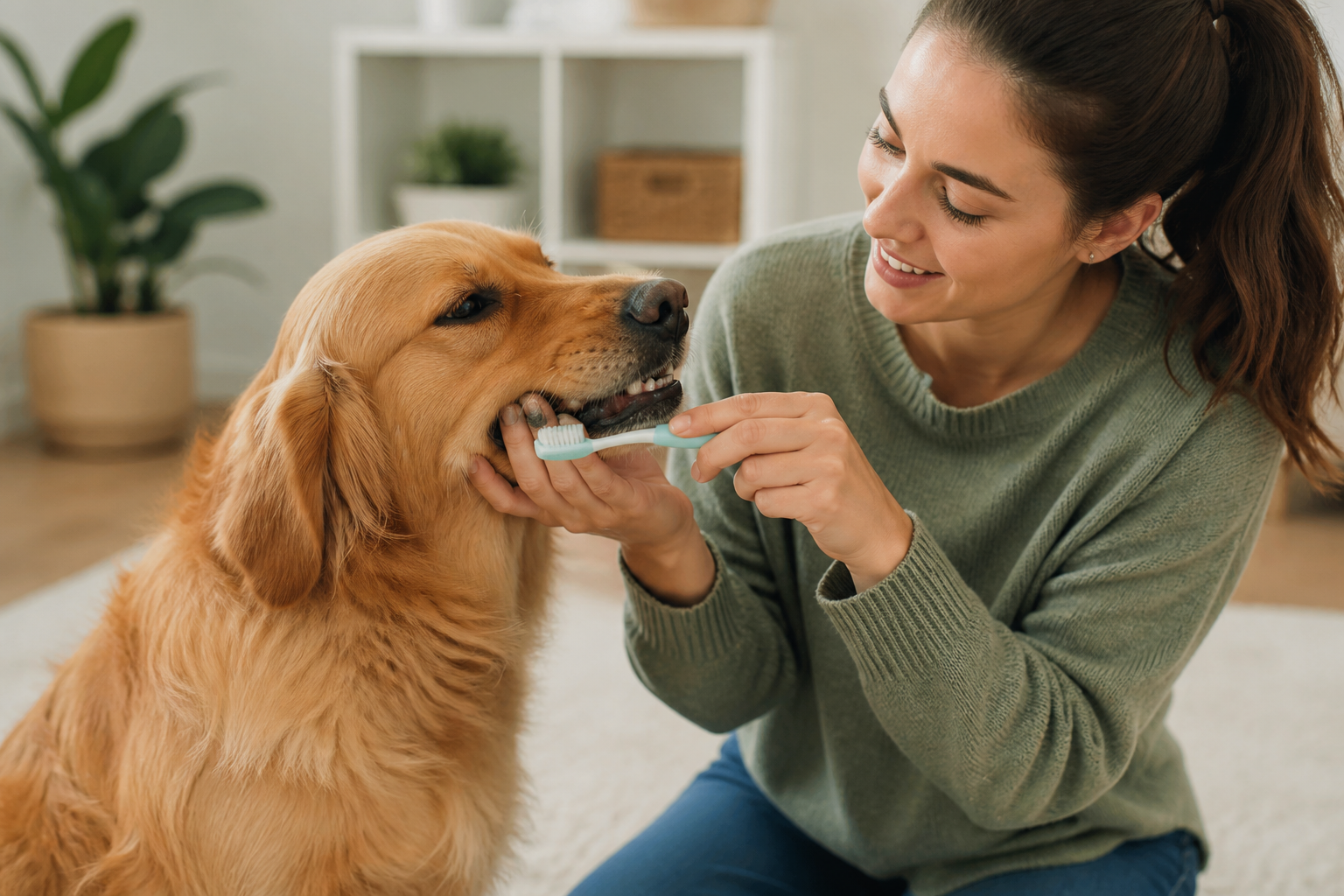
Apply the paste to a pet toothbrush. Hold the brush at a 45-degree angle toward the gumline. Use small, circular motions. Aim for about 30 seconds per side. If your dog gets wiggly or upset, stop immediately and try again tomorrow. You want to end every session on a positive note.
Key Takeaway: Consistency is more important than perfection. Brushing for 30 seconds three times a week is much more effective than a 5-minute deep scrub once a month. You can also review these pet dental care tips for additional routine-building ideas.
Using Dental Wipes for Difficult Dogs
Some dogs simply will not tolerate a brush in their mouth. If you find yourself struggling with a toothbrush, dental wipes are an excellent alternative. These are pre-moistened pads treated with cleaning agents and breath fresheners. Dog dental wipes and oral care products can help you build a gentler routine.
To use them, wrap the wipe around your index finger and swipe it firmly over the surface of each tooth. They are particularly good at removing the daily film of bacteria before it hardens. While they do not get into the tiny crevices as well as bristles do, they are much better than doing nothing at all. They are also highly portable for travel.
The Role of Dental Chews and Toys
If you are looking for ways to clean teeth without a brush, mechanical cleaning through chewing is your best friend. At BaxterBoo, we carry a variety of toys and treats designed specifically for this purpose. Browse our dental treats collection for options designed for dogs.
Texture Matters
Look for rubber toys with ridges, nubs, or "bristle" textures. As your dog chews, these bumps scrape against the tooth surface. Brands like Kong offer durable rubber toys that can be stuffed with healthy snacks to encourage longer chewing sessions. You can explore our selection of KONG products for durable toy options.
Dental Treats
Specific dental treats, such as Greenies, are formulated to be flexible so the tooth sinks into the treat. This allows the edges of the treat to scrub the tooth all the way down to the gumline. See our selection of Greenies products for available dental treat options.
Bottom line: While chews and toys are helpful supplements, they should not be the only method you use because they often miss the very back molars and the tiny front teeth.
Water Additives and Oral Rinses
For the busiest pet owners, water additives offer a "hands-off" way to support oral health. These are liquids you add to your dog’s daily water bowl. They usually contain enzymes or ingredients like chlorhexidine that help kill bacteria in the mouth.
Rinses work similarly but are applied directly to the gums. These are helpful for dogs who have existing gum redness or irritation. They act as a liquid shield against plaque. Just make sure the product is specifically labeled for dogs, as some human mouthwashes contain alcohol or other ingredients that are harmful if swallowed. Our dental supplements category includes water additives and other oral care options.
Nutrition and Prescription Diets
What your dog eats every day has a massive impact on their dental health. Soft, wet food tends to stick to the teeth more than dry kibble. However, standard dry kibble usually crumbles too quickly to provide much cleaning benefit.
If your dog is prone to rapid plaque buildup, your vet might suggest a prescription dental diet. These kibbles are much larger and have a specific fiber matrix that does not shatter when the dog bites down. Instead, the tooth sinks into the kibble, which scrubs the surface. We provide access to specialized foods through our pet pharmacy. You can have your vet's prescription sent directly to us to streamline your ordering process.
Key Takeaway: Prescription dental diets are formulated to be nutritionally complete while acting like a "toothbrush" for every meal, making them a great option for senior dogs or breeds prone to dental issues.
When Home Care Is Not Enough
It is important to recognize the limitations of home cleaning. If your dog already has thick, brown "stones" on their teeth, no amount of brushing will remove them. This is tartar, and it requires professional scaling. You should also watch for signs of pain or infection that require a veterinary visit.
Common red flags include:
- Bleeding gums during or after brushing.
- One-sided chewing or dropping food.
- Excessive drooling.
- Visible cracks or broken teeth.
- A "rotten" smell that does not go away after brushing.
- Swelling under the eye, which can indicate a tooth root abscess.
If you notice these symptoms, it is time for a professional exam. While we want to help you maintain health at home, ignoring a deep infection can lead to systemic health problems.
Vet Tip: Check your dog's mouth once a week for any new lumps, bumps, or changes in gum color. Early detection of oral growths is just as important as keeping teeth white.
Creating a Sustainable Dental Routine
The best way to ensure you actually clean your dog’s teeth is to tie it to an existing habit. Maybe you brush their teeth right after you brush your own at night, or right before their evening walk.
Sample Weekly Schedule
- Daily: Add a water additive to the bowl and give one VOHC-approved dental chew.
- Monday, Wednesday, Friday: 2 minutes of brushing with enzymatic toothpaste.
- Sunday: A "deep clean" check where you look for any broken teeth or gum redness.
Using a program like our Autoship programme can help ensure you never run out of toothpaste or your favorite dental treats. This saves you money and keeps your routine consistent. You can also earn points on every dental care purchase through the MVP Rewards programme, which helps offset the cost of maintaining your dog's health.
Conclusion
Cleaning your dog's teeth at home is one of the most proactive steps you can take as a pet owner. By combining a regular brushing routine with the right tools, you can keep their breath fresh and their mouth pain-free. Remember to start slowly, use pet-safe products, and provide plenty of positive reinforcement. While home care cannot replace the deep cleaning of a veterinary visit, it is the best defense against the progression of dental disease.
- Start with enzymatic toothpaste and a soft brush or finger sleeve.
- Supplement with dental chews and water additives.
- Monitor your dog's mouth for red flags like bleeding or loose teeth.
- Consult your vet for an annual oral exam to catch what brushing might miss.
For all your dental supplies, from specialized brushes to prescription diets, visit our Dental Care section. Our pharmacy is also available for any prescription needs your veterinarian recommends to manage your dog's oral health.
FAQ
Can I use baking soda to clean my dog’s teeth at home?
While baking soda is not toxic in tiny amounts, it has a very salty, unpleasant taste that may make your dog hate the brushing process. It is also quite abrasive and can damage the enamel if used too frequently. It is much better to use a flavored enzymatic toothpaste that encourages your dog to enjoy the experience.
How often do I really need to brush my dog’s teeth?
Ideally, you should brush your dog’s teeth every single day to stay ahead of plaque. However, for many busy owners, three times a week is a more realistic and still very effective goal. If you skip more than two days, the plaque begins to harden into tartar, which is much harder to manage without professional help.
Are rawhides a good way to clean dog teeth?
Rawhides are generally not recommended for dental cleaning because they can become soft and gummy rather than providing a scrubbing action. They also pose a significant choking risk and can cause intestinal blockages if large pieces are swallowed. Stick to rubber toys or dental treats that are specifically designed to break down safely.
My dog’s gums bleed a little when I brush. Should I stop?
A small amount of pink on the brush or a tiny bit of bleeding is common when you first start a routine, as it indicates mild gingivitis. If you continue brushing gently, the gums will usually toughen up and the bleeding will stop within a week or two. However, if the bleeding is heavy or the gums look bright red and swollen, stop and consult your veterinarian.






