
 Save 15% on your 1st Autoship learn more

 Email us
 Live Chat
 FAQs
FAQs





Introduction
You lean in for a happy morning nuzzle only to be met with a puff of breath that smells like a damp basement or a garbage bin. While we often joke about "dog breath," a foul odor is usually the first sign that your dog needs a more consistent dental routine. Keeping a dog's mouth clean is about more than just avoiding stinky kisses. It is a vital part of preventing systemic health issues that can affect their heart and kidneys.
At BaxterBoo, we have helped pet parents navigate dental care since 2006 by providing the tools and guidance needed for healthy smiles. This post covers everything from the basics of brushing to the role of dental chews and professional cleanings. We will explore how to build a routine that fits your lifestyle while ensuring your dog stays comfortable. Consistent oral hygiene is the most effective way to extend your dog's life and keep their tail wagging. Explore our dog dental and breath care collection for products that can support your routine.
Understanding Why Your Dog's Breath Smells
Before you can fix the smell, you need to understand what is happening inside your dog's mouth. Most bad breath stems from the accumulation of bacteria. When your dog eats, food particles mix with saliva to form plaque. If this plaque is not removed within a few days, it hardens into tartar, also known as calculus. Tartar provides a rough surface where even more bacteria can thrive, leading to inflammation of the gums.
This inflammation is the beginning of periodontal disease. As the condition progresses, bacteria can enter the bloodstream through the sensitive gum tissue. This is why veterinarians are so insistent on dental care. The same bacteria found in a dog's mouth can travel to the heart, liver, and kidneys, causing long-term damage.
While plaque and tartar are the most common culprits, other factors can influence the scent of your dog's breath. Their diet plays a role, especially if they have a habit of scavenging in the yard or the litter box. Sometimes, a specific smell can even indicate a non-dental health issue.
Vet Tip: If your dog's breath smells like ammonia, it could indicate kidney issues. A sweet or fruity scent might be a sign of diabetes. In these cases, you should skip the toothbrush and head straight to your veterinarian for a full wellness exam and bloodwork.
Common Signs of Dental Trouble
It is easy to miss the early stages of dental disease because dogs are masters at hiding pain. Look for these specific red flags during your weekly grooming sessions. For more guidance, read this article about warning signs of bad teeth in dogs.
- Bright red or bleeding gums along the tooth line
- Heavy brown or yellow buildup on the back molars
- Excessive drooling that seems unusual for their breed
- Dropping kibble or hesitating to eat hard treats
- Pawing at the mouth or face
- One-sided chewing
The Gold Standard: Brushing Your Dog’s Teeth
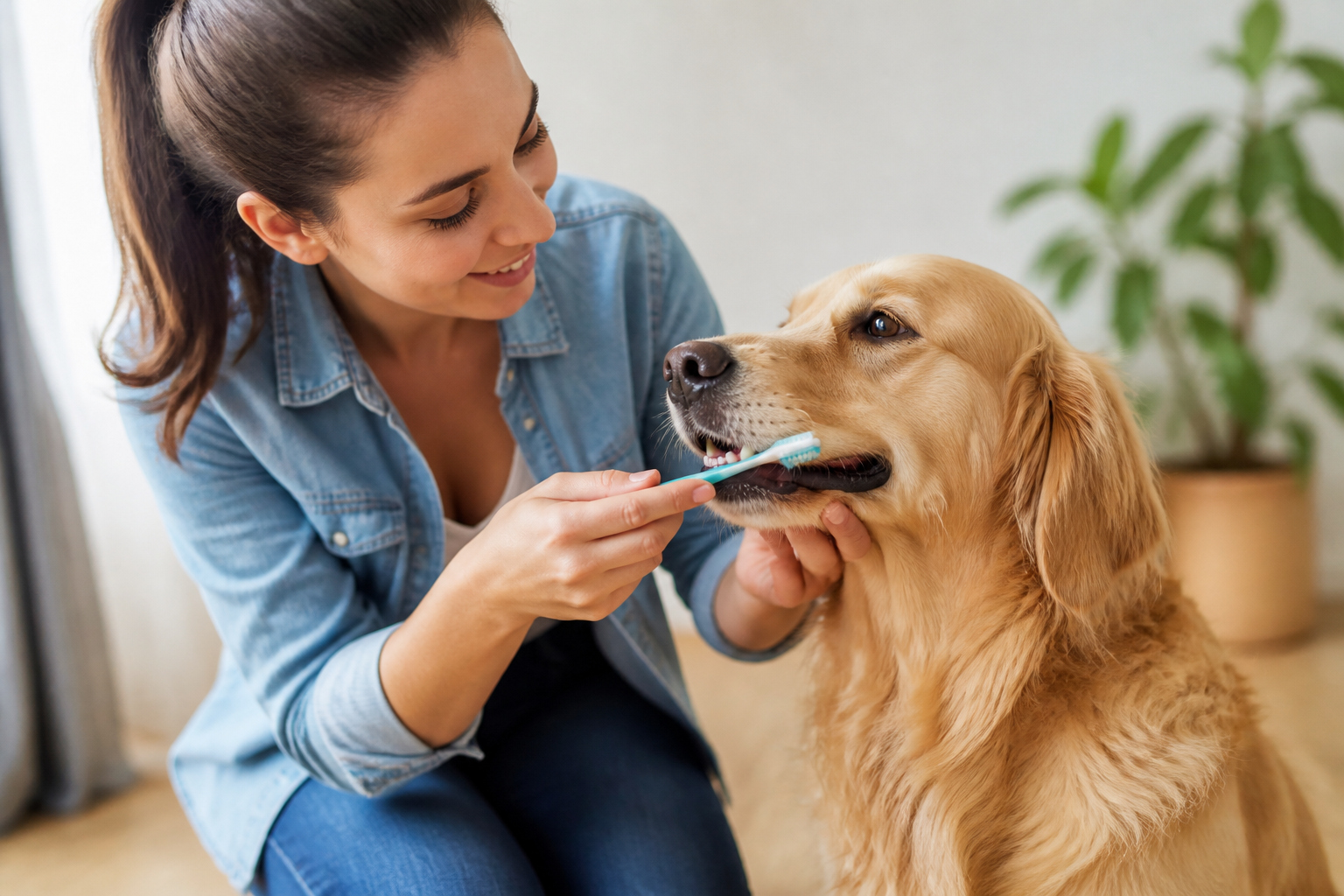
Brushing is the most effective way to remove plaque before it turns into tartar. While it might seem daunting, most dogs can learn to accept the process if you introduce it slowly. The key is to use the right tools. Never use human toothpaste on a dog. Human formulas often contain xylitol, an artificial sweetener that is toxic to dogs, or fluoride, which can upset their stomachs.
Canine toothpaste is formulated to be swallowed and comes in flavors like poultry, beef, or peanut butter. This makes the experience feel more like a treat than a chore. You also have choices regarding the brush itself. A standard long-handled pet toothbrush works well for larger breeds, while a finger brush offers more control and a gentler touch for small dogs or puppies. A product such as Virbac C.E.T. Enzymatic Pet Toothpaste for Dogs and Cats can be used as part of a dog-safe brushing routine.
Step-by-Step: Introducing the Toothbrush
Step 1: Let them taste the paste. / Put a small dab of dog-safe toothpaste on your finger and let your dog lick it off. Do this for a few days until they get excited when they see the tube.
Step 2: Get them used to mouth handling. / Gently lift your dog’s lip and rub your finger along their gums. Keep these sessions very short and follow up with praise or a favorite toy.
Step 3: Introduce the brush. / Apply a small amount of toothpaste to the brush. Let your dog lick the paste off the bristles so they get used to the texture of the brush.
Step 4: Start brushing the front teeth. / Gently brush the large canine teeth in a circular motion. You do not need to pry the mouth open. Most plaque accumulates on the outside surface of the teeth, so focus there.
Step 5: Move to the back molars. / Once your dog is comfortable, reach further back to the molars where tartar buildup is usually heaviest. Aim for thirty seconds on each side.
Key Takeaway: Daily brushing is the ideal goal, but even brushing two or three times a week can significantly reduce the risk of periodontal disease and noticeably freshen breath.
Using Dental Chews and Toys for Mechanical Cleaning
For many owners, daily brushing is a challenge. This is where dental chews and functional toys become essential. These products are designed to use the mechanical action of chewing to scrape away soft plaque. As your dog gnaws on a textured surface, the friction helps clean the areas near the gum line that are hard to reach with a brush.
When shopping for dental chews, look for the Veterinary Oral Health Council (VOHC) seal of approval. This seal means the product has undergone testing to prove it effectively reduces plaque or tartar by at least 20 percent. We carry several trusted brands like Greenies and Kong that offer specific textures designed for dental health. Greenies Original Dental Dog Chews are one option for dogs in the appropriate size range.
Chewing also stimulates saliva production. Saliva contains natural enzymes that help break down food particles and protect the enamel. However, not all chews are created equal. Avoid extremely hard items like natural bones, cow hooves, or hard nylon toys. If a toy is too hard to indent with your thumbnail, it is hard enough to fracture your dog’s teeth.
Choosing the Right Chew for Your Dog
- Size Matters: Always select a chew that is appropriate for your dog’s weight. A chew that is too small can be a choking hazard, while one that is too large may be too difficult for them to enjoy.
- Calorie Awareness: Dental chews are treats and contain calories. If you give one every day, you may need to slightly reduce your dog's meal portions to maintain a healthy weight.
- Texture: Look for "nubs" or ridges. These specific shapes are designed to get into the crevices between teeth.
Bottom line: Dental chews are a fantastic supplement to brushing, but they should not be the only method of cleaning your dog's teeth.
Water Additives and Dental Powders
If your dog is particularly resistant to having their mouth handled, water additives and dental powders provide a hands-off approach. These products work chemically rather than mechanically. Most water additives contain enzymes or safe, flavorless agents that kill odor-causing bacteria in the mouth. OxyFresh Pet Dental Water Additive is one brushless option designed for pet water bowls.
Dental powders are typically sprinkled over your dog's food. Many of these, such as Perio Support, contain probiotics that help maintain a healthy bacterial balance in the mouth. This can be especially helpful for senior dogs or breeds prone to rapid tartar buildup, such as Greyhounds or small terriers. Another option is ProDen PlaqueOff Powder Dog and Cat Teeth Care.
While these solutions are easy to use, they are most effective when started after a professional cleaning. They are designed to prevent new plaque from forming rather than removing thick layers of existing tartar. If your dog already has heavy brown buildup, a water additive will not be able to penetrate that layer.
Note: Always provide a secondary bowl of plain water when introducing an additive. While most are tasteless, some discerning dogs may drink less if they notice a change in their water.
Natural Remedies for Fresh Breath
Some owners prefer to use natural items to help manage breath. Crunchy vegetables like carrots and apple slices (without the seeds) act as natural toothbrushes. The firm texture requires significant chewing, which helps scrub the teeth. They are also low in calories and high in fiber, making them a great snack for weight-conscious dogs.
Fresh herbs like parsley and mint can also provide a temporary scent boost. You can finely chop a small amount of fresh parsley and sprinkle it over their food. Parsley contains chlorophyll, which is a natural deodorizer. Coconut oil is another popular option due to its antimicrobial properties. Some pet parents even use a small amount of coconut oil as a "toothpaste" because most dogs love the taste.
While these natural options are safe and helpful, they are best used as an addition to a more robust dental care plan. They lack the concentrated enzymatic power found in specialized pet dental products.
Quick Answer: To clean a dog's breath and teeth at home, use a combination of enzymatic pet toothpaste, VOHC-approved dental chews, and water additives. For the best results, brush their teeth at least three times a week and provide crunchy, healthy vegetables like carrots to help scrape away plaque.
The Importance of Professional Veterinary Cleanings
No matter how diligent you are at home, most dogs will eventually need a professional cleaning. Just like humans go to the dentist to remove the tartar that brushing misses, dogs need a deep clean under the gum line. A professional cleaning at your vet's office is much more thorough than what can be achieved at home.
During a professional cleaning, your dog is placed under general anesthesia. This allows the vet to perform a full examination, take X-rays to check for hidden abscesses, and use ultrasonic scalers to remove tartar from beneath the gums. This is where the most damaging bacteria hide. Anesthesia-free cleanings might make the teeth look white, but they do not address the health of the tissues below the surface.
Our pharmacy provides access to FDA-approved medications and prescription dental diets that your vet might recommend after a cleaning. Through our partnership with Pet's Choice, we can help you manage your dog's long-term dental health with professional-grade products.
Preparing for a Professional Cleaning
- Pre-anesthetic Bloodwork: This ensures your dog’s liver and kidneys are healthy enough to process the anesthesia.
- Follow-up Care: Your vet may prescribe antibiotics or a specific oral gel to help the gums heal after a deep cleaning.
- Prescription Diets: For dogs with chronic dental issues, a prescription dental kibble like Royal Canin Dental or Farmina Vet Life can make a massive difference in how quickly plaque returns.
Diet and Its Role in Oral Health
What your dog eats every day has a direct impact on their mouth. Some people believe that all dry kibble cleans teeth, but this is a common myth. Most standard kibble is small and brittle, shattering easily when the tooth hits it. This does little to scrape the tooth surface.
Specialized dental diets use a different technology. The kibbles are often larger and have a fibrous texture that does not shatter. Instead, the tooth sinks into the kibble, allowing the fibers to scrub the tooth as the dog bites down. These diets are specifically formulated to reduce the accumulation of plaque and tartar.
If you are looking for ways to save on these long-term necessities, our Autoship programme is a great option. It ensures you never run out of your dog's preferred dental diet or treats while providing a discount on your orders. Combining a high-quality diet with the rewards from our MVP Rewards program helps make consistent dental care more affordable.
Creating a Sustainable Dental Routine
The best dental routine is the one you can actually stick to. You do not have to do everything every day. The goal is layers of protection. Perhaps you brush their teeth on Monday, Wednesday, and Friday. On the other days, you provide a dental chew. Every day, they get a water additive or a sprinkle of dental powder on their dinner. For more ideas, review these pet dental care tips.
Start small and be patient. If you have a puppy, starting now will save you thousands of dollars in veterinary bills later in their life. For senior dogs, it is never too late to start. Improving their oral health can reduce chronic inflammation and make them feel much more energetic.
A Simple Weekly Checklist
- Monday: Brush teeth for 1 minute.
- Tuesday: Give a VOHC-approved dental chew.
- Wednesday: Brush teeth for 1 minute.
- Thursday: Treat with crunchy carrots or apple slices.
- Friday: Brush teeth for 1 minute.
- Saturday: Check the mouth for redness or new buildup.
- Sunday: Give a long-lasting dental toy stuffed with pet-safe spreads.
Conclusion
Cleaning your dog's breath and teeth is an essential part of responsible pet ownership that pays off in the long run. By combining regular brushing, the right chews, and professional veterinary oversight, you can prevent painful infections and keep your dog's heart healthy. Remember to always use dog-specific products and keep the experience positive with plenty of praise.
If you notice persistent bad breath despite your best efforts, consult your veterinarian to rule out underlying health conditions. Our pharmacy and wide selection of dental care products at BaxterBoo are here to support you in every step of your dog's wellness journey. You can also browse our selection of Greenies products for dental chews and other pet care options.
- Brush with enzymatic toothpaste 2-3 times per week.
- Use VOHC-approved chews for daily mechanical cleaning.
- Add water additives or powders for extra bacterial control.
- Schedule annual veterinary dental exams.
Bottom line: A proactive approach to dental health leads to fresher breath, a healthier body, and many more years of happy snuggles.
FAQ
Can I use human toothpaste on my dog if I only use a little bit?
No, you should never use human toothpaste on a dog. Many human toothpastes contain xylitol, which is highly toxic to dogs and can cause life-threatening low blood sugar or liver failure. Additionally, the foaming agents in human toothpaste are meant to be spit out, and since dogs swallow everything, it can cause severe stomach upset.
My dog hates the toothbrush, what are my other options?
If your dog will not tolerate a brush, you can use dental wipes or a piece of clean gauze wrapped around your finger to rub their teeth and gums. Combining this with a water additive and daily VOHC-approved dental chews can still provide significant protection. The goal is to find a combination of products that works for your dog's personality.
How often should my dog have a professional dental cleaning?
Most dogs benefit from a professional cleaning every one to two years, though this varies by breed and individual health. Small breeds and dogs with pushed-in faces, like Pugs or Bulldogs, often require more frequent cleanings because their teeth are crowded together. Your veterinarian will check your dog's dental health during their annual wellness exam to give you a specific recommendation.
Are dental chews enough to keep my dog's teeth clean?
While dental chews are a helpful tool, they are usually not enough on their own to prevent all plaque and tartar. Chews are most effective at cleaning the chewing surfaces of the back teeth but often miss the front teeth and the area just under the gum line. For the best results, use dental chews as one part of a multi-layered routine that includes brushing or dental wipes.






