
 Save 15% on your 1st Autoship learn more

 Email us
 Live Chat
 FAQs
FAQs





Introduction
You lean in for a happy morning nuzzle from your dog, but instead of sweetness, you are met with a wall of pungent breath. That distinctive, swampy smell is often the first sign that plaque and tartar have started to move in. While professional veterinary cleanings are sometimes necessary, many owners look for ways to maintain oral hygiene between visits using gentle ingredients. At BaxterBoo, we know that keeping those pearly whites clean does more than just freshen breath. It protects your dog from the pain of gum disease and tooth loss. This post covers the most effective natural methods for cleaning your dog’s teeth, from coconut oil brushing to the right types of raw snacks. Consistent home care is the most reliable way to ensure your dog stays comfortable and healthy for years to come.
Quick Answer: Natural dental care for dogs involves mechanical cleaning through brushing and chewing, combined with antibacterial agents like coconut oil. You can use raw bones, specific vegetables like carrots, and seaweed supplements to break down tartar. These methods work best when started early and performed daily to prevent mineralized buildup.
The Power of Coconut Oil for Canine Dental Health
Coconut oil has gained popularity in the pet world for many reasons, but its antibacterial properties make it a standout for dental care. It contains lauric acid, which helps kill the bacteria that lead to tooth decay and foul odors. Unlike human toothpaste, coconut oil is safe for dogs to swallow and has a taste most of them actually enjoy. This makes the training process much smoother for dogs that are nervous about having their mouths handled.
When you use coconut oil as a natural toothpaste, you are doing more than just moving a brush around. The oil helps to break down the sticky biofilm that forms on the teeth throughout the day. If you catch this film before it hardens into tartar, you can often prevent the need for more invasive dental procedures later. For additional brushing options, explore our dog dental care category.
How to Brush with Coconut Oil
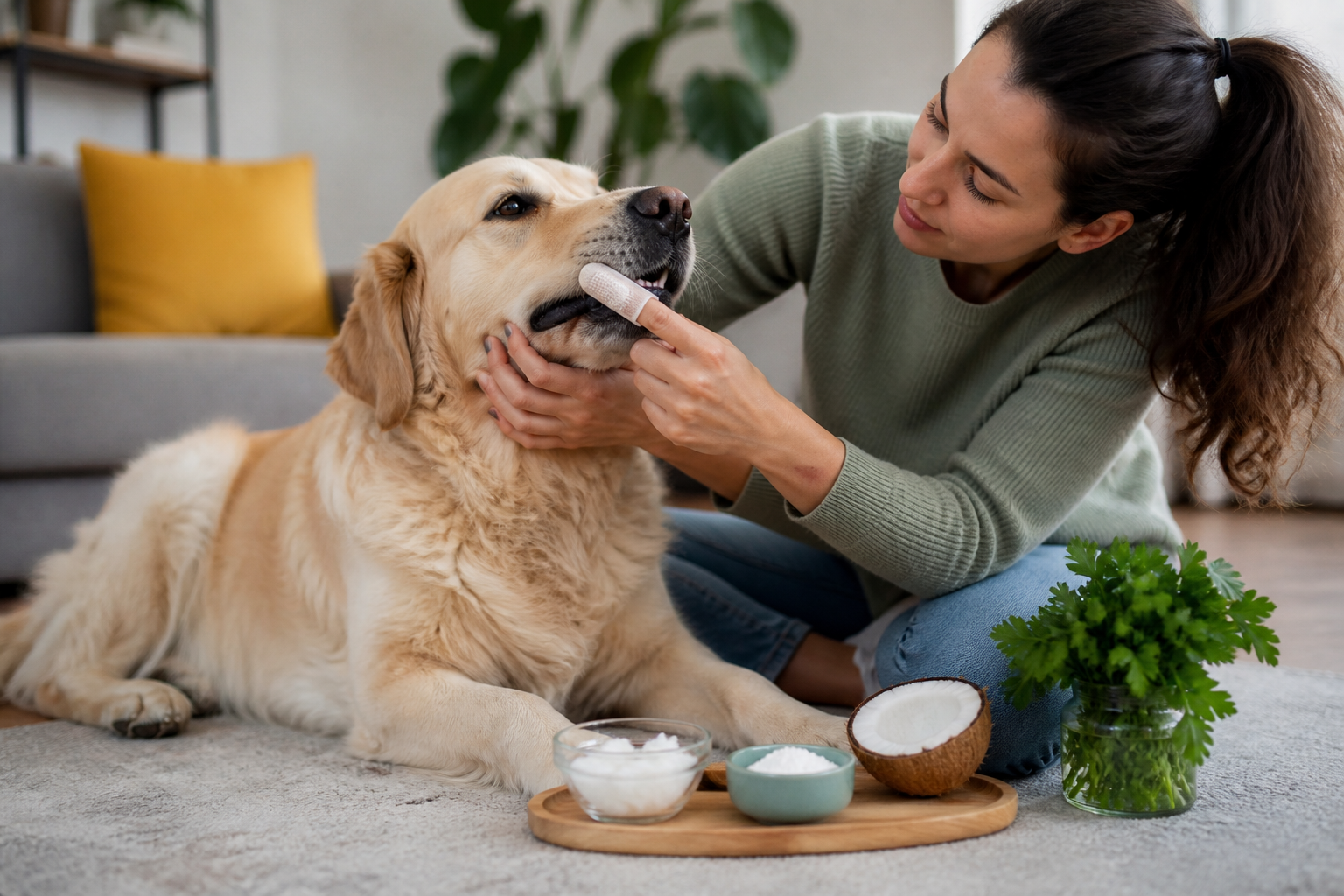
To get started, you do not need much equipment. A soft-bristled dog toothbrush or even a piece of clean gauze wrapped around your finger will work. A dual-ended option such as the Virbac C.E.T. Dual-Ended Pet Toothbrush for Dogs and Cats - Color Varies can help you reach different tooth surfaces.
Step 1: Get your dog comfortable. / Choose a time when your dog is relaxed, such as after a long walk or a meal.
Step 2: Introduce the oil. / Let your dog lick a small amount of organic, unrefined coconut oil off your finger so they associate the flavor with a positive experience.
Step 3: Lift the lips. / Gently lift the side of your dog’s mouth to expose the large premolars and canines.
Step 4: Brush in circles. / Apply a small amount of oil to your brush or gauze and move in small circular motions along the gum line.
Step 5: Reward and repeat. / Give your dog plenty of praise afterward and try to reach a few more teeth each day until you can do the whole mouth.
Key Takeaway: Coconut oil serves as a safe, antibacterial alternative to commercial toothpastes and helps most dogs accept the brushing routine more easily.
Using Natural Mechanical Cleaners
Dogs are designed to chew. In the wild, the act of gnawing on cartilage and bone acts as a natural toothbrush. For our domestic companions, we can replicate this process with safe, natural chews. Mechanical cleaning is the physical scraping of the tooth surface. This action helps "knock off" debris before it has a chance to mineralize. For more ideas, see these dental chews for dogs.
Raw Bones and Antlers
Raw bones are a traditional way to keep teeth clean, but they must be used with caution. Unlike cooked bones, which become brittle and can splinter, raw bones are pliable and contain natural enzymes that support oral health. Large, marrow-filled "recreational" bones are often best for scraping the back molars.
Deer antlers are another long-lasting option. They are very hard and do not splinter like wood or cooked bone. However, if your dog is an aggressive chewer, they could potentially fracture a tooth on an antler. Always monitor your dog when they are working on a hard chew.
Dental Chews with the VOHC Seal
While many treats claim to clean teeth, look for products that carry the Veterinary Oral Health Council (VOHC) seal. This seal means the product has been tested and proven to reduce plaque or tartar. Many of these chews use natural ingredients like alfalfa or parsley to help freshen breath while the texture does the heavy lifting of cleaning. At BaxterBoo, we recommend checking the ingredient list to ensure there are no hidden sugars or artificial dyes that could work against your dog's health. Browse our dental treats collection for additional options.
Vet Tip: Always supervise your dog with bones or hard chews to prevent choking or broken teeth. If your dog has existing dental fractures or loose teeth, avoid hard chews entirely and consult your veterinarian for a safer alternative.
Natural Supplements and Water Additives
Sometimes the best way to clean a dog’s teeth is from the inside out. Certain natural supplements can change the chemistry of your dog’s saliva to make it harder for plaque to stick. For another perspective on warning signs and home care, read what to know about bad teeth in dogs.
Seaweed and Kelp
One of the most effective natural supplements is a specific type of brown seaweed called Ascophyllum nodosum. When your dog eats this seaweed, its compounds are absorbed into the bloodstream and released back through the saliva. It works systemically to soften existing tartar and prevent new plaque from sticking. You can find this in powdered form to sprinkle over their food, such as ProDen PlaqueOff Powder Dog and Cat Teeth Care.
Cinnamon and Grapefruit Seed Extract
Cinnamon is a natural antioxidant with mild antibacterial properties. Adding a small pinch to your dog’s food can help keep oral bacteria levels in check. Grapefruit seed extract is another potent antimicrobial. Some natural dental sprays use this extract as a base. It helps to neutralize the pathogens in the mouth that cause inflammation and gum disease.
- Seaweed powder: Softens tartar over several weeks of consistent use.
- Cinnamon: Provides a mild antibacterial boost and freshens breath.
- Grapefruit seed extract: Often found in natural sprays to target the gum line.
- Water additives: Natural formulas that use enzymes to break down plaque while the dog drinks.
A brushless option such as Zymox Oratene Brushless Enzyme Dog and Cat Oral Care Water Additive can fit easily into a daily routine.
Bottom line: Supplements like seaweed provide a "passive" way to fight tartar by changing the environment of the mouth through the dog's saliva.
Dietary Choices for Cleaner Teeth
The old myth that dry kibble cleans teeth like a toothbrush is largely untrue. Most kibble is too small and brittle to provide any real scraping action. In fact, many high-carb kibbles can actually contribute to plaque because the starches stick to the teeth.
Fresh Vegetables as Toothbrushes
Crunchy, water-rich vegetables can be very helpful for mechanical cleaning. Raw carrots are a fantastic natural chew. They are hard enough to provide some scraping action but soft enough that they won't break a tooth. Apples are also a good choice, as long as you remove the seeds and the core. The fibrous texture of these snacks helps sweep away food particles after a meal.
The Role of a High-Quality Diet
Feeding a diet rich in whole proteins and low in unnecessary fillers is essential. High-sugar treats or foods with lots of corn and soy can lead to more rapid plaque buildup. Focusing on nutrition supports the overall immune system. This is important because a healthy immune system is better at fighting off the bacteria that lead to gingivitis.
Key Takeaway: Fresh, crunchy vegetables like carrots provide a low-calorie way to mechanically clean teeth while avoiding the starches found in many processed treats.
Recognizing When Natural Methods Aren't Enough
While home care is vital, it cannot always replace professional intervention. If your dog already has thick, brown tartar or red, bleeding gums, natural remedies might not be able to reverse the damage. This is especially true for small breeds or flat-faced dogs like Pugs and Bulldogs. These dogs often have crowded teeth, which creates tiny pockets where bacteria hide.
When plaque mineralizes into tartar, it becomes like concrete. No amount of coconut oil or carrot-chewing will remove it safely. At this stage, the bacteria can move under the gum line and enter the bloodstream. This can eventually lead to issues with the heart, liver, and kidneys.
Our dog pharmacy offers a variety of medications and prescription dental diets. If your veterinarian discovers an infection or advanced periodontal disease, they may prescribe specific treatments that go beyond what natural remedies can provide.
Signs of Dental Trouble
- Bad breath that persists after brushing
- Yellow or brown deposits near the gum line
- Red, swollen, or bleeding gums
- Difficulty eating or dropping food
- Pawing at the mouth or face
- Loose or missing teeth
Vet Tip: Schedule a dental exam at least once a year. Your vet can see what is happening beneath the gum line with X-rays, which is where the most serious dental disease often hides. If your dog shows signs of pain or refuses to eat, seek veterinary care immediately.
Establishing a Long-Term Routine
The secret to natural dental care is consistency. Cleaning a dog’s teeth once a month will not have a significant impact. You should aim for a daily routine that combines different methods for the best results.
Think of it as a three-pronged approach. Use brushing for direct cleaning, chews for mechanical scraping, and supplements for systemic support. This multi-layered strategy covers all the bases. If you start this routine while your dog is a puppy, they will likely grow up with a healthy mouth and a much lower risk of needing expensive, stressful surgeries.
For adult dogs that already have some buildup, do not give up. Even starting a routine later in life can slow the progression of dental disease and keep their breath much fresher. Every little bit of cleaning helps to reduce the bacterial load in their mouth.
Bottom line: A successful dental routine combines daily brushing, healthy chewing habits, and the right nutritional supplements to maintain oral health.
Conclusion
Natural dental care for your dog is about more than just a bright smile. It is a fundamental part of their overall wellness that affects their comfort and longevity. By using simple ingredients like coconut oil and providing healthy outlets for chewing, you can manage plaque before it turns into a larger problem. We are here to help you find the right tools for the job, whether you are looking for VOHC-approved treats or natural supplements. If your dog's dental needs become more complex, our pharmacy is ready to assist with prescription options.
- Commit to brushing at least three times a week with coconut oil.
- Provide safe, raw bones or natural dental chews for mechanical cleaning.
- Add a seaweed supplement to their daily meals to soften tartar.
- Monitor your dog's mouth regularly for signs of inflammation or pain.
To find the best supplies for your dog's oral health, browse our dog dental care section and consider signing up for our Autoship programme to ensure you never run out of your favorite dental chews or supplements.
FAQ
Can I use baking soda to clean my dog's teeth naturally?
Baking soda can be used occasionally to help scrub away stains and neutralize odors, but it should not be used every day. It has a high salt content which can be hard on a dog's stomach if they swallow too much. It is generally safer to stick with coconut oil or a dog-specific enzymatic toothpaste for daily cleaning.
How long does it take for seaweed supplements to work?
You will typically see a difference in your dog's breath within a few weeks, but it can take eight to twelve weeks to see a visible reduction in tartar. The seaweed works by changing the chemistry of the saliva, so it requires daily, consistent use to be effective. If you stop using it, the benefits will eventually fade.
Are raw carrots really as good as dental chews?
Raw carrots are an excellent low-calorie natural chew that provides good mechanical cleaning for the surface of the teeth. However, they do not contain the specific plaque-fighting enzymes found in many high-quality dental chews. Using both carrots and VOHC-approved chews is a great way to provide variety and comprehensive care.
Why does my dog's breath still smell bad even after I brush?
If persistent bad breath remains after regular cleaning, it usually indicates that there is an underlying issue like a tooth infection or tartar buildup beneath the gum line. Natural brushing only cleans the visible part of the tooth. You should consult your veterinarian to rule out periodontal disease or other health concerns that may require professional treatment.






