
 Save 15% on your 1st Autoship learn more

 Email us
 Live Chat
 FAQs
FAQs





Introduction
You are sitting on the sofa when your dog leans in for a friendly lick, and the smell is enough to make you pull away. That "dog breath" is often the first sign that plaque and tartar are moving in. While a professional veterinary cleaning is sometimes necessary, many owners want to know how to manage dental hygiene at home to avoid the stress and cost of a clinical visit. At BaxterBoo, we have helped pet parents find the right gear for their furry friends since 2006. We know that a consistent home routine is the best way to keep those pearly whites sparkling. This guide covers the most effective tools and techniques for at-home care. With the right approach, you can maintain your dog's oral health and significantly reduce the need for professional procedures.
Quick Answer: You can clean your dog's teeth at home using a combination of daily brushing, dental chews, and water additives. These methods work together to remove plaque and prevent the formation of hard tartar.
The Gold Standard: Brushing at Home
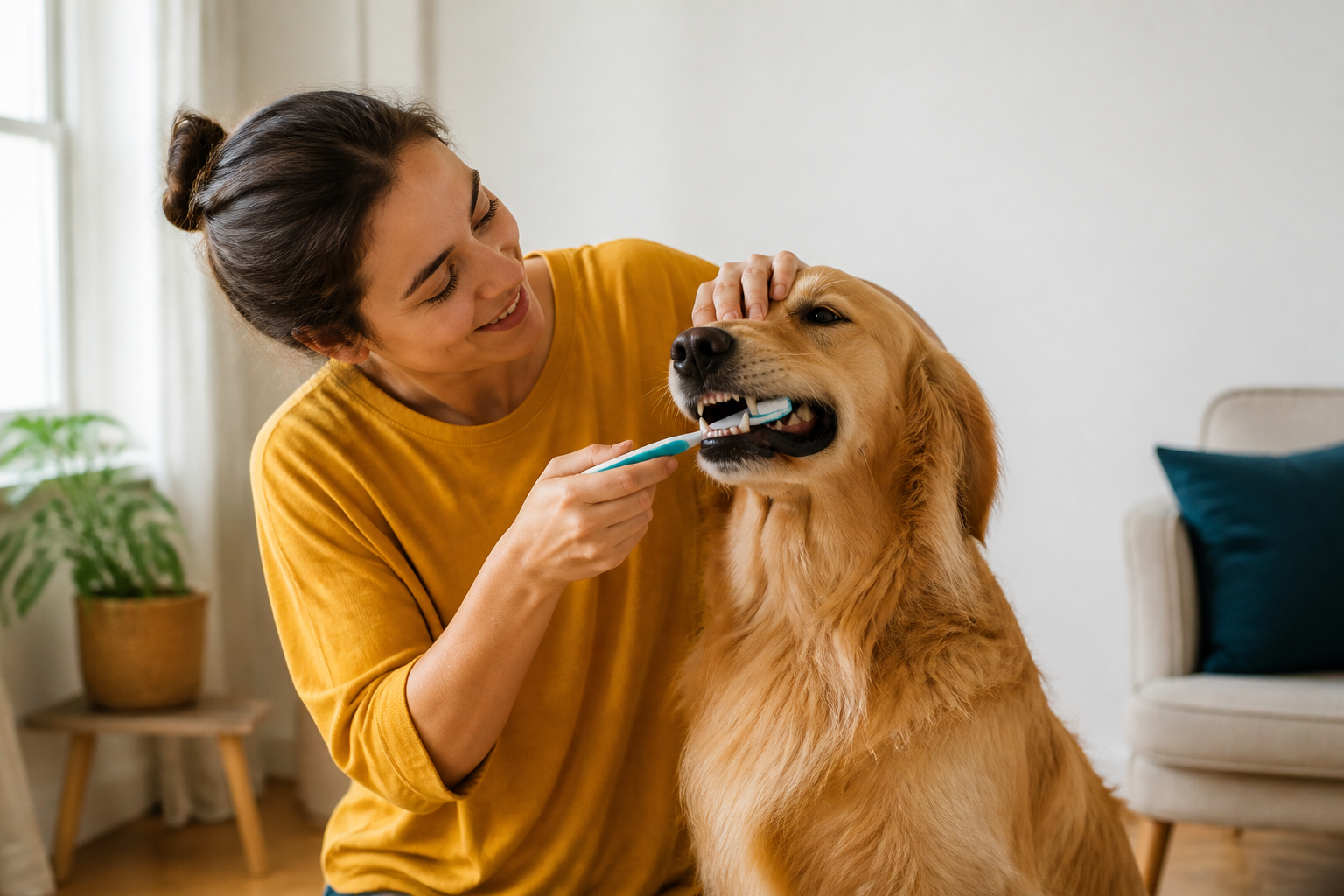
Brushing is the single most effective way to keep your dog's mouth healthy. It works just like it does for humans by physically scrubbing away the sticky film of plaque before it can harden into tartar. Once plaque turns into tartar, it usually requires professional tools to remove.
You cannot use human toothpaste for your dog. Human formulas often contain fluoride or xylitol. Both of these ingredients are toxic to dogs. Pet-safe enzymatic toothpastes are designed to be swallowed and come in flavors like poultry or beef to make the experience more enjoyable. You can explore our dog dental care category for toothpaste, brushes, and other oral hygiene supplies.
Getting the Right Brush
There are several types of brushes available. A long-handled brush with angled heads can help you reach the back molars. These are the teeth where most tartar tends to build up. If your dog is smaller or more sensitive, a finger brush might be better. This is a small silicone cap that fits over your fingertip. It allows you to feel exactly where you are cleaning.
The Brushing Process
Step 1: Introduce the flavor. / Put a small amount of pet toothpaste on your finger. Let your dog lick it off so they associate the brush time with a tasty treat.
Step 2: Practice the motion. / Use your finger to gently rub the outside of the teeth and gums. Do this for a few days until they are comfortable with you touching their mouth.
Step 3: Introduce the brush. / Put the paste on the brush and gently lift the lip. Focus on the outer surfaces of the teeth. This is where most plaque sits.
Step 4: Keep it short. / Start with just 10 seconds per side. Gradually work up to a full minute or two as your dog becomes more patient.
Vet Tip: If your dog's gums bleed slightly the first few times you brush, do not panic. This is often a sign of mild gingivitis. However, if the bleeding is heavy or the gums look very red and swollen, you should consult your veterinarian.
For additional guidance, read these pet dental care tips before beginning a new routine.
Using Dental Chews and Treats
Not every dog will sit still for a toothbrush. This is where dental chews become very useful. These treats are formulated with a specific texture that helps scrape plaque off the teeth as the dog chews. Some even contain enzymes that help break down bacteria in the mouth.
Look for products that carry the Veterinary Oral Health Council (VOHC) seal. This seal means the product has been tested and proven to reduce plaque or tartar. Brands like Greenies are popular for this reason. They are designed to be flexible so the tooth sinks into the treat, cleaning all the way down to the gumline.
It is important to match the size of the chew to your dog. If the chew is too small, your dog might swallow it whole, which provides no dental benefit and could be a choking hazard. If it is too large, they might struggle to chew it properly. We carry a wide range of sizes to ensure every dog gets a safe and effective treat.
Key Takeaway: Dental chews are a great supplement to brushing but work best when used daily. The mechanical action of chewing is what provides the cleaning power.
For more ideas, browse our dental chews and treats for options in different sizes and textures.
Water Additives and Oral Rinses
If you are looking for the easiest possible way to improve your dog's breath, water additives are a strong choice. These are essentially drinkable mouthwashes for pets. You simply add a capful to their water bowl each day.
These additives contain ingredients that help kill the bacteria that cause bad breath and plaque. Some use stabilized chlorine dioxide or enzymes to keep the mouth fresh. While they do not provide the mechanical scrubbing of a brush, they are excellent for reaching the gaps between teeth where plaque hides. One option is OxyFresh Pet Dental Water Additive.
Benefits of Additives
- They are flavorless and odorless so most dogs will not notice them.
- They require zero effort from the dog, making them perfect for anxious pets.
- They help reduce the overall bacterial load in the mouth.
- They work throughout the day every time your dog takes a drink.
Bottom line: Water additives are a "set it and forget it" tool that works best as part of a multi-step dental routine.
Dental Toys: Cleaning Through Play
Dogs love to chew, and you can use this natural instinct to keep their teeth clean. At BaxterBoo, we curate a selection of toys specifically designed for dental hygiene. Look for rubber toys with nubs, ridges, or bristles. As your dog gnaws on the toy, these textures rub against the teeth and massage the gums.
Kong toys are a classic example. You can stuff them with pet-safe peanut butter or wet food to keep your dog chewing for longer. This prolonged chewing session acts like a natural toothbrushing. Rope toys are also effective. The fibers of the rope act like floss, sliding between the teeth to pull away food particles. Explore our dog toys for textured options that support supervised chewing.
Always supervise your dog during playtime. If a toy starts to break or pieces fall off, it is time to replace it. Avoid very hard toys like stones or real bones. These can actually cause painful tooth fractures that would require an emergency vet visit.
Dental Wipes and Finger Gauze
Some dogs are "mouth-shy" and will not tolerate a plastic brush or a bulky toy. Dental wipes are a great middle-ground. These are pre-moistened pads that you wrap around your finger. They allow you to physically wipe the surface of the teeth to remove film and bacteria.
Wipes are often infused with baking soda or mint to freshen breath. Because you are using your own finger, you have much more control and can be very gentle. This is often the best method for senior dogs who might have sensitive gums or for puppies who are just learning to have their mouths handled.
How to Use Wipes Effectively
- Wrap the wipe tightly around your pointer finger.
- Gently lift the side of the lip.
- Rub the wipe in a circular motion across the teeth.
- Pay extra attention to the gumline.
- Use a clean section of the wipe for each side of the mouth.
Key Takeaway: Wipes are more effective than additives but less intense than brushing, making them a perfect transition tool for reluctant dogs.
The Role of Diet in Dental Hygiene
What your dog eats every day has a huge impact on their dental health. There is a long-running debate about wet food versus dry food. Generally, dry kibble is thought to be better for teeth because the crunchy texture helps scrape away some plaque. However, many standard kibbles are small and shatter easily, providing little cleaning.
Specific dental diets are different. These kibbles are usually larger and have a fibrous structure. Instead of shattering, the tooth sinks into the kibble, which cleans the surface. Some of these diets require a prescription from your vet.
Our pharmacy offers a range of prescription pet foods through our partnership with Pet's Choice. This includes brands like Farmina Vet Life, which has formulas specifically designed for ongoing health management. If your vet recommends a specific dental or prescription diet, you can easily manage those orders through us to ensure your dog never misses a meal.
Ingredients to Look For
When choosing treats or food for dental health, look for ingredients like calcium carbonate or sodium tripolyphosphate. These help prevent plaque from mineralizing into hard tartar. You can also look for natural breath fresheners like parsley or cinnamon in treats.
Vet Tip: Even the best diet cannot replace manual cleaning. Think of a dental diet as a supportive tool rather than a total solution.
Creating a Consistent Schedule
The secret to cleaning your dog's teeth without the vet is consistency. Plaque can turn into tartar in as little as 24 to 48 hours. This means an occasional cleaning once a month will not do much. You should aim for a daily routine that combines several of these methods.
A sample daily routine might look like this:
- Morning: Add a dental rinse to the fresh water bowl.
- Afternoon: Give one VOHC-approved dental chew.
- Evening: A quick one-minute brushing or wipe-down.
- Playtime: Use a textured rubber toy for 15 minutes of chewing.
If you find it hard to remember, our Autoship program can help. You can set your dental treats and additives to arrive on a regular schedule. This ensures you never run out of supplies, and it helps keep you on track with your dog's care. Plus, it saves you money on every recurring order.
Knowing When Home Care is Not Enough
While we want to empower you to care for your dog at home, it is vital to know when a professional needs to step in. Home cleaning is a preventative measure. It cannot fix deep-seated infections or abscesses. If your dog is already in pain, trying to brush their teeth could make the situation worse.
Watch for these warning signs:
- Very foul breath that persists even after cleaning.
- Red, swollen, or bleeding gums.
- Loose or broken teeth.
- Yellow or brown crust (tartar) that will not rub off.
- Drooling more than usual or dropping food while eating.
- Pawing at the mouth or face.
If you notice these symptoms, it is time to schedule a visit with your veterinarian. They may need to perform a deep cleaning under anesthesia to reach the areas beneath the gumline that at-home tools cannot touch. Once the vet has restored their mouth to health, you can start your home routine again to maintain those results.
Vet Tip: Annual dental checkups are still important. A vet can see things the average owner might miss, such as a cracked tooth or a growth under the tongue.
For more information about warning signs, read how to recognize dental problems in dogs.
Conclusion
Cleaning your dog's teeth at home is one of the best things you can do for their long-term wellness. By using a mix of brushing, dental chews, and water additives, you can keep their breath fresh and their gums healthy. We are committed to providing the expert-curated tools you need to make this process easy and effective. Whether you are starting a puppy on their first toothbrush or managing a senior dog's dental diet, the right supplies make all the difference. Remember that consistency is your best friend. A few minutes of care each day can prevent painful problems later in life.
- Brush daily with enzymatic toothpaste.
- Use VOHC-approved chews for mechanical cleaning.
- Utilize water additives for effortless bacteria control.
- Shop our dental care supplies for curated brushes and toys.
Bottom line: Regular home dental care is the most effective way to avoid expensive and stressful veterinary dental procedures.
Check out our full collection of dental care supplies to find the perfect tools for your dog's routine.
FAQ
Can I use baking soda to clean my dog's teeth?
While baking soda is not toxic in small amounts, it has a very salty taste that most dogs dislike. It can also be abrasive if used too often. It is much better to use a flavored pet toothpaste that contains enzymes specifically designed to be swallowed and support a regular dental routine.
How often should I use dental wipes on my dog?
For the best results, you should use dental wipes daily. Since plaque begins to harden into tartar within two days, a daily wipe-down ensures you are removing the film before it becomes a permanent problem. If daily is not possible, aim for at least three times a week.
My dog hates the toothbrush, what should I do?
If your dog resists a brush, do not force it. Start by using a dental wipe or even just a piece of gauze wrapped around your finger. You can also rely more heavily on dental chews and water additives while you slowly work on desensitizing them to the feeling of the brush.
Are rawhides good for cleaning a dog's teeth?
Rawhides can help remove plaque through chewing, but they come with risks. They can be hard to digest and may cause blockages if swallowed in large chunks. Many owners prefer modern dental chews or natural alternatives that are designed to dissolve safely while still providing a deep clean.






