
 Save 15% on your 1st Autoship learn more

 Email us
 Live Chat
 FAQs
FAQs





Introduction
Finding a way to keep your dog's mouth fresh and healthy is a common goal for many pet owners. You might notice a bit of bad breath during a morning snuggle or see a yellowish tint building up along their gumline. Many owners feel uneasy about the idea of general anesthesia for a professional cleaning, leading to the question of how to handle dental care at home or through non-sedated methods. At BaxterBoo, we believe that consistent home care is the best way to support your dog’s oral health between veterinary visits. This post covers the reality of anesthesia-free cleanings, the best tools for home maintenance, and how to build a routine that keeps your pup comfortable. By focusing on preventative care today, you can help reduce the need for intensive procedures later.
Understanding the Goal of Dental Cleaning
When we talk about cleaning a dog's teeth without sedation, we are usually talking about two different things. One is a professional procedure often called Anesthesia-Free Dental Scaling. The other is a daily home care routine performed by you. It is important to understand what each method can and cannot achieve for your pet’s health.
A true medical dental cleaning performed by a veterinarian involves cleaning the areas you cannot see. This includes the space under the gumline where bacteria thrive. When a dog is under anesthesia, a vet can take X-rays to check for bone loss or tooth rot. They can also use ultrasonic scalers to remove hard tartar safely.
Home care is different. It is a preventative strategy. Your goal at home is to disrupt plaque before it turns into rock-hard tartar. Plaque is a soft film of bacteria that forms on the teeth after eating. If you remove this film through brushing or other mechanical means, you prevent it from mineralizing into tartar. Once tartar forms, it usually requires professional tools to remove.
Quick Answer: You can clean your dog's teeth without sedation by using enzymatic toothpaste, dental wipes, and specialized chews daily. While these methods remove plaque and freshen breath, they do not replace the deep cleaning under the gumline that only a veterinarian can perform under anesthesia.
The Reality of Anesthesia-Free Professional Cleanings
You may have seen advertisements for "anesthesia-free" professional cleanings at grooming salons or specialty clinics. It sounds like a great alternative for owners worried about sedation. However, most major veterinary organizations do not recommend this as a substitute for a traditional dental exam.
In these sessions, a provider typically restrains the dog and uses a hand scaler to scrape away the visible tartar. This makes the teeth look white and clean. The problem is that it is largely a cosmetic fix. It does not address the bacteria hiding under the gums, which is what actually causes gum disease and tooth loss.
Furthermore, scaling can leave tiny scratches on the tooth enamel. In a veterinary office, the teeth are polished after scaling to smooth out these scratches. Without polishing, the roughened surface of the tooth actually allows plaque to attach even faster than before.
Risks of Scaling Without Sedation
The process of scraping a dog's teeth while they are awake carries some specific risks.
- Restraint stress: Most dogs do not like being held still for long periods while someone uses sharp metal tools in their mouth. This can be a very scary experience for them.
- Accidental injury: If a dog flinches or moves suddenly, a sharp scaler can easily slip and cut the gums or the tongue.
- Incomplete exam: It is impossible to get a full view of the back molars or the inside surfaces of the teeth when a dog is awake.
Vet Tip: If your dog has significant tartar buildup, red gums, or loose teeth, please consult your veterinarian. These are signs of periodontal disease that require a professional medical assessment rather than a cosmetic cleaning.
Building a Home Brushing Routine
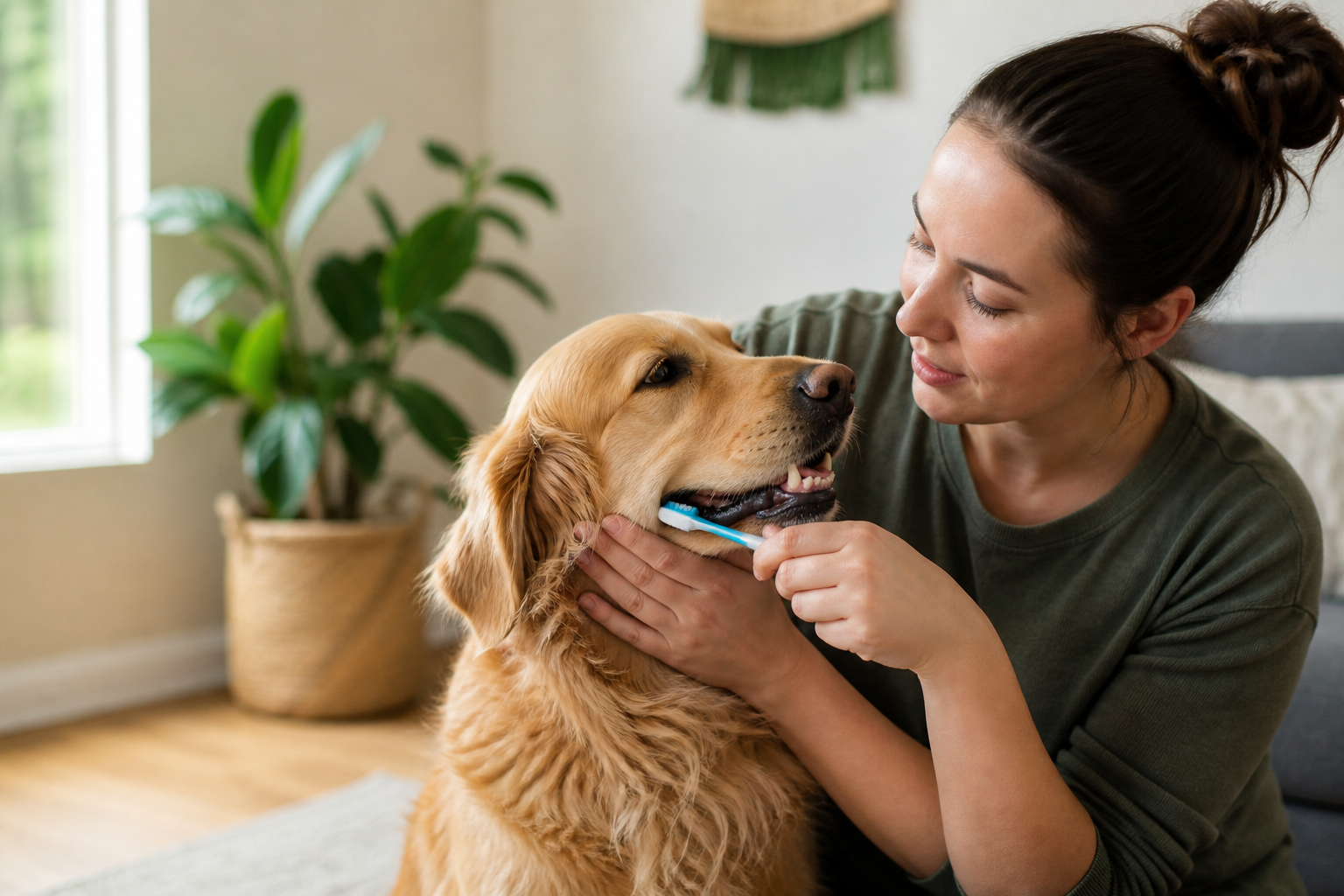
Brushing is the gold standard for cleaning a dog's teeth without sedation. It is the most effective way to remove plaque. If you start slowly and use the right tools, most dogs can learn to accept and even enjoy the process.
Choose the Right Supplies
Never use human toothpaste for your dog. Human formulas contain fluoride and often xylitol, both of which are toxic to dogs. Instead, look for an enzymatic pet toothpaste. These pastes contain enzymes that help break down food particles and bacteria even if you do not get a perfect scrubbing motion. They also come in flavors like poultry, beef, or peanut butter to make the experience more pleasant. You can find brushes, toothpaste, and oral-care kits in our dog dental care category.
For the brush, you have options. A finger brush is a small rubber cap that fits over your fingertip. This is great for beginners because it allows you to feel exactly where you are in the dog's mouth. A long-handled pet toothbrush is better for reaching the large molars in the back of the mouth once your dog is comfortable.
Step-by-Step Brushing Guide
Step 1: Introduction to the taste.
Let your dog lick a small amount of the flavored toothpaste off your finger. Do this for a few days without trying to touch their teeth. You want them to associate the tube of paste with a treat.
Step 2: Testing the touch.
Gently lift your dog's lip and rub your bare finger over their teeth and gums. Keep this very brief. Follow up immediately with praise or a small reward.
Step 3: Introducing the brush.
Put a small amount of paste on a finger brush or soft toothbrush. Let the dog lick the paste off the brush. Gently rub just the front teeth for a few seconds.
Step 4: Focusing on the gumline.
The most important area to clean is where the tooth meets the gum. Use small, circular motions at a 45-degree angle. You do not need to scrub the inside surfaces of the teeth, as the tongue does a decent job of keeping those areas clean.
Step 5: Increasing the duration.
Slowly work your way to the back of the mouth. The upper back molars are where most tartar tends to collect. Aim for about 30 to 60 seconds per side.
Key Takeaway: Consistency is more important than perfection. Brushing for 30 seconds every day is far more effective than a five-minute deep scrub once a month.
For additional guidance on introducing oral care, read these pet dental care tips.
Alternatives to Brushing
We know that not every dog is a candidate for brushing. Some dogs have mouth sensitivity, and some owners have physical limitations that make brushing difficult. If you cannot brush, there are other ways to manage plaque without sedation.
Dental Wipes
Dental wipes are textured pads pre-soaked with cleaning agents. You simply wrap the wipe around your finger and rub it over the surfaces of the teeth. These are an excellent middle ground for dogs who are afraid of the sensation of a brush. They provide the mechanical friction needed to remove plaque but feel more natural to the pet.
Water Additives and Oral Rinses
Water additives are liquid solutions you pour into your dog's drinking bowl. They contain ingredients that help kill oral bacteria and freshen breath. While they do not provide the mechanical scrubbing of a brush, they are a great "set it and forget it" tool for multi-pet households. You can explore our dental and breath care supplies for water additives and other oral-care products.
Dental Chews and Toys
Certain treats are specifically designed to clean teeth. Brands like Greenies or specialized dental chews from NutriSource are shaped to scrub the teeth as the dog bites down. Look for the VOHC (Veterinary Oral Health Council) seal on packaging. This seal indicates the product has been tested and proven to reduce plaque or tartar.
Textured rubber toys, such as those made by Kong, can also help. When a dog chews on a nubby rubber surface, it acts like a mild squeegee for the teeth. You can even smear a bit of enzymatic toothpaste inside a hollow toy to encourage more chewing.
For more ideas, browse our dental chews for dogs or read about the best dental chews for dogs.
The Role of Diet in Dental Health
What your dog eats every day has a significant impact on their oral hygiene. While some believe that all dry kibble cleans teeth, most standard kibble actually crumbles too quickly to provide much benefit. However, there are specific dental diets formulated to help.
Prescription Dental Diets
Specialty diets like Royal Canin Dental or Farmina Vet Life are designed with a specific fiber matrix. These kibbles are larger and do not shatter when the dog bites into them. Instead, the tooth sinks into the kibble, allowing the fibers to scrub the surface of the tooth. These are often prescription items because they are formulated to be a complete daily diet while treating a specific health need. We provide access to these specialized foods through our pharmacy.
Raw and Whole Food Considerations
Some owners find that adding raw meaty bones or specific whole foods can help. However, this comes with risks like broken teeth or bacterial contamination. If you choose to go this route, always supervise your dog and consult with a vet to ensure the bones are appropriate for your dog's size and chewing style.
Key Takeaway: A combination of mechanical cleaning (brushing or chews) and chemical cleaning (enzymatic paste or water additives) provides the best defense against dental disease.
Signs Your Dog Needs Professional Help
Even with the best home routine, some dogs are genetically predisposed to dental issues. Smaller breeds, in particular, often have crowded teeth that trap food and bacteria. You should monitor your dog's mouth regularly for signs that home care is no longer enough.
- Extreme bad breath: While "dog breath" is normal, a truly foul, rotting smell usually indicates infection.
- Bleeding gums: If you see blood on a chew toy or on the toothbrush, it is a sign of gingivitis.
- Difficulty eating: If your dog drops food, tilts their head while chewing, or stops eating hard kibble, they may have a painful tooth.
- Excessive drooling: New or unusual drooling can be a sign of oral pain or a foreign object stuck in the mouth.
- Lumps or bumps: Any swelling on the gums or under the eye should be checked by a professional immediately.
If you notice these symptoms, it is time to move beyond home cleaning. A vet visit is necessary to determine if there is an underlying infection that requires antibiotics or an extraction. Our pharmacy offers FDA-approved medications for oral infections and pain management when prescribed by your veterinarian through the Pet's Choice partnership.
For a closer look at warning signs, read how to recognize bad teeth in dogs.
How to Make Professional Anesthesia Safer
If your vet informs you that your dog needs a professional cleaning under sedation, it is natural to worry. Modern veterinary medicine has made anesthesia very safe. Before the procedure, your vet will likely perform blood work to ensure your dog’s liver and kidneys can process the medication.
During the cleaning, your dog is monitored by a technician who tracks their heart rate, oxygen levels, and blood pressure. The benefit of this thoroughness is that the vet can clean deep under the gums where 80 percent of dental disease occurs. They can also take X-rays to find problems that are invisible to the naked eye, such as root abscesses.
Bottom line: Home cleaning keeps the mouth healthy, but professional cleanings under anesthesia are necessary to treat established disease.
Conclusion
Cleaning your dog's teeth without sedation is a vital part of being a proactive pet owner. By using enzymatic toothpastes, dental wipes, and high-quality chews, you can significantly slow the buildup of tartar and keep your dog's breath fresh. We have seen firsthand how a consistent routine can improve a pet's quality of life and potentially save owners from expensive veterinary bills down the road.
Remember to start your routine slowly and use plenty of positive reinforcement. If you ever feel overwhelmed or notice signs of pain in your dog's mouth, your veterinarian is your best resource for a safe treatment plan. Whether you need a new soft-bristled brush or a prescription dental diet, BaxterBoo is here to support your journey toward a healthier smile for your pup.
Next Steps for Your Dog's Dental Health:
- Browse our selection of dental chews and toys to find a texture your dog loves.
- Check out our dental and breath care supplies for professional oral-care products.
- Sign up for our Autoship programme to ensure you never run out of toothpaste and dental treats.
FAQ
Can I use baking soda to clean my dog's teeth?
While baking soda is not toxic in small amounts, it has a very high alkaline content and a salty taste that most dogs dislike. It can also upset their stomach if swallowed in large quantities. It is much better to use a formulated enzymatic pet toothpaste that is designed to be swallowed and tastes like a treat.
How often should I clean my dog's teeth at home?
Ideally, you should brush your dog's teeth every single day. Plaque can begin to mineralize into tartar within 24 to 48 hours, so daily disruption is the goal. If daily brushing is not possible, aim for at least three times a week and supplement with dental chews or water additives on the off days.
Will dental chews alone keep my dog's teeth clean?
Dental chews are a helpful tool, but they are rarely enough to maintain perfect oral health on their own. They mostly clean the chewing surfaces of the teeth and may not reach the gumline where periodontal disease starts. Think of dental chews as a supplement to brushing rather than a replacement for it.
My dog's gums bleed when I brush. Should I stop?
Minor bleeding is often a sign of gingivitis, which means the gums are inflamed from bacteria. Usually, the solution is more frequent, gentle brushing to remove that bacteria. However, if the bleeding is heavy or your dog seems to be in significant pain, stop brushing and schedule a veterinary exam to check for more serious gum disease.






