
 Save 15% on your 1st Autoship learn more

 Email us
 Live Chat
 FAQs
FAQs





Introduction
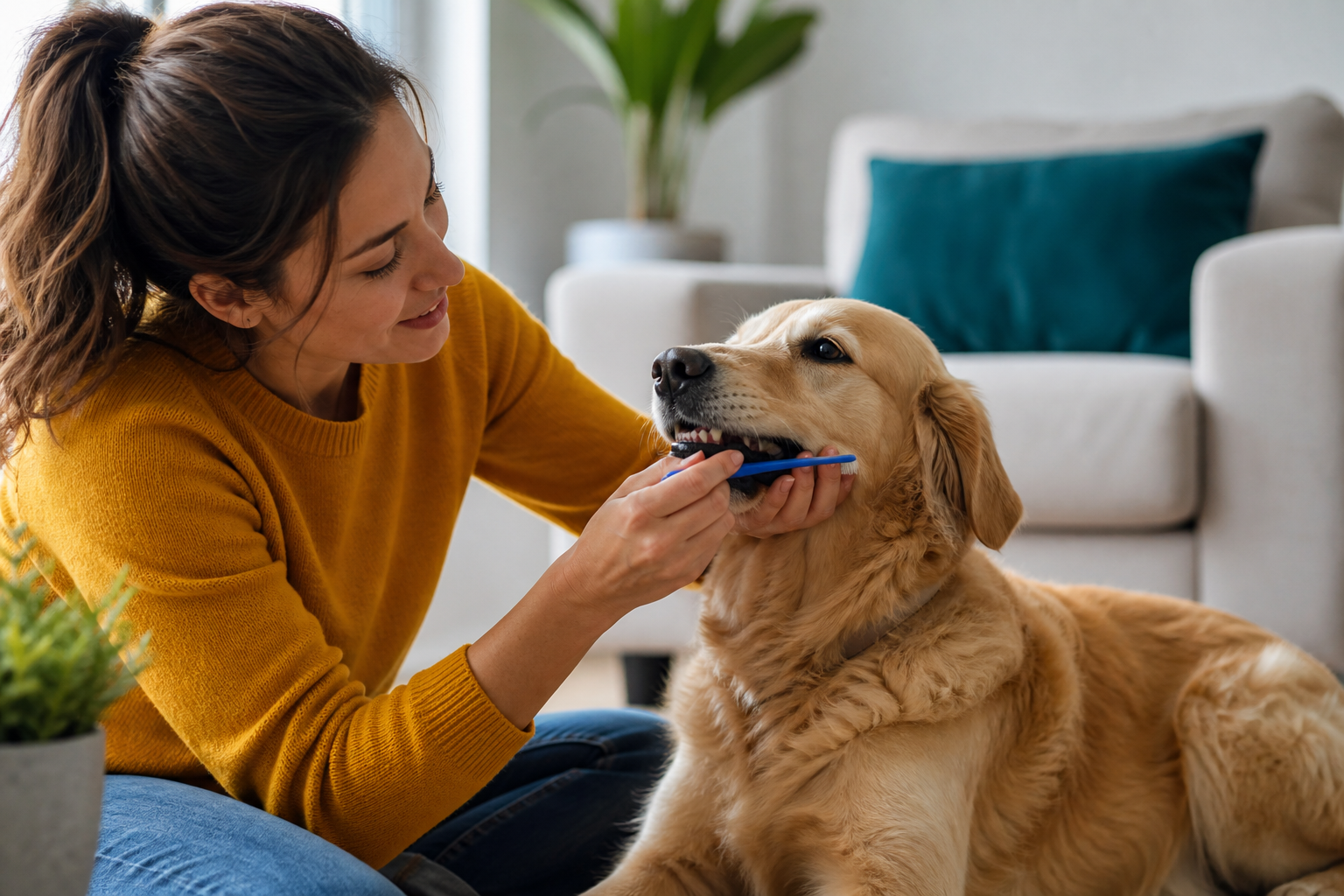
You are relaxing on the couch when your dog leans in for a friendly lick. Instead of a sweet greeting, you are met with a wave of breath that is hard to ignore. You might lift their lip and notice a yellow film or red gums. This is a common moment for many pet owners. It is the realization that your dog needs a dental routine. At BaxterBoo, we know that many owners feel intimidated by the idea of brushing a dog's teeth. It can feel like a chore that your pet will not enjoy. However, maintaining oral health at home is one of the best ways to ensure a long, happy life for your companion. This guide covers the tools you need and the exact steps to follow. We will show you how to make dental care a stress-free part of your daily routine.
Why Home Dental Care is Necessary
Brushing your dog's teeth is not just about freshening their breath. It is about preventing a biological process that can lead to systemic health issues. Every time your dog eats, a sticky film of bacteria called plaque forms on their teeth. If this plaque is not brushed away, it mixes with minerals in the saliva. Within about 48 hours, it hardens into tartar. You cannot brush tartar away at home. Only a professional veterinary cleaning can remove it.
When tartar builds up, it pushes under the gumline. This leads to inflammation known as gingivitis. If left alone, this can progress to periodontal disease. This condition can cause teeth to loosen and fall out. It also creates a path for bacteria to enter the bloodstream. Those bacteria can travel to the heart, liver, and kidneys. Regular home cleaning keeps plaque under control and protects these vital organs.
Quick Answer: Clean your dog's teeth at home using a dog-specific toothbrush and enzymatic toothpaste. Use gentle circular motions on the outer surfaces of the teeth. Aim for daily brushing or at least three times per week to prevent plaque from hardening into tartar.
Essential Supplies for Your Home Dental Kit
Before you begin, you need the right tools. Using human dental products can be dangerous for your dog. You should always select items designed specifically for canine anatomy and safety. You can find suitable options in our dog dental health collection.
Choosing the Right Toothbrush
There are several types of brushes available. The right one depends on your dog's size and their comfort level.
- Standard Dog Toothbrushes: these look like human brushes but have angled heads. The angle helps you reach the back molars more easily.
- Finger Brushes: these are small rubber or silicone caps that fit over your pointer finger. They provide more control and are often less scary for small dogs or puppies.
- Dual-Ended Brushes: these have a large brush head on one end and a tiny one on the other. They are great for households with different-sized dogs.
- Gauze or Dental Wipes: if your dog absolutely refuses a brush, you can start by wrapping medical gauze around your finger.
The Importance of Dog-Safe Toothpaste
Never use human toothpaste on your pet. Our toothpaste often contains fluoride and foaming agents like sodium lauryl sulfate. These are meant to be spit out, not swallowed. Many human brands also contain xylitol. This sweetener is highly toxic to dogs and can be fatal.
Dog toothpaste is formulated to be swallowed. It is also flavored to appeal to them. You will find options like poultry, beef, or peanut butter. Most dog pastes are enzymatic. This means they contain enzymes that help break down plaque even after you stop brushing. A product such as Petrodex Advanced Dental Care Kit Dog Toothpaste can be a practical starting point.
Getting Your Dog Ready for Brushing
You cannot expect your dog to sit still for a full cleaning on the first day. You must build trust and positive associations. This process might take a few days or even a couple of weeks. For additional guidance, review these pet dental care tips.
Step 1: Get them used to your touch. / Gently lift your dog's lips and touch their teeth with your finger. Do this for a few seconds and then give them a high-value treat.
Step 2: Introduce the flavor. / Put a small dab of the dog toothpaste on your finger. Let your dog lick it off. Do this for several days until they get excited when they see the tube.
Step 3: Combine touch and taste. / Put toothpaste on your finger and rub it gently over their front teeth. Keep the session very short and follow up with praise.
Step 4: Introduce the tool. / Let your dog sniff and lick the toothbrush. Put some paste on the bristles and let them lick it off without moving the brush.
Key Takeaway: Patience is the most important tool in your dental kit. Moving slowly during the introduction phase prevents your dog from becoming fearful of the brush.
How to Clean Your Dog's Teeth: Step-by-Step
Once your dog is comfortable with the tools, you can move on to the actual cleaning. Try to pick a time when your dog is calm. A post-walk session is often easier than a high-energy morning session.
Step 1: Position yourself correctly. / Do not stand over your dog or hold them down. This can feel threatening. Sit or kneel beside them.
Step 2: Start with the front teeth. / Lift the upper lip. Gently brush the large canine teeth and the small incisors in the front. Use small, circular motions.
Step 3: Move to the back molars. / Slide the brush along the cheek to reach the back teeth. This is where most plaque and tartar build up. You do not need to pry the mouth open. The tongue usually keeps the inside surfaces of the teeth clean. Focus on the outside surfaces.
Step 4: Reward and finish. / Keep the first few sessions to under a minute. Even if you only get one side done, stop while the dog is still being good. Give them a treat or play a game immediately after. You can also compare your routine with this guide to pet dental care.
Vet Tip: If you notice bleeding gums during brushing, do not panic. Occasional light bleeding can happen with early gingivitis. However, if the bleeding is heavy or the gums look very red and swollen, stop brushing and consult your veterinarian for an oral exam.
Handling a Reluctant Dog
Some dogs are more resistant to having their mouths handled. If your dog pulls away or tries to hide, do not force the issue. Forcing a dog can lead to a bite or a permanent fear of the routine.
If your dog is very fussy, try using a finger brush. Many dogs find the sensation of a human finger more natural than a plastic stick. You can also try changing the flavor of the toothpaste. Some dogs might hate poultry but love beef.
Keep your sessions extremely short. You might only brush one tooth today. That is okay. Consistency is more important than a total cleaning in one go. If you brush one tooth a day, you will eventually cover the whole mouth.
Effective Alternatives to Brushing
Brushing is the best way to clean teeth, but it is not the only way. If you have a busy schedule or a very difficult dog, you can use other tools to support their health. These methods work well when used alongside occasional brushing.
Dental Chews and Treats
Many treats are designed to scrape away plaque as the dog chews. Look for products that have the Veterinary Oral Health Council (VOHC) seal. This seal means the product has been tested and proven to reduce plaque or tartar. Brands like Greenies are popular for a reason. They have a texture that allows the tooth to sink in, cleaning all the way to the gumline. For more ideas, browse our dog dental treats.
Water Additives
A water additive is like a mouthwash for your dog. You simply add a capful to their fresh water bowl every day. These additives contain ingredients that kill the bacteria responsible for plaque and bad breath. This is an effortless way to improve oral hygiene. One available option is OxyFresh Pet Dental Water Additive.
Dental Toys
Certain rubber toys are designed with nubs and ridges. As your dog chews on these, the rubber massages the gums and rubs against the tooth surfaces. Kong toys and similar durable rubber options are excellent for this. They encourage the natural chewing instinct while providing a mild cleaning effect.
Dental Wipes
If your dog will not tolerate a brush, a dental wipe is a great middle ground. These are pre-moistened pads that you wrap around your finger. They allow you to manually wipe away the soft plaque before it hardens. They are also helpful for freshening breath quickly.
Key Takeaway: While brushing is the gold standard, using a combination of chews, toys, and water additives provides a strong defense against dental disease.
The Impact of Diet on Dental Health
What your dog eats plays a role in their oral health. There is a common belief that all dry kibble cleans teeth. This is not always true. Most standard kibble is small and brittle. It shatters as soon as the dog bites it. This provides very little cleaning action.
Specific dental diets are different. The kibbles are larger and have a fibrous structure. Instead of shattering, the tooth sinks into the kibble. This creates a mechanical scrubbing action.
For dogs with significant dental concerns, a veterinarian might recommend a prescription dental diet. At BaxterBoo, our pharmacy offers a range of FDA-approved medications and prescription foods through our partnership with Pet's Choice. This includes brands like Farmina Vet Life, which offers formulas designed to manage various health needs. If your vet prescribes a specialized dental diet, you can easily manage those orders through us.
Identifying Signs of Dental Disease
Even with the best home care, problems can arise. You should check your dog's mouth once a week for signs of trouble. If you notice any of the following, a trip to the vet is necessary.
- Persistent Bad Breath: all dogs have a certain scent, but it should not be foul or rotten.
- Discolored Teeth: look for brown or yellow deposits near the gumline.
- Red or Swollen Gums: healthy gums should be a light, bubblegum pink.
- Difficulty Eating: if your dog drops food or avoids hard kibble, they may be in pain.
- Excessive Drooling: sudden changes in drooling can indicate an oral infection or a broken tooth.
- Loose or Missing Teeth: adult dogs should not lose teeth. If one is loose, there is likely underlying bone loss.
Bottom line: Home care is preventive, but professional veterinary intervention is required to treat existing dental disease or infections.
Professional Cleaning vs. Home Care
It is helpful to understand how home care and professional cleanings work together. Think of home brushing like your own daily brushing and flossing. It keeps things clean day to day. A professional cleaning at the vet is like your six-month dental checkup.
A veterinary cleaning is performed under anesthesia. This is the only way a vet can safely scale the tartar from beneath the gumline. It also allows them to take dental X-rays. These X-rays are vital because most dental disease happens below the surface where you cannot see it.
The more work you do at home, the less often your dog will need these professional cleanings. This saves you money and reduces the number of times your pet needs anesthesia.
Establishing a Long-Term Routine
Success with dental care comes down to making it a habit. Find a trigger that reminds you to brush. For example, you could brush your dog's teeth right after you brush your own at night. Or, you could make it the very first thing you do when you get home from work.
Keep your supplies in a visible spot. If the toothbrush and paste are hidden in a drawer, you are more likely to forget them. Having them on the counter or next to the treat jar keeps the routine top of mind.
If you have a puppy, start immediately. Puppies are much more accepting of new sensations. Even though they will lose their baby teeth, the habit you build now will last a lifetime. For senior dogs, dental care is even more critical. Older dogs often have weaker immune systems. Preventing oral infections helps them stay healthy in their golden years.
Using Rewards to Your Advantage
We want our pets to enjoy their care. Using the MVP Rewards program at BaxterBoo is a great way to save on the dental supplies you need. You can earn points on every purchase of toothbrushes, pastes, and dental treats. This makes it easier to keep your kit fully stocked.
If you use dental treats or specific foods daily, consider our Autoship programme. This ensures you never run out of supplies. It also provides extra savings on your first order. Keeping the routine consistent is much easier when the tools arrive at your door on a schedule.
Bottom line: A consistent dental routine combined with high-quality supplies is the best investment you can make in your dog's long-term health.
FAQ
How often should I actually brush my dog's teeth?
Ideally, you should brush your dog's teeth every single day. Plaque can begin to harden into tartar within 48 hours. If you cannot manage a daily session, aim for at least three times per week. This frequency is usually enough to keep major tartar buildup at bay for most dogs.
Can I use baking soda to clean my dog's teeth?
It is best to avoid using baking soda as a primary cleaner. While it is not as toxic as human toothpaste, it has a high alkaline content. If your dog swallows too much of it, it can upset their stomach and throw off their electrolyte balance. Stick to enzymatic pet toothpastes that are designed to be safely ingested.
What if my dog's gums bleed when I brush?
Light bleeding can be a sign of early gingivitis. It often happens when you first start a brushing routine after a long break. If the bleeding is very minor, continue to brush gently. If the bleeding is heavy, or if the gums look very red and angry, you should stop and see a vet. This could indicate a more serious infection or advanced periodontal disease.
Are dental chews enough to replace brushing?
While dental chews are helpful, they are not a complete replacement for brushing. Chews usually only clean the tips of the teeth and the surfaces used for grinding. They often miss the area right at the gumline where bacteria hide. For the best results, use dental chews as a supplement to a regular brushing routine.






