
 Save 15% on your 1st Autoship learn more

 Email us
 Live Chat
 FAQs
FAQs





Introduction
Many dog owners notice that familiar, unpleasant scent when their dog leans in for a greeting. While bad breath is often dismissed as just a part of owning a pet, it usually points to a buildup of bacteria and plaque. Brushing a dog’s teeth can be a challenge, especially if they are not used to the sensation of a toothbrush. This is why many people are looking for natural, palatable alternatives to keep the mouth fresh and healthy.
At BaxterBoo, we know that dental care is one of the most overlooked aspects of pet wellness. We see many owners looking for ways to make oral hygiene less stressful for their pets. This post covers the specific benefits of using coconut oil for dental health, the best methods for application, and how to safely integrate it into a daily routine. Using coconut oil is a practical way to support healthy gums and fresher breath without a struggle.
Why Coconut Oil Works for Canine Dental Health
Coconut oil is more than just a kitchen staple or a skin moisturizer. It contains a high concentration of lauric acid, which is a medium chain fatty acid. This specific fat has natural antimicrobial, antifungal, and antibacterial properties. When applied to the teeth and gums, it helps reduce the population of harmful bacteria that live in the mouth.
These bacteria are the primary cause of plaque and tartar. As they feed on food particles, they produce acids and films that harden over time. By introducing lauric acid, you are essentially making the mouth a less hospitable environment for these microbes. This helps slow down the formation of plaque and can help calm mild gum irritation.
Quick Answer: You can clean your dog's teeth with coconut oil by applying a small amount to a soft toothbrush or your finger and gently rubbing it along the gumline. The lauric acid in the oil helps fight bacteria that cause plaque and bad breath.
Choosing the Best Coconut Oil
Not all coconut oil is created equal. When you are shopping for your pet, you should look for specific labels to ensure the oil is effective and safe. Refined oils are often processed with chemicals or high heat, which can destroy the beneficial compounds like lauric acid.
Look for virgin or extra virgin coconut oil that is unrefined and cold pressed. This ensures that the natural properties remain intact. Organic options are also preferable to avoid any pesticide residue. The oil should be solid at room temperature and have a mild, pleasant coconut scent. If the oil smells sour or has no scent at all, it may be old or overly processed.
Step-by-Step Guide to Cleaning Teeth With Coconut Oil
Introducing a new routine requires patience. If your dog is not used to having their mouth handled, you should move slowly. The goal is to make this a positive experience so they look forward to the taste of the oil.
Step 1: Let your dog taste the oil.
Put a tiny amount on your finger and let them lick it off. Most dogs love the taste of coconut oil, which makes it much easier to use than flavored toothpastes.
Step 2: Get them used to mouth handling.
Gently lift your dog's lip and touch their teeth and gums with your finger. Reward them with praise. Do this for a few days before you even try to scrub or brush.
Step 3: Apply the oil to the teeth.
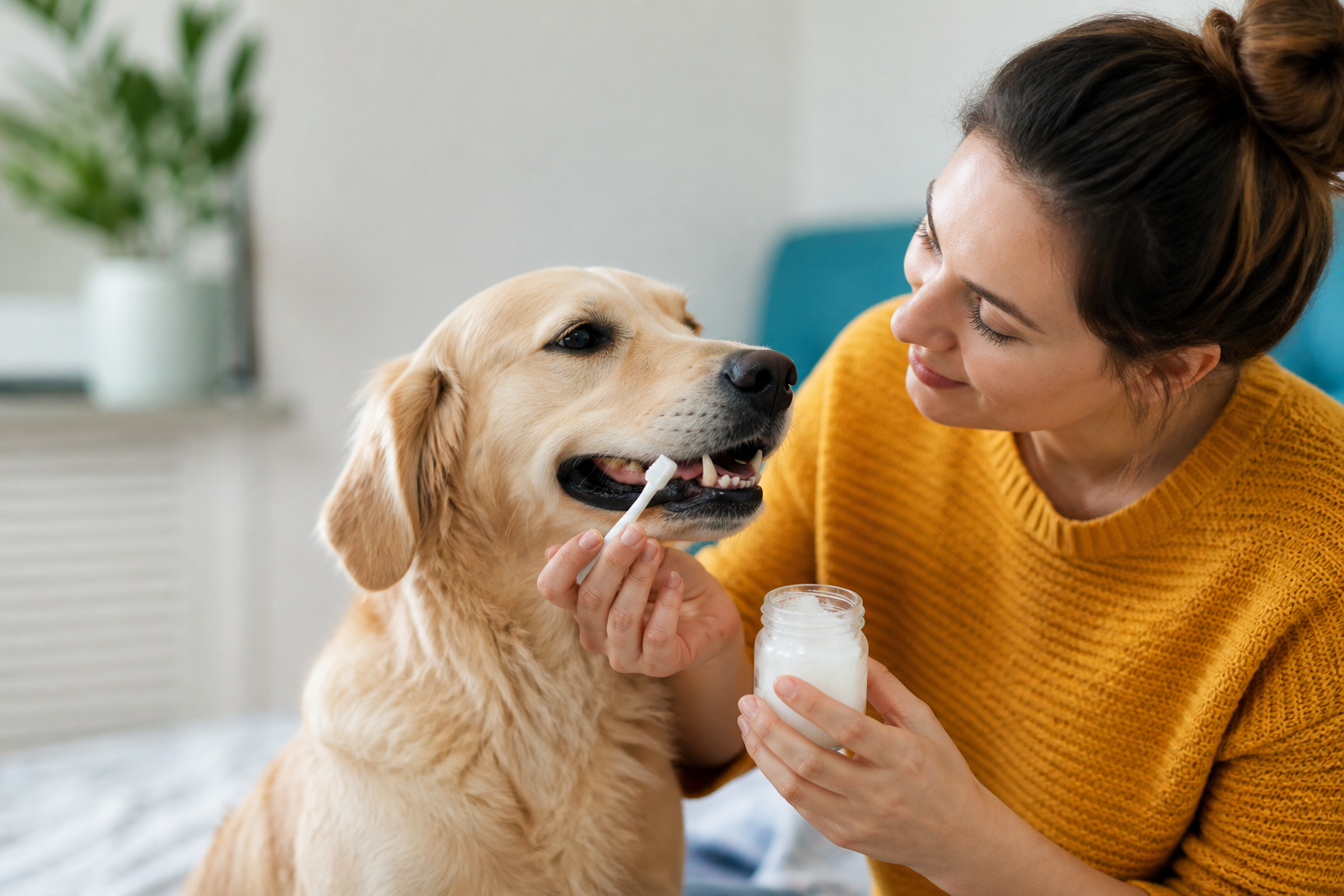
Use a small amount of oil on a finger brush or a soft-bristle toothbrush made for dogs. If they resist the brush, a clean piece of gauze wrapped around your finger works well too.
Step 4: Focus on the gumline.
Gently rub the oil in a circular motion along the area where the teeth meet the gums. This is where bacteria tend to hide. You do not need to rinse the oil away, as it is safe for them to swallow in small amounts.
Key Takeaway: Coconut oil works best as a mechanical and chemical cleaner when applied directly to the gumline with a brush or gauze.
Alternative Method: Adding Coconut Oil to Food
Some dogs are very protective of their mouths and will not tolerate any form of brushing. In these cases, you can still gain some benefits by adding the oil to their meals. While it will not provide the same mechanical scrubbing action as a brush, it can still help change the environment of the mouth.
When a dog eats food mixed with coconut oil, the oil coats the teeth and tongue. This helps to inhibit bacterial growth throughout the day. It also provides systemic benefits, such as supporting a healthy coat and skin. However, since this method skips the scrubbing, it is best paired with dental treats and chews that help scrape the teeth.
Using Toys to Support Dental Cleaning
You can use the natural chewing instinct of your dog to help clean their teeth. Many pet owners apply a thin layer of coconut oil to a rubber toy, like a Kong, to encourage prolonged chewing. As the dog licks and chews to get the oil, the texture of the toy helps rub away soft plaque.
This is an excellent way to reach the back molars, which are often the hardest teeth to brush manually. We carry a wide variety of textured toys at BaxterBoo that are designed specifically for this purpose. Combining the antimicrobial power of the oil with the mechanical action of a durable toy creates a multi-layered approach to hygiene.
Safety and Dosing Considerations
While coconut oil is generally safe, it is a fat and contains calories. It is important to start with small amounts to avoid digestive upset. If a dog gets too much fat too quickly, they may experience loose stools or lethargy.
For a small dog, start with about a quarter teaspoon per day. Large dogs can usually handle a full teaspoon. If your dog has a history of pancreatitis or is on a strict low fat diet, you should be very cautious. In these cases, the extra fat could trigger a flare-up of their condition.
Vet Tip: Always consult your veterinarian before adding supplements like coconut oil to your dog's diet, especially if they have underlying health issues like obesity, pancreatitis, or metabolic disorders. They can provide a specific dosage that fits your dog's weight and health history.
The Role of the BaxterBoo Pharmacy
Sometimes, a natural approach like coconut oil is not enough to manage advanced dental issues. If you notice your dog has bleeding gums, loose teeth, or a total refusal to eat, they likely have periodontal disease. This requires a professional veterinary cleaning and potentially prescription care.
Our pet pharmacy provides a range of FDA-approved medications and prescription diets through our partnership with Pet's Choice. For dogs with chronic dental infections or severe inflammation, a vet might prescribe specific antibiotics or medicated oral rinses. We also carry prescription dental diets from brands like Royal Canin and Farmina Vet Life. These foods are specifically shaped to scrub teeth as the dog eats and are only available with a valid prescription from your veterinarian.
Transitioning From Treats to Real Care
It is easy to rely on dental treats like Greenies, but these should be one part of a larger plan. Treats are excellent for daily maintenance, but they often contain calories and ingredients that some dogs may be sensitive to. Using coconut oil allows you to control the ingredients completely.
If you are using treats, look for those that have the Veterinary Oral Health Council (VOHC) seal. This ensures the product has been tested for its ability to reduce plaque and tartar. Using these treats in the morning and doing a coconut oil brushing in the evening is a great way to stay consistent. You can explore our selection of Greenies products for additional dental-care options.
Managing Bad Breath and Oral Bacteria
Bad breath is caused by volatile sulfur compounds produced by bacteria. When you use coconut oil, you are targeting the source of these compounds. However, bad breath can also be a sign of internal issues, such as kidney problems or digestive distress.
If your dog's breath smells like ammonia, fruit, or something sweet, it is time for a vet visit. These scents can indicate issues that no amount of teeth cleaning will fix. For standard "dog breath," coconut oil is usually very effective at neutralizing the odor within a week or two of regular use. For additional guidance, read about warning signs of dental disease in dogs.
Key Takeaway: Consistent application is more important than the amount of oil used. A small amount used daily is better than a large amount used once a month.
Building a Long-Term Dental Routine
The best way to ensure your dog has a healthy mouth into their senior years is to stack different methods of care. No single product is a silver bullet for dental health. A complete routine should look something like this:
- Daily mechanical cleaning (brushing with coconut oil or gauze)
- High-quality nutrition from trusted brands like Acana or Orijen
- Regular use of dental toys to encourage chewing
- Annual or bi-annual veterinary check-ups to monitor for decay
- Prescription support from our pharmacy if chronic issues arise
By combining these steps, you reduce the likelihood of your dog needing expensive and stressful dental surgeries later in life. It also keeps them more comfortable, as dental pain can often lead to behavioral changes like irritability or hiding.
Signs Your Dog Needs Professional Dental Work
Coconut oil is a preventative measure, not a cure for existing decay. You should regularly check your dog's mouth for "red flags" that indicate a need for professional intervention.
Look for:
- Dark brown or yellow crust near the gumline (tartar)
- Red, swollen, or bleeding gums
- A persistent foul odor that does not improve with cleaning
- Dropping food while eating or chewing on only one side of the mouth
- Pawing at the face or mouth
If you see these signs, it is important to see a vet. They may need to perform a cleaning under anesthesia to reach the tartar beneath the gumline that a toothbrush cannot touch. After a professional cleaning, using coconut oil is the perfect way to maintain those results and prevent the tartar from returning. You can also browse our dog dental care category for at-home care products.
Dietary Habits and Their Impact on Teeth
What your dog eats every day has a massive impact on their oral environment. Diets high in simple carbohydrates and sugars can feed the bacteria in the mouth, leading to faster plaque buildup. This is why we focus on carrying brands at BaxterBoo that use whole ingredients and high protein levels.
For example, brands like Stella and Chewy's or The Honest Kitchen offer options that are minimally processed. Some owners find that switching to a raw or freeze-dried diet helps keep teeth cleaner because these foods don't leave the same starchy residue on the teeth that some kibbles do. Regardless of the food you choose, adding coconut oil can act as a final layer of protection.
Bottom line: Cleaning your dog's teeth with coconut oil is a safe, natural, and effective way to manage oral bacteria and improve breath when used as part of a broader dental care plan.
FAQ
Is coconut oil safe for all dogs to eat?
Most dogs can safely consume coconut oil in small amounts, but those with a history of pancreatitis or obesity should use it cautiously. Because it is high in saturated fat, excessive amounts can cause digestive upset or weight gain. Always start with a very small dose and watch for any changes in your dog's stool or energy levels.
Can coconut oil replace regular dog toothpaste?
Coconut oil is an excellent natural alternative to commercial dog toothpaste because it contains antimicrobial lauric acid. However, it does not contain some of the enzymatic cleaners found in specialized pet pastes. For most dogs, it is an effective substitute, especially if they prefer the taste of coconut over artificial flavors.
How often should I brush my dog's teeth with coconut oil?
For the best results, you should aim to brush your dog's teeth or rub their gums with coconut oil daily. If your schedule is busy, even three times a week can make a significant difference in reducing plaque buildup. Consistency is the key to preventing the bacteria from hardening into tartar.
Will coconut oil remove existing tartar from my dog's teeth?
No, coconut oil cannot remove tartar that has already hardened onto the teeth. Tartar, or calculus, is a mineralized deposit that usually requires professional scaling by a veterinarian. Coconut oil is best used as a preventative measure to stop soft plaque from turning into hard tartar.






