
 Save 15% on your 1st Autoship learn more

 Email us
 Live Chat
 FAQs
FAQs





Introduction
You lean in for a happy morning nuzzle only to be met with a cloud of "dog breath" that makes you recoil. It is a common moment for many pet owners. This unpleasant odor is often the first sign that bacteria are taking over your dog’s mouth. At BaxterBoo, we know that keeping those pearly whites clean is about more than just fresh breath. It is a vital part of your dog’s overall health and longevity. This guide covers the most effective ways to remove plaque before it hardens, the tools you need for a successful routine, and when it is time to call in the professionals. By understanding the difference between simple plaque and stubborn tartar, you can build a home care plan that keeps your dog wagging and healthy.
Quick Answer: You can clean plaque from dog teeth by brushing daily with dog-safe enzymatic toothpaste and using mechanical aids like dental wipes or chews. Plaque is a soft film that is easy to remove, but once it mineralizes into hard tartar, only a professional veterinary cleaning can safely get it off.
Understanding the Difference Between Plaque and Tartar
To keep your dog’s mouth healthy, you must first understand what you are fighting. Plaque is a soft and sticky film of bacteria that begins to form on the teeth just hours after a meal. It is colorless and hard to see, but it is the root of almost all dental issues. Because it is soft, you can easily rub it away with a brush or a cloth.
If plaque stays on the tooth for more than 24 to 48 hours, it begins to mix with minerals in your dog’s saliva. This process causes the plaque to harden into tartar, which is also known as calculus. Tartar is usually yellow or brown and feels like concrete on the tooth surface. It provides a rough area where even more bacteria can grow.
Once plaque becomes tartar, home brushing will no longer remove it. Tartar bonds strongly to the tooth enamel and often creeps under the gumline. This leads to inflammation, recessed gums, and eventually tooth loss. This is why the focus of home care is always on the daily removal of soft plaque.
Key Takeaway: Plaque is a soft bacterial film you can remove at home, while tartar is a hard mineral deposit that requires professional veterinary tools for removal.
The Gold Standard: Daily Brushing
Brushing is the single most effective way to clean plaque from dog teeth. The physical scrubbing motion breaks up the bacterial film before it can mineralize. While it may seem daunting at first, most dogs can learn to accept and even enjoy the process if you move slowly.
You must never use human toothpaste for your dog. Our toothpaste often contains xylitol, which is a sweetener that is highly toxic to dogs. Human paste also contains foaming agents that can upset a dog’s stomach when swallowed. Instead, use an enzymatic dog toothpaste. These are designed to be swallowed and come in flavors like poultry, beef, or peanut butter.
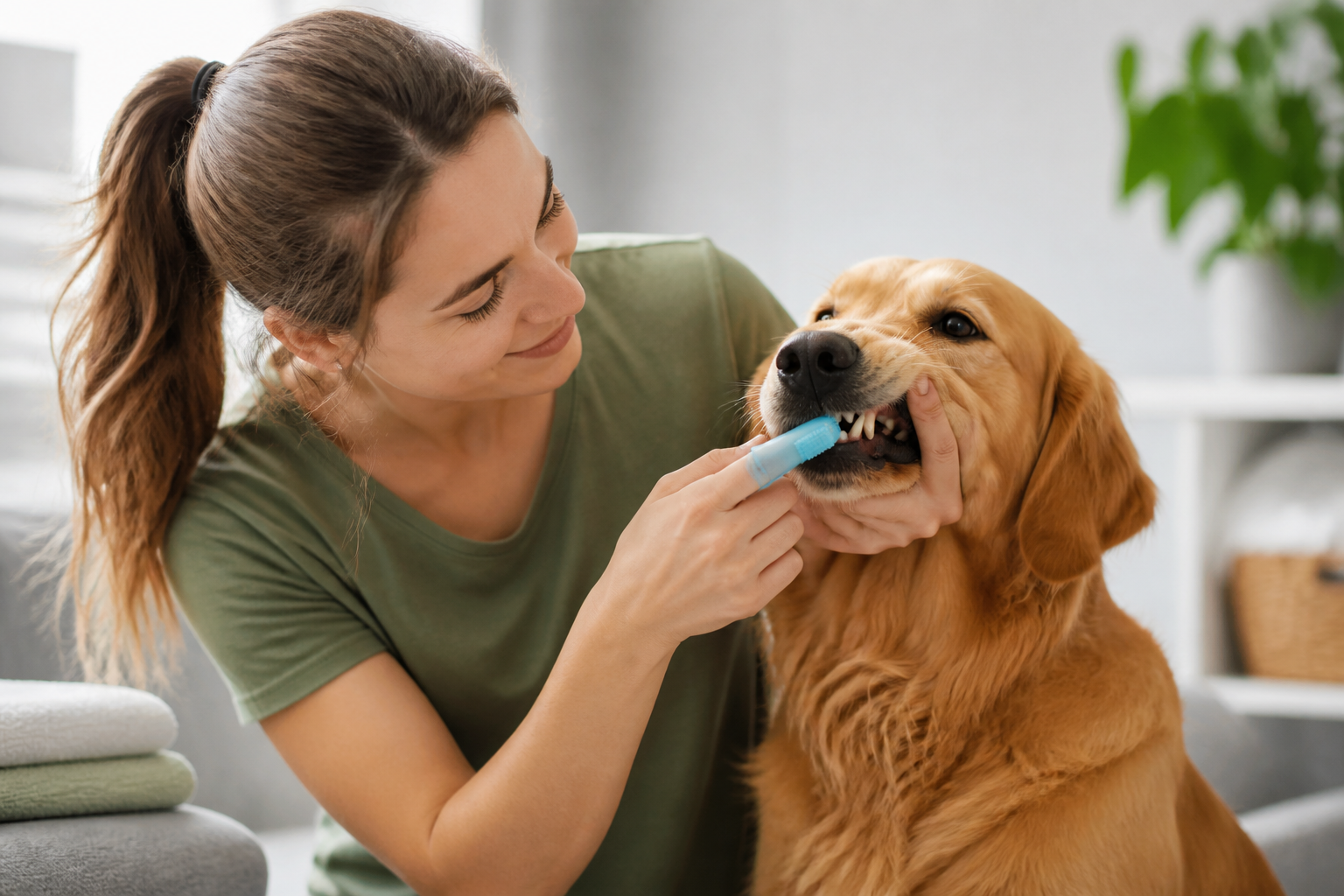
The enzymes in these pastes continue to work even after you stop brushing. They help break down the protein pellicle that allows plaque to stick to the teeth. For the brush, you can use a soft-bristled pet toothbrush or a silicone finger brush. Finger brushes are often better for beginners because they give you more control and feel less invasive to the dog.
How to Start a Brushing Routine
- Let your dog lick a small amount of flavored toothpaste off your finger to create a positive association.
- Gently rub your finger along their gums and teeth without a brush to get them used to the sensation.
- Introduce the toothbrush by letting them lick the paste off the bristles.
- Lift the lip and use gentle circular motions on the outside surfaces of the teeth, focusing on the gumline.
- Reward your dog with praise or a small healthy treat immediately after you finish.
Vet Tip: If your dog’s gums bleed significantly or they pull away in pain during brushing, stop immediately and consult your veterinarian. This can be a sign of advanced periodontal disease that needs medical attention before you continue home care.
Effective Alternatives to Brushing
Some dogs simply will not tolerate a toothbrush in their mouth. If you are struggling with a wiggly puppy or a skeptical rescue dog, you can still make progress with other mechanical tools. Dental wipes and oral care products are a fantastic middle ground. These are textured pads pre-soaked in cleaning solutions that you wrap around your finger.
Wipes allow you to physically rub the plaque away without the bulk of a brush. They are especially useful for cleaning the large canine teeth and the flat surfaces of the molars. While they do not reach into the tiny crevices as well as bristles do, they are much better than doing nothing at all.
Oral gels and foams are another option. These are often "no-brush" formulas that you apply directly to the gumline. The dog’s tongue moves the gel around the mouth as they lick. These products usually contain enzymes or silver to kill bacteria and freshen breath. They work well as a supplement to other cleaning methods rather than a total replacement.
Bottom line: While brushing is best, using dental wipes or oral gels provides a helpful secondary defense against plaque buildup.
The Role of Dental Chews and Toys
Dogs have a natural urge to chew, and we can use this to our advantage. Certain dental chews are designed with a specific texture that acts like a squeegee on the teeth. As the dog bites down, the chew scrapes along the tooth surface to dislodge soft plaque.
When choosing a chew, look for the VOHC (Veterinary Oral Health Council) seal of approval. This seal means the product has been scientifically tested and proven to reduce plaque or tartar by a certain percentage. We carry many trusted brands that focus on dental health, such as Greenies dental chews and Oravet.
Chew toys can also be helpful. Rubber toys with nubs or ridges help stimulate the gums and provide mild abrasive action. However, you must be careful about the hardness of the toys. Hard plastic bones, elk antlers, or real animal bones can actually cause teeth to fracture. A good rule of thumb is the "knee cap test." If it would hurt to hit your knee with the toy, it is likely too hard for your dog’s teeth.
- Supervise all chewing: Always watch your dog when they have a dental chew to prevent choking or gulping of large pieces.
- Watch the calories: Dental chews have calories. If you give one every day, you may need to slightly reduce their meal portions to prevent weight gain.
- Size matters: Ensure the chew is appropriate for your dog’s weight. A chew that is too small can be a choking hazard, while one that is too large may be too difficult to chew effectively.
For additional ideas, review these dental chews for dogs and choose an option that suits your dog’s size and chewing style.
Water Additives and Their Benefits
Water additives are essentially mouthwash for dogs that you pour into their water bowl. These are flavorless or lightly minted liquids that contain ingredients to break down the biofilm in the mouth. They are the easiest way to manage plaque for owners with very busy schedules or difficult pets.
Most additives work by changing the chemistry of the saliva or by using safe antibacterial agents like chlorhexidine. They help reduce the total number of bacteria in the mouth, which slows down the rate at which plaque forms. While they do not provide the mechanical scrubbing action that a brush does, they are an excellent daily "maintenance" step.
We recommend using water additives alongside at least one mechanical method, like a weekly brush or a daily chew. This multi-pronged approach covers all the bases. It kills the bacteria and physically removes the debris they leave behind.
Key Takeaway: Water additives are a low-effort way to reduce oral bacteria, but they work best when combined with mechanical cleaning like brushing.
Nutrition and Dental Specific Diets
What your dog eats affects how fast plaque builds up. Standard kibble is often thought to clean teeth, but many dogs simply swallow the small pieces whole. When this happens, there is no cleaning benefit. True dental diets are different.
Prescription dental foods, such as those from Royal Canin or Farmina Vet Life, have much larger kibble sizes. These pieces are designed not to shatter immediately when bitten. Instead, the tooth sinks into the kibble, and the fibers inside the food scrub the tooth surface. Some of these diets also contain "polyphosphates," which are minerals that bind to calcium in the saliva to prevent it from turning plaque into tartar.
If your dog is prone to rapid tartar buildup, your vet might suggest a prescription diet. These are available through our pharmacy for dogs with a valid prescription from your veterinarian.
Vet Tip: Avoid feeding a strictly wet food diet if your dog has dental issues. Wet food sticks to the teeth and gumline much more easily than dry food, providing a feast for plaque-forming bacteria.
When Professional Intervention is Required
No matter how diligent you are at home, most dogs will eventually need a professional cleaning. This is especially true for small breeds like Yorkies or Chihuahuas, whose teeth are crowded together, making them "plaque magnets."
A professional veterinary dental cleaning is performed under general anesthesia. This is the only way to safely and thoroughly clean beneath the gumline, where the most damaging bacteria live. During the procedure, the vet uses an ultrasonic scaler to vibrate tartar off the teeth. They also polish the enamel to smooth out microscopic scratches, making it harder for plaque to stick in the future.
If you notice any of the following, it is time to schedule a vet visit:
- Persistent bad breath that does not improve with brushing.
- Visible brown or yellow buildup on the teeth.
- Gums that look red, swollen, or bleed easily.
- Loose or broken teeth.
- Difficulty eating or dropping food while chewing.
For more guidance on warning signs, read what to do when your dog has bad teeth.
Using the BaxterBoo Pharmacy for Dental Health
Managing your dog’s oral health often involves more than just a toothbrush. For dogs with chronic gingivitis or advanced dental disease, veterinarians may prescribe specific medications or therapeutic diets. Our pharmacy at BaxterBoo, operated through Pet's Choice, provides a convenient way to get these essential items delivered to your door.
We carry FDA-approved medications that your vet may prescribe after a dental procedure, such as antibiotics or pain relief. We also stock a wide range of prescription dental diets designed to slow the progression of periodontal disease. By integrating your pharmacy needs with your regular shopping, you can keep all your pet’s health records and supplies in one place.
Using our Autoship program for these items ensures you never run out of the food or preventatives your dog needs. Plus, you will save on your first order and earn MVP Rewards on every purchase. It is a practical way to manage the long-term costs of your dog’s dental care.
A Sample Weekly Dental Routine
Consistency is more important than perfection. You do not need to spend an hour on your dog’s teeth every day. A few minutes of focused care can add years to their life.
- Monday through Friday: Quick 2-minute brush with enzymatic toothpaste.
- Tuesday and Thursday: Give one VOHC-approved dental chew after the evening meal.
- Daily: Add a dental water additive to their fresh water bowl.
- Sunday: Do a "mouth check." Lift the lips to look for any new redness, broken teeth, or heavy tartar buildup.
Bottom line: A consistent daily routine is the most effective way to prevent plaque from hardening into tartar and causing permanent damage.
Common Obstacles and How to Overcome Them
Many owners give up on dental care because their dog makes it difficult. If your dog hates the brush, try changing the flavor of the paste. Some dogs hate mint but will do anything for a poultry-flavored gel. You can also try different times of day. A tired dog after a long walk is much more likely to sit still for a cleaning than a dog that is ready to play.
If you have a senior dog who already has significant tartar, do not try to "scrape" it off yourself with metal tools. This can scratch the enamel and cause deep infections. Start by visiting the vet for a professional cleaning to get back to a "blank slate." Once the teeth are clean and the mouth is no longer sore, you can start your home prevention routine.
Remember that any amount of cleaning is better than none. If you can only brush three times a week, that is still a huge win for your dog’s health. Focus on the progress you are making rather than the days you might miss.
Summary of Plaque Removal Methods
| Method | Ease of Use | Effectiveness | Best For |
|---|---|---|---|
| Brushing | Moderate | Very High | Daily plaque removal and gum health |
| Dental Wipes | Easy | High | Dogs who dislike brushes or for quick touch-ups |
| Water Additives | Very Easy | Moderate | Controlling total mouth bacteria |
| Dental Chews | Very Easy | Moderate | Supplemental mechanical cleaning and enrichment |
| Prescription Diet | Very Easy | High | Long-term management of tartar-prone dogs |
Protecting Your Dog’s Long-Term Health
Oral health is a window into the rest of the body. Bacteria from infected gums can enter the bloodstream and travel to the heart, kidneys, and liver. By learning how to clean plaque from dog teeth at home, you are protecting more than just their smile. You are protecting their vital organs and preventing the chronic pain associated with dental disease.
At BaxterBoo, we have been helping pet owners find the right tools for their dogs since 2006. Whether you need a starter kit for a new puppy or a prescription diet for a senior, we are here to support your journey. Your dog depends on you to keep them healthy, and a clean mouth is one of the best gifts you can give them.
Take the next step by exploring our dog dental care collection or consulting with your vet about our pharmacy options. Your dog will thank you with plenty of fresh-smelling kisses.
FAQ
Can I remove tartar from my dog's teeth at home?
No, you should not attempt to remove hardened tartar at home using scrapers or scales. These tools can easily slip and cause painful injuries to the gums or scratch the tooth enamel, which actually allows more bacteria to grow. Once plaque has hardened into tartar, only a professional veterinary cleaning under anesthesia can safely remove it.
How often should I brush my dog's teeth to prevent plaque?
Ideally, you should brush your dog's teeth every single day. Plaque begins to harden into tartar within 24 to 48 hours, so daily brushing ensures you remove the film while it is still soft. If a daily routine is not possible, aiming for at least three times a week will still provide significant health benefits compared to no brushing at all.
Is it too late to start cleaning a senior dog's teeth?
It is never too late to improve your dog’s oral health, but senior dogs often require a different starting point. If your senior dog already has heavy tartar or red gums, they likely need a professional cleaning from a vet first to address any existing pain or infection. Once their mouth is healthy, you can start a gentle home routine to prevent new plaque from building up.
Are dental chews enough to keep my dog's teeth clean?
While dental chews are a helpful supplement, they are usually not enough on their own to maintain perfect oral health. Chews primarily clean the chewing surfaces of the back molars and may not reach the gumline of the front teeth or the canines. For the best results, use dental chews as part of a larger plan that includes regular brushing or dental wipes.






