
 Save 15% on your 1st Autoship learn more

 Email us
 Live Chat
 FAQs
FAQs





Introduction
You are finally relaxing on the couch after a long day when your dog hops up to give you a big, affectionate lick. Instead of a sweet moment, you are met with a scent so strong it makes you recoil. That "dog breath" is often the first sign of plaque buildup. If left alone, this sticky film turns into hard tartar that only a veterinarian can remove under anesthesia. At BaxterBoo, we know that keeping your dog's mouth clean is about more than just fresh breath. It is a vital part of their overall health that can prevent pain and expensive dental procedures later in life. This guide covers the most effective tools and techniques for removing plaque at home. We will explain how to build a routine that actually works for you and your dog.
The Difference Between Plaque and Tartar
Before you grab a toothbrush, it is important to know exactly what you are trying to remove. Plaque is a soft, sticky film of bacteria and food particles that forms on the teeth within hours of eating. Because it is soft, you can easily remove it with mechanical action like brushing or wiping.
If plaque remains on the tooth for more than 24 to 48 hours, it begins to mineralize. It reacts with the salts in your dog's saliva to form tartar, also known as calculus. Tartar is hard, yellow or brown, and porous. Once it forms, it acts like a coral reef for more bacteria to grow on.
Quick Answer: You can remove plaque at home using mechanical tools like toothbrushes, dental wipes, and specific chews. However, hardened tartar cannot be brushed away and requires a professional cleaning by a veterinarian.
The Gold Standard: Brushing Your Dog’s Teeth
Brushing is the single most effective way to keep your dog's teeth clean. It physically breaks up the biofilm of plaque before it can harden. While it might seem daunting, most dogs can learn to accept and even enjoy the process if you use the right approach. For additional guidance, read these top pet dental care tips.
Choose the Right Toothbrush
Not all brushes are created equal. You have several options depending on your dog's size and comfort level.
- Standard Pet Toothbrush: These usually have long handles and angled heads to reach the back molars.
- Finger Brushes: These silicone or fabric caps fit over your finger. They offer better control and are often less intimidating for small dogs or puppies.
- Children's Soft Toothbrush: If you are in a pinch, a soft-bristled human toothbrush for kids can work for medium to large dogs.
Never Use Human Toothpaste
This is the most critical rule of home dental care. Human toothpaste contains ingredients that are dangerous for dogs. Most contain xylitol, an artificial sweetener that is highly toxic to canines. Many also contain foaming agents like Sodium Lauryl Sulfate that can cause severe stomach upset since dogs cannot spit out the foam. Dog-specific toothpaste is designed to be swallowed and comes in flavors like poultry, beef, or peanut butter to make the experience a treat. You can explore our dog dental care selection for toothpaste, brushes, and other oral-care supplies.
Vet Tip: If your dog has red, bleeding gums or loose teeth, stop brushing immediately and call your veterinarian. These are signs of advanced periodontal disease that require medical treatment rather than home cleaning.
Step-by-Step Brushing Guide
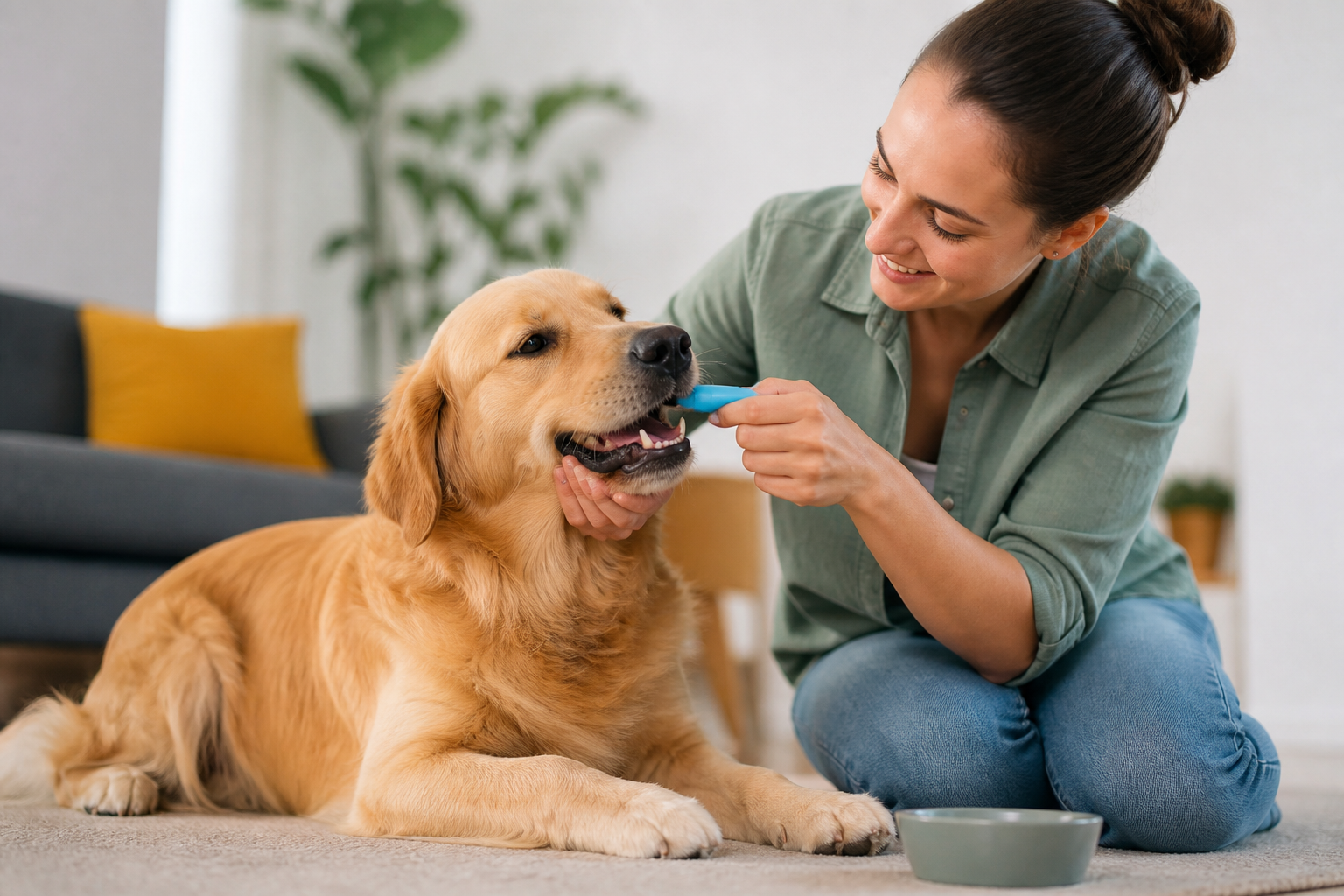
If your dog is not used to having their mouth touched, do not try to brush every tooth on the first day. This process should take one to two weeks of gradual training. For another helpful overview, see how to care for your dog's teeth at home.
Step 1: The Taste Test. / Let your dog lick a small amount of poultry-flavored enzymatic toothpaste off your finger. This builds a positive association with the paste itself.
Step 2: Gentle Touch. / While they are enjoying the flavor, gently rub your finger along their upper gums and teeth. Do this for just a few seconds and then give them a high-value treat.
Step 3: Introduce the Tool. / Put a small amount of paste on the brush or finger cap. Lift the upper lip and gently touch one or two of the large canine teeth in the front.
Step 4: The Circular Motion. / Move the brush in small circles along the gum line. This is where most plaque accumulates. Focus on the outside of the teeth, as this is where the most buildup occurs.
Step 5: Increase Duration. / Slowly work your way toward the back molars over several sessions. Reward your dog with praise or a favorite toy after every successful session.
Alternatives for Dogs That Hate Brushing
We understand that some dogs simply will not tolerate a toothbrush. If you find yourself in a daily battle, it is better to use alternative mechanical cleaners than to give up entirely.
Dental Wipes
Dental wipes are textured pads treated with enzymes or antibacterial solutions. You wrap the wipe around your finger and rub it over the surface of the teeth. This provides the mechanical friction needed to disturb plaque without the scary sensation of a plastic brush. Wipes are particularly useful for senior dogs who might have sensitive gums or for pets who are head-shy. Our dental and breath-care category includes wipes and other oral-care options.
Oral Gels and Sprays
Enzymatic gels can be applied to the gums with a finger. These gels work by using enzymes like glucose oxidase to break down the proteins that allow plaque to stick to the teeth. While they are not as effective as brushing, they are a great "better than nothing" option for difficult pets. OxyFresh Pet Dental Gel Toothpaste can be applied along the gum line with a finger or finger brush.
Key Takeaway: Mechanical action is the most important part of plaque removal. Whether you use a brush or a textured wipe, the physical scrubbing is what prevents tartar from forming.
Using Dental Chews and Toys
Chewing is a natural behavior that can significantly support oral health. When a dog chews on a specifically designed dental treat, the material acts like a squeegee to scrape plaque off the teeth. For more ideas, browse these dental chew options for dogs.
What to Look for in a Dental Chew
The most reliable way to choose a chew is to look for the VOHC Seal. The Veterinary Oral Health Council only awards this seal to products that have been scientifically proven to reduce plaque or tartar.
- Firmness: The chew should be firm enough to provide resistance but not so hard that it could break a tooth.
- Size: Always choose a chew appropriate for your dog's weight. A chew that is too small can be swallowed whole, posing a choking risk.
- Ingredients: Many dental chews also contain ingredients that freshen breath or help balance mouth bacteria.
Safe Chew Toys
Certain toys are designed to clean teeth as the dog plays. Look for rubber toys with nubs or ridges. As your dog gnaws on the toy, these ridges slide between the teeth to massage the gums and disturb plaque. Avoid very hard items like natural bones, antlers, or heavy nylon toys. These are often harder than the tooth enamel itself and can lead to painful slab fractures.
Natural Remedies for Home Use
Some owners prefer to use natural supplements to support their dog's dental health. While these are rarely enough on their own, they can be excellent additions to a brushing routine. Our dental supplement collection includes kelp and other oral-care support products.
Seaweed and Kelp Supplements
Specific types of brown seaweed, such as Ascophyllum nodosum, have been shown to improve oral health. When ingested, the compounds in the seaweed are absorbed into the bloodstream and eventually released into the saliva. This change in saliva chemistry helps prevent plaque from sticking to the teeth and can even help soften existing tartar over time. These are typically available as powders that you sprinkle over your dog's daily meals.
Coconut Oil
Coconut oil has natural antibacterial and antifungal properties thanks to its high lauric acid content. Some owners use it as a base for home brushing. Dogs generally love the taste, which makes them more cooperative. While it is not as powerful as enzymatic toothpaste, it is a safe and palatable option for many.
Dietary Support for Dental Health
What your dog eats every day has a direct impact on their teeth. While there is a common myth that all dry kibble cleans teeth, most standard kibble is too small and brittle to provide much benefit. It simply shatters when the dog bites down.
Prescription Dental Diets
If your dog is prone to rapid plaque buildup, your vet may recommend a prescription dental diet. These formulas are designed with a specific fiber matrix that does not shatter. Instead, the tooth sinks into the kibble, allowing the fibers to scrub the tooth surface all the way to the gum line. Brands like Royal Canin and Farmina Vet Life offer these specialized options. You can browse our Farmina Vet Life dog food selection for veterinary diet products.
Our pharmacy at BaxterBoo can fulfill these prescription food orders through our partnership with Pet's Choice. If your veterinarian provides a prescription for a dental or weight management diet, we make it easy to get those specialized nutrients delivered to your door. Visit our pet pharmacy to explore prescription-support options.
Water Additives
Water additives are the easiest way to support dental health. These are tasteless liquids you add to your dog's water bowl. They contain enzymes or mild antiseptics that help reduce the bacterial load in the mouth throughout the day. This is a helpful secondary defense, especially for dogs that drink a lot of water.
Bottom line: A combination of daily brushing, effective chews, and the right diet provides the most comprehensive protection against dental disease.
Knowing When Home Care Isn't Enough
Home care is about prevention. If your dog already has thick brown buildup or very bad breath, you cannot solve the problem with a toothbrush alone. At this stage, your dog likely has tartar that has worked its way under the gum line. This causes inflammation and can eventually lead to systemic health issues affecting the heart, liver, and kidneys.
A professional dental cleaning is the only way to reset your dog's oral health. During this procedure, a vet will use ultrasonic scalers to remove tartar and polish the enamel. They will also take X-rays to check for issues beneath the surface that are not visible to the naked eye. Once the vet provides a clean slate, your home routine becomes much more effective at maintaining those results.
Summary Checklist for Home Success
- Brush daily or at least three times a week.
- Use dog-specific enzymatic toothpaste.
- Provide VOHC-approved dental chews.
- Add a seaweed supplement or water additive.
- Schedule a veterinary dental check-up every 6 to 12 months.
Conclusion
Cleaning plaque off your dog's teeth at home is one of the kindest things you can do for them. It prevents the pain of toothaches and keeps their breath fresh for those evening snuggles. While brushing is the gold standard, using a mix of wipes, chews, and additives can still make a massive difference. Our team at BaxterBoo is here to help you find the right supplies for your dog's unique needs. For those with specific medical requirements or who need prescription-strength support, we encourage you to explore our pet pharmacy. By staying consistent with these home habits, you are helping your dog live a longer, more comfortable life.
FAQ
Can I use baking soda to clean my dog's teeth?
While baking soda is not toxic in very small amounts, it is generally not recommended as a primary cleaner. It has a salty taste that many dogs find unpleasant, which can make them resist brushing. Furthermore, if a small dog swallows too much baking soda, it can cause an alkaline imbalance in their stomach. It is much safer and more effective to use a flavored enzymatic toothpaste formulated specifically for pets.
How long does it take for plaque to turn into tartar?
Plaque begins to mineralize and turn into tartar in as little as 24 to 48 hours. This is why consistency is so important in a dental routine. If you only brush your dog's teeth once a week, you are leaving six days of plaque to harden into tartar that you can no longer remove. Brushing every day is ideal, but aim for at least three times a week to see a meaningful difference in their oral health.
My dog’s gums bleed when I brush, should I keep going?
If you see a tiny amount of pink on the brush the first few times you clean, it may just be a sign of mild gingivitis that will improve with regular cleaning. However, if the bleeding is heavy or if the gums look bright red and swollen, you should stop and see a vet. This often indicates that the plaque has already caused an infection or that there is tartar beneath the gum line causing irritation.
Are rawhides good for cleaning plaque off teeth?
While the act of chewing a rawhide can help scrape off some plaque, they are often not the best choice for dental health. Rawhides can be difficult for some dogs to digest and can pose a choking risk if large pieces are swallowed. Additionally, many rawhides do not contain the enzymes found in dedicated dental chews. It is usually better to choose a VOHC-approved dental treat that is designed to dissolve safely and fight bacteria effectively.






