
 Save 15% on your 1st Autoship learn more

 Email us
 Live Chat
 FAQs
FAQs





Introduction
You lean in for a morning nuzzle from your favorite pup only to be met with a puff of breath that smells less like a greeting and more like a swamp. While bad breath is often laughed off as just a dog thing, it is actually the first warning sign of plaque buildup. Plaque is a sticky film of bacteria that constantly forms on your dog's teeth. If you do not remove it, it hardens into tartar within days. Here at BaxterBoo, we have spent years helping pet owners navigate the world of canine dental care with practical tools and expert advice. This guide covers everything from daily brushing techniques and dental chews to the role of professional cleanings. Understanding how to manage oral hygiene at home is the best way to ensure your dog stays healthy and comfortable for years to come.
Understanding Plaque and Tartar
Plaque is a soft and sticky biofilm that develops when saliva, food particles, and bacteria mix in the mouth. It starts forming within hours of a meal. Because it is colorless, it is very hard to see on a dog's teeth. You might notice a slight dullness on the surface of the tooth, but the bacteria are hard at work. If plaque remains on the tooth surface for more than 48 to 72 hours, it begins to mineralize.
When plaque mineralizes, it turns into tartar, also known as calculus. Tartar is a hard and yellow or brown deposit that sticks firmly to the enamel. Unlike plaque, you cannot simply brush tartar away. It requires professional tools to chip or scrape off. Tartar creates a rough surface that attracts even more plaque, creating a cycle that leads to gum inflammation and eventual tooth loss.
Key Takeaway: Plaque is a soft bacteria film that can be brushed away, but once it hardens into tartar, it requires professional veterinary intervention to remove.
Why Dental Health Matters
Poor oral hygiene does more than just cause bad breath. Bacteria from the mouth can enter the bloodstream through inflamed gums. Once in the blood, these bacteria can travel to major organs like the heart, liver, and kidneys. This can lead to serious systemic infections and chronic health issues. Keeping your dog's teeth clean is a vital part of their overall wellness routine. For more guidance, read about the warning signs of dental disease in dogs.
The Gold Standard: Daily Brushing
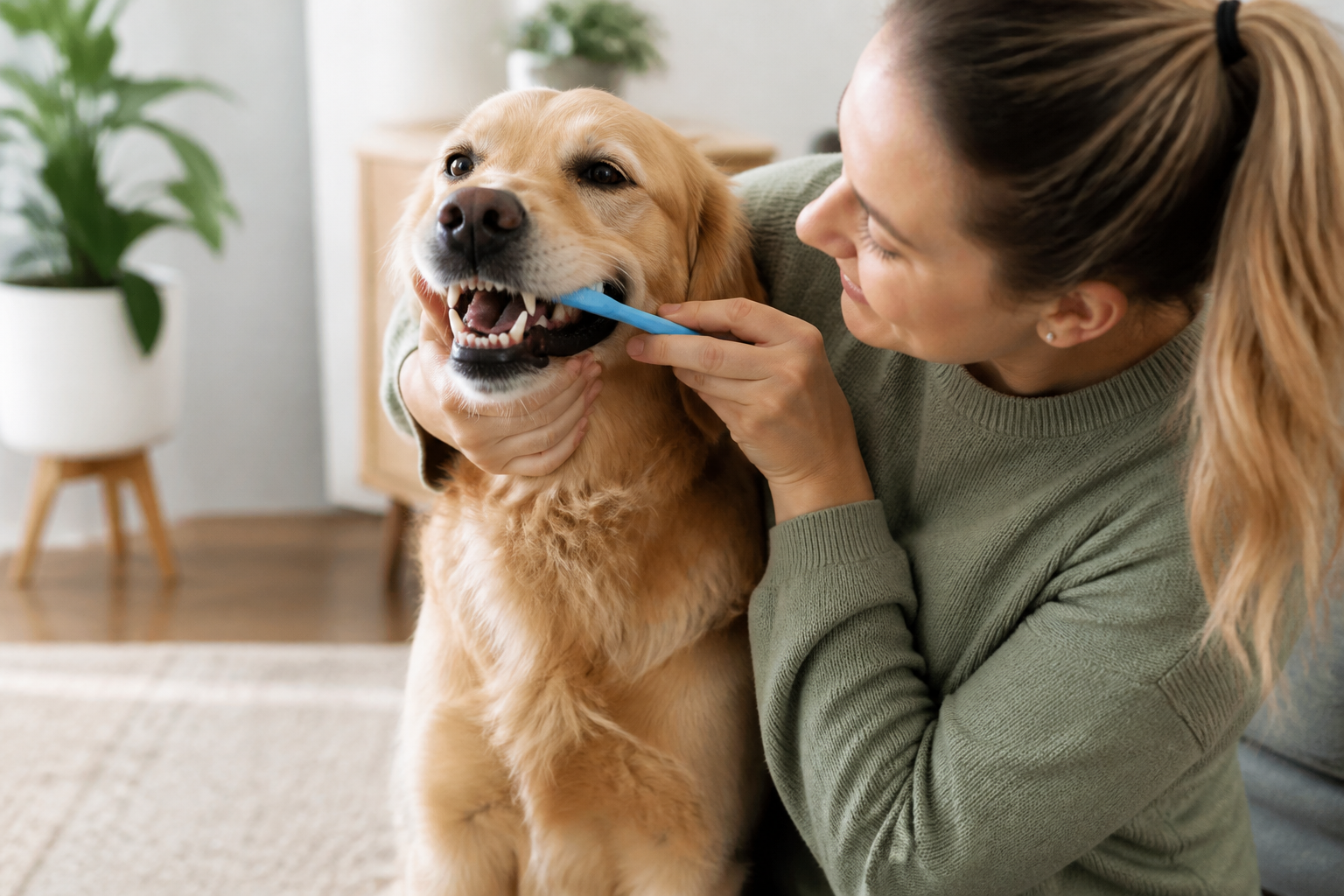
The most effective way to clean plaque off your dog's teeth is regular brushing. While it might seem daunting at first, most dogs can learn to accept and even enjoy the process if you start slowly. You will need a toothbrush specifically designed for dogs. These often have angled heads or multiple sets of bristles to reach all sides of the teeth. Finger brushes are also a great option for smaller dogs or those who are sensitive to a traditional handle.
Never use human toothpaste for your dog. Human toothpaste contains fluoride and xylitol, both of which are toxic to dogs. Pet-safe toothpastes come in flavors like poultry, beef, or peanut butter to make the experience more palatable. Many of these formulas are enzymatic. This means they contain proteins that help break down the chemical bonds of plaque even after you stop brushing. A complete option is the Virbac C.E.T. Pet Oral Hygiene Kit, which includes brushes and enzymatic toothpaste.
Step-by-Step Brushing Guide
Step 1: Introduce the flavor. / Let your dog lick a small amount of pet toothpaste off your finger so they associate the brush with a treat.
Step 2: Touch the mouth. / Gently lift your dog's lips and touch their teeth and gums with your finger to get them used to the sensation.
Step 3: Introduce the brush. / Put toothpaste on the brush and let them lick it. Then, gently brush the large canine teeth in a circular motion.
Step 4: Expand the area. / Gradually move toward the back molars where plaque buildup is most common. Focus on the outside of the teeth, as this is where most plaque accumulates.
Step 5: Reward. / Always end the session with a high-value treat or play session to create a positive association.
Vet Tip: If your dog has red, bleeding, or swollen gums, stop brushing and consult your veterinarian. These are signs of advanced gingivitis or periodontal disease that may be painful and require medical treatment before home care can resume.
Using Dental Chews and Treats
Not every dog will sit still for a toothbrush. In these cases, dental chews are an excellent secondary tool. These treats are designed with a specific texture that creates mechanical friction against the tooth as the dog chews. This scraping action helps rub away plaque before it has a chance to harden. You can explore our dental and breath care category for chews, toothpaste, wipes, and other oral-care products.
We carry a variety of trusted brands like Greenies, Whimzees, and Oravet. These products are often VOHC (Veterinary Oral Health Council) accepted. This seal means the product has undergone testing to prove it actually reduces plaque or tartar. When choosing a chew, ensure it is the right size for your dog. A chew that is too small can be swallowed whole, posing a choking risk and providing no dental benefit.
How Chewing Works
When a dog gnaws on a dental treat, the product is usually dense enough that the tooth sinks into it. This provides cleaning all the way down to the gum line. Some treats also include ingredients like sodium hexametaphosphate. This helps prevent minerals in the saliva from bonding to plaque, which slows down the formation of tartar.
Quick Answer: The best way to clean plaque is through daily brushing with enzymatic toothpaste. For dogs that resist brushing, dental chews and water additives provide helpful mechanical and chemical cleaning.
Water Additives and Oral Rinses
For the busiest pet owners or the most stubborn dogs, water additives are a low-effort way to fight plaque. These are liquid solutions that you add directly to your dog's drinking water. They are usually tasteless and odorless so your dog won't even know they are there. One example is Synergy Labs Dental Fresh Water Additive.
These additives contain enzymes and anti-bacterial agents that help neutralize the bacteria responsible for plaque. While they are not a replacement for brushing, they are a great supplement. They help reach the nooks and crannies of the mouth that a brush or chew might miss. Oral rinses work similarly but are applied directly to the gums and teeth using a squirt bottle.
Choosing the Right Additive
Look for products that are free from alcohol and artificial sweeteners. Some additives also help freshen breath instantly using natural mint or chlorophyll. This is a great way to manage "dog breath" while also working on the underlying cause of the odor.
Bottom line: Water additives provide a passive way to reduce mouth bacteria, but they work best when combined with mechanical cleaning like brushing or chewing.
Dental Wipes and Sprays
If your dog finds a toothbrush too invasive, dental wipes are a fantastic middle ground. These are pre-moistened pads that you wrap around your finger. You then rub the pad over the surface of the teeth and along the gum line. The textured surface of the wipe provides the friction needed to remove soft plaque.
Dental sprays are another topical option. These are sprayed directly onto the teeth and gums. They often contain enzymes that break down the biofilm of plaque. Sprays are particularly useful for senior dogs who might have sensitive gums and cannot handle the vigorous scrubbing of a brush.
Benefits of Finger Wipes
Wipes give you a high level of control. You can feel exactly where the teeth are and ensure you are cleaning the back molars. They are also less intimidating for dogs that are head-shy or have had bad experiences with grooming tools. For additional ideas, review these pet dental care tips.
- Use a fresh wipe for each side of the mouth.
- Focus on the gum line where plaque hides.
- Follow up with a dental spray for extra protection.
- Consistency is key, so try to use them daily.
Dietary Habits and Their Impact
What your dog eats plays a significant role in their oral health. There is a common belief that dry kibble cleans teeth better than wet food. While the crunch of kibble does provide some mechanical scraping, many standard kibbles crumble too easily to provide a real benefit. However, specific prescription dental diets are different.
Our pharmacy carries prescription dental foods like Farmina Vet Life and Royal Canin Dental. These kibbles are larger and have a fibrous structure that does not shatter. Instead, the tooth sinks into the kibble, allowing the fibers to scrub the tooth surface. You can browse our pet pharmacy for prescription products recommended by your veterinarian.
Foods to Avoid
Avoid giving your dog sugary treats or human foods that are high in starch. Bacteria thrive on sugar and carbohydrates, which leads to faster plaque formation. If you want to give your dog a healthy snack that helps their teeth, consider raw carrots or apple slices. These provide a natural crunch that can help dislodge food particles.
Vet Tip: Before starting a prescription dental diet, consult your veterinarian to ensure it is appropriate for your dog's specific nutritional needs and health profile.
Natural Remedies and Home Care
Many pet owners look for natural ways to support dental health. Coconut oil is a popular choice due to its antimicrobial properties. Lauric acid in coconut oil can help kill the bacteria that lead to plaque. You can use a small amount of organic coconut oil as a "toothpaste" or add it to your dog's food.
Raw bones are another natural option for plaque removal. The act of gnawing on a raw bone can help scrape away buildup. However, there are significant risks to consider. Never give your dog cooked bones, as they can splinter and cause internal damage. Even raw bones can cause tooth fractures if the bone is too hard. Always supervise your dog when they are chewing on a bone.
Seaweed and Kelp Supplements
Specific types of seaweed, such as Ascophyllum nodosum, have been shown to reduce plaque and tartar. When ingested, the compounds in the seaweed are absorbed into the bloodstream and then released into the saliva. This changes the composition of the saliva so that plaque cannot easily stick to the teeth. These supplements are usually available in a powder form that you sprinkle over your dog's meals.
Key Takeaway: Natural aids like coconut oil and seaweed supplements can support dental health, but they should be used as part of a broader hygiene routine that includes mechanical cleaning.
When to See a Veterinarian
No matter how diligent you are at home, most dogs will eventually need a professional cleaning. This is especially true for small breeds, which tend to have crowded teeth that trap plaque more easily. If you see hard, brown deposits on your dog's teeth, you are looking at tartar. At this stage, home remedies will not be enough.
A professional dental cleaning at the vet involves general anesthesia. This allows the vet to thoroughly clean under the gum line and take X-rays to check for bone loss or abscesses. This is a critical procedure for preventing long-term pain and tooth loss. Our pharmacy can help you manage your dog's recovery with FDA-approved medications and prescription diets recommended by your vet.
Signs of Dental Pain
Dogs are notorious for hiding pain. You might not realize your dog has a dental issue until it is quite advanced. Watch for these subtle signs:
- Dropping food while eating.
- Pawing at the mouth or rubbing the face on the floor.
- Excessive drooling.
- Reluctance to play with tug toys or chew on hard treats.
- One-sided chewing.
Vet Tip: An annual dental exam is the best way to catch oral health issues before they become severe and expensive to treat.
Establishing a Sustainable Routine
The key to cleaning plaque off your dog's teeth is consistency. A once-a-month brushing session will not make a difference. You need to build a routine that fits your lifestyle and your dog's personality. If you can only brush three times a week, supplement the other days with dental chews and water additives.
At BaxterBoo, we recommend the "layering" approach to dental care. Start with the most effective method your dog will tolerate and add secondary layers for extra protection. For example, use a water additive daily, a dental chew every other day, and try to brush at least a few times a week. If you regularly purchase dental supplies, our Autoship programme can help simplify repeat orders.
Tracking Progress
Keep an eye on your dog's gums. Healthy gums should be a vibrant pink color. If you notice a red line where the gum meets the tooth, that is gingivitis. By stepping up your cleaning routine, you can often reverse this redness before it turns into full-blown periodontal disease.
Bottom line: A multi-modal approach combining brushing, chews, and regular veterinary check-ups is the most effective way to keep your dog's mouth healthy.
Conclusion
Cleaning plaque off your dog's teeth is one of the most impactful things you can do for their long-term health. By starting with daily brushing and incorporating dental chews, wipes, and water additives, you can prevent the painful transition from soft plaque to rock-hard tartar. Remember that home care is about prevention and maintenance. If your dog already has significant tartar or signs of gum disease, a visit to the vet is the necessary first step. We invite you to explore our extensive collection of dental care products to find the tools that work best for your pup. Whether you need a flavorful enzymatic toothpaste or a prescription diet from our pharmacy, we are here to support your dog's bright, healthy smile.
- Brush daily with pet-safe enzymatic toothpaste.
- Use VOHC-approved dental chews for mechanical cleaning.
- Add oral rinses or water additives for extra bacterial control.
- Schedule annual veterinary dental exams.
Note: For dogs requiring specialized care, our pharmacy offers a wide range of prescription dental foods and medications recommended by your veterinarian.
FAQ
How can I remove tartar from my dog's teeth at home?
You cannot safely remove hardened tartar from your dog's teeth at home. Tartar is mineralized plaque that bonds strongly to the tooth enamel and often extends below the gum line. Attempting to scrape it off with metal tools can damage the enamel or injure the gums. If you see brown or yellow hard deposits, you should schedule a professional cleaning with your veterinarian.
Does dry kibble actually clean a dog's teeth?
Most standard dry kibbles do not provide significant dental cleaning because they shatter as soon as the dog's tooth hits them. However, specific dental-formulated kibbles are designed to stay intact longer, allowing the tooth to sink in and the fibers to scrub the surface. For the best results, look for dental diets that carry the VOHC seal of approval.
Can I use baking soda to brush my dog's teeth?
While baking soda is not toxic in small amounts, it has a very high alkaline content and a salty taste that most dogs dislike. It can also upset their stomach if swallowed in larger quantities. It is much better to use a pet-specific toothpaste that is formulated for safety and comes in flavors that encourage your dog to cooperate.
How often should I brush my dog's teeth?
Ideally, you should brush your dog's teeth every day. Plaque begins to turn into tartar in as little as 48 hours, so daily brushing is the only way to stay ahead of the mineralization process. If daily is not possible, aiming for at least three times a week can still provide significant health benefits compared to not brushing at all.






