
 Save 15% on your 1st Autoship learn more

 Email us
 Live Chat
 FAQs
FAQs





Introduction
If you have ever leaned in for a puppy kiss and pulled back because of "stinky breath," you are not alone. Small dogs are famous for having big personalities and unfortunately, even bigger dental challenges. Their tiny mouths often struggle with overcrowding, which creates the perfect environment for plaque to hide. At BaxterBoo, we know that many pet owners find the idea of brushing a wiggly dog's teeth a bit daunting. This post covers the specific tools you need, a step by step cleaning process, and how to spot signs of dental disease. We want to help you build a routine that keeps your small dog healthy and pain free. Consistent at home care is the most effective way to prevent expensive vet visits and serious health issues.
Why Small Dogs Have Unique Dental Needs
Small breeds like Chihuahuas, Pugs, and Yorkies face dental issues more often than large dogs. Even though their heads are smaller, they still have 42 adult teeth. This leads to significant overcrowding. When teeth are packed closely together, food particles get trapped in tiny gaps that are hard to reach. This trapped debris quickly turns into plaque and then hardens into tartar.
Many small breeds also have misaligned jaws. This is especially true for brachycephalic or flat faced breeds. When the upper and lower teeth do not meet correctly, the natural cleaning action of chewing is lost. Bacteria can thrive in these areas, leading to gingivitis and periodontal disease much earlier in life.
Key Takeaway: Small dogs have the same number of teeth as large dogs but much less space in their mouths. This makes them prone to rapid plaque buildup and requires more frequent dental care.
Choosing the Right Supplies
You cannot use human products on your dog. Human toothpaste often contains fluoride or xylitol. Xylitol is a sweetener that is highly toxic to dogs even in small amounts. You need a toothpaste formulated specifically for pets. These usually come in flavors like poultry, beef, or peanut butter to make the experience more enjoyable for your dog. Our dog dental care collection includes pet toothpaste and other oral-care options.
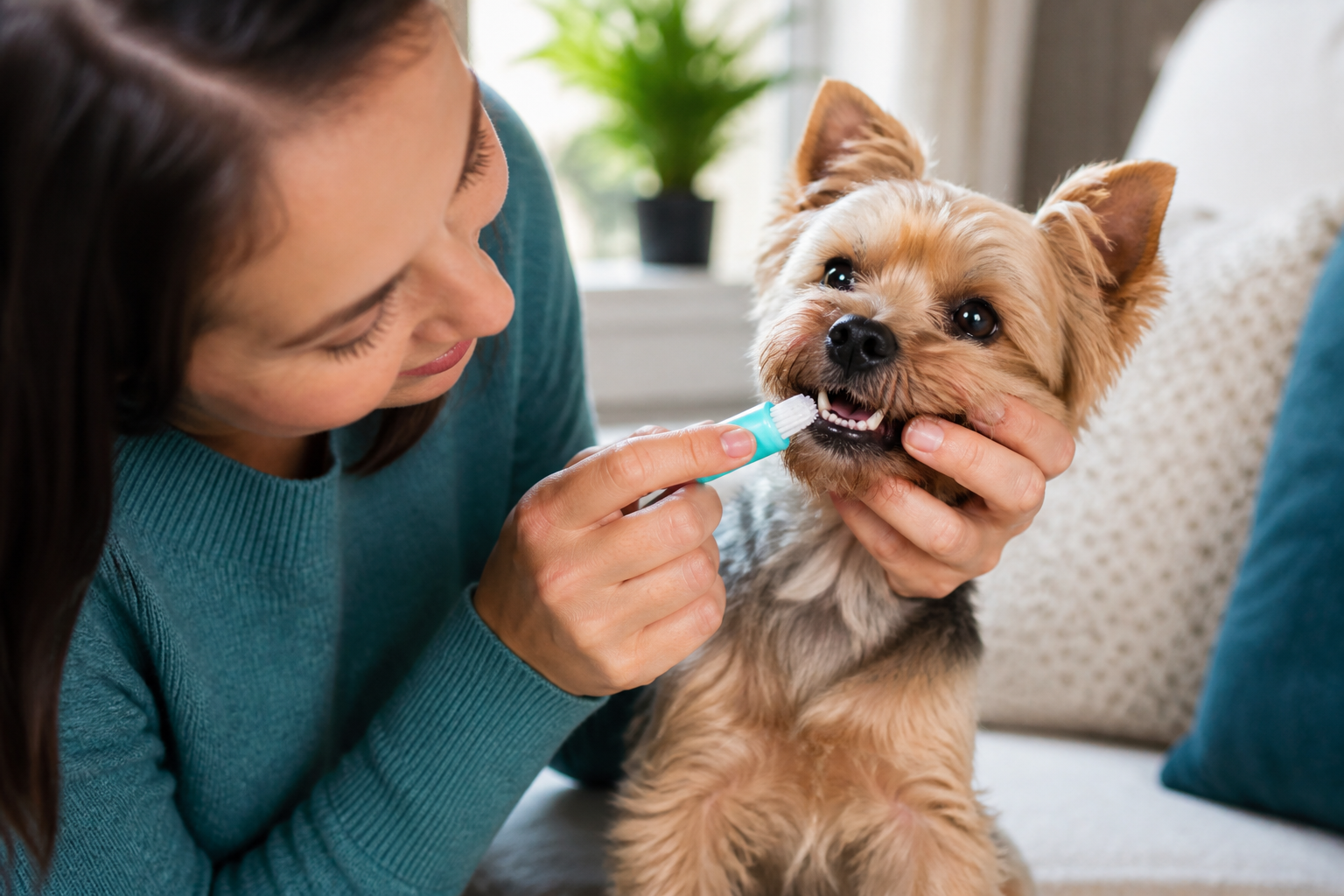
For the brush, you have two main options. A traditional long handled brush with a small head works well for reaching the back molars. Many owners of small dogs prefer finger brushes. These are soft silicone caps that fit over your fingertip. They give you more control and allow you to feel exactly where you are brushing. This is helpful when navigating a tiny mouth with sensitive gums. A single-ended toothbrush for small dogs can also be a useful option.
Quick Answer: To clean a small dog's teeth at home, you need pet-safe enzymatic toothpaste and a small-headed toothbrush or finger brush. Focus on the outer surfaces of the teeth using gentle circular motions.
Preparing Your Dog for Brushing
Do not expect to do a full cleaning on the first day. The goal is to make this a positive part of your day, not a chore your dog fears. Start by choosing a quiet time when your dog is relaxed. Sit on the floor so you are at their level.
Let your dog sniff and lick a small amount of the toothpaste from your finger. Most enzymatic toothpastes are designed to taste like a treat. Once they enjoy the flavor, practice gently lifting their lips to look at their teeth and gums. Reward them with praise or a small training treat for staying calm. These gradual steps reflect the approach in our pet dental care tips.
Step 1: Get them used to the taste / Let your dog lick toothpaste off your finger for several days.
Step 2: Introduce touch / Rub your finger along their gums and teeth while they lick the paste.
Step 3: Introduce the brush / Let them lick the paste off the brush without moving it.
Step 4: Start brushing / Use short, gentle strokes on just one or two teeth.
The Brushing Technique for Small Mouths
Once your dog is comfortable with the brush, you can begin the actual cleaning. Hold the brush at a 45 degree angle toward the gumline. Use small, circular motions. You do not need to scrub hard. The enzymatic ingredients in the toothpaste do a lot of the work by breaking down proteins that lead to plaque.
Focus mostly on the outside surfaces of the teeth. This is where the most plaque accumulates because the tongue does not reach these areas. For small dogs, the upper back molars and the canine teeth are the most common trouble spots. Keep the initial sessions very short, perhaps only 30 seconds per side.
Vet Tip: If you notice your dog's gums bleeding slightly during the first few sessions, do not panic. This often happens if there is mild inflammation. If the bleeding is heavy or does not stop after a few days of brushing, consult your veterinarian to check for advanced gum disease.
How to Handle a Wiggly Dog
Some small dogs are naturally more active or nervous. If your dog will not sit still, try the "burrito wrap" method. Gently wrap them in a soft towel to keep their paws tucked away. This can help them feel more secure and prevent them from scratching you.
Another trick is to position the dog with their back against you. This prevents them from backing away. Use one hand to gently cup their chin and lift the lip. Use the other hand to brush. If they become too stressed, stop immediately. You want them to remember the session as something that ended with a treat and a cuddle, not a struggle.
Beyond Brushing: Dental Chews and Toys
Brushing is the gold standard, but it is not the only tool you have. Dental chews can be a great supplement. These are designed with textures that scrape away plaque as the dog chews. Look for products that have the Veterinary Oral Health Council seal of approval. You can compare options in our dental food and treat category.
Rubber toys with ridges or nubs can also help. As your dog chews, the ridges rub against the teeth. You can even smear a little pet-safe toothpaste into the grooves of a toy. This encourages the dog to "brush" their own teeth while they play. We carry several trusted brands like KONG and Greenies that offer specific sizes for small mouths.
Note: Dental chews and toys are supplements and should not replace brushing. They are most effective when used as part of a multi-pronged approach to oral hygiene.
Water Additives and Dental Wipes
If your dog absolutely refuses a toothbrush, dental wipes are a good middle ground. These are pre-moistened pads that you wrap around your finger. You simply wipe the surfaces of the teeth. They are less intrusive than a brush and can still remove a significant amount of surface film.
Water additives are another easy option. You add a small amount of the liquid to your dog's water bowl. These additives contain enzymes or ingredients that help reduce the bacteria count in the mouth. While they do not remove existing tartar, they can slow down the formation of new plaque and help freshen breath. Our dental supplements include options for adding oral-care support to your dog's routine.
Diet and Dental Health
What your dog eats also plays a role in their dental health. There is a common belief that dry kibble cleans teeth better than wet food. While the crunch of kibble can provide some mechanical cleaning, most small dogs tend to swallow small kibble pieces whole.
Some prescription dental diets are formulated with larger, fibrous kibble. These pieces do not shatter immediately. Instead, the tooth sinks into the kibble, which scrubs the surface. Our pet pharmacy carries prescription pet foods and FDA-approved medications. If your vet recommends a specific dental diet for your small dog, we can help you manage those orders conveniently.
Recognizing Signs of Dental Disease
It is important to check your dog's mouth regularly for signs of trouble. Dental disease is progressive. If caught early, it can often be reversed with a professional cleaning. If left too long, it can lead to tooth loss and infections that spread to the heart, liver, and kidneys.
Watch for these warning signs:
- Persistent bad breath that does not go away
- Red, swollen, or bleeding gums
- Brown or yellow crust near the gumline (tartar)
- Loose or broken teeth
- Excessive drooling or dropping food
- Pawing at the mouth or face
Bottom line: Bad breath is not just a cosmetic issue; it is usually the first sign of an underlying infection or decay that needs professional attention.
For additional guidance on symptoms, read how to recognize warning signs of bad teeth in dogs.
The Role of Professional Veterinary Cleanings
Even with perfect at-home care, most small dogs will eventually need a professional cleaning. This is done under general anesthesia. It allows your vet to perform a full exam and take X-rays to see what is happening beneath the gumline.
During a professional cleaning, the vet uses ultrasonic scalers to remove tartar that is too hard for a toothbrush to handle. They also polish the teeth to smooth out the surface. A smooth tooth is harder for plaque to stick to. We recommend talking to your vet about a dental exam at least once a year for small breeds.
Creating a Sustainable Routine
Consistency is the most important factor in dog dental care. Plaque can turn into hard tartar in as little as 36 to 48 hours. This means brushing once a week is not enough. Aim for at least three times a week, though daily is best.
Try to link brushing to an existing habit. For example, you might brush your dog's teeth right after you finish your own evening routine. Keep your supplies in a visible spot so you do not forget. When you make it a regular part of life, your dog will come to expect it and may even get excited for their "peanut butter toothpaste time."
Step 1: Set a schedule / Pick a specific time each day for dental care.
Step 2: Prepare the area / Have your brush, paste, and treats ready.
Step 3: Perform the cleaning / Brush for 1 to 2 minutes.
Step 4: Reward and track / Give a treat and note any changes in gum color or breath.
Managing Dental Health Costs
Dental care can be expensive, especially if extractions are needed. This is why we encourage preventive care. Joining a program like MVP Rewards can help you earn back on the supplies you buy regularly, like toothpaste and dental treats.
If you are a new customer at BaxterBoo, you can even get a $10 reward on your first order of $39 or more when you sign in at checkout. This is a great way to stock up on a variety of brushes and pastes to see what your small dog prefers. Taking small steps now can save you hundreds or even thousands of dollars in veterinary surgery costs later.
When Home Care Is Not Enough
Sometimes, despite your best efforts, a small dog may develop a painful tooth or a gum abscess. If your dog stops eating or only chews on one side of their mouth, they may be in significant pain. Small dogs are very good at hiding discomfort.
In these cases, you must see a veterinarian. They may prescribe antibiotics or pain relief. Our pharmacy can fill these prescriptions for you. Never try to scrape tartar off your dog's teeth with metal tools at home. This can crack the enamel and cause deep, painful scratches that actually encourage more bacteria growth.
Summary of Best Practices
Cleaning a small dog's teeth does not have to be a stressful event. By starting slowly and using the right tools, you can significantly improve your pet's quality of life. Remember that small mouths need specialized care due to overcrowding and jaw shape.
- Use only pet-safe enzymatic toothpaste.
- Choose a tiny brush or finger brush for better control.
- Focus on the outside of the teeth and the gumline.
- Complement brushing with dental chews and water additives.
- Watch for red gums and foul odors.
- Schedule yearly professional exams.
Key Takeaway: A few minutes of dental care each day can add years to your small dog's life by preventing systemic infections and chronic pain.
Conclusion
Taking care of your small dog's teeth is one of the best things you can do for their long term health. It starts with a simple routine and the right supplies. Whether you choose a finger brush or a tiny soft-bristled toothbrush, the goal is to keep those surfaces clean and free of plaque. We are here to support you with a wide selection of dental care products in our Vernon Hills warehouse and online. Explore our dog dental care section to find the perfect tools for your pup. For even more convenience and savings, consider our Autoship programme so you never run out of toothpaste or your dog's favorite dental chews.
Key Takeaway: Consistent home brushing paired with professional veterinary checkups is the gold standard for small dog dental health.
FAQ
Can I use a human toothbrush on my small dog?
You can use a very soft, child sized human toothbrush if you cannot find a dog-specific one, but a finger brush is usually better for small mouths. The heads on adult human brushes are far too large and can hurt a small dog's sensitive gums. Always ensure the bristles are soft to avoid causing irritation or bleeding.
How often should I realistically brush my dog's teeth?
Ideally, you should brush your dog's teeth every single day to prevent plaque from hardening into tartar. If daily brushing is not possible, aim for at least three times per week. Anything less than that allows tartar to build up, which can only be removed by a veterinarian under anesthesia.
My dog hates the toothbrush, what should I do?
Start by skipping the brush and just using your finger with some flavored pet toothpaste. Let them lick it and get used to the sensation of you touching their mouth. You can also try dental wipes or water additives as an alternative until your dog becomes more comfortable with a traditional brush.
Is professional dental cleaning safe for small dogs?
Professional cleaning is generally very safe, but it does require general anesthesia to be effective and thorough. Your vet will typically perform blood work beforehand to ensure your dog is healthy enough for the procedure. Anesthesia allows the vet to clean under the gumline and take X-rays, which is impossible to do while a dog is awake.






