
 Save 15% on your 1st Autoship learn more

 Email us
 Live Chat
 FAQs
FAQs





Introduction
You lean in for a happy nuzzle from your dog, only to be met with a puff of breath that smells remarkably like a dumpster on a hot day. When you lift their lip to investigate, you see a hard, brownish-orange crust cemented to their back molars. This is tartar, also known as dental calculus, and it is more than just a cosmetic blemish or a source of bad odors. At BaxterBoo, we see this often, and we know that managing your pet's oral health is one of the most important ways you can extend their lifespan. This guide will walk you through the practical steps to soften and remove plaque before it hardens, the natural remedies that help manage existing buildup, and when it is time to call in a professional. We focus on safe, effective methods to keep those pearly whites shining.
Quick Answer: Tartar is hardened plaque that requires professional scaling for full removal. However, you can manage and soften buildup at home using enzymatic toothpastes, daily brushing, dental chews, and seaweed-based supplements that break down the bacterial film.
Understanding the Shift from Plaque to Tartar
Plaque is a sticky, colorless film of bacteria and food particles that begins forming on your dog's teeth within hours of eating. If you have ever felt a "fuzzy" sensation on your own teeth after a long day, you have experienced plaque. At this stage, the substance is soft and easy to remove with a simple toothbrush or a dental wipe.
If plaque is not removed within 24 to 48 hours, it begins to mineralize. Minerals in your dog's saliva, such as calcium and phosphorus, mix with the plaque and cause it to harden into tartar. Once this substance reaches a cement-like consistency, it bonds tightly to the tooth enamel. This creates a rough surface that makes it even easier for more plaque to attach, creating a snowball effect of buildup.
Tartar often starts at the gumline and works its way up the tooth. It can also creep beneath the gumline, where it causes the most damage. This leads to inflammation, infection, and eventually the destruction of the bone and tissues that hold the teeth in place.
Key Takeaway: Plaque is a soft bacterial film that is easy to brush away, while tartar is a mineralized, hard deposit that bonds to the enamel and requires more intensive effort to manage.
Why You Cannot Ignore Tartar Buildup
Tartar is a reservoir for bacteria. These bacteria do not stay localized to the mouth. Every time your dog chews or swallows, bacteria can enter the bloodstream through inflamed gum tissue. This process, known as bacteremia, can lead to systemic issues that affect the heart, liver, and kidneys.
Common signs that tartar is becoming a health concern include:
- Persistent foul breath that does not improve after a meal.
- Visible yellow, brown, or gray crusting on the teeth.
- Red, swollen, or bleeding gums (gingivitis).
- Pawing at the mouth or rubbing the face on furniture.
- Dropping food while eating or a sudden preference for soft food.
- Excessive drooling, sometimes tinged with blood.
Small dog breeds and brachycephalic (flat-faced) breeds are particularly prone to rapid buildup. Their teeth are often crowded together, which creates more nooks and crannies where plaque can hide. If you have a Yorkie, a Pug, or a Chihuahua, you must be even more vigilant about their daily dental routine.
Vet Tip: If your dog shows signs of pain while eating or has loose teeth, skip the home remedies and head straight to your veterinarian. These are signs of advanced periodontal disease that require professional medical intervention.
Home Methods to Soften and Remove Tartar
While heavy tartar usually requires a professional cleaning, you can take significant steps at home to soften the deposits and prevent new ones from forming. Consistency is the most important factor in any dental care routine. Explore our dog dental care collection to find tools for a consistent routine.
Brushing with Coconut Oil
Coconut oil is a popular natural tool for canine dental health because it contains lauric acid. This fatty acid has antibacterial and antifungal properties that can help reduce the bacterial load in your dog's mouth.
To use this method, apply a small amount of organic, unrefined coconut oil to a dog-specific toothbrush or a piece of clean gauze. Gently rub the teeth and the gumline. The oil helps to lubricate the tartar and may make it slightly easier to dislodge over time with mechanical brushing. Most dogs enjoy the taste, which makes the process much less stressful than using flavored pastes they might dislike.
Enzymatic Toothpastes
Unlike human toothpaste, which often contains xylitol (toxic to dogs) and foaming agents that should not be swallowed, enzymatic toothpastes for dogs are designed to be eaten. These pastes contain enzymes like glucose oxidase that produce a natural antibacterial reaction.
These enzymes work by breaking down the organic matter that makes up plaque. Even if you cannot get a perfect brushing session in, simply getting the paste onto the teeth allows the enzymes to go to work. Consider a pet-specific option such as the Petrodex Advanced Dental Care Kit Dog Toothpaste when introducing a brushing routine.
Dental Wipes and Manual Rubbing
If your dog is terrified of a toothbrush, dental wipes are an excellent bridge. These are textured pads often soaked in baking soda or other mild cleaning agents. The physical friction of rubbing the wipe against the tooth helps to scrub away soft plaque and surface stains. Focus on the upper molars and canines, as these areas typically see the most significant buildup.
Bottom line: Natural oils and enzymatic pastes are effective tools for breaking down the bacterial film, but they work best when combined with regular mechanical scrubbing.
The Power of Mechanical Cleaning
Mechanical cleaning refers to the physical action of scraping or rubbing the teeth to remove debris. While you should never use metal dental picks at home, as you can easily crack enamel or lacerate gums, you can use safe "nature-made" tools.
Dental Chews and Toys
Not all dental chews are created equal. When shopping for treats at BaxterBoo, look for the Veterinary Oral Health Council (VOHC) seal of approval. This seal means the product has been tested and proven to reduce plaque or tartar by a specific percentage.
Products like Greenies dental dog chews or specialized Kong dental toys work by encouraging the dog to chew. The texture of these items is designed to allow the tooth to sink in, scraping the sides of the tooth as the dog bites down. This mimics the action of a squeegee and can be very effective at removing plaque before it turns into tartar.
Raw Bones
Chewing on raw bones can be a highly effective way to keep teeth clean. The abrasive surface of the bone acts like sandpaper against the tartar. However, safety is paramount when using this method.
- Never give cooked bones. Cooking makes bones brittle and prone to splintering, which can cause internal punctures or blockages.
- Choose a bone that is appropriately sized. It should be large enough that your dog cannot swallow it whole.
- Supervise every chewing session. Remove the bone if it becomes small enough to be a choking hazard.
- Avoid extremely hard "marrow" bones for aggressive chewers, as these can occasionally cause slab fractures on the premolars.
Seaweed Supplements
A specific type of brown seaweed, Ascophyllum nodosum, has been shown in clinical studies to improve canine dental health. When ingested, the compounds in the seaweed are absorbed into the bloodstream and eventually released back into the saliva. This changes the chemistry of the saliva, making it harder for plaque to stick to the teeth and helping to soften existing tartar. This is a "hands-off" approach that works well for dogs who will not tolerate any physical handling of their mouths. One option is ProDen PlaqueOff Powder Dog and Cat Teeth Care.
| Method | Target | Difficulty Level |
|---|---|---|
| Brushing | Soft Plaque | High (requires training) |
| Dental Chews | Plaque & Surface Tartar | Low (dogs love them) |
| Seaweed Supplements | Saliva Chemistry | Very Low (mix with food) |
| Raw Bones | Hard Tartar | Moderate (requires supervision) |
Implementing a Step-by-Step Brushing Routine
If your dog is not used to having their mouth touched, you cannot expect to do a full cleaning on the first day. You must build trust and positive associations. For additional guidance, review these pet dental care tips.
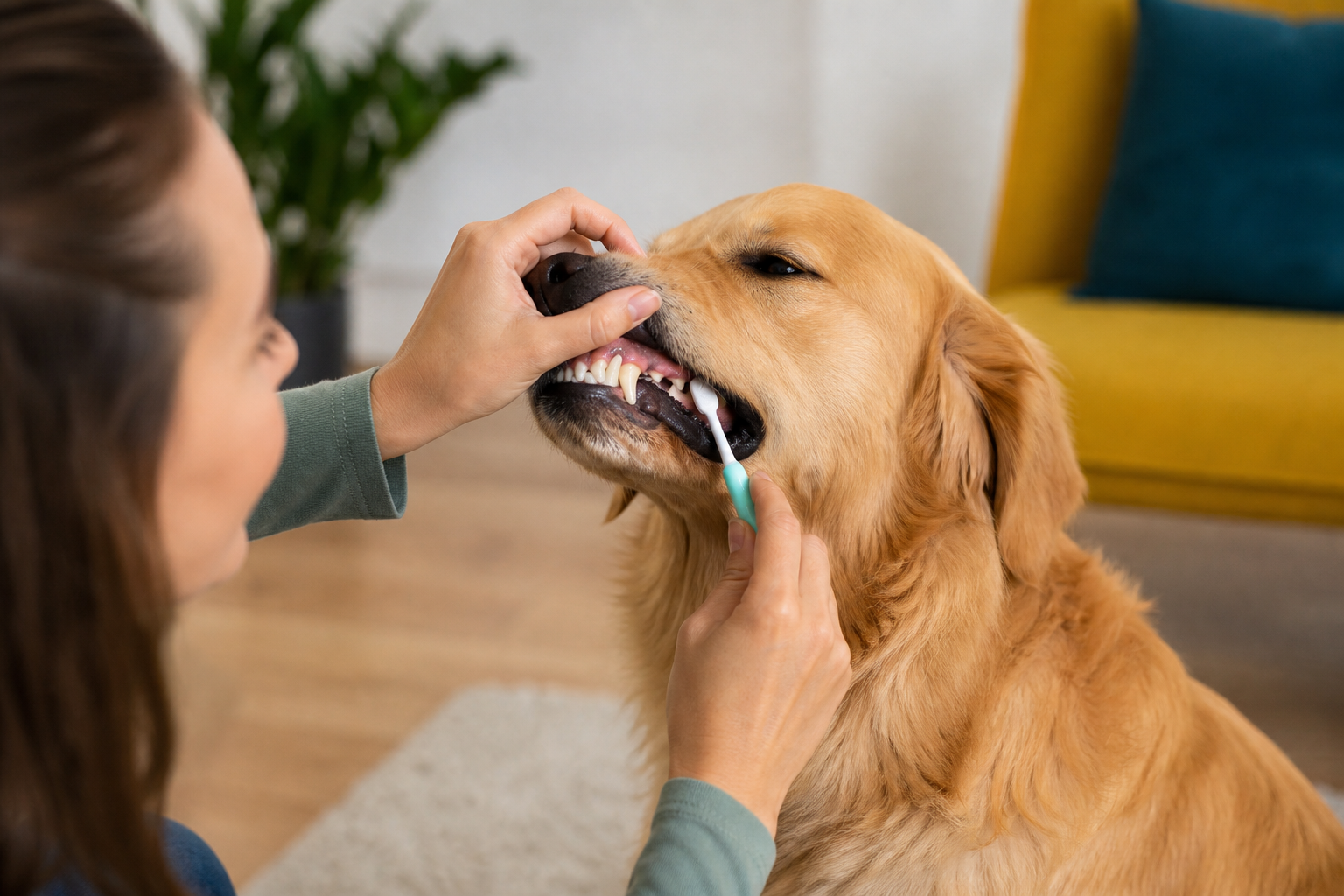
Step 1: Desensitization. Spend a week just touching your dog's muzzle and lifting their lips for a few seconds. Follow every touch with a high-value treat.
Step 2: Introduction of taste. Put a dab of enzymatic toothpaste or coconut oil on your finger and let your dog lick it off. Do this for several days until they are excited to see the tube.
Step 3: Finger brushing. Rub your finger, coated in paste, along their outer teeth and gums. Do not worry about the inside of the teeth yet; the tongue does a decent job of cleaning those surfaces.
Step 4: The toothbrush. Introduce a soft-bristled dog toothbrush. Place it at a 45-degree angle to the gumline and use small, circular motions.
Step 5: Consistency. Aim for at least three times a week. Daily is the gold standard, as it stops the mineralization process of plaque entirely.
Key Takeaway: Patience is the secret to a successful dental routine. Moving too fast can cause a fear response that makes future cleanings impossible.
When Home Care is Not Enough
There is a limit to what can be achieved with a toothbrush and chews. If your dog has thick, dark brown deposits that cover more than half the tooth, they likely need a professional veterinary dental cleaning.
A professional cleaning is performed under general anesthesia. This is a critical point that many owners worry about, but it is necessary for several reasons. First, a vet must use ultrasonic scalers to vibrate the tartar off the teeth, including the areas deep under the gumline. A dog will not sit still for this. Second, anesthesia allows for a full set of dental X-rays. Since 60% of the tooth is hidden below the gumline, X-rays are the only way to find painful abscesses or bone loss that are invisible to the naked eye.
Our partnership with Pet's Choice allows us to support your pet's long-term health through our pet pharmacy. If your vet diagnoses advanced dental disease, they may prescribe specific medications or prescription dental diets.
Prescription Dental Diets
For dogs prone to heavy buildup, a standard kibble might not be enough. Prescription diets, such as those from Farmina Vet Life or Royal Canin, feature kibble that is much larger and more fibrous. Instead of crumbling immediately when bitten, the kibble stays intact longer, forcing the tooth to move through the fiber and "scrubbing" the surface clean. These are available through our pharmacy with a valid prescription from your veterinarian.
The Role of the BaxterBoo Pharmacy
Managing chronic dental issues often involves more than just a brush. If your dog undergoes a dental procedure, they may need antibiotics to clear up gum infections or pain relief medications for several days. Our pharmacy carries FDA-approved medications and prescription foods to support this recovery.
By using our pharmacy services through the Pet's Choice partnership, you can have these essential health items delivered directly to your door. This is especially helpful for senior dogs who may be on a permanent prescription diet to manage their oral health.
Vet Tip: Never attempt to "flick" tartar off with a metal tool or your fingernail. You can easily create microscopic scratches in the enamel. These scratches act like a magnet for bacteria, causing tartar to return faster and bond even more tightly than before.
Dietary Habits That Impact Dental Health
What your dog eats plays a role in how fast tartar accumulates. While the "dry food cleans teeth" theory is mostly a myth for standard kibble, certain dietary habits do matter.
- Avoid table scraps. Sugary or starchy human foods provide the perfect fuel for plaque-forming bacteria.
- Limit sticky treats. Treats that cling to the teeth are much harder for the dog's saliva to wash away.
- Provide fresh water. Constant access to clean water helps flush food particles out of the mouth after eating.
- Consider water additives. These are tasteless liquids you add to the water bowl that contain enzymes to inhibit bacterial growth.
If you are a member of our MVP Rewards program, you can earn points on these preventative items, making it more affordable to maintain a consistent routine. Keeping your pet healthy should not break the bank, and we aim to provide the best value on the brands you trust like Kong, Zesty Paws, and NutriSource.
Maintaining the Routine for Life
Oral health is not a one-time task. It is a lifelong commitment. As your dog ages, their immune system may not be as effective at fighting off oral bacteria, making a solid dental routine even more vital in their senior years.
A balanced approach includes:
- Daily or near-daily brushing with an enzymatic paste.
- Daily use of a VOHC-approved dental chew.
- Regular visual inspections of the mouth at home.
- Annual or bi-annual dental exams by a veterinarian.
- Prompt treatment of any broken teeth or bleeding gums.
By staying proactive, you can avoid the high costs and health risks associated with advanced periodontal disease. Your dog will be more comfortable, their breath will be fresher, and you will have many more years of happy, healthy snuggles.
Bottom line: A combination of at-home mechanical cleaning, enzymatic support, and regular professional check-ups is the only way to truly manage tartar buildup.
Summary of Tartar Management
Keeping your dog's mouth healthy requires a mix of different strategies. No single treat or brush session is a magic fix.
- Soften: Use coconut oil or seaweed supplements to change the mouth environment.
- Dissolve: Use enzymatic toothpastes to break down the bacterial plaque film.
- Scrub: Use brushes, wipes, and dental toys to physically remove softened debris.
- Protect: Use VOHC-approved chews to create a barrier against new plaque.
- Consult: Always work with your vet for deep cleaning and potential prescription needs.
If you are looking to start a new dental routine, check out our toothbrushes and toothpastes at BaxterBoo. For those already managing a condition, our pharmacy is ready to help with prescription diets and medications. Setting up our Autoship programme for your dental chews is a great way to ensure you never run out, keeping your dog's oral health consistent month after month.
FAQ
Can I remove hard tartar at home with a dental scaler?
No, you should never use metal dental scalers on your dog at home. Professional tools are very sharp and require training to use safely. You risk causing deep cuts to the gums or accidentally chipping the tooth enamel, which can lead to permanent damage and severe pain for your pet.
Does dry kibble really clean a dog's teeth?
Standard dry kibble does not significantly clean a dog's teeth because it usually shatters upon the first contact with the tooth. Only specialized prescription dental diets, which have a specific fibrous structure designed to stay intact and scrub the tooth surface, are effective at reducing tartar through eating.
Is bad breath in dogs always caused by tartar?
While tartar and gum disease are the most common causes of bad breath, other issues can be to blame. Persistent foul odors can also signal problems with the digestive system, kidneys, or liver. If your dog's breath remains offensive even after a dental cleaning, you should consult your veterinarian for further testing.
How often should I brush my dog's teeth to prevent tartar?
Ideally, you should brush your dog's teeth every day to remove plaque before it can mineralize into tartar. If daily brushing is not possible, aiming for at least three times a week can still provide significant health benefits and slow down the accumulation of dental calculus.






