
 Save 15% on your 1st Autoship learn more

 Email us
 Live Chat
 FAQs
FAQs





Introduction
When you are sitting on the couch and your dog gives a big, toothy yawn, you might notice something besides their tongue. If you see a yellow or brown crust along the gumline, you are looking at tartar. This hardened buildup is a common concern for pet owners who want to keep their dogs healthy and their breath fresh. At BaxterBoo, we know that dental care can feel like a chore, but it is one of the most important things you can do for your dog's long-term wellness. This guide covers the difference between plaque and tartar, what you can safely do at home, and when it is time to call the vet. You will learn about the tools and techniques that help keep those pearly whites shining between professional cleanings.
Quick Answer: Once plaque mineralizes into hard tartar, it typically requires a professional veterinary scaling to remove completely. At home, you can use enzymatic toothpastes, dental wipes, and specific chews to soften early buildup and prevent new tartar from forming.
The Difference Between Plaque and Tartar
To understand how to clean your dog’s teeth, you first need to know what you are fighting. Plaque is the starting point. It is a sticky, colorless film of bacteria and food particles that forms on the teeth shortly after eating. Because it is soft, you can easily brush it away with a toothbrush or even a soft cloth.
If plaque stays on the tooth for more than 24 to 48 hours, it reacts with the minerals in your dog's saliva. This chemical reaction causes the plaque to harden into tartar, which is also known as dental calculus. Once it reaches this stage, it bonds strongly to the tooth enamel. It feels like rough cement and usually appears as a dark yellow or brown stain.
Tartar is a problem because its rough surface acts like a magnet for even more plaque. This creates a cycle of buildup that eventually pushes under the gumline. When bacteria get under the gums, they can cause inflammation, bone loss, and even systemic infections that affect the heart or kidneys.
Key Takeaway: Plaque is soft and easy to remove at home, but tartar is a hardened mineral deposit that is much more stubborn.
Why Professional Cleaning Is Sometimes Necessary
Many owners want to know how to scrape tartar off at home. While there are scaling tools available for purchase, we strongly advise against using them yourself. Professional cleaning is the only way to safely remove heavy tartar, especially the deposits hiding under the gumline.
Vets perform these cleanings under anesthesia for a few reasons. First, it allows them to clean the inside surfaces of the teeth and the deep pockets in the gums without causing the dog stress or pain. Second, they can use ultrasonic scalers that vibrate the tartar loose without scratching the delicate enamel. If you try to scrape your dog’s teeth at home, you might create tiny microscopic scratches. These scratches actually give bacteria more places to hide, making future tartar buildup happen even faster.
Vet Tip: If your dog has red, bleeding gums or loose teeth, stop home cleaning and see a vet immediately. These are signs of advanced periodontal disease that require professional medical intervention rather than just a toothbrush.
Tools for Softening Tartar at Home
If your dog has mild buildup, you can use specific products to help soften it. This makes it easier to brush away the top layers and prevents the situation from getting worse. Explore our dog dental and breath care collection for toothpaste, wipes, chews, and other oral-care options.
Enzymatic Toothpastes
Unlike human toothpaste, which contains detergents and fluoride that are toxic to dogs, pet-safe toothpaste uses enzymes. These enzymes, like glucose oxidase, work to break down the proteins that hold plaque to the tooth. When you apply an enzymatic paste, the ingredients keep working even after you stop brushing. We carry brands like Royal Canin and other trusted names that formulate these pastes specifically for canine oral chemistry. One option is Virbac C.E.T. Enzymatic Pet Toothpaste.
Coconut Oil
Some owners prefer a natural approach using organic, unrefined coconut oil. It contains lauric acid, which has natural antimicrobial properties. While it won't "melt" hard tartar, it can help reduce the bacteria load in the mouth and soothe irritated gums. You can use it as a base for brushing or let your dog lick a small amount off a spoon to help freshen their breath.
Dental Wipes
If your dog hates the sensation of a toothbrush, dental wipes are an excellent middle ground. These are pre-moistened pads that you wrap around your finger. They allow you to feel exactly where you are cleaning. By rubbing the teeth in a circular motion, you can mechanically lift away soft plaque and stain-causing debris before they mineralize.
Bottom line: Using enzymatic products consistently is the best way to chemically break down the "glue" that holds plaque to your dog's teeth.
The Power of Mechanical Cleaning
Mechanical cleaning refers to the physical action of rubbing or scraping the teeth. Since we want to avoid metal scrapers, we rely on safe, abrasive materials that work while your dog plays or eats. For more ideas, read our guide to the best dental chews for dogs.
Dental Chews and Sticks
Products like Greenies or dental sticks are designed with specific textures that act like a squeegee. As your dog chews, the edges of the treat rub against the tooth surface. Many of these chews also contain ingredients that bind to the minerals in saliva, stopping them from hardening into tartar in the first place. Greenies Original Dental Dog Chews are one available option.
Raw Bones and Natural Chews
Gnawing on a raw bone can be a very effective way for a dog to "self-clean" their back molars. The shearing action as they scrape meat and cartilage off the bone helps knock away loose tartar. However, safety is a major factor here.
- Never give cooked bones, as they splinter and can cause internal injuries.
- Match the size of the bone to your dog to prevent choking.
- Supervise every chewing session to ensure they do not break a tooth on a hard bone.
- Discard the bone once it is small enough to be swallowed whole.
Rubber Toys
Toys from brands like Kong often have ridges or nubs. When your dog bites down on these, the rubber massages the gums and scrapes the teeth. You can even smear some enzymatic toothpaste inside the grooves of a toy to combine mechanical and chemical cleaning.
Dietary Support for Dental Health
What your dog eats every day has a massive impact on their oral hygiene. Some foods are designed to help keep teeth clean simply through the way they are chewed.
Specialized Dental Diets
Standard kibble often shatters as soon as a dog's tooth hits it, providing very little cleaning. Specialized dental diets use a larger kibble size and a specific fiber matrix. Instead of shattering, the tooth sinks into the kibble, which wipes the surface of the enamel as the dog bites down.
If your vet recommends a prescription-strength dental diet, such as Farmina Vet Life or Royal Canin Dental, you can often find these through specialized channels. Our pharmacy at BaxterBoo provides access to FDA-approved medications and prescription diets through our partnership with Pet's Choice. These diets are formulated to manage oral health as part of a long-term wellness plan.
Seaweed Supplements
Recent studies have shown that certain types of brown seaweed (Ascophyllum nodosum) can help reduce plaque and tartar. When a dog eats a supplement containing this seaweed, the compounds are absorbed into the bloodstream and eventually come out in the saliva. It changes the composition of the saliva so that plaque cannot stick to the teeth as easily. It also helps soften existing tartar over several weeks of consistent use.
How to Start a Brushing Routine
The best way to clean tartar is to stop it from forming. If your dog is not used to having their mouth touched, you need to move slowly. For additional guidance, see our pet dental care tips.
Step 1: Get them comfortable with touch. / Spend a few days just lifting their lips and rubbing their gums with your finger. Use plenty of praise.
Step 2: Introduce the flavor. / Put a small amount of dog-safe toothpaste on your finger and let them lick it off. Most are flavored like poultry or beef to make this easy.
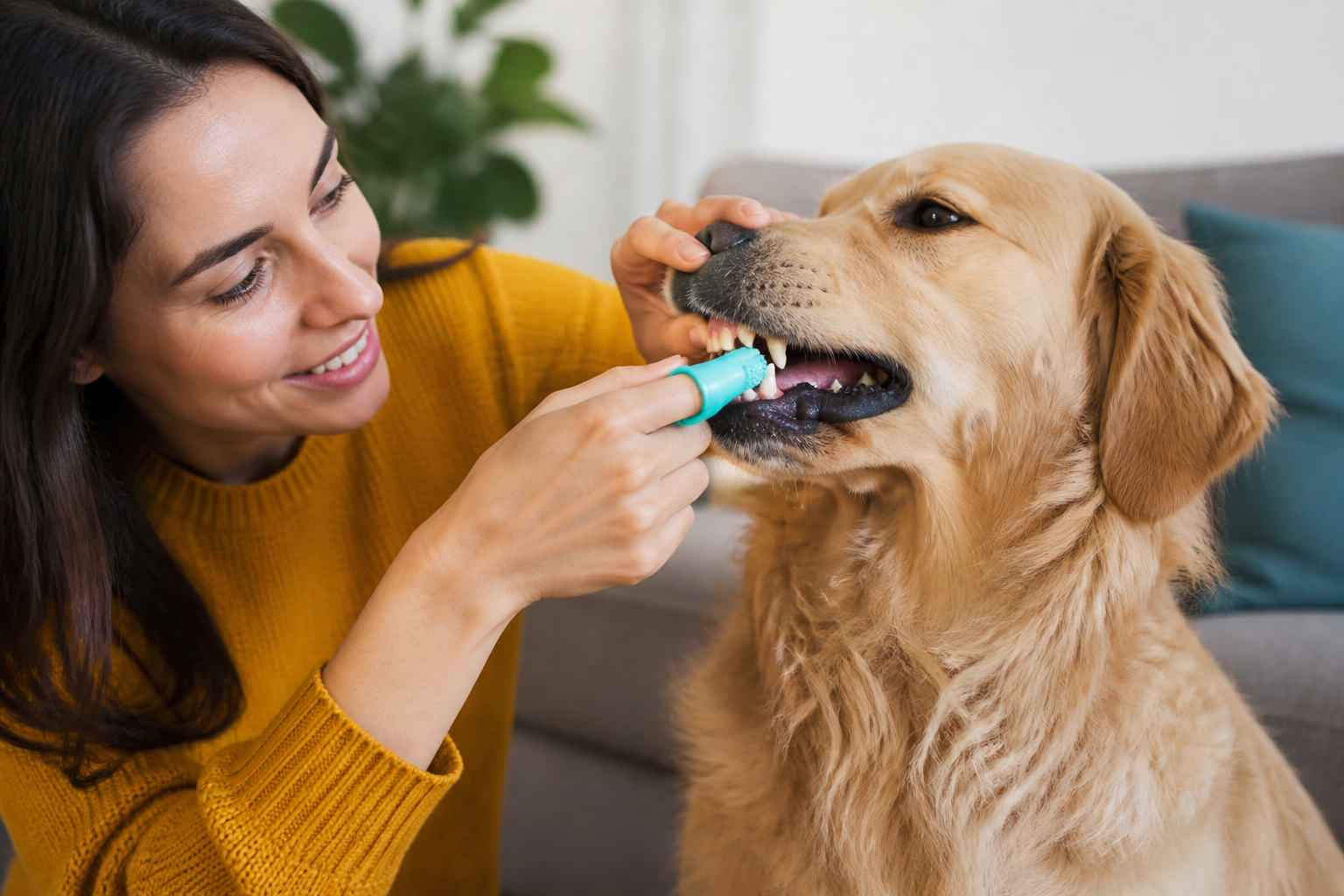
Step 3: Introduce the brush. / Use a soft-bristled brush or a silicone finger brush. Let them sniff it and lick more paste off the bristles.
Step 4: Start brushing. / Aim for a 45-degree angle toward the gumline. Focus on the outside surfaces of the teeth first, as this is where tartar builds up most heavily.
Step 5: Reward. / Always end the session with a high-value reward or a fun game so they associate the brush with positive things.
Key Takeaway: Consistency is more important than duration. Brushing for 30 seconds three times a week is much better than a deep clean once a month.
Managing Tartar in Senior Dogs
Senior dogs often have more significant tartar buildup because they have had more years for minerals to accumulate. They may also have weaker immune systems, making them more prone to gum infections. However, older dogs can also have heart or kidney issues that make anesthesia for professional cleaning more risky.
For these dogs, at-home maintenance is vital. Focus on gentle methods like dental wipes and seaweed supplements. If your senior dog has stiff joints, they might find it harder to hold onto large bones or chews. In these cases, softer dental treats or water additives can be helpful alternatives. If you are managing chronic health conditions in an older pet, check with our dog healthcare selection for any prescription dental rinses that might be safer than physical scrubbing.
Signs Your Dog Has Dental Pain
Because dogs are stoic, they often hide the pain caused by tartar and gum disease. You have to look for subtle behavioral changes. Our guide to warning signs of bad teeth in dogs can help you recognize concerning symptoms.
- Dropping food while eating or chewing on only one side of the mouth.
- Pawing at the face or rubbing their muzzle against the furniture.
- Excessive drooling that may be tinged with blood.
- A sudden loss of interest in hard toys or crunchy treats.
- Worsening breath that smells like rotting meat or ammonia.
If you notice these signs, the tartar has likely progressed to a point where home cleaning is no longer enough. A trip to the vet is the only way to ensure your dog is not living in constant discomfort.
Summary of Home Care Strategies
Cleaning tartar at home is a multi-step process that involves softening, mechanical action, and prevention. No single product is a magic wand, but a combination of methods can produce great results.
- Daily: Use a water additive or seaweed supplement to change saliva chemistry.
- 2-3 Times Weekly: Brush with enzymatic toothpaste to break down plaque.
- Weekly: Provide a high-quality dental chew or a safe raw bone for mechanical scrubbing.
- Monthly: Do a "lift the lip" exam to check for new spots of yellow or brown buildup.
At BaxterBoo, we have helped pet owners navigate dental care since 2006. Whether you need a finger brush for a wiggly puppy or a prescription diet for a senior dog through our pharmacy partnership, we provide the tools to keep your dog's mouth healthy. For recurring dental-care purchases, consider our Autoship programme.
Bottom line: While you cannot always remove every speck of hard tartar at home, a dedicated routine will significantly reduce the frequency of professional cleanings and keep your dog much more comfortable.
FAQ
Can I use a human toothbrush on my dog?
You can use a very soft human toothbrush, but the shape might make it difficult to reach the back molars. Dog-specific brushes are usually angled or have smaller heads to fit more comfortably in a canine mouth. Never use human toothpaste, as ingredients like xylitol and fluoride are toxic to dogs.
How long does it take for seaweed to soften tartar?
Most owners begin to see a difference in breath and a softening of surface stains within 3 to 8 weeks of daily use. The effect is cumulative, so you must stay consistent with the supplement every day to see the best results in your dog's mouth.
Does dry kibble really clean a dog's teeth?
Standard dry kibble provides very little dental benefit because it crumbles easily. For real cleaning, you need a specific dental diet kibble that is designed to stay together and "scrub" the tooth as the dog bites down. These are often available as prescription diets through a pharmacy.
My dog's gums bleed when I brush. Should I stop?
Minor bleeding can be a sign of gingivitis, which is caused by plaque buildup. If the bleeding is very slight and stops quickly, continue brushing gently to help the gums heal. However, if the bleeding is heavy or the gums look very swollen and purple, stop brushing and schedule a veterinary exam to check for deep infection.






