
 Save 15% on your 1st Autoship learn more

 Email us
 Live Chat
 FAQs
FAQs





Introduction
You are sitting on the couch when your dog leans in for a friendly lick. Suddenly, you notice a smell that is much stronger than typical dog breath. You lift your dog's lip and see a hard, yellowish-brown crust covering the base of the back teeth. This crust is tartar, and it is more than just a cosmetic issue. If left alone, it can lead to pain, tooth loss, and even serious heart or kidney problems.
At BaxterBoo, we know that dental care is one of the most overlooked parts of pet ownership. We see many owners who want to help their dogs but are not sure where to start. This post covers practical ways to manage tartar at home using tools like brushing, chews, and supplements. We will also discuss when it is time to put down the toothbrush and call your veterinarian.
Establishing a solid routine now can save your dog from discomfort and save you from expensive medical bills later.
Understanding the Difference Between Plaque and Tartar
To fix the problem, you first need to know what you are looking at. Many people use the terms plaque and tartar as if they are the same thing. They are actually two different stages of the same process.
Plaque is a soft, sticky film that forms on the teeth within hours of eating. It is made of bacteria, saliva, and tiny food particles. Because it is soft, you can easily remove it with a toothbrush or a dental wipe. If you stay on top of plaque, you prevent the harder stuff from ever forming.
Tartar occurs when plaque is left on the tooth for more than 48 to 72 hours. Minerals in your dog's saliva mix with the plaque and cause it to calcify. Once it hardens into tartar, it becomes like a rock. You cannot simply brush it away. It bonds to the tooth enamel and often spreads under the gumline where you cannot see it.
Quick Answer: You can remove soft plaque at home through daily brushing and dental wipes. However, hardened tartar usually requires a professional veterinary cleaning to remove safely without damaging the enamel.
Why Tartar Is a Serious Health Risk for Your Dog
Tartar is not just an ugly stain on a white tooth. It acts as a porous surface where even more bacteria can grow. This cycle leads to several health issues that affect your dog's quality of life.
Periodontal Disease
This is the most common health issue in adult dogs. When tartar reaches the gumline, it causes inflammation known as gingivitis. You might notice your dog's gums look bright red or bleed easily. As it gets worse, the tissue and bone supporting the teeth begin to break down. This causes pain and eventually leads to loose teeth that may fall out.
Systemic Health Issues
The mouth is a gateway to the rest of the body. The bacteria found in tartar can enter the bloodstream through the inflamed gums. From there, the bacteria can travel to vital organs. Studies have shown a strong link between poor oral health and damage to the heart valves, kidneys, and liver. Keeping the mouth clean is a fundamental part of protecting your dog's internal health.
Chronic Pain
Dogs are masters at hiding pain. They might continue to eat even if their mouth hurts. You might notice subtle signs like your dog dropping food, chewing on only one side, or avoiding hard toys. By the time a dog stops eating entirely, the dental disease is usually very advanced.
For additional warning signs to watch for, read our guide to recognizing bad teeth in dogs.
Key Takeaway: Dental health affects the entire body. Removing plaque and managing tartar at home is a preventive measure that supports your dog's heart, liver, and kidney function.
The Gold Standard: Brushing Your Dog’s Teeth
If you want to know how to clean tartar off dog's teeth at home, the most effective answer is daily brushing. While it will not easily pop off large chunks of old tartar, it stops new tartar from building up. It also helps soften existing deposits over time when used with the right products.
Choosing the Right Supplies
Never use human toothpaste for your dog. It often contains xylitol, which is a sweetener that is highly toxic to pets. It also contains foaming agents that are not meant to be swallowed. Dog-specific toothpaste is safe to swallow and usually comes in flavors like poultry, beef, or peanut butter to make the experience more enjoyable for them.
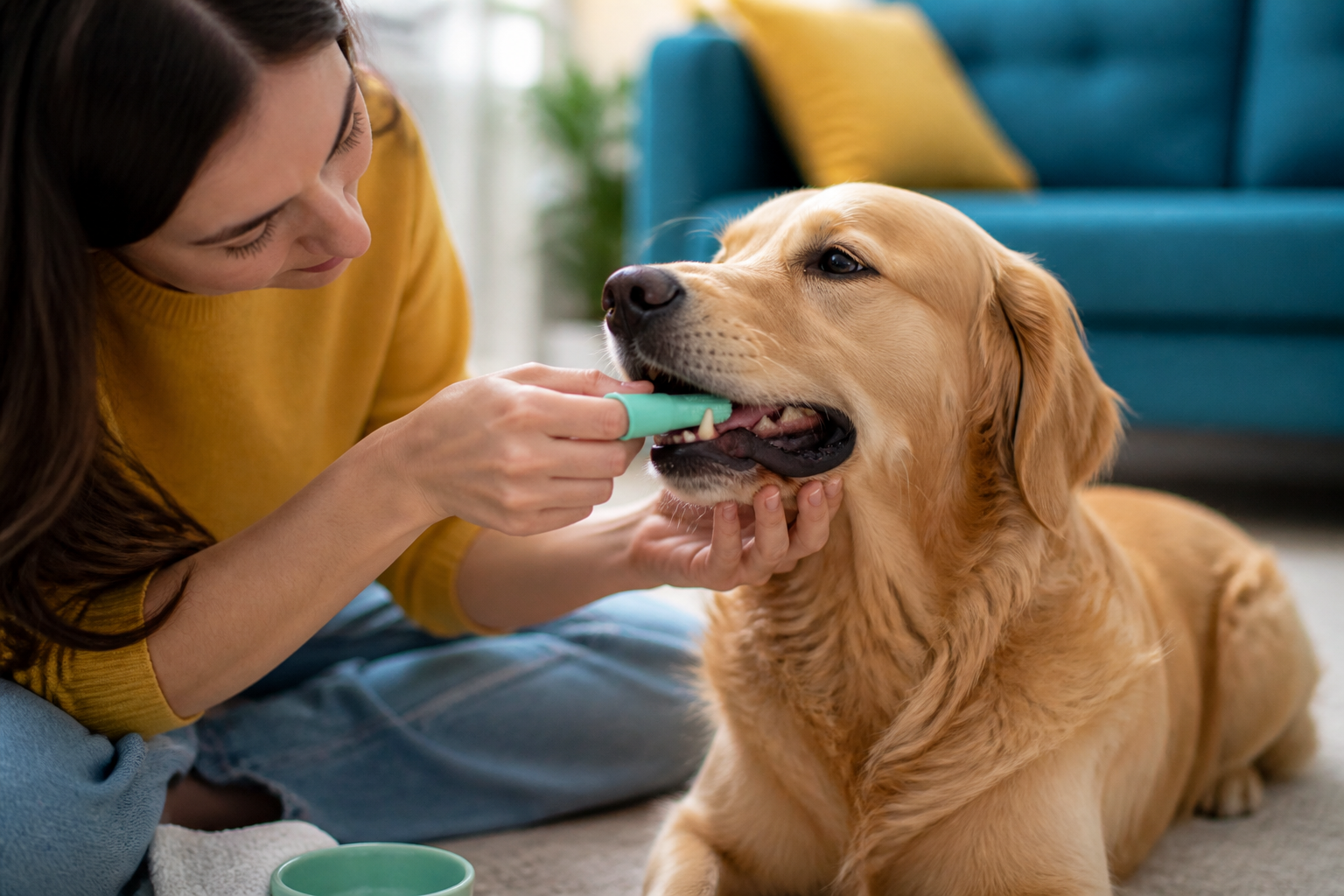
You can use a specialized dog toothbrush with a long handle to reach the back molars. If your dog is nervous, a finger brush that fits over your index finger can offer more control and feel less threatening. You can find toothbrushes, toothpaste, and other supplies in our dog dental care collection.
How to Introduce Brushing
Do not expect to do a full cleaning on the first day. It takes time to build trust.
Step 1: Let them taste the paste. / Put a small amount of flavored dog toothpaste on your finger and let them lick it off.
Step 2: Get them used to the touch. / Gently rub your finger along their gums and teeth for a few seconds.
Step 3: Introduce the brush. / Apply toothpaste to the brush and let them lick it. This helps them get used to the texture of the bristles.
Step 4: Start brushing. / Lift the lip and use gentle circular motions. Focus on the outside surfaces of the teeth, as this is where most tartar builds up.
Step 5: Reward immediately. / Give your dog plenty of praise or a dental-safe treat after each session.
For more guidance on building a routine, see these pet dental care tips.
Vet Tip: If your dog's gums bleed significantly during brushing, consult your veterinarian. Mild bleeding can happen with gingivitis, but heavy bleeding suggests advanced disease that needs a professional exam.
Using Dental Chews and Toys for Mechanical Cleaning
Not every dog will sit still for a toothbrush. If your dog is resistant, or if you want to supplement your brushing routine, dental chews are a fantastic option. They work through mechanical action. As your dog gnaws on the chew, the texture scrapes against the tooth surface to rub away plaque.
What to Look for in a Chew
Look for chews that have the Veterinary Oral Health Council (VOHC) seal of approval. This means the product has been tested and proven to reduce plaque or tartar. Many popular brands we carry, such as Greenies or specialized Kong toys, are designed with ridges and nubs that reach between teeth.
The chew should be firm enough to provide resistance but not so hard that it could break a tooth. Avoid natural bones or antlers if your dog is a "power chewer," as these can cause painful slab fractures on the premolars.
Browse our dog dental treats and chews to find options for your dog's routine.
Dental Toys
Rubber toys with textured surfaces can also help. Some designs allow you to smear enzymatic toothpaste or a dental gel inside the grooves. As your dog plays and chews, they are effectively brushing their own teeth. This is a low-stress way to maintain oral hygiene for high-energy dogs.
Bottom line: Dental chews and toys are effective tools for mechanical plaque removal, but they work best as a supplement to brushing rather than a total replacement.
Water Additives and Supplements
If you are looking for a hands-off approach to help soften tartar, consider what goes into your dog's water or food. These products work chemically rather than mechanically.
Water Additives
These are liquid solutions you add to your dog's daily drinking water. They often contain enzymes or mild antiseptics that help kill oral bacteria. They also help break down the film that allows plaque to stick to the teeth. Most are tasteless and odorless, so your dog will not even know they are there.
Kelp and Seaweed Powders
Certain types of seaweed, like Ascophyllum nodosum, have been shown to improve dental health. When your dog eats these supplements, the natural compounds are absorbed into the bloodstream and released back into the saliva. This changes the composition of the saliva so that plaque cannot harden as easily. Over time, it can even help soften existing tartar, making it easier to brush away.
You can explore our dental supplements for dogs for powders and other oral-care options.
Probiotics for the Mouth
Just like the gut, the mouth has its own microbiome. Oral probiotics for dogs help introduce "good" bacteria that crowd out the "bad" bacteria responsible for plaque and bad breath. This is a gentle, natural way to support long-term oral health.
Dental Wipes and Gels
For dogs that hate the sensation of bristles, dental wipes are a great middle ground. These are pre-moistened pads that you wrap around your finger. They allow you to physically rub the plaque off the teeth with more precision than a brush.
The Power of Enzymes
Many dental gels contain enzymes like glucose oxidase. These enzymes produce a natural antibacterial effect that helps dissolve the organic matter in plaque. You can often apply these gels directly to the gumline with your finger. The gel stays in contact with the teeth and continues to work long after you apply it.
Baking Soda and Coconut Oil
Some owners prefer a natural DIY approach. A paste made of baking soda and a little water can act as a mild abrasive to help clean the teeth. Coconut oil is also popular because it contains lauric acid, which has natural antimicrobial properties. While these are safe, they are usually less effective than specialized enzymatic products designed for canine oral chemistry.
When At-Home Care Isn't Enough: Seeing Your Vet
It is important to be realistic about what you can achieve at home. If your dog already has thick, stony tartar, no amount of brushing will make it disappear. Attempting to scrape tartar off with metal tools at home is dangerous. You can easily slip and cut the gums or scratch the enamel, which creates even more places for bacteria to hide.
Signs You Need a Professional Cleaning
- Foul breath that does not go away after brushing.
- Visible yellow or brown crust that covers more than half the tooth.
- Red, swollen, or bleeding gums.
- Loose or broken teeth.
- Excessive drooling or dropping food.
- Pawing at the face or mouth.
What Happens During a Vet Cleaning?
A professional cleaning is done under general anesthesia. This is necessary because it allows the vet to clean under the gumline safely. They use ultrasonic scalers to vibrate the tartar off the teeth and then polish the enamel to make it smooth again. They also take X-rays to check for bone loss or infections deep in the roots.
Vet Tip: Anesthesia is the only way to perform a thorough dental exam and cleaning. "Anesthesia-free" cleanings only address the visible part of the tooth and leave the dangerous bacteria under the gumline untouched.
How the BaxterBoo Pharmacy Supports Your Dog's Dental Health
Sometimes, a simple toothbrush is not enough to manage a dog's dental issues. If your veterinarian identifies an infection or advanced periodontal disease, they may prescribe specific medications or specialized diets.
Our pharmacy offers FDA-approved medications and prescription pet foods through our partnership with Pet's Choice. This is a vital resource for owners managing chronic dental health conditions. Your vet might suggest a prescription dental diet, such as Royal Canin Dental or Farmina Vet Life options, which are formulated with a specific kibble size and texture to maximize cleaning.
Through our partnership with Pet's Choice, we can help you get the exact products your vet recommends delivered right to your door. This includes antiseptic rinses like chlorhexidine, which are often used after a professional cleaning to keep bacteria levels low. Because we operate as a hybrid retailer with a real warehouse in Vernon Hills, Illinois, we combine the expertise of a local shop with the convenience of a full-service pharmacy.
When your veterinarian recommends medication, visit our pet pharmacy to explore prescription options.
Maintaining the Results
Once you have managed to clean your dog's teeth, the goal is to keep them that way. Plaque starts forming again immediately after a cleaning.
- Set a schedule: Brush at the same time every day so your dog expects it.
- Use MVP Rewards: Earn points on every purchase of toothpaste, brushes, and chews to keep your costs down.
- Set up Autoship: Never run out of dental chews or water additives by scheduling regular deliveries. You will also get a free MVP Gold membership.
- Monitor monthly: Do a quick "lip flip" once a month to look for new tartar or red gums.
Learn more about the MVP Rewards programme and its available benefits.
Conclusion
Cleaning tartar off your dog's teeth at home is a marathon, not a sprint. While you cannot safely remove heavy, hardened tartar without a vet, you have immense power to prevent it and manage plaque. By combining daily brushing with enzymatic gels, dental chews, and water additives, you can keep your dog's mouth healthy and their breath fresh.
Remember that oral health is a key pillar of overall wellness. A clean mouth leads to a healthier heart and a happier pet. If you notice signs of pain or heavy buildup, talk to your vet about a professional cleaning. We are here to support that journey with the supplies you need and the pharmacy access your vet requires.
Key Takeaway: Consistency is the secret to dental health. Daily attention to plaque prevention is the best way to avoid the dangers of tartar and ensure your dog lives a long, pain-free life.
Bottom line: Start a dental routine today using our collection of dog dental brushes and chews, and consult your vet if you see signs of advanced tartar.
FAQ
Can I use a human dental scaler to remove my dog's tartar at home?
No, you should never use metal scaling tools on your dog at home. It is very easy to slip and cause a deep injury to your dog's gums or tongue. Additionally, scaling leaves tiny scratches on the tooth enamel that actually make it easier for plaque to stick in the future. Professionals always polish the teeth after scaling to smooth out these scratches, which is something you cannot do at home.
How often should I brush my dog's teeth to prevent tartar?
Ideally, you should brush your dog's teeth every single day. Plaque can harden into tartar in as little as 48 hours, so skipping even a few days gives tartar a chance to form. If daily brushing is not possible, aim for at least three times a week and supplement with dental chews or water additives on the off days.
Does dry food really clean a dog's teeth?
While the crunch of dry kibble provides a tiny bit of mechanical cleaning, it is not a substitute for brushing. Most kibble is small and shatters easily, meaning it does not spend enough time in contact with the tooth to remove much plaque. Specialized prescription dental diets are different because they have a larger, fibrous kibble that does not shatter, forcing the dog to chew more and effectively "scrubbing" the tooth.
Is bad breath in dogs always caused by tartar?
While tartar and gum disease are the most common causes of bad breath, it can sometimes signal other health issues. Problems with the digestive system, kidneys, or liver can also cause changes in a dog's breath. If you have been brushing regularly and your dog still has a strong, foul odor in their mouth, it is a good idea to visit your veterinarian for a full health checkup.






