
 Save 15% on your 1st Autoship learn more

 Email us
 Live Chat
 FAQs
FAQs





Introduction
You are relaxing on the couch with your dog when they let out a big yawn or lean in for a lick. Instead of the usual happy greeting, you notice a sharp, unpleasant odor. When you lift their lip to check, you see a thick, cement-like yellow or brown crust clinging to their back molars. This hardened substance is tartar, and it is more than just a cosmetic blemish. At BaxterBoo, we know that seeing this buildup can be worrying for any pet owner. We have spent years helping dog owners navigate dental health by providing the right tools and trustworthy advice. This guide covers how tartar forms, why home removal is tricky, and the best ways to keep your dog's mouth healthy. Understanding the difference between plaque and tartar is the first step toward a brighter smile for your dog.
Quick Answer: You cannot safely scrape hardened tartar off a dog’s teeth at home without risking damage to the enamel or gums. While you can prevent tartar using daily brushing and dental chews, existing tartar requires a professional cleaning by a veterinarian under anesthesia.
Understanding the Difference Between Plaque and Tartar
Many pet owners use the terms plaque and tartar interchangeably. However, they are two very different stages of dental disease. Plaque is a soft, sticky film that forms on the teeth within hours of eating. It consists of saliva, food particles, and bacteria. Because it is soft, you can easily remove plaque with a toothbrush or even a dental wipe.
If plaque stays on the tooth for more than 48 to 72 hours, it begins to mineralize. Minerals in your dog's saliva mix with the plaque and cause it to harden into tartar, also known as calculus. Once it reaches this stage, it bonds strongly to the tooth enamel. It becomes a rough, porous surface that acts like a magnet for even more bacteria.
Tartar often starts at the gumline and spreads upward. It provides a perfect hiding spot for bacteria to thrive and travel under the gums. This is where the real trouble begins. While plaque is the enemy you can fight every day, tartar is a much more stubborn opponent that requires professional intervention.
Why You Should Not Scrape Tartar at Home
It is tempting to buy a metal dental scaler online and try to chip the tartar away yourself. We strongly advise against this for several reasons. First, your dog's tooth enamel is surprisingly thin. Metal tools can easily scratch the enamel, creating microscopic grooves. These tiny scratches actually make it easier for plaque and bacteria to stick to the tooth in the future.
Second, the most dangerous tartar is the kind you cannot see. It sits below the gumline where it causes inflammation and infection. Even if you manage to scrape off the visible "tip of the iceberg," you are leaving the most harmful bacteria behind. Furthermore, a dog who is awake will likely flinch or move during the process. This creates a high risk of the metal tool slipping and causing a painful puncture wound to the gums or tongue.
Vet Tip: Attempting to scrape tartar at home can cause your dog to develop a fear of having their mouth handled. Always leave the scaling to professionals who use ultrasonic tools and can clean safely beneath the gumline while your dog is comfortable.
The Role of Professional Dental Cleanings
When tartar has already formed, a professional veterinary cleaning is the only effective solution. During this procedure, your vet will put your dog under general anesthesia. This is a vital step because it allows the medical team to perform a thorough cleaning without causing the dog stress or pain.
While your dog is under, the vet uses specialized ultrasonic scalers to vibrate the tartar loose. They clean both the visible surface and the pockets under the gums. Most professional cleanings also include dental X-rays. These images allow the vet to see if there is bone loss or abscesses hiding beneath the surface. After the tartar is gone, the vet polishes the teeth. Polishing smooths out the enamel so it is harder for new plaque to attach.
Bottom line: Professional cleanings are a medical necessity for removing hardened tartar and identifying hidden oral health issues.
Daily Brushing: The Gold Standard for Prevention
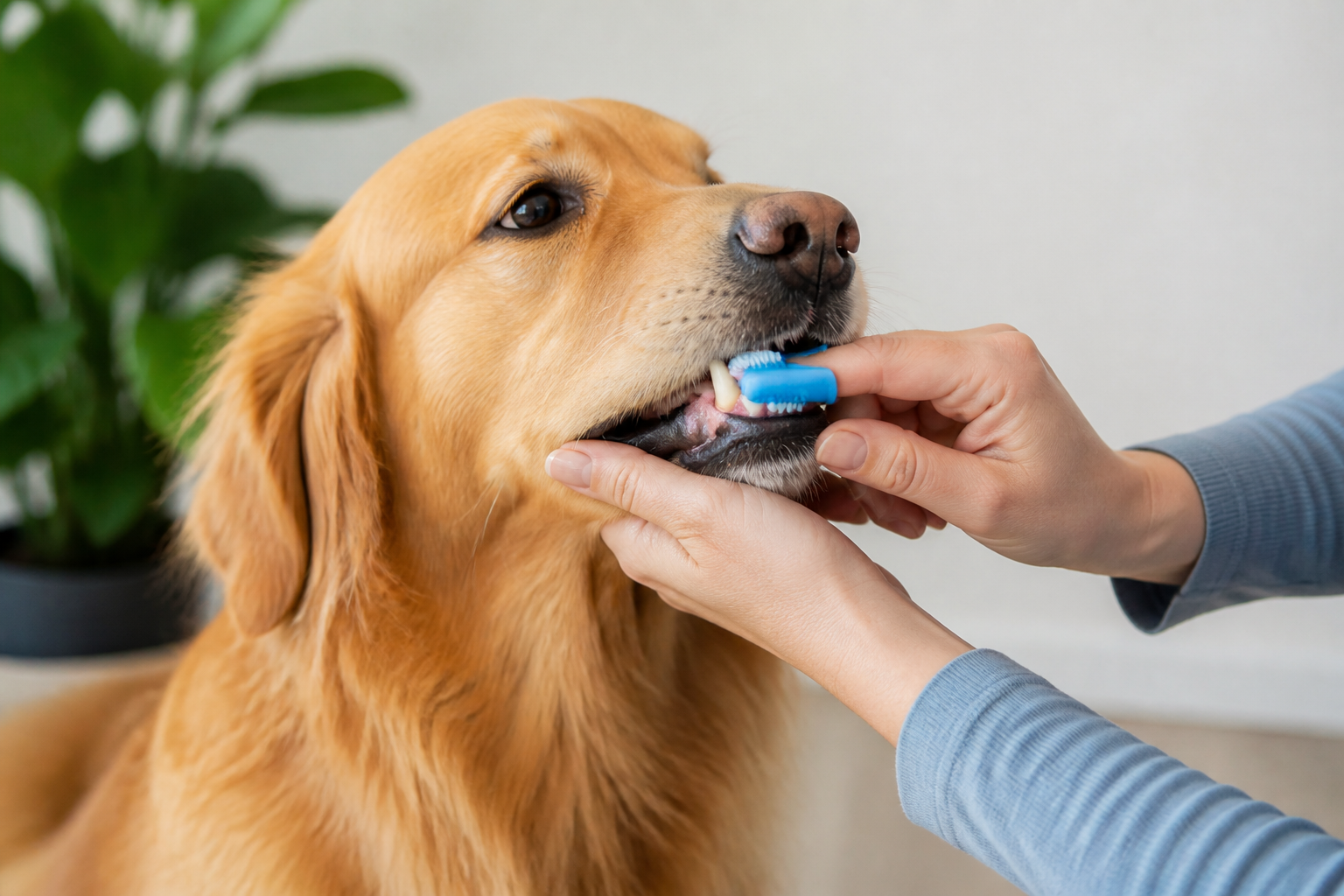
The best way to "clean" tartar is to never let it form in the first place. This means tackling plaque while it is still soft. Daily brushing is the most effective tool in your kit. You should always use a toothpaste specifically formulated for dogs. Human toothpaste often contains xylitol, which is toxic to dogs, or foaming agents that can upset their stomachs.
Enzymatic toothpastes are especially helpful for dogs. These contain enzymes that help break down food particles and bacteria even if you cannot reach every single nook and cranny. At BaxterBoo, we recommend starting slow. Let your dog lick the toothpaste off your finger first to get used to the flavor. Gradually move to a finger brush or a soft-bristled dog toothbrush. For additional guidance, read our tips for introducing a regular pet dental care routine.
Tips for a Successful Brushing Session
- Choose a time when your dog is calm and relaxed.
- Focus on the outside surfaces of the teeth, as this is where most tartar builds up.
- Keep sessions short, aiming for just 30 to 60 seconds.
- Always follow up with a high-value reward or praise.
- Be consistent, as brushing once a week is rarely enough to stop mineralization.
Dental Chews and Toys as Maintenance Tools
If your dog is resistant to brushing, dental chews and toys are helpful supplements. These products work through mechanical action. As your dog chews, the texture of the treat or toy scrapes against the tooth surface to rub away soft plaque. Some chews, like Greenies, are specifically designed to be flexible so the tooth sinks in, allowing the treat to clean down to the gumline. You can compare options in our dog dental care category.
Rubber toys with ridges or "nubs" can also help stimulate the gums and increase saliva flow. Saliva contains natural enzymes that help protect the teeth. While these tools are excellent for maintenance, they are not a replacement for brushing. Think of them as the "flossing" part of the routine rather than the "brushing" part.
Key Takeaway: Dental chews and toys provide mechanical scrubbing that helps remove plaque before it can harden into permanent tartar.
Water Additives and Oral Sprays
For dogs that absolutely will not tolerate a toothbrush, water additives and oral sprays offer an alternative. You simply add a specific amount of the solution to your dog's water bowl or spray it directly onto their teeth and gums. These products usually contain ingredients like chlorhexidine or enzymes that kill bacteria and slow down plaque formation. One example is Synergy Labs Dental Fresh Water Additive.
These are particularly useful for senior dogs or pets with crowded teeth where brushing is difficult. They help freshen breath almost immediately by reducing the bacterial load in the mouth. However, they work best when used in combination with other mechanical cleaning methods like chews or wipes.
Nutritional Support and Specialized Diets
What your dog eats can also impact how quickly tartar accumulates. Some dogs benefit from specialized dental diets. These kibbles are usually larger and have a specific fiber structure. Instead of crumbling instantly when bitten, the kibble holds together longer. This forces the tooth to graze against the kibble, providing a cleaning effect.
We carry brands like Royal Canin and Farmina Vet Life that offer formulas specifically designed for oral health. Some of these are prescription diets that contain minerals to bind the calcium in saliva, preventing it from turning plaque into tartar. If your dog has a history of rapid tartar buildup, our pharmacy can help you fulfill prescriptions for these specialized foods through our partnership with Pet's Choice.
Vet Tip: If your dog has red, bleeding gums or seems to be dropping food, skip the treats and head to the vet. These are signs of advanced periodontal disease that require medical treatment rather than home care.
How to Check Your Dog's Progress
Consistency is the only way to win the battle against tartar. We suggest doing a "mouth check" once a week. Lift the flews (the floppy part of the upper lip) and look at the back teeth. You are looking for a few specific things:
- Color: Teeth should be white. Yellow or brown indicates tartar.
- Gum Health: Gums should be a healthy pink. Redness or swelling along the tooth line is a sign of gingivitis.
- Breath: While "dog breath" is normal, a truly foul or rotting smell is a sign of infection.
- Stability: Gently check if any teeth seem loose, though be very careful as this can be painful for the dog.
For more warning signs to watch for, see our guide to recognizing dental problems in dogs.
The Risks of Ignoring Tartar
Leaving tartar on the teeth is not just about a yellow smile. The bacteria trapped in tartar can cause chronic inflammation. This inflammation eventually destroys the bone and tissues that hold the teeth in place. This leads to pain, tooth loss, and difficulty eating.
Even more concerning is the link between oral health and internal organs. Bacteria from the mouth can enter the bloodstream through inflamed gums. From there, it can travel to the heart, liver, and kidneys. Long-term dental neglect has been linked to heart valve issues and kidney disease in dogs. Keeping the teeth clean is a vital part of extending your dog's lifespan.
Establishing a Long-Term Routine
Creating a dental routine does not have to be a chore. Start by integrating one new habit this week. Maybe it is adding a dental chew to their afternoon routine or trying out a finger brush. Once that becomes a habit, add another layer of protection.
Step 1: Schedule a vet exam. Get a professional baseline so you know if you are starting with clean teeth or if a professional scaling is needed first.
Step 2: Introduce daily brushing. Use a dog-safe enzymatic toothpaste. Even 30 seconds a day makes a massive difference in plaque levels.
Step 3: Use supplemental tools. Provide dental chews like Greenies or use a water additive to keep the bacterial count low between brushes.
Step 4: Monitor and adjust. Check your dog's mouth weekly. If you see tartar returning quickly, talk to your vet about a specialized dental diet.
Key Takeaway: A multi-layered approach involving brushing, chews, and professional cleanings is the only way to effectively manage dog tartar.
Summary of At-Home Dental Tools
| Tool | Best Used For | Effectiveness |
|---|---|---|
| Toothbrush & Paste | Removing daily plaque | High |
| Dental Chews | Mechanical scrubbing | Medium |
| Water Additives | Killing bacteria/breath | Low-Medium |
| Dental Wipes | Quick surface cleaning | Medium |
| Raw Carrots | Natural scrubbing | Low |
Conclusion
Managing your dog's dental health is a lifelong commitment that pays off in comfort and longevity. While you cannot safely remove hardened tartar at home, you have all the tools necessary to prevent it from coming back once it is professionally cleaned. Regular brushing, high-quality dental chews, and routine veterinary check-ups form the foundation of a healthy mouth. At BaxterBoo, we are committed to helping you find the best supplies to make this process easier for both you and your dog. Whether you need an enzymatic toothpaste or a prescription diet from our pharmacy, taking action today will keep your dog's tail wagging and their breath fresh for years to come.
Bottom line: Focus your home efforts on daily plaque removal to prevent the formation of rock-hard tartar.
FAQ
Can I use a human dental scaler to remove tartar from my dog's teeth?
No, you should never use a metal scaler on your dog's teeth at home. These tools can easily slip and cause serious injury to your dog's mouth or damage their thin tooth enamel. Professional scaling is done under anesthesia to ensure every part of the tooth, including the area under the gumline, is cleaned safely and thoroughly.
Does dry kibble really keep a dog's teeth clean?
While some people believe dry food is better than wet food for teeth, standard kibble usually crumbles too quickly to provide much cleaning. Specialized dental diets are the exception because they have a specific texture and size designed to scrub the teeth as the dog chews. For the best results, use a dental diet alongside daily brushing rather than relying on food alone.
How often should I brush my dog's teeth to prevent tartar?
You should ideally brush your dog's teeth every single day. Plaque can begin to harden into tartar in as little as 48 hours, so brushing once a week is not enough to stop the mineralization process. If daily brushing is not possible, aim for at least three times a week and supplement with dental chews and water additives on the off days.
Why does my dog still have bad breath after I brush their teeth?
If your dog's breath remains foul after brushing, there may already be significant tartar buildup or an underlying infection below the gumline. Brushing only cleans the surface of the teeth and cannot reach deep infections or remove hardened calculus. In this case, you should consult your veterinarian for a professional exam to rule out periodontal disease or other health issues.






