
 Save 15% on your 1st Autoship learn more

 Email us
 Live Chat
 FAQs
FAQs





Introduction
You are sitting on the couch when your dog leans in for a friendly lick. Instead of a sweet moment, you are met with a wave of breath that smells like a damp basement. You know you should brush their teeth. But every time you reach for that tiny plastic brush, your dog turns into a master of avoidance. They hide under the table or clamp their jaw shut like a vault. Many pet owners face this exact struggle every day.
At BaxterBoo, we believe that dental care should not feel like a wrestling match. While traditional brushing is the gold standard, it is not the only way to keep a dog's mouth healthy. This guide explores several effective, low-stress methods to manage plaque and tartar without ever picking up a toothbrush. By choosing the right tools and staying consistent, you can protect your dog from dental disease and keep their breath fresh.
Quick Answer: You can clean your dog's teeth without a toothbrush by using dental powders, water additives, and VOHC-approved dental chews. These products use active ingredients and mechanical abrasion to break down plaque during normal eating and drinking routines.
The Problem With Plaque and Tartar
Dental care is about more than just white teeth. It is about preventing systemic health issues. When your dog eats, a sticky film called plaque begins to form on their teeth within hours. If that plaque is not disrupted, it reacts with the minerals in your dog's saliva. Within 48 hours, it hardens into tartar.
Tartar is the yellow or brown crust you see near the gumline. Once it hardens, you cannot remove it with a brush or a chew at home. It requires a professional cleaning from a veterinarian. This buildup irritates the gums and can lead to gingivitis or periodontal disease. Over time, bacteria from the mouth can enter the bloodstream and affect the heart, liver, and kidneys.
We see many owners who feel guilty because they cannot brush their dog's teeth daily. It is important to remember that some care is always better than no care. A consistent routine using brushless methods can significantly slow down the buildup of tartar and keep your dog comfortable as they age.
For more warning signs to watch for, read our guide to recognizing signs of dental disease in dogs.
Key Takeaway: Plaque turns into permanent tartar in as little as two days. Consistency is more important than the specific method you use.
The Power of Dental Powders
Dental powders are the easiest way to manage oral health for dogs that hate mouth handling. You do not have to touch their teeth or hold their muzzle. You simply sprinkle a measured scoop onto their food once a day.
The most effective powders use a specific type of seaweed called Ascophyllum nodosum. This kelp works through the dog's system. Once ingested, the active compounds are absorbed into the blood and released through the saliva. It works to soften existing tartar and prevents new plaque from sticking to the tooth surface.
ProDen PlaqueOff is the leader in this category. It carries the Veterinary Oral Health Council (VOHC) Seal of Acceptance. This seal means independent studies have proven the product actually works to reduce plaque and tartar. It is a simple addition to a morning meal that provides 24-hour protection.
How to Introduce Dental Powder
Step 1: Check the dosage. / Look at the package to find the correct amount for your dog's weight.
Step 2: Mix it well. / Sprinkle the powder over dry kibble or mix it into wet food to ensure they eat the entire dose.
Step 3: Monitor for results. / It usually takes three to eight weeks of daily use to see a visible difference in breath and tartar softness.
Vet Tip: If your dog has a history of thyroid issues, consult your veterinarian before using seaweed-based powders. These products naturally contain iodine, which can affect thyroid function in sensitive pets.
Dental Chews and Treats
Dental chews are the most popular brushless option for a reason. Most dogs view them as a high-value treat rather than a medical chore. These chews work through mechanical abrasion. As your dog gnaws on the treat, the texture scrapes against the teeth to wipe away plaque.
Not all treats are created equal. Some "dental" bones are simply hard treats that crumble immediately. Look for brands like Greenies or ProDen PlaqueOff Dental Care Bones. These are designed with specific ridges and a flexible texture that allows the tooth to sink into the chew. This ensures the scraping action happens all the way down to the gumline.
We carry a variety of sizes to match every breed. Giving a large dog a tiny chew is a choking hazard. Giving a small dog a giant bone can be too hard on their jaw. Always match the product size to your dog's weight to get the best results.
Selecting the Right Chew
- VOHC Seal: Look for the seal to ensure the claim is backed by clinical data.
- Calories: Remember that dental chews are treats. Adjust your dog's daily meal portions to account for the extra calories.
- Ingredients: Choose chews with limited fillers. Some premium options also include enzymes that break down bacteria.
- Durability: The chew should last for several minutes. If your dog gulps it down in three seconds, it is not cleaning the teeth.
For more options, browse our dog dental treats.
Bottom line: A daily VOHC-approved dental chew is an excellent mechanical tool for removing soft plaque before it hardens.
Water Additives for Passive Cleaning
If your dog is picky about food toppings or has a sensitive stomach that cannot handle dental chews, water additives are a great alternative. These are odorless and tasteless liquids that you pour into your dog's water bowl.
Water additives often contain enzymes or ingredients like stabilized chlorine dioxide. These components help kill the bacteria in the mouth that cause bad breath and plaque formation. Every time your dog takes a drink, they are giving their mouth a mini-rinse.
This method is entirely passive. It requires zero cooperation from your dog. However, it is best used as a supplement to another method. While water additives are great at freshening breath and reducing bacteria, they do not provide the mechanical scraping needed to remove thick buildup.
Using Dental Wipes and Finger Brushes
Some dogs do not mind their owners touching their mouths but find the long handle of a toothbrush terrifying. In these cases, dental wipes or finger brushes are a bridge between brushing and brushless care.
Dental wipes are pre-moistened pads that you wrap around your index finger. They allow you to feel exactly where you are cleaning. You can gently rub the surface of the teeth and the gumline to lift away film. Because your finger is soft and familiar, most dogs find this much less invasive than a traditional brush.
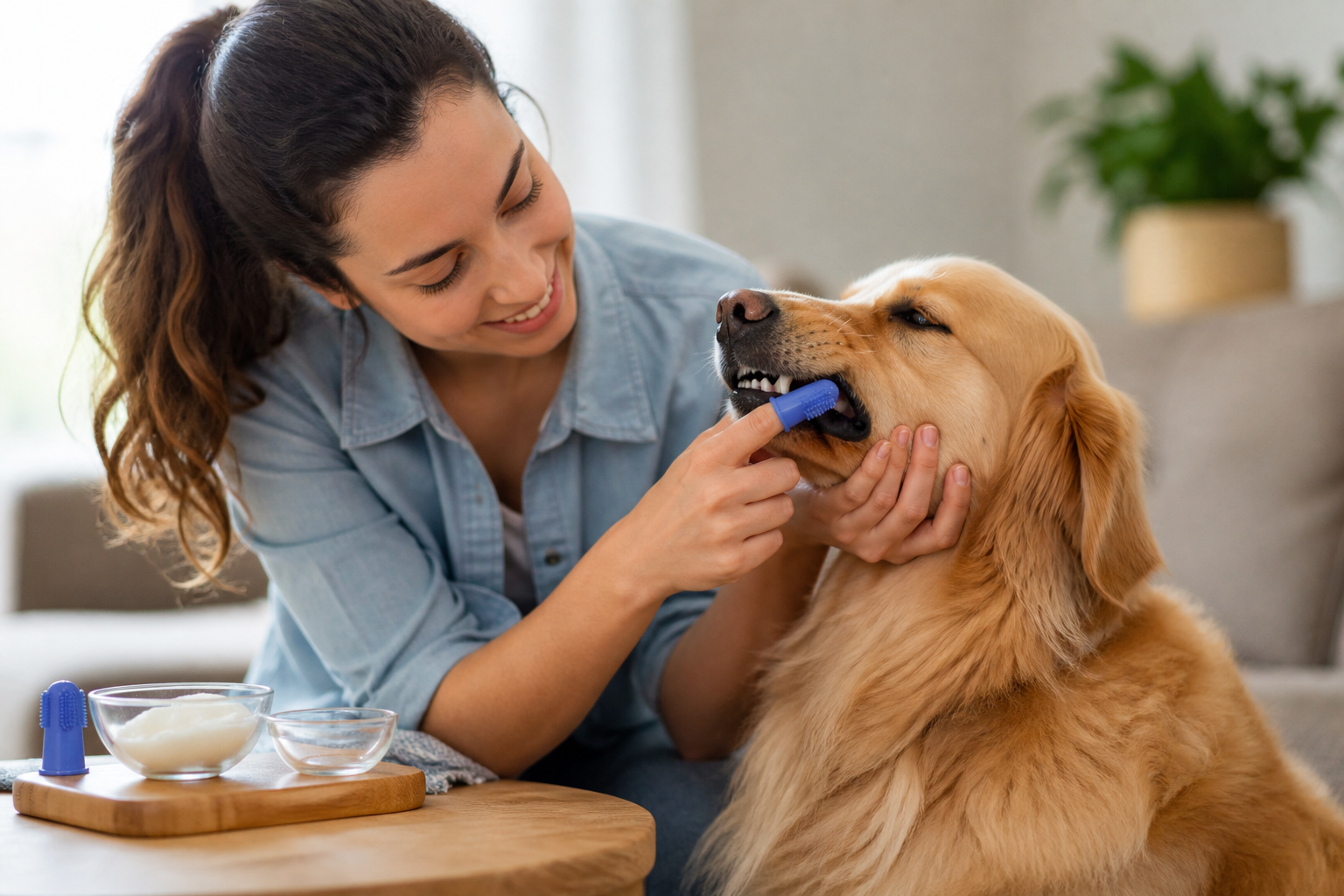
Finger brushes are small silicone caps with soft bristles that fit over your fingertip. They provide a bit more scrubbing power than a wipe but keep the familiar feel of your hand. If your dog allows this, you can use a pet-safe enzymatic toothpaste. These pastes contain enzymes that keep working to break down plaque long after you finish rubbing the teeth.
Key Takeaway: Wipes and finger brushes offer more control and are often better tolerated by dogs that are fearful of plastic toothbrushes.
Dental Toys and Playtime
You can turn dental hygiene into a game by choosing specific toys. Many Kong toys and textured rubber rings are designed with "dental ridges." When a dog chews on these during play, the rubber massaged the gums and scrapes the teeth.
To make these toys more effective, you can smear a small amount of dog-safe toothpaste or a bit of plain coconut oil into the grooves. As the dog licks and chews to get the flavor, they are inadvertently cleaning their teeth. This is a perfect option for high-energy chewers who need something to do with their mouths.
Avoid extremely hard toys like natural antlers or heavy nylon bones if your dog is an aggressive chewer. These can be harder than the tooth enamel itself. We often see "slab fractures" in dogs that chew on items with no "give" or flex. If you cannot indent the toy with your thumbnail, it might be too hard for your dog's teeth.
Prescription Dental Diets
For dogs with a high tendency toward dental disease, a change in diet can make a massive difference. Standard kibble often shatters as soon as a tooth hits it. This provides very little cleaning benefit. Prescription dental diets are different.
Brands like Royal Canin Dental or Farmina Vet Life offer specialized kibble. These pieces are much larger than standard food. They are also made with a fiber matrix that does not crumble. The tooth must penetrate the entire piece of kibble before it breaks. This creates a "squeegee" effect on the tooth surface.
These diets also contain calcium-binding agents. These agents grab the calcium in the saliva so it cannot be used to turn plaque into tartar. Because these are specialized formulas, they often require a veterinarian's authorization. Our pet pharmacy can help you manage these prescription orders easily.
Vet Tip: If you notice your dog is dropping food, bleeding from the mouth, or only chewing on one side, stop all home dental care and call your vet. These are signs of active pain or a fractured tooth that requires professional attention.
Comparison of Brushless Methods
| Method | Ease of Use | Mechanical Cleaning | Bacterial Control | Best For |
|---|---|---|---|---|
| Dental Powder | Very High | Low | High | Dogs who hate mouth handling |
| Dental Chews | High | High | Moderate | Dogs who love treats |
| Water Additives | Very High | None | Moderate | Picky eaters / Supplemental care |
| Dental Wipes | Moderate | Moderate | Moderate | Puppies / Training for brushing |
| Dental Toys | High | Moderate | None | Active chewers |
| Dental Diets | High | High | High | Chronic dental issues |
The Role of the BaxterBoo Pharmacy
Even with the best brushless routine, some dogs have a genetic predisposition to dental problems. Small breeds, such as Pugs or Yorkies, have crowded mouths that trap food and bacteria more easily. For these pets, home care is a tool for maintenance, but medical intervention may still be necessary.
Our pharmacy carries FDA-approved medications and prescription diets that support oral health. If your vet recommends a specific dental rinse or a prescription-strength food, you can find those options through our partnership with Pet's Choice. We make it simple to get the professional-grade products your dog needs delivered right to your door.
Using our Autoship program for these items is a smart way to ensure you never run out. Consistency is the most important factor in dental health. If you miss a week of dental powder or chews, plaque can quickly begin to mineralize. Setting up recurring deliveries also earns you a free MVP Gold membership, which adds even more value to your pet care routine.
When Brushless Methods Aren't Enough
It is important to have realistic expectations for brushless dental care. These methods are designed to prevent new buildup and maintain a healthy mouth. They are not a "cure" for advanced periodontal disease.
If your dog already has thick, stony tartar covering their teeth, no amount of seaweed powder or dental chews will make it disappear. At that stage, the bacteria are likely already under the gumline where no home product can reach. Your dog will need a professional cleaning under anesthesia.
Once the vet has performed a "clean slate" procedure, your brushless routine becomes vital. It will help keep the teeth clean for much longer and may reduce the frequency of professional cleanings in the future.
Signs Your Dog Needs a Vet Visit
- Foul Odor: A smell that is metallic, rotten, or sharp.
- Discoloration: Dark brown or gray buildup that covers most of the tooth.
- Gum Changes: Bright red, bleeding, or receding gums.
- Behavioral Shifts: Shying away when you touch their face or refusing hard food.
- Loose Teeth: Any wiggly or missing teeth in an adult dog.
Bottom line: Brushless care is a maintenance strategy, not a replacement for professional veterinary dental exams.
Creating a Daily Routine
The secret to success is making dental care a habit that fits into your existing schedule. You do not need to do everything at once. Choose one or two methods that your dog enjoys and stick with them.
A sample routine might look like this:
- Morning: Add one scoop of ProDen PlaqueOff powder to their breakfast.
- Afternoon: Give one VOHC-approved dental chew while you are cleaning up after lunch.
- All Day: Ensure their water bowl contains a dental additive.
- Evening: A quick chew session with a textured dental toy.
This routine provides four layers of protection without ever needing to use a toothbrush. It addresses the bacteria in the saliva, provides mechanical scraping, and offers systemic support. Over time, you will notice their breath getting better and their gums looking healthier.
If you are just starting out, we recommend beginning with the MVP Rewards program. Since dental care requires buying products regularly, you can earn up to 5% back on every purchase. This helps make high-quality dental care more affordable for the long term.
FAQ
Is it really possible to keep a dog's teeth clean without brushing?
Yes, you can maintain good oral health using a combination of systemic and mechanical methods. Products like VOHC-approved dental powders and chews are clinically proven to reduce plaque and tartar buildup. While brushing is still the most direct way to clean, a consistent brushless routine is significantly more effective than doing nothing at all.
Which "no-brush" product is the most effective?
The most effective products are those with the VOHC Seal of Acceptance, such as ProDen PlaqueOff powder or Greenies dental chews. Powders work systemically to soften tartar and prevent plaque from sticking, while chews provide the mechanical action needed to scrape surfaces. Using both together offers the most comprehensive protection for a dog that refuses a toothbrush.
Can coconut oil clean a dog's teeth?
Coconut oil has antimicrobial properties because of its lauric acid content, which can help reduce bacteria in the mouth. While it is not a standalone solution for cleaning teeth, it is a safe and tasty "toothpaste" alternative when used with a dental wipe or smeared on a textured toy. It will not remove existing tartar, but it can support overall gum health.
How do I know if my dog's teeth are getting clean?
You should monitor your dog's breath and the color of their gums. Fresh breath is a sign that bacteria levels are under control. Healthy gums should be a light pink color, not red or swollen. You can also lift your dog's lip to see if the yellow buildup near the gumline is thinning or if new white tooth surface is becoming visible.






