
 Save 15% on your 1st Autoship learn more

 Email us
 Live Chat
 FAQs
FAQs





Introduction
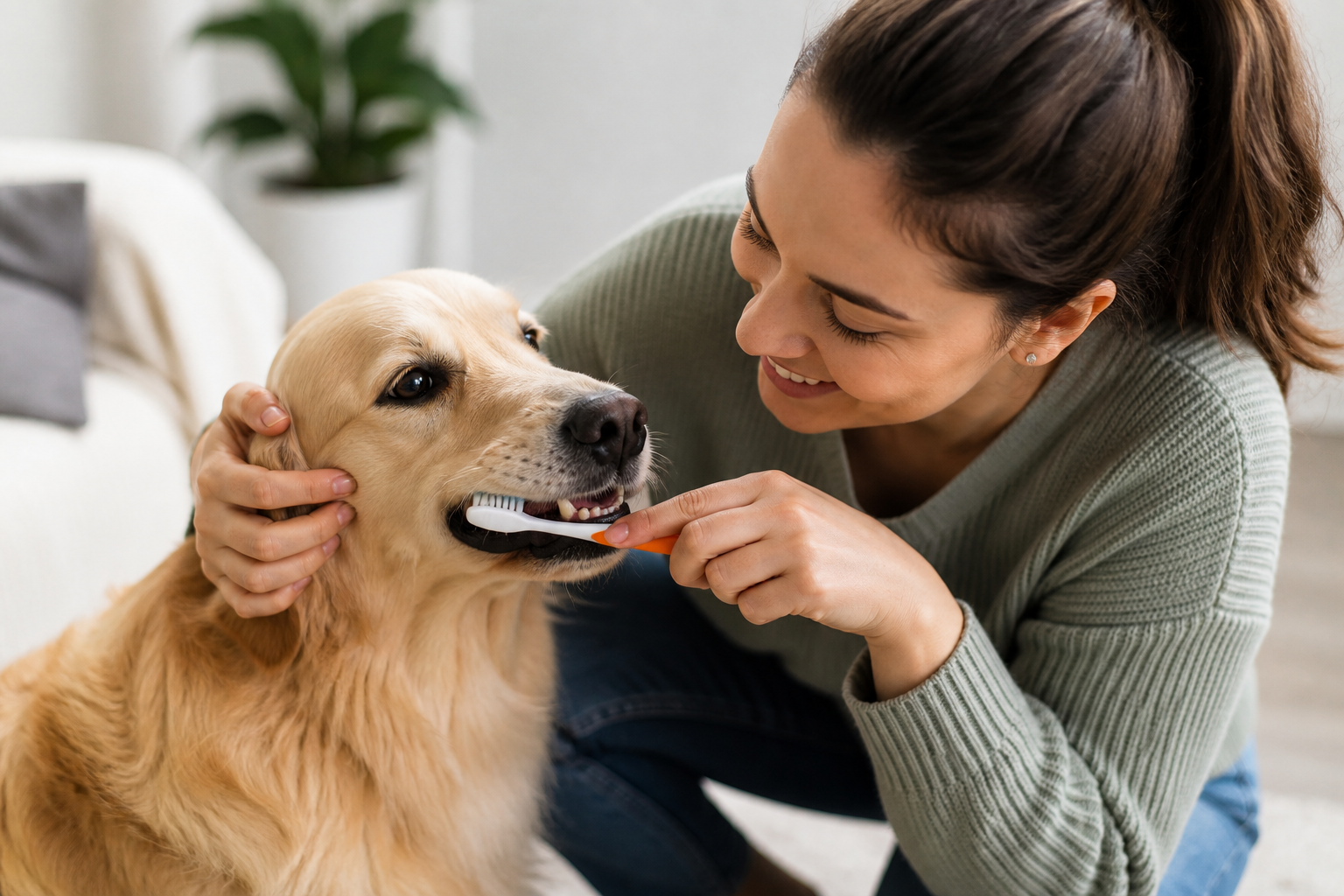
You lean in for a happy morning pup kiss and find yourself pulling back from a cloud of "dog breath." It is a common moment for many pet owners. That smell is often the first sign that bacteria are building up on your dog's teeth and gums. At BaxterBoo, we believe that dental care is just as important as a good diet or daily exercise. Many owners feel nervous about sticking a toothbrush into a wiggly dog's mouth. This guide will show you that it does not have to be a struggle. We will cover the tools you need and a simple step by step process to get the job done. With a little patience, you can manage your dog's oral health right from your living room.
Why Home Dental Care Is Essential
Most dogs show signs of dental disease by the time they are three years old. It usually starts with a thin film of plaque. This is a sticky layer of bacteria that forms after every meal. If you do not remove it, it reacts with minerals in your dog's saliva. Within about 48 hours, it hardens into tartar. You cannot brush tartar away at home. Only a professional cleaning under anesthesia can remove that hard brown buildup.
Ignoring these issues leads to more than just bad breath. Bacteria from the mouth can enter the bloodstream. This puts a constant strain on your dog's heart, liver, and kidneys. Routine brushing helps prevent painful infections and tooth loss. It also helps you avoid the high costs of dental surgery down the road.
The Plaque to Tartar Timeline
Plaque starts forming within hours of eating. It is soft and easy to wipe away with a brush or even a dental wipe. Once it mineralizes into tartar, the surface becomes rough. This rough surface makes it even easier for more plaque to stick. It becomes a cycle that damages the gum line. This leads to gingivitis and eventually bone loss around the teeth.
Quick Answer: You can clean your dog's teeth by using a dog-specific toothbrush and enzymatic toothpaste once a day. Focus on the outside surfaces of the teeth using gentle circular motions. Start slowly to build trust and always reward your dog with praise or a treat afterward.
Gathering Your Dental Supplies
Before you start, you need the right gear. You should never use human products on your dog. Our human toothpaste contains fluoride and often xylitol. Both are toxic to dogs. Since dogs do not spit, they swallow everything you put in their mouth. Dog-specific toothpaste is designed to be swallowed safely.
Choosing the Best Toothbrush
There are several types of brushes to consider based on your dog's size and comfort level.
- Finger Brushes: These are small silicone sleeves that fit over your pointer finger. They have soft bristles on one side. These are excellent for puppies or dogs that are wary of long objects in their mouth.
- Dual-Headed Brushes: These have a long handle with a large brush on one end and a tiny one on the other. This allows you to reach the tiny front teeth and the large back molars with one tool.
- Three-Sided Brushes: These wrap around the tooth to clean the top, front, and back at the same time. These are great for dogs that do not have much patience for long sessions.
- Gauze or Dental Wipes: If your dog absolutely refuses a brush, you can wrap medical gauze around your finger. We also carry pre-moistened dental wipes that work well for basic plaque removal.
For a ready-made option, the Petrodex Advanced Dental Care Kit Dog Toothpaste - Peanut includes toothpaste, a dual-ended toothbrush, and a finger toothbrush.
Finding a Flavor They Love
Dog toothpaste comes in flavors like poultry, beef, and peanut butter. This makes the experience feel like a treat rather than a chore. At BaxterBoo, we find that enzymatic toothpaste is the most effective. These pastes contain enzymes that help break down bacteria even after you stop brushing.
Key Takeaway: Always use toothpaste formulated specifically for pets to avoid toxicity. Enzymatic formulas provide the best protection by continuing to work after the brushing session ends.
How to Clean Your Dog's Teeth Step by Step
Do not expect to do a full brushing on the first day. Your goal is to build a positive association. If you rush, your dog may become fearful. This process might take a week or two to master.
Step 1: The Taste Test
Start by letting your dog lick a small amount of toothpaste off your finger. Do this for a couple of days. You want them to get excited when they see the tube. Praise them heavily while they enjoy the flavor. This establishes the paste as a reward.
Step 2: Getting Used to Touch
While your dog is relaxed, gently lift their lip. Rub your bare finger along their gums and teeth in a circular motion. This mimics the feeling of a brush. If they stay calm, give them a small high-value treat. Repeat this until they are comfortable with you handling their mouth.
Step 3: Introducing the Brush
Put a small dab of toothpaste on your chosen brush. Let your dog lick the paste off the bristles. This shows them that the brush is just a delivery system for the tasty paste. You can also gently touch the brush to their front teeth without moving it.
Step 4: The Brushing Motion
Once they are ready, lift the lip and brush the large canine teeth in the front. Use a 45-degree angle toward the gum line. Move in small circles. You only need to focus on the outside of the teeth. A dog's tongue generally does a good job of keeping the inside surfaces clean.
Step 5: Reaching the Back Molars
The back molars are where the most tartar builds up. Slide the brush back along the cheek. You do not need to open their mouth wide. Just sliding the brush under the cheek is usually enough. Aim for about 30 seconds on each side.
Step 6: The Final Reward
Always end on a high note. Even if the session was short or messy, give plenty of praise. A dental-friendly treat or a favorite toy can help seal the deal. You want your dog to look forward to the next time.
Vet Tip: Check your dog's mouth regularly for red or bleeding gums. If you notice significant bleeding during brushing, stop and consult your veterinarian. This could be a sign of advanced gum disease that requires professional treatment before you can continue home care.
For additional guidance on warning signs, read how to recognize bad teeth in dogs.
Alternatives to Traditional Brushing
Some dogs will never fully accept a toothbrush. If you have a rescue dog with a sensitive mouth or a very senior pet, you may need other options. While brushing is the gold standard, these tools still help reduce bacterial load.
Dental Chews and Treats
High-quality dental chews are designed to scrape the tooth surface as the dog bites down. Look for products that have the Veterinary Oral Health Council (VOHC) seal. These have been tested for their ability to reduce plaque and tartar. We carry brands like Greenies and Cosequin that offer dental support alongside other health benefits.
You can explore our dental dog treats for chew-based options, including products designed for regular use.
Water Additives and Powders
Dental water additives are tasteless liquids you add to your dog's water bowl. They contain ingredients that help kill bacteria in the mouth. Similarly, dental powders can be sprinkled over their food. These often contain natural seaweed or enzymes that work systemically to soften plaque.
Dental Toys
Rough-textured rubber toys or cotton ropes can act as a natural toothbrush. As your dog chews, the fibers or bumps rub against the teeth. This is a great way to incorporate dental health into playtime. KONG toys are excellent for this, especially when paired with a dental-specific paste inside.
Bottom line: Brushing is the most effective method, but using dental chews and water additives can significantly help if your dog is resistant to a toothbrush.
For more ideas involving chews, water additives, and home routines, see these pet dental care tips.
Managing the Needs of Different Breeds
A dog's breed plays a large role in their dental health. Small and toy breeds, like Chihuahuas or Yorkies, often have crowded mouths. Their teeth are large compared to their small jaws. This creates many tiny crevices where food and bacteria get trapped. These dogs often need daily brushing to prevent early tooth loss.
Brachycephalic breeds, or flat-faced dogs like Pugs and Bulldogs, also face unique challenges. Their jaw structure is often misaligned. This means their teeth do not meet correctly, which prevents the natural cleaning that happens during chewing. For these dogs, you may need a very small finger brush to reach into tight spaces.
Large breeds often have more space between their teeth. This makes cleaning easier, but they also tend to be heavy chewers. You must be careful with hard bones or stones. These can cause painful tooth fractures that require emergency vet care.
When Home Care Is Not Enough
Brushing is a preventive measure. It is not a cure for existing dental disease. If your dog already has thick brown tartar or loose teeth, brushing will not fix the problem. In fact, brushing an infected mouth can be very painful for your dog.
Signs of Dental Trouble
- Persistent bad breath that does not go away after brushing.
- Yellow or dark brown buildup near the gum line.
- Red, swollen, or bleeding gums.
- Pawing at the mouth or face.
- Dropping food while eating or refusing dry kibble.
- Excessive drooling.
If you see these signs, it is time for a professional exam. Your vet can perform a thorough cleaning and take X-rays. This identifies problems hidden below the gum line that the naked eye cannot see.
The Role of Prescription Diets
In some cases, your vet might recommend a prescription dental diet. These kibbles are larger and have a specific fiber structure. They do not crumble immediately when bitten. Instead, the tooth sinks into the kibble, which wipes away plaque. We provide access to many of these specialized formulas.
Our pet pharmacy offers a wide range of medications and prescription pet foods. If your vet prescribes a specific dental diet or a medication for a mouth infection, you can fulfill those needs with us. This ensures your dog gets exactly what the doctor ordered to get their health back on track.
Vet Tip: Annual dental exams are crucial for every dog. Even with perfect home brushing, your vet needs to check for oral tumors, fractures, and deep pocketing in the gums that can hide infection.
Creating a Consistent Routine
Consistency is more important than perfection. If you can only brush for 20 seconds, that is better than not brushing at all. Try to tie the routine to an existing habit. Maybe you brush your dog's teeth right after you brush your own at night. Or perhaps you do it right before they get their final evening walk.
If you find it hard to remember, our Autoship program can help. You can set your toothpaste, dental chews, and treats to arrive on a regular schedule. This ensures you never run out of the supplies you need to keep that smile bright. Plus, you save on your orders while keeping your pet healthy.
Common Brushing Mistakes to Avoid
- Using Human Toothpaste: As mentioned, this is dangerous. Always stick to pet-safe options.
- Being Too Aggressive: You do not need to scrub hard. Gentle pressure is enough to move plaque.
- Forcing the Mouth Open: This causes stress. Let the dog keep their jaw closed and just work under the lips.
- Stopping Because of Light Bleeding: Minor pinkness on the brush can happen when you first start. However, heavy bleeding means it is time to see the vet.
- Neglecting the Back Teeth: Most people only brush the front, but the back molars do the most work and collect the most tartar.
Summary of At-Home Dental Tips
Maintaining your dog's teeth is a long-term commitment. It requires the right tools, a bit of training, and daily effort.
- Start with a dog-safe enzymatic toothpaste.
- Introduce the brush gradually over several days.
- Focus on the outside of the teeth and the gum line.
- Use dental chews and water additives as supplements.
- Watch for signs of pain or advanced disease.
- Schedule yearly checkups with your veterinarian.
Key Takeaway: Success in home dental care comes from patience and routine. By starting slowly and using the right pet-safe tools, you can significantly improve your dog's quality of life and longevity.
Conclusion
Cleaning your dog's teeth at home is one of the most proactive things you can do as a pet owner. It prevents pain, keeps breath fresh, and protects vital organs from bacterial damage. While it may feel awkward at first, most dogs eventually accept it as part of their daily life. Remember to stay patient and keep the experience positive with plenty of rewards. Whether you need a starter kit with a finger brush or a specialized enzymatic paste, we are here to help. You can find everything you need in our dog dental care category to keep your dog's smile healthy for years to come.
FAQ
Can I use baking soda to clean my dog's teeth?
No, you should avoid using baking soda. It has a high alkaline content that can upset a dog's stomach if swallowed in large amounts. It also lacks the enzymes found in professional dog toothpaste that are necessary to properly break down plaque.
How often do I really need to brush my dog's teeth?
Ideally, you should brush your dog's teeth every day. Plaque begins to harden into tartar within 24 to 48 hours, so daily cleaning is the best way to prevent buildup. If your schedule is tight, aim for at least three times a week to see a benefit.
Will dental chews replace the need for brushing?
While dental chews are a great supplement, they are not a total replacement for brushing. Chews mostly clean the chewing surfaces of the teeth but often miss the gum line where periodontal disease starts. Brushing remains the most effective way to remove plaque from the entire tooth.
Why does my dog's breath still smell bad after brushing?
Persistent bad breath usually indicates that there is already tartar buildup or an infection below the gum line. Brushing only removes surface plaque, not hardened tartar. If the smell remains, you should schedule a visit with your vet for a professional dental exam.






