
 Save 15% on your 1st Autoship learn more

 Email us
 Live Chat
 FAQs





Introduction
You are relaxing on the sofa with your cat when you notice a sprinkling of white flakes across their lower back. It looks exactly like human dandruff. While a few flakes might seem like a minor cosmetic issue, they often signal that your cat’s skin needs a little extra attention. At BaxterBoo, we talk to pet owners every day who are looking for ways to restore their cat's glossy coat and soothe itchy skin. This guide covers the most common causes of feline flakes and provides practical steps to clear them up. We will look at everything from grooming habits to nutritional changes. Understanding why these flakes appear is the first step toward helping your cat feel comfortable and look their best.
What Exactly Is Cat Dandruff?
Dandruff is a collection of dead skin cells that have clumped together and become visible on the fur. Under normal circumstances, a cat sheds skin cells regularly. This is a natural part of the skin’s renewal cycle. Usually, these cells are so small that you never see them. When the skin becomes irritated, dry, or overly oily, those cells shed more rapidly and stick together.
You will most often notice these flakes on the base of the tail or along the spine. These are areas where cats might have a harder time reaching during their daily tongue-baths. While the flakes themselves are not a disease, they are a symptom of an underlying issue.
Quick Answer: Cat dandruff is a visible buildup of dead skin cells caused by dry skin, poor grooming, or underlying health issues. You can usually manage it by increasing hydration, improving their diet, and using proper grooming tools.
Dandruff vs. Dander
Many people use the terms dander and dandruff interchangeably. They are actually two different things. Dander is composed of microscopic skin cells that every healthy cat sheds. It is invisible to the naked eye. Dander is also the primary carrier of the protein that triggers allergies in humans.
Dandruff consists of much larger flakes that you can easily see. If you can spot white specks on your cat's coat or on their favorite sleeping spot, you are looking at dandruff. All cats have dander, but only cats with skin irritation or health issues develop dandruff.
Walking Dandruff
There is a specific condition called Cheyletiellosis, which is often nicknamed walking dandruff. This is not actually dry skin. It is a type of skin mite that is large enough to see with the naked eye. If you look closely and notice the white flakes are actually moving, your cat has a parasite infestation. This requires specific medical treatment from a veterinarian.
Cat Skin & Coat Care












Common Causes of Flaky Skin in Cats
Identifying the cause of the flakes is the only way to get rid of them for good. Most cases fall into a few specific categories.
Poor Grooming Habits
Cats are famous for their cleanliness. They spend a significant portion of their waking hours grooming. If a cat stops grooming effectively, dead skin cells and natural oils build up on the skin. This leads to flakes and a dull coat.
Obesity is a leading cause of poor grooming. If a cat is overweight, they literally cannot reach their middle or lower back. Arthritis in senior cats is another common factor. If it hurts to twist and bend, the cat will skip the hard-to-reach spots. Over time, the coat in those areas will become greasy and flaky.
Nutritional Deficiencies
A cat's skin and coat require a lot of energy and specific nutrients to stay healthy. In fact, a large percentage of a cat's daily protein intake goes toward maintaining their skin. If their food is low in quality or lacks essential fatty acids, the skin is the first place you will see the results.
Omega-3 and Omega-6 fatty acids are crucial for a healthy moisture barrier. Without them, the skin becomes brittle and prone to cracking. We see many cats on budget-friendly kibble diets that simply do not provide enough healthy fats to keep the skin supple.
Wet food and hydration can be especially helpful for cats that eat mostly dry kibble.
Low Humidity and Dry Air
Just like humans, cats experience dry skin during the winter months. When the heater runs constantly, the humidity in your home drops significantly. This saps the moisture right out of your cat's skin. You might notice that the dandruff only appears when the weather gets cold and disappears once the windows are open in the spring.
Parasites and Skin Infections
Fleas, mites, and lice can all cause enough irritation to create dandruff. When a cat is bitten by a flea, they often experience an allergic reaction. This leads to intense scratching and inflammation. This inflammation disrupts the skin's normal cycle and causes it to flake off in large patches.
Fungal infections like ringworm can also cause localized scaling. If you see circular patches of hair loss along with flakes, an infection is a likely culprit.
Vet Tip: If your cat is losing clumps of hair, has red sores, or the dandruff is accompanied by a foul odor, please schedule a veterinary exam. These signs often point to a skin infection or a parasite problem that requires prescription-strength treatment.
How to Treat Cat Dandruff at Home
If your cat is otherwise acting normal, you can often clear up the flakes with a few simple changes to their routine.
Step 1: Improve the Grooming Routine
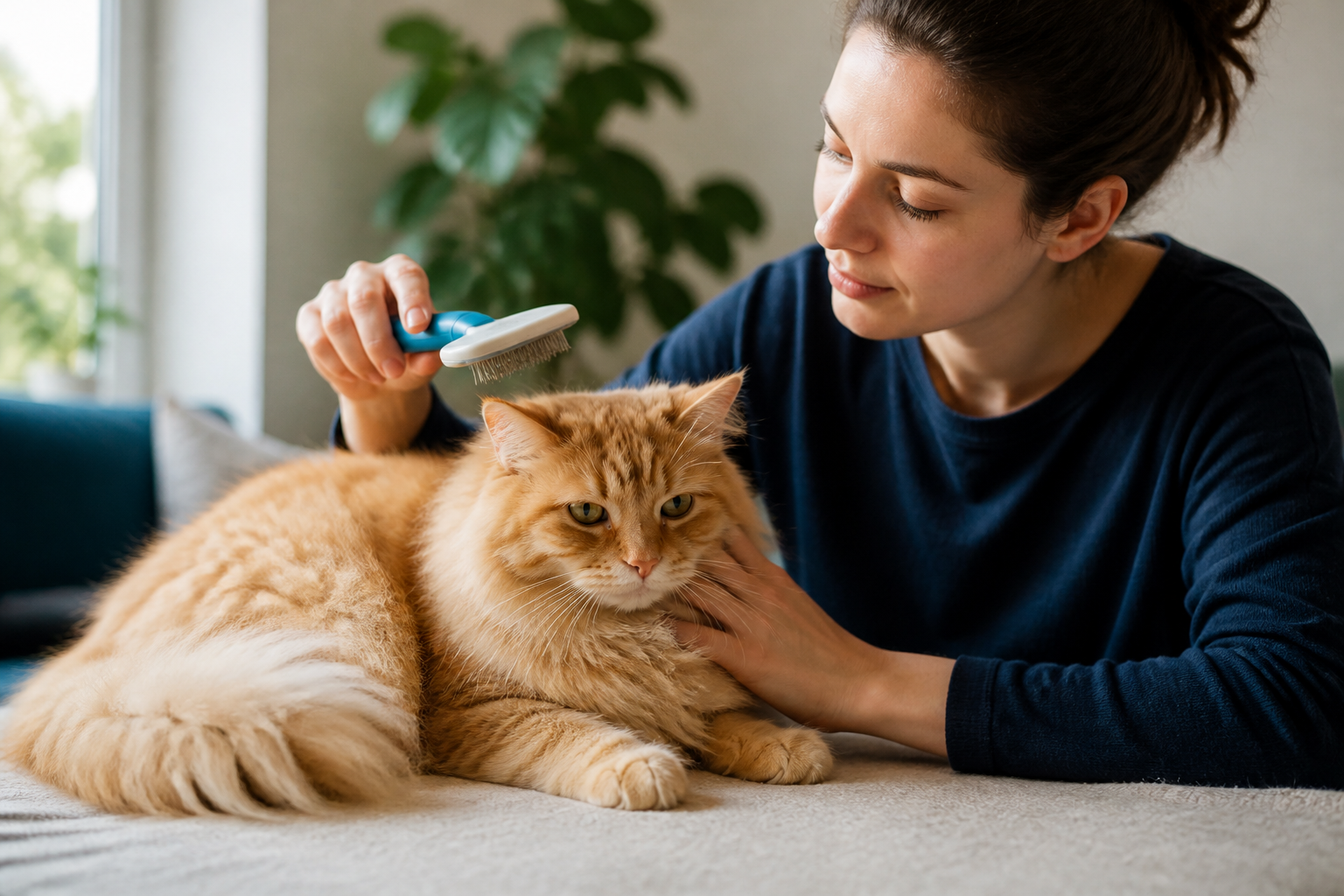
If your cat cannot reach certain spots, you need to step in and help. Regular brushing does more than just remove loose hair. It stimulates the skin and helps distribute natural oils across the entire body. These oils act as a natural moisturizer.
Use a soft-bristled brush or a rubber grooming tool like a Kong ZoomGroom. These tools are gentle on the skin but effective at lifting away dead cells. For long-haired cats, you may need a metal comb to get through the undercoat where flakes can get trapped.
Browse our cat grooming supplies for brushes, combs, wipes, and other coat-care tools.
Step 2: Boost Hydration
Many cats live in a state of mild dehydration. This is especially true for cats that eat only dry kibble. Cats have a low thirst drive because their ancestors evolved to get moisture from their prey. If they are not getting enough water, their skin will become dry and less elastic.
You can encourage more drinking by:
- Switching to a pet water fountain. Cats prefer moving water over standing water.
- Adding a splash of tuna water (with no added salt) to their bowl.
- Providing multiple water stations throughout the house.
Step 3: Update Their Diet
The quality of what goes into your cat's body shows up on the outside. Look for foods that list a specific meat as the first ingredient rather than grain or "meat by-products." Brands like The Honest Kitchen, Stella and Chewy's, or Open Farm prioritize high-quality proteins and healthy fats.
Consider adding a wet food component to their diet. Wet food provides significant hydration and often contains fewer fillers than kibble. If you prefer to stick with dry food, you can add a high-quality fish oil supplement. Omega-3 supplements from brands like Zesty Paws or Honest Paws are excellent for supporting skin health.
For additional ideas about hydration and sensitive diets, read about sensitive-stomach food choices for cats.
Step 4: Manage the Environment
If the air in your home is dry, your cat's skin will be too. Using a humidifier in the rooms where your cat spends the most time can make a massive difference. Aim for a humidity level between 40 and 50 percent. Not only will this help your cat, but it will likely help your own skin and respiratory health as well.
Key Takeaway: Most cases of cat dandruff can be solved by combining regular brushing with a boost in hydration and high-quality fatty acid supplements.
The Role of Professional Care
Sometimes home remedies are not enough. If the dandruff persists despite your best efforts, there may be an internal health issue. Conditions like hyperthyroidism, diabetes, or kidney disease can all affect the quality of a cat's skin.
Our pharmacy at BaxterBoo offers a wide range of FDA-approved medications and prescription diets through our partnership with Pet's Choice. If your veterinarian determines that your cat's skin issues are caused by an allergy or a chronic condition, they may prescribe a specialized diet or medication. Having access to these prescription items alongside your regular pet supplies makes managing a chronic condition much easier.
Flea and Tick Prevention
Even indoor cats can get fleas. Humans can carry them in on their clothes, or they can hitch a ride on a dog returning from a walk. A single flea can cause enough irritation to trigger a massive breakout of dandruff. Consistent use of preventatives like Frontline or NexGard is the best way to keep the skin healthy. Our pharmacy carries these trusted brands to ensure you have access to legitimate, safe protection for your cat.
Explore our cat flea and tick collection for prevention options, and learn more about how flea collars work.
Checklist for Clear Skin
If you are starting a plan to deal with flakes, follow this checklist to track your progress:
- Brush your cat for at least five minutes every day.
- Introduce one serving of wet food daily to increase moisture intake.
- Check the humidity levels in your home and add a humidifier if needed.
- Apply a monthly flea and tick preventative.
- Add an Omega-3 supplement to their morning meal.
Bottom line: A healthy coat starts with a healthy body, so focus on nutrition and hydration first.
Choosing the Right Grooming Tools
Not all brushes are created equal when it comes to dandruff. A brush that is too stiff can actually scratch the skin and make the flaking worse. For a cat with sensitive, dry skin, look for tools with rounded tips.
Rubber Brushes
Rubber brushes are excellent for cats with dandruff. They act like a magnet for loose hair and dead skin. The soft rubber nubs massage the skin, which increases blood flow to the surface. This helps the skin heal and produce healthy new cells.
Slicker Brushes
A slicker brush has fine, short wires close together. These are best for long-haired cats who have flakes trapped deep in their fur. Be very gentle with these tools, as the wires can be sharp if you press too hard against the skin.
Grooming Wipes
If your cat's coat is greasy as well as flaky, you can use specialized grooming wipes. Look for wipes that contain soothing ingredients like aloe or oatmeal. These allow you to clean the coat and remove flakes without the stress of a full bath. Most cats do not need regular baths, and bathing too frequently can actually strip away the natural oils they need.
Nutritional Support for Skin Health
When looking at food labels, keep an eye out for specific vitamins that support the skin. Vitamin E and Vitamin A are both vital for skin repair. Zinc is another mineral that plays a role in maintaining a healthy coat.
We carry many brands that focus on limited ingredients for cats with sensitivities. If your cat has a food allergy, it often manifests as skin irritation and dandruff. Switching to a protein source your cat hasn't had before, like duck or rabbit, can sometimes clear up skin issues within a few weeks. Brands like Farmina and NutriSource offer excellent options for cats with sensitive systems.
When to Seek Veterinary Care
While most dandruff is harmless, it can sometimes be the first sign of a serious problem. You should always monitor your cat for changes in behavior. If the flakes are accompanied by any of the following, a vet visit is necessary:
- Excessive thirst or urination
- A sudden change in appetite
- Lethargy or hiding
- Visible sores or scabs on the skin
- Thinning hair or bald patches
Your vet may perform a skin scraping to look for mites or fungi. They might also run blood work to check for metabolic issues like hyperthyroidism. Identifying these problems early makes them much easier to manage.
Vet Tip: Never use human dandruff shampoos on your cat. Human skin has a different pH level than cat skin. These products often contain ingredients that are toxic to cats if they lick their fur after a bath. Always use products specifically formulated for felines.
Summary of Solutions
Dealing with cat dandruff requires a multi-step approach. Start by addressing the environment and basic grooming. If you do not see improvement within two to three weeks, look closer at their diet and hydration. At BaxterBoo, we aim to provide the tools you need for every stage of your pet's life. Whether you need a new grooming tool, a high-protein food, or a prescription treatment from our pharmacy, we are here to help.
Don't forget to join the MVP Rewards program to earn points on every purchase you make for your cat's skin care needs. You can also set up our Autoship programme for your favorite supplements and foods to ensure you never run out. This keeps your cat’s routine consistent, which is the best way to prevent flakes from returning.
Bottom line: Consistency in grooming and nutrition is the most effective way to eliminate cat dandruff for good.
FAQ
Can I use coconut oil to help my cat's dandruff?
You can use a tiny amount of organic coconut oil as a topical treatment or a food topper, but it is not a cure-all. While it has moisturizing properties, it is very high in fat and can cause stomach upset if you give too much. It is usually better to use a dedicated fish oil supplement which provides the specific Omega-3s cats need for skin health.
Why is my cat's dandruff only on their lower back?
The lower back and the base of the tail are the hardest areas for a cat to reach. If your cat is a bit older, carries extra weight, or has stiff joints, they simply stop cleaning those spots. This leads to a buildup of oils and dead skin in those specific areas.
Does a cat's diet really affect their dandruff?
Yes, nutrition is one of the most significant factors in skin health. Skin is an organ, and it requires protein and healthy fats to stay strong. If a cat's diet is low in essential fatty acids, the skin becomes dry and the hair becomes brittle, leading to visible flakes.
How often should I brush my cat to stop dandruff?
For a cat currently experiencing dandruff, daily brushing is best. This helps remove the existing flakes and distributes oils to prevent new ones from forming. Once the dandruff is under control, you can usually drop back to two or three times a week for maintenance.






- Site & Contents BaxterBoo.com. BaxterBoo is located in the United States.
- Privacy & Security
- Terms of Use
- Accessibility Statement
