
 Save 15% on your 1st Autoship learn more

 Email us
 Live Chat
 FAQs
FAQs





Introduction
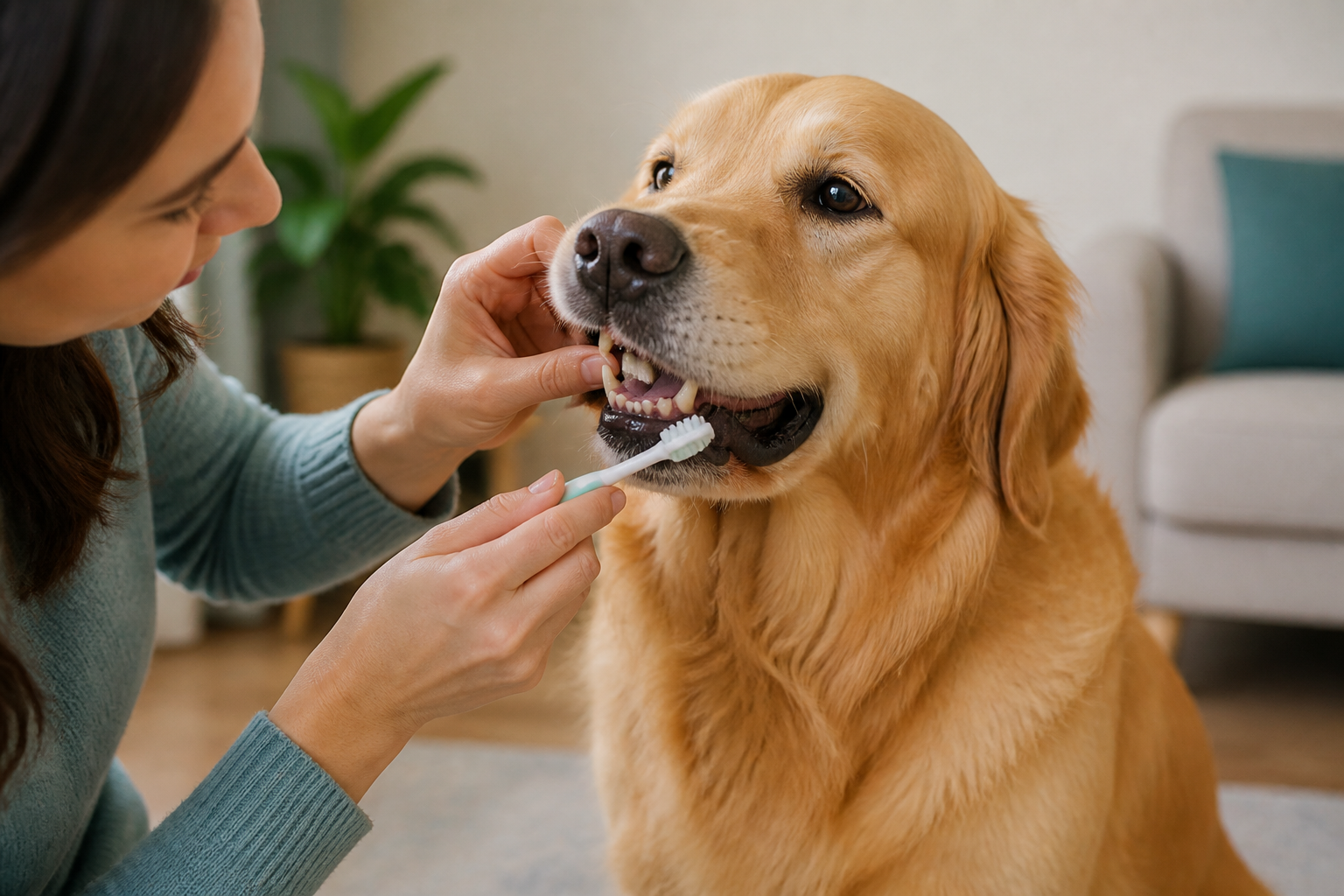
You lean in for a morning snuggle and a happy face lick, but your dog’s breath tells a different story. That sharp, funky odor is more than just a minor nuisance. It is a clear sign that plaque and bacteria are moving into your dog’s mouth. While we often think of dental care as a professional service, maintaining a bright smile actually starts in your living room. At BaxterBoo, we have helped thousands of pet owners find the right tools to manage oral hygiene between veterinary visits. This guide covers how to effectively clean your dog’s teeth at home using brushes, additives, and specialized diets. We will help you understand which methods work best for different temperaments and when it is time to seek professional medical help.
Quick Answer: A deep clean at home involves daily brushing with enzymatic toothpaste, supplemented by dental chews and water additives. For dogs with existing tartar, a combination of mechanical scrubbing and VOHC-approved treats provides the best results. However, home care cannot reach beneath the gum line, which still requires periodic veterinary attention.
The Reality of Canine Dental Health
Most dogs show some sign of dental disease by the time they reach three years old. It often starts as a thin film of plaque. If you do not remove this film, it reacts with minerals in your dog’s saliva to form hard tartar. Once tartar takes hold, it provides a porous surface where even more bacteria can grow. This cycle eventually leads to gingivitis and periodontal disease.
Periodontal disease is a serious concern because it does not stay in the mouth. Bacteria from infected gums can enter the bloodstream. From there, it can travel to the heart, liver, and kidneys, causing long-term organ damage. This is why we prioritize dental care as a pillar of overall wellness rather than just a cosmetic concern.
At-home cleaning is your first line of defense. It slows the progression of tartar and keeps the gums tight against the teeth. While it cannot replace a professional scaling under anesthesia, it can significantly reduce how often those procedures are needed. For more warning signs to watch for, read our guide to recognizing bad teeth in dogs.
The At-Home Deep Cleaning Toolkit
Before you start cleaning, you need the right supplies. Using the wrong items can be ineffective or even dangerous for your pet.
Enzymatic Toothpaste
Never use human toothpaste on a dog. Human formulas contain fluoride and xylitol, both of which are toxic to pets. Instead, look for enzymatic toothpastes designed for dogs. These contain enzymes that help break down food particles and plaque even if you cannot scrub every single surface. Most come in flavors dogs actually enjoy, such as poultry, beef, or peanut butter.
For a dog-specific option, consider Nutri-Vet Dog Toothpaste, a non-foaming paste made for canine oral care.
Choosing the Right Brush
The type of brush you use depends on your dog’s size and comfort level.
- Finger brushes: These silicone caps fit over your pointer finger. They are excellent for puppies or dogs who are nervous about long objects in their mouths.
- Dual-headed brushes: These have a long handle with a large brush on one end and a small brush on the other. They allow you to reach the back molars without putting your hand too far into the mouth.
- Triple-headed brushes: These wrap around the tooth to clean the top, front, and back at the same time.
A dual-ended option such as the Virbac C.E.T. pet toothbrush offers large and small brush heads for different tooth surfaces.
Key Takeaway: Success in home dental care depends on using dog-specific enzymatic toothpaste and a brush that fits your dog’s mouth comfortably.
A Step-by-Step Guide to Brushing
If your dog is not used to having their mouth touched, you cannot rush the process. Aim for a slow introduction over the course of a week.
Step 1: Get them used to the taste. / Put a small amount of dog toothpaste on your finger and let them lick it off. Do this for two or three days until they see the paste as a treat.
Step 2: Touch the teeth and gums. / While they lick the paste, gently rub your finger along their gums. This gets them accustomed to the sensation of someone touching their mouth.
Step 3: Introduce the brush. / Put toothpaste on the brush and let them lick it. Gently lift the lip and brush the front canine teeth in a circular motion.
Step 4: Reach the back molars. / This is where most plaque hides. Slide the brush along the cheek to reach the large teeth in the back. You do not need to open the mouth wide; just focus on the outside surfaces.
Step 5: Reward and praise. / Always end the session with a high-value treat or a favorite game. You want your dog to associate dental care with a positive experience.
For additional guidance on building a routine, see our pet dental care tips.
Cleaning Teeth Without the Brush
We know that some dogs simply will not tolerate a toothbrush. If you find yourself struggling, there are other ways to keep the mouth clean. These methods are also great for supplementing a brushing routine on days when you are short on time.
Dental Chews and Treats
Not all treats are created equal. Effective dental chews have a specific texture that allows the tooth to sink into the treat. This creates a mechanical scrubbing action that wipes away plaque. Look for the Veterinary Oral Health Council (VOHC) seal on packaging. This seal ensures the product has been tested and proven to reduce plaque or tartar. Brands like Greenies and RedBarn offer options that cater to different chewing styles.
You can compare options in our dental dog treats collection.
Water Additives and Sprays
Water additives are essentially a drinkable mouthwash for your dog. You add a capful to their water bowl each time you refill it. These products use enzymes or safe chemicals to kill the bacteria that cause bad breath and plaque. Sprays work similarly but are applied directly to the teeth and gums. They are a good choice for dogs who are picky about the taste of their water.
Our dental and breath care category includes oral gels, water additives, toothpaste, and other dental care products.
Dental Toys and Enrichment
Toys can be a powerful tool for dental hygiene. Rubber toys with nubs or ridges, like those from Kong, help scrape teeth as the dog chews. Cotton rope toys can also act like a natural floss, though you must monitor your dog to ensure they do not swallow loose strings. Avoid very hard items like natural bones, antlers, or heavy rawhides. These are often harder than the tooth enamel itself and can cause painful fractures.
| Method | Best For | Effectiveness |
|---|---|---|
| Brushing | Most dogs | High |
| Dental Chews | Aggressive chewers | Medium |
| Water Additives | Picky dogs | Low-Medium |
| Dental Toys | High-energy dogs | Medium |
When Diet Becomes Medicine
Nutrition plays a massive role in oral health. Some dogs are genetically prone to heavy tartar buildup. In these cases, a standard kibble might not be enough.
Therapeutic dental diets are formulated with a specific kibble structure. Unlike regular kibble that crumbles immediately, dental kibble is larger and fibrous. It resists breaking, forcing the dog to chew through it. This action scrubs the tooth surface all the way to the gum line.
These diets often require a veterinary recommendation because they are balanced for specific health needs. If your vet suggests a specialized food, our pharmacy at BaxterBoo can help. Through our partnership with Pet's Choice, we offer a wide range of FDA-approved prescription diets and medications. This ensures your pet gets the exact nutrition required to manage chronic dental issues alongside their daily care routine.
Vet Tip: If you notice your dog only chewing on one side of their mouth or dropping food, they may have a painful tooth. Before starting a new cleaning routine or dental diet, have your vet check for existing fractures or abscesses.
Breed-Specific Dental Challenges
Not every dog has the same dental landscape. Size and jaw shape change how you should approach a deep clean.
Small and toy breeds, such as Chihuahuas and Yorkies, are notorious for dental problems. Their teeth are often crowded into a very small mouth. This crowding creates tiny pockets where food and bacteria get trapped easily. Small dogs also tend to live longer, meaning their teeth need to last for many more years. For these dogs, daily brushing is almost always a necessity.
Flat-faced or brachycephalic breeds, like Pugs and Bulldogs, often have misaligned jaws. Their teeth may grow in at odd angles, making it difficult for the natural "self-cleaning" process of chewing to work. You will need to be extra diligent in checking for debris stuck between their crooked teeth.
Large breeds usually have more space between their teeth, which helps. However, they are more likely to break teeth on hard toys or stones. For large dogs, focus on using heavy-duty dental toys that can withstand their jaw pressure without causing damage. Explore our dog toy selection for chew-friendly enrichment options.
When to Put Down the Brush and Call the Vet
At-home cleaning is a preventive measure. It is not a cure for existing dental disease. You should be able to recognize the signs that your dog needs a professional medical intervention.
If you see a thick, brown, or orange crust on the teeth, that is tartar. You cannot brush tartar away at home. Attempting to scrape it off with metal tools can damage the enamel and lead to more infections. If the gums look bright red or bleed when you touch them, your dog has gingivitis. This requires a professional cleaning to prevent it from turning into full-blown periodontal disease.
Other red flags include:
- Loose or wobbling teeth.
- Pus around the gum line.
- A persistent foul odor that does not go away after brushing.
- Swelling under the eye or along the jawline.
- Reluctance to eat hard food or treats.
In these instances, your veterinarian may need to perform a professional cleaning under anesthesia. This allows them to take X-rays to see what is happening beneath the gums and to safely remove tartar from sensitive areas. Following a professional cleaning, you can return to your at-home deep cleaning routine to maintain those fresh results.
Key Takeaway: Home cleaning maintains health but does not cure disease. Always consult a veterinarian if you see bleeding gums, loose teeth, or heavy tartar buildup.
Conclusion
Deep cleaning your dog's teeth at home is a commitment that pays off in a longer, healthier life for your pet. By combining daily brushing with enzymatic toothpaste, high-quality dental chews, and the right chew toys, you can keep plaque at bay. Remember that every dog is different. Some might love the taste of their toothpaste, while others prefer the ease of a water additive. The best routine is the one you can perform consistently.
- Start slow and keep sessions positive.
- Use VOHC-approved products for the best results.
- Monitor for signs of pain or infection.
- Maintain regular veterinary checkups.
If your pet needs a specialized approach, our pharmacy is here to support you with prescription dental diets and oral health medications. We invite you to explore our dog dental care collection to find the brushes, pastes, and treats your dog needs for a lifetime of healthy smiles.
FAQ
Can I use baking soda to clean my dog’s teeth? Baking soda is not recommended for dogs because it has a high alkaline content. If swallowed in large amounts, it can upset your dog's digestive system and throw off their electrolyte balance. It also lacks the enzymes found in pet-specific toothpaste that are necessary for breaking down plaque effectively.
How often should I deep clean my dog's teeth at home? Ideally, you should brush your dog's teeth every day. Plaque can turn into hard tartar in as little as 24 to 48 hours. If daily brushing is not possible, aim for at least three times a week and supplement the off-days with dental chews or water additives.
My dog's gums bleed a little when I brush. Is this normal? Minor bleeding can occur if your dog has early-stage gingivitis or if you are using a brush that is too firm. However, frequent or heavy bleeding is a sign of gum disease. You should stop brushing and consult your veterinarian to ensure there is not a more serious underlying infection or sensitivity.
Are raw bones safe for cleaning a dog's teeth? While some people use raw bones for dental hygiene, they come with risks like tooth fractures and bacterial contamination. Cooked bones are even more dangerous because they can splinter and cause internal injuries. Many veterinarians recommend sticking to rubber dental toys or VOHC-approved chews as a safer alternative for mechanical cleaning.






