
 Save 15% on your 1st Autoship learn more

 Email us
 Live Chat
 FAQs
FAQs





Introduction
Finding a thick layer of fur on your favorite black leggings or watching "tumbleweeds" of hair roll across the kitchen floor is a daily reality for many pet owners. While a high quality brush is a standard tool for managing this mess, not every dog is a fan of the grooming bench. Some dogs have sensitive skin that reacts poorly to metal bristles. Others may have developed a fear of grooming tools from a young age. At BaxterBoo, we know that keeping your home clean and your dog comfortable requires a bit of creativity when the standard brush is out of the question. This post covers effective, hands-on methods to remove loose undercoat fur using bathing techniques, household items, and lifestyle changes. You can achieve a smooth, healthy coat without ever picking up a traditional wire brush.
Quick Answer: You can deshed a dog without a brush by using rubber grooming mitts, a damp microfiber cloth, or a thorough deshedding bath. High velocity blowouts and supplements like Omega-3 fatty acids also help manage shedding from the inside out.
Why Some Owners Skip the Brush
Brushing is the most common way to manage fur, but it is not always the best fit for every situation. Some dogs have extremely thin skin or coat types that are easily irritated by stiff bristles or metal pins. If a dog has had a bad experience with "brush burn," they might hide the moment they see a grooming tool.
There are also practical reasons to look for alternatives. You might be traveling and realized you left your grooming kit at home. Perhaps you have a short-haired breed where a standard slicker brush just scratches the skin without grabbing any hair. In these cases, using friction, moisture, and air can be much more effective than a traditional rake or comb.
Key Takeaway: Alternative deshedding methods are often gentler on sensitive skin and can be more effective for short-haired breeds that a traditional brush might miss.
The Power of the Deshedding Bath
One of the most effective ways to remove a massive amount of loose fur is during bath time. Water and shampoo help lubricate the hair follicles. This makes it much easier for dead fur to slide out of the coat. This is often called "wet deshedding" and is a favorite technique among professional groomers. For additional bath guidance, read our guide to bathing your dog.
Step 1: Prepare the Coat
Start by getting your dog completely wet down to the skin. This can be difficult for double-coated breeds like Huskies or Labradors because their coats are designed to repel water. Use a spray nozzle and work your fingers through the fur to ensure the undercoat is saturated.
Step 2: Use a Specific Shampoo
Apply a deshedding shampoo. These formulas often contain omega fatty acids and vitamin E to help strengthen the hair shaft while loosening the dead undercoat. Massage the shampoo in deeply for several minutes. Do not just scrub the surface. Use your fingertips to reach the skin and move in circular motions. Browse our dog grooming collection for shampoos, conditioners, and bathing supplies.
Step 3: The "Shedding" Massage
While the shampoo is still on the dog, use your hands or a rubber curry mitt to massage the coat. This friction will pull the loose fur out of the follicles and into the soapy lather. You will likely see clumps of hair beginning to wash away.
Step 4: Condition and Rinse
Follow up with a deshedding conditioner. This is a vital step because it smooths the hair cuticle, allowing loose hairs to slide past healthy hairs without getting tangled. Rinse thoroughly until the water runs clear. Any leftover soap can cause itching, which leads to more scratching and more shedding.
Vet Tip: If your dog has red, itchy, or flaky skin, consult your veterinarian before using a deshedding shampoo. They may recommend a prescription medicated wash from our dog healthcare selection to treat underlying skin conditions first.
Using Rubber and Friction
If your dog hates the sensation of metal or plastic teeth, rubber is the perfect alternative. Rubber creates a natural "pull" on the hair that grabs loose fur without scratching the skin.
Grooming Mitts and Gloves
Grooming gloves are essentially "wearable brushes" that use rubber nubs on the palms. This is an excellent choice for anxious dogs because they feel like you are simply petting them. As you stroke your dog, the rubber nubs catch the dead undercoat. You can then peel the layer of fur off the glove in one sheet.
The Rubber Curry Tool
While technically a tool, many owners find that a rubber curry tool feels more like a massage than a grooming session. These are especially effective for short-haired dogs like Boxers or Pit Bulls. The thick rubber teeth reach down to the skin and vibrate the hair follicles. This brings the loose hair to the surface where you can easily wipe it away.
Bottom line: Rubber tools use friction instead of sharp points to remove hair, making them the safest choice for dogs with sensitive skin or thin coats.
The Damp Cloth Technique
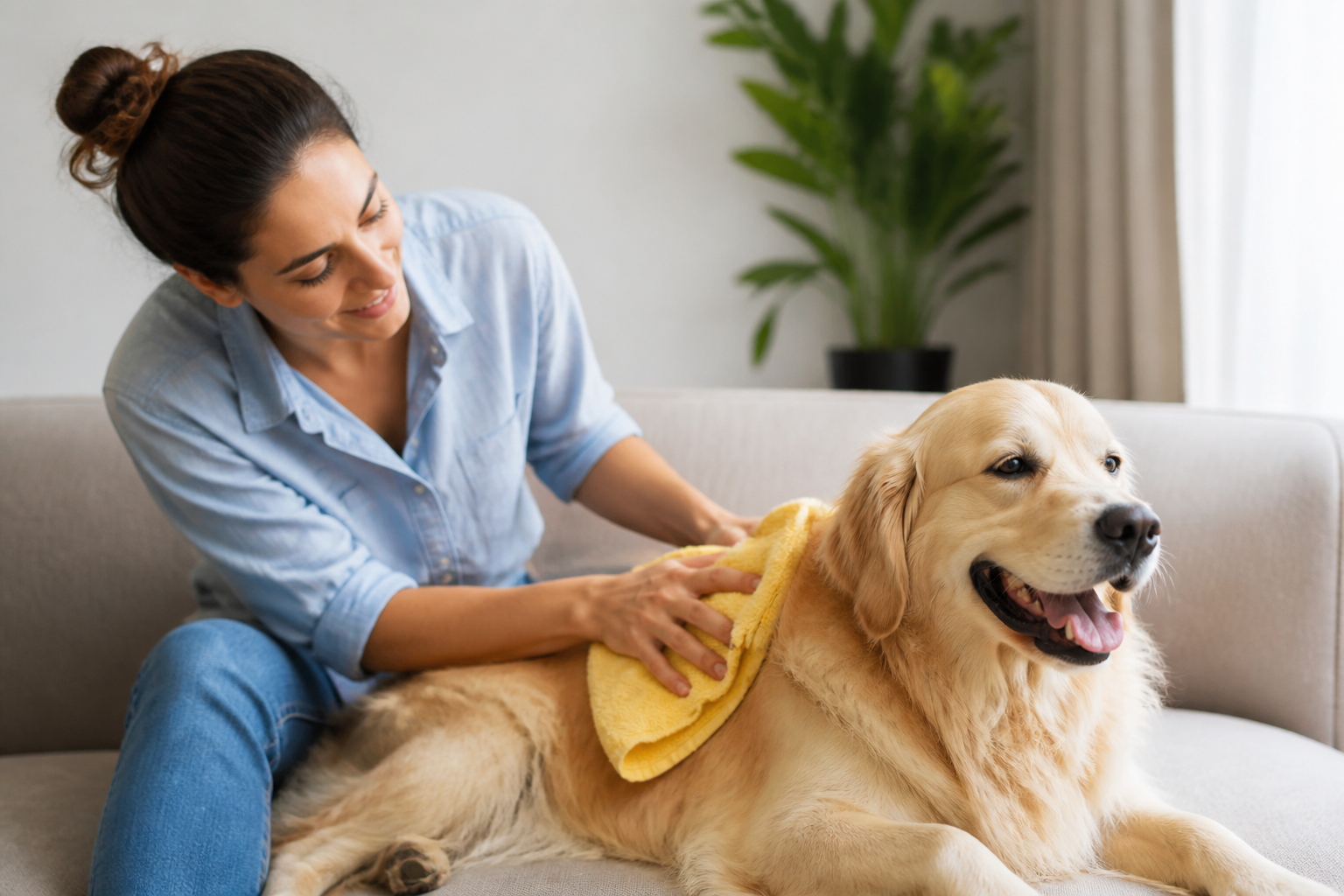
For a quick, daily deshedding session without any specialized tools, look no further than your linen closet. A damp microfiber cloth or a textured washcloth can be surprisingly effective at grabbing surface fur.
Step 1: Wet a microfiber cloth with warm water.
Step 2: Wring it out so it is damp but not dripping.
Step 3: Wipe your dog firmly in the direction of hair growth.
Step 4: Rinse the cloth frequently as it fills with fur.
The static and texture of the microfiber act like a magnet for loose hair. This method is perfect for smooth-coated dogs and is a great way to remove allergens and dander between deep cleanings. It also adds a nice shine to the topcoat by distributing natural oils.
High-Velocity Blowouts
Professional groomers often deshed dogs without ever touching them with a brush by using a high-velocity (HV) dryer. These are not like human hair dryers. They use a powerful stream of cool air to literally blast the loose undercoat out of the skin.
If you have access to a pet dryer, you can use it on a dry or damp coat to "blow out" the shedding fur. This is a very messy process, so it is best done outdoors or in a garage. The air reaches the spots that brushes often miss, such as the thick fur around the neck and the "trousers" on the back legs.
Note: Never use a human hair dryer on a high heat setting for this. Dogs have much thinner skin than humans and can be easily burned. Always use a pet-specific dryer or the "cool" setting on a standard dryer.
Hand Stripping and Plucking
For some breeds, particularly wire-haired terriers, a brush does very little. Their hair grows in a specific cycle where the dead hair stays in the follicle until it is physically pulled out. While professional hand stripping is a skill, you can do a simplified version at home using just your fingers.
Gently grasp small tufts of hair that look dull or are sticking out further than the rest of the coat. If the hair is dead, it should slide out with zero resistance. If the dog flinches or the hair stays put, it is still healthy and should be left alone. This method is slow but can be a very calming bonding activity for you and your pet.
Managing Shedding from the Inside Out
Sometimes, the best way to deshed a dog is to prevent the hair from becoming brittle and falling out prematurely. Nutrition is the foundation of coat health. If your dog's skin is dry and flaky, the hair will not stay rooted as long as it should. For more guidance, explore our dog supplement options.
Essential Fatty Acids
Omega-3 and Omega-6 fatty acids are the gold standard for skin health. You can find these in high-quality fish oil supplements or in premium dog foods. We carry brands like Zesty Paws and Honest Paws that offer targeted skin and coat support. Within a few weeks of starting a supplement, many owners notice a significant decrease in "dust bunnies" around the house.
Hydration and Skin Health
Dehydrated skin is tight and itchy. A dog that scratches constantly will shed significantly more than a dog with hydrated, supple skin. Ensure your dog has constant access to fresh water. You might also consider adding wet food or a topper to their diet to increase their moisture intake.
Bottom line: A healthy coat starts with a healthy diet. Supplements and high-quality proteins keep hair follicles strong and reduce unnecessary shedding.
When Shedding is a Health Concern
It is important to recognize the difference between a seasonal "coat blow" and a medical issue. All dogs shed, but some patterns are not normal. If you notice any of the following, it is time to schedule a visit with your veterinarian:
- Symmetry in hair loss (thinning in the same spot on both sides)
- Completely bald patches
- Red, inflamed skin or open sores
- An unpleasant, musty odor coming from the skin
- Black specks in the fur (which could indicate flea dirt)
If your vet determines that your dog has a skin infection, allergies, or a hormonal imbalance like hypothyroidism, they may require specialized care. Our pharmacy at BaxterBoo offers FDA-approved medications and prescription diets through our partnership with Pet's Choice. Managing an underlying health condition often does more to stop excessive shedding than any grooming tool ever could.
Environmental Controls
While you are working on your dog, do not forget to manage the fur that has already left the building. Reducing the amount of hair in your environment helps prevent it from redepositing on your dog's coat and causing mats.
- Air Purifiers: Use a HEPA filter to catch airborne dander and fine hairs.
- Frequent Vacuuming: Use a vacuum with a specialized pet attachment to pull hair from deep within carpet fibers.
- Washable Covers: Protect your furniture with blankets or covers that can go straight into the washing machine.
- Humidifiers: In the winter, dry indoor air can make your dog's skin itchier. A humidifier helps keep the skin hydrated.
Using Wipes for Daily Maintenance
Grooming wipes are another excellent brush-free option. They are essentially large, heavy-duty wet wipes for pets. They are saturated with cleansers and conditioners that help lift away loose fur and dander. For between-bath cleanup, consider Natural Dog Company Dog Grooming Wipes.
Wipe your dog down once a day after they come in from a walk. This not only removes loose hair but also gets rid of pollen and dust that can cause itching. This is a very practical solution for owners who live in apartments and might not have the space for a full bath and blowout every week.
Summary of Brush-Free Methods
There is no single "perfect" way to manage a shedding dog. Often, a combination of methods works best. You might use a deshedding bath once a month and a damp cloth every other day.
| Method | Best For | Effort Level |
|---|---|---|
| Deshedding Bath | Heavy shedders, double coats | High |
| Rubber Mitts | Anxious dogs, smooth coats | Low |
| Damp Cloth | Surface fur, shine | Very Low |
| HV Blowout | Removing thick undercoat | Medium |
| Supplements | Long-term coat health | Very Low |
Conclusion
Deshedding your dog without a brush is entirely possible with a bit of patience and the right approach. Whether you choose to focus on wet deshedding in the tub or use the friction of a rubber glove, the goal is to keep your pet comfortable and your home fur-free. Remember that a healthy coat begins with what your dog eats. Providing the right nutrients and keeping their skin hydrated will make every other grooming task much easier.
We are here to help you find the best solutions for your pet's unique needs. From premium food to the supplements that support skin health, our team at BaxterBoo is dedicated to your pet's wellness. If you are ready to take the next step in your grooming routine, consider setting up our Autoship programme for your favorite deshedding shampoos and supplements. You will save on every order and ensure you never run out of the essentials.
FAQ
Can I use a regular human towel to deshed my dog?
A regular towel works okay, but a microfiber cloth or a textured washcloth is much better. The loops in a standard towel are often too large to grab fine undercoat hairs. Microfiber has a much tighter weave and a natural static charge that attracts and holds onto loose fur more effectively.
Is it okay to bathe my dog every week to stop shedding?
Bathing too frequently can strip the natural oils from your dog's skin, leading to dryness and more shedding. For most dogs, a bath every 4 to 6 weeks is sufficient. If you need to manage fur between baths, use a damp cloth or grooming wipes instead of a full soak.
How long does it take for supplements to reduce shedding?
It usually takes about 4 to 6 weeks to see a noticeable change in your dog's coat after starting a supplement like fish oil. This is because the new, healthier hair needs time to grow in and replace the old, brittle hair. Consistency is the most important factor when using nutritional support.
Will shaving my dog stop the shedding?
No, shaving does not stop shedding. It simply means your dog will shed shorter, sharper hairs that are harder to clean out of fabrics. Shaving a double-coated dog can also damage their ability to regulate their body temperature and may cause permanent changes to the texture of their fur.






