
 Save 15% on your 1st Autoship learn more

 Email us
 Live Chat
 FAQs
FAQs





Introduction
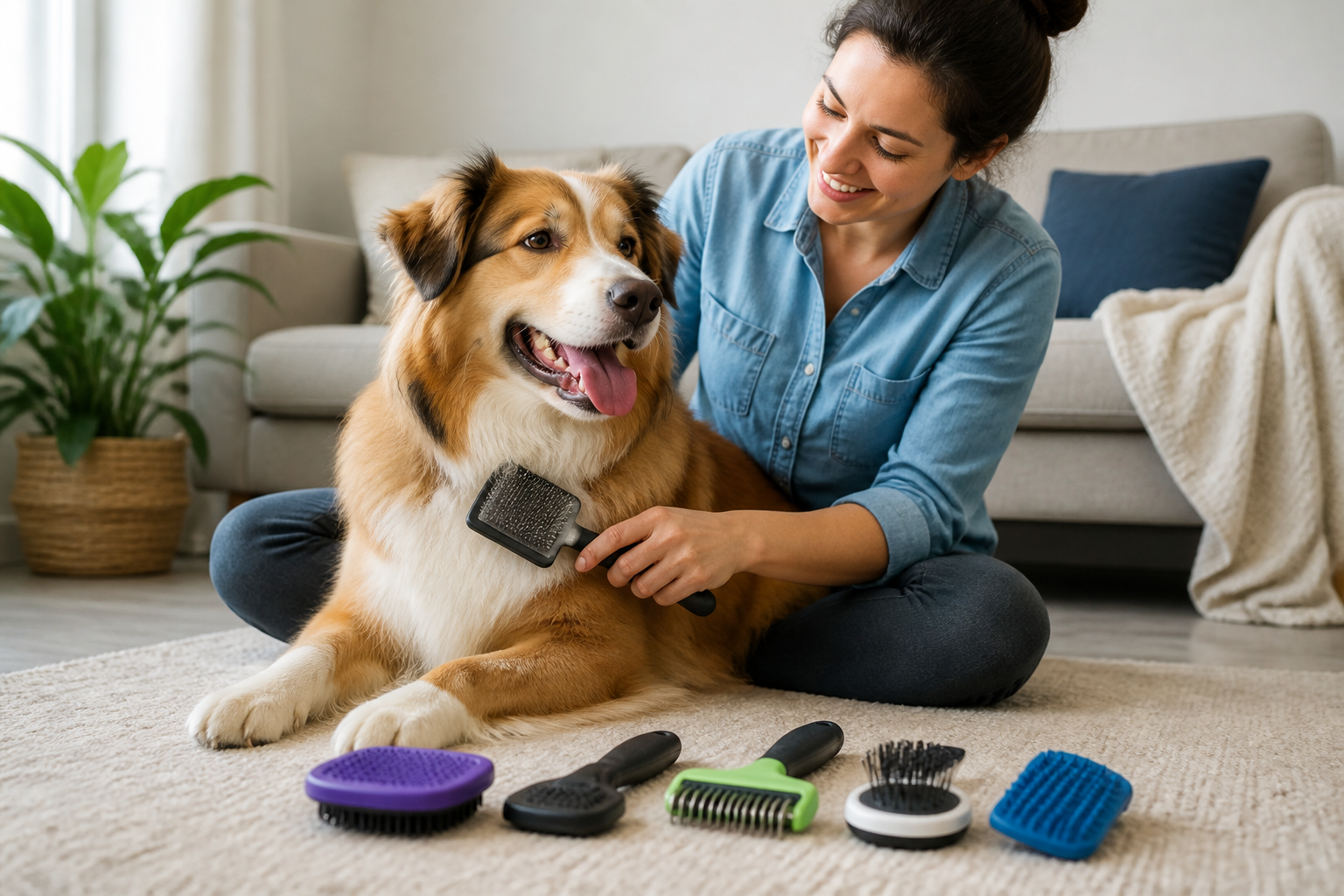
You are sitting on the rug with your dog when you notice a small clump of fur drifting across the floor like a tumbleweed. Or perhaps you reach down to scratch their ears and feel a hard, tangled knot that was not there yesterday. These moments are when most owners realize their current grooming tool might not be up to the task. At BaxterBoo, we know that the right brush does more than just keep your house clean. It prevents painful mats, distributes natural skin oils, and serves as a vital health check for your best friend. This guide covers every major brush type and how to match them to your dog's specific hair. Choosing the right tool depends entirely on your dog’s coat type rather than just picking the most popular item on the shelf.
Understanding Your Dog’s Coat Type
Before you can choose a tool, you must understand what you are brushing. Dogs have incredibly diverse hair types. Some have a single layer of smooth fur. Others have a dense, woolly undercoat protected by a harsh outer layer. Using the wrong brush is often the reason why grooming feels like a chore or causes your dog discomfort.
Short, smooth coats belong to breeds like Boxers, Labradors, and Pugs. These dogs shed, but they rarely mat. Their grooming needs focus on removing loose hair and keeping the skin healthy. Double coats are found on Huskies, Golden Retrievers, and German Shepherds. These dogs have a soft undercoat that "blows" twice a year. If you do not reach that bottom layer, the dead hair stays trapped and causes skin irritation.
Curly and woolly coats, like those on Poodles or Doodles, require the most work. Their hair does not fall out easily. Instead, it gets caught in the surrounding curls. This leads to severe matting very quickly. Finally, silky coats on Yorkies or Setters are prone to tangles and breakage. Each of these needs a specific physical mechanism to clean the hair without hurting the dog.
The Slicker Brush: The Versatile Workhorse
The slicker brush is easily the most common tool in a groomer's kit. It features a flat or slightly curved head covered in rows of thin, hooked wire pins. These pins are designed to grab onto loose hair and pull it away from the body.
Quick Answer: A slicker brush is the best choice for dogs with medium to long hair or curly coats. It excels at breaking up minor tangles and removing dead fur before it becomes a mat.
We often recommend these for "Doodle" breeds. Since curly hair traps shed fur, a slicker brush can reach into the curls to hook those loose strands. It is also excellent for wire-haired breeds. When using a slicker brush, always use a light touch. The metal pins can scratch the skin if you press too hard. You should use long, gentle strokes. If the brush catches on a knot, do not yank it. Stop and work the knot out slowly. Explore our dog brushes and combs to compare slicker, pin, and de-shedding options.
Many modern slicker brushes come with a self-cleaning feature. You press a button on the back, and the pins retract. This leaves the fur sitting on a flat surface so you can wipe it away in one second. This saves quite a bit of time during a long grooming session.
Bristle Brushes for Short and Smooth Hair
If your dog has short hair, a metal-pinned brush might be too harsh. This is where the bristle brush shines. These brushes use natural or synthetic bristles packed tightly together. They do not reach deep into a thick coat. Instead, they work on the surface.
A bristle brush acts like a polisher. As you move it over the coat, it picks up dander, dust, and loose hair. More importantly, it stimulates the skin. This stimulation helps the skin produce natural oils. The bristles then spread these oils down the hair shaft. This creates the "show dog shine" that many owners want.
For a breed like a Beagle or a Greyhound, a soft bristle brush is often the only tool you need. It feels like a massage to the dog, which makes grooming a bonding experience. If your dog has slightly longer hair but a single coat, look for a brush with firmer, longer bristles. Our BASS Brushes selection includes wire-and-boar and other grooming styles for different coat needs.
Pin Brushes for Silky and Delicate Coats
A pin brush looks very similar to a standard human hair brush. It usually has an oval head with metal pins that have rounded tips. These rounded tips are essential because they prevent the pins from scratching the skin.
This tool is not meant for heavy de-shedding or removing thick undercoats. It is a finishing tool. It is the best dog brush for silky, long hair that breaks easily. If you have a Maltese or a Silky Terrier, a pin brush will glide through the hair without snapping the delicate strands.
We suggest using a pin brush daily if your dog has long, flowing hair. It keeps the hair separated and prevents the fine strands from twisting together. It is also a great choice for dogs with very sensitive skin who find slicker brushes too prickly.
Undercoat Rakes and De-shedding Tools
When "shedding season" arrives, standard brushes often fail. If you have a Husky or a Shepherd, you know the frustration of brushing for an hour and still seeing clumps of fur. This is because the dead hair is trapped in the undercoat.
Undercoat rakes have long, widely spaced teeth. They are designed to pass through the top coat and reach the dense layer underneath. They pull out the "dead" woolly hair without cutting the healthy top coat. Using a rake once a week can reduce the amount of fur on your furniture by a massive margin. For more ideas about seasonal shedding, read how Australian Shepherds shed.
Key Takeaway: Undercoat rakes and de-shedding tools are built to remove the dense, insulating layer of fur that breeds like Huskies "blow" twice a year.
Specific de-shedding tools take this a step further. They often have a fine, comb-like edge that catches the smallest loose hairs. These tools are incredibly effective but must be used with care. You should never use them on a wet dog. You should also avoid using them on dogs without an undercoat, as you could accidentally damage their skin. Our dog grooming tools offer additional options for brushing, bathing, and coat care.
Rubber Curry Brushes and Grooming Mitts
Some dogs absolutely hate the feeling of a traditional brush. For these sensitive pups, rubber curry brushes or grooming mitts are a fantastic alternative. These are made of soft, flexible rubber with short nubs.
You can use these in a circular motion. The rubber creates a bit of friction that "grabs" loose hair and pulls it out. Because they are soft, you can use them on bony areas like legs and hips without worrying about causing pain.
These are also the best tools for bath time. You can use the rubber nubs to work shampoo deep into the coat while simultaneously pulling out shed hair. For short-haired dogs that shed constantly, like Pugs, a rubber mitt used every few days is often the most effective way to manage the mess. Browse our dog grooming collection for brushes, bathing supplies, and other coat-care essentials.
When Grooming Becomes a Health Check
Grooming is about more than just looks. It is your best chance to find health issues before they become serious. As you brush, you should be looking at the skin under the fur.
Look for redness, flaky skin, or small bumps. If your dog flinches when you brush a specific spot, they may have a sore or a hot spot. Frequent grooming also helps you spot fleas or ticks early. If you notice your dog has chronically dry or itchy skin, it might be an allergy or a nutritional issue.
Vet Tip: If you discover red, inflamed skin, bald patches, or unusual lumps while brushing, consult your veterinarian for a professional diagnosis. Persistent skin issues may require medicated treatments or a change in diet.
Our pharmacy at BaxterBoo offers a wide range of FDA-approved medications and prescription diets through our partnership with Pet's Choice. If your vet prescribes a medicated shampoo for allergies or a specific skin condition, you can fulfill those needs through our dog pharmacy. Grooming allows you to be the first line of defense for your dog's wellness.
Choosing the Right Size and Handle
The best dog brush in the world will not help if it is the wrong size. A giant slicker brush will not work on a Chihuahua. It will be too clunky to reach under the chin or behind the ears. Conversely, using a tiny brush on a Great Dane will take hours and wear out your hand.
Always look for a brush that matches your dog's scale. Most of the brands we carry offer small, medium, and large versions of their best-selling tools.
Do not ignore the handle. If you have a dog that requires thirty minutes of brushing, you want an ergonomic grip. Look for handles with rubberized coatings or "gel" grips. These reduce the strain on your wrist and prevent your hand from slipping if it gets wet. A comfortable tool makes you more likely to stick to a regular grooming schedule.
Establishing a Grooming Routine
Consistency is the secret to a healthy coat. If you wait until your dog is a matted mess, the grooming session will be stressful for everyone. It is much better to do five minutes of brushing every day than an hour once a month.
Step 1: Find a quiet, well-lit spot where your dog feels comfortable. If they are small, putting them on a table can save your back.
Step 2: Start with a quick "hands-on" check. Run your fingers through the fur to feel for any large mats or skin issues.
Step 3: Begin brushing in the direction of hair growth. Use long, smooth strokes. Work in sections, starting from the head and moving toward the tail.
Step 4: Check the "friction areas." These are the spots where mats form most often: behind the ears, under the armpits, and where the collar sits.
Step 5: Finish with a small treat. You want your dog to associate the brush with something positive. Over time, many dogs will see grooming as a relaxing massage. If you are introducing grooming to a young dog, the puppy shop includes puppy-focused grooming supplies.
Maintaining Your Grooming Tools
To keep your brushes working well, you must clean them. Hair left in the bristles will eventually trap oils and dander. This can lead to bacteria growth. After every session, remove all the hair from the pins or bristles.
Once a month, you should wash your brushes. Use a bit of mild dish soap and warm water. Scrub between the pins with an old toothbrush. Make sure you dry them thoroughly, especially if they have metal pins. Metal can rust if left damp, which can then irritate your dog's skin.
If you notice pins are bending or the rubber tips on a pin brush are falling off, it is time to replace the tool. A damaged brush can cause "brush burn" or scratches. Keeping your kit in top shape ensures that grooming remains a safe and pleasant experience.
Managing Mats and Tangles Safely
If you find a mat, do not reach for the scissors immediately. Cutting out a mat often leaves a bald spot or, worse, leads to an accidental nick on the skin. Dog skin is very thin and can tear easily.
Instead, try to pick the mat apart with your fingers or the end of a metal comb. You can also use a de-matting spray. These sprays provide "slip" to the hair strands, making it easier for them to slide apart.
For very stubborn mats, a de-matting comb can help. These tools have sharp, recessed edges that cut through the knot without cutting the dog. If the mat is tight against the skin, it is usually safer to visit a professional groomer. They have specialized clippers that can remove the mat safely without risking a trip to the vet for stitches.
Seasonal Changes in Grooming Needs
Your dog's coat changes with the weather. In the winter, many dogs grow a thicker coat for warmth. During this time, you might need to brush more often to prevent the thick hair from tangling under winter sweaters or coats.
In the spring, the "big shed" happens. This is when an undercoat rake becomes your most important tool. You may find that you need to brush every single day for two weeks to keep up with the volume of fur.
In the summer, grooming helps keep your dog cool. Removing dead undercoat allows air to circulate against the skin. This helps with natural thermoregulation. Never shave a double-coated dog in the summer thinking it will cool them down. Their coat actually acts as insulation against the heat. Keeping it brushed and free of dead hair is the best way to help them stay comfortable.
Training Your Puppy to Love Brushing
If you have a new puppy, start grooming immediately. Even if they do not have much hair yet, they need to get used to the sensation. A puppy's first experience with a brush should be very gentle.
Use a soft bristle brush or a rubber mitt. Let them sniff the brush first. Give them treats while you do a few light strokes. Keep the sessions very short, perhaps only sixty seconds.
The goal is to make the brush a normal part of life. Puppies that are groomed early are much less likely to be fearful when they go to a professional groomer later. It also makes your life much easier once their adult coat comes in and requires more intensive care.
Bottom line: Matching the brush to the coat type is the only way to ensure effective grooming and a happy, comfortable dog.
Conclusion
Finding the best dog brush is about understanding the science of your pup's fur. Whether you need a slicker brush for a Poodle's curls or a bristle brush for a Boxer’s shine, the right tool makes all the difference. Regular grooming prevents painful skin issues and keeps your home much cleaner. It also gives you a front-row seat to your dog's health.
- Identify your dog's coat type (single, double, curly, or silky).
- Choose a brush size that fits their body.
- Check the skin for redness or lumps during every session.
- Use the BaxterBoo pharmacy for any vet-prescribed skin treatments.
If you are ready to upgrade your grooming kit, explore our full collection of brushes, rakes, and mitts. You can also sign up for the MVP Rewards program to earn points on every grooming tool and treat you buy.
FAQ
What is the best brush for a dog that sheds a lot?
If your dog has a double coat, an undercoat rake or a de-shedding tool is usually the most effective choice. These tools reach past the top layer of fur to pull out the loose, woolly hair underneath before it falls off on your furniture. For short-haired heavy shedders, a rubber curry brush or grooming mitt works wonders to grab loose hair.
Can I use a human hair brush on my dog?
While a human brush might look like a pin brush, it is usually not the best choice for a dog. Human brushes often have bristles that are too soft to penetrate a dog's coat or pins that are too sharp for their skin. Professional dog brushes are designed with specific pin lengths and angles to handle the unique texture of canine fur without causing irritation.
How often should I brush my dog?
The frequency depends on the coat type, but most dogs benefit from a thorough brushing at least once or twice a week. Long-haired or curly-coated breeds often need daily attention to prevent mats from forming. During seasonal shedding periods in the spring and fall, you may need to brush double-coated dogs every day to manage the volume of fur.
Does brushing help with dog allergies?
Yes, regular brushing can significantly help both the dog and the owner with allergies. For the dog, it removes dander and environmental allergens like pollen that get trapped in the fur. For owners, frequent brushing reduces the amount of hair and dander circulating in the home. If your dog has severe skin allergies, consult your vet about medicated shampoos available through our pharmacy.






