
 Save 15% on your 1st Autoship learn more

 Email us
 Live Chat
 FAQs
FAQs





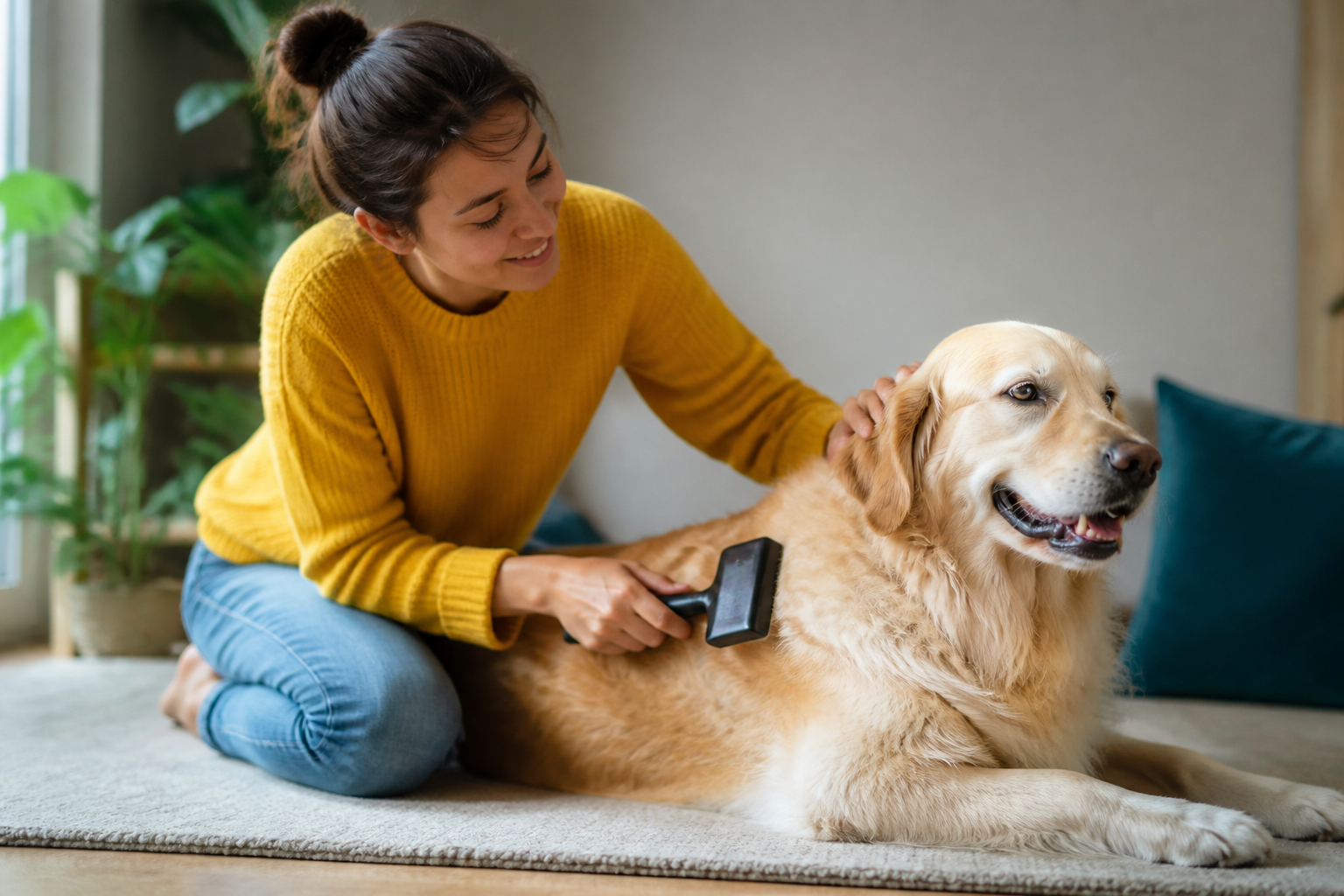
Introduction
You reach for the grooming kit and hear the familiar sound of paws scurrying into the other room. For many owners, the sight of a slicker brush is enough to send a dog into hiding under the sofa or behind a chair. We understand how frustrating it is when a simple hygiene task feels like a battle of wills. At BaxterBoo, we believe grooming should be a relaxing bonding experience rather than a stressful chore. This guide covers why dogs fear the brush and how to change their minds through slow training and positive rewards. You can transform a wiggly or fearful pet into one that leans into every stroke with patience and the right approach.
Understanding Why Your Dog Avoids the Brush
Dogs do not dislike brushing without a reason. Often, their resistance comes from a past negative experience. If a previous groomer or owner pulled on a mat too hard, the dog remembers that sharp pain. They associate the tool itself with discomfort. Puppies may simply be overwhelmed by the new sensation of bristles against their skin.
Some dogs have sensory sensitivities. The sound of a metal comb against long hair or the feel of wire bristles can be overstimulating. Other dogs are simply impatient. They would rather be playing fetch or napping than sitting still for a beauty session. Understanding the "why" behind their behavior helps you tailor your training.
Quick Answer: To get a dog used to brushing, use "desensitization" and "counter-conditioning." This means introducing the brush slowly while providing high-value treats to create a positive emotional response.
Reading Your Dog's Body Language
Before you even touch your dog with a brush, you must watch their signals. A dog that is uncomfortable will show subtle signs before they try to run or growl. Look for these "stay away" signals:
- Licking their lips or yawning.
- Showing the whites of their eyes (whale eye).
- Turning their head away from the brush.
- Tucking their tail or pinning their ears back.
- Tensing their muscles.
If you see these signs, you are moving too fast. Stop the session and try again later with a more gradual approach.
Choosing the Right Tools for Your Dog’s Coat
Using the wrong brush is a common reason for grooming struggles. A brush that is too harsh can scrape the skin and cause "brush burn." We carry over 500 trusted brands to help you find the exact match for your pet's specific needs. Explore our dog brushes and combs to compare tools for different coat types.
Common Brush Types
- Slicker Brushes: These have fine wire bristles. They are great for removing loose fur and tangles in double-coated breeds. However, they can be scratchy if used with too much pressure.
- Pin Brushes: These look like human hairbrushes with tipped bristles. They are gentler and work well for long, silky coats.
- Bristle Brushes: These use natural or synthetic soft bristles. They are perfect for short-haired dogs or as a "starter" brush for puppies.
- Rubber Curry Brushes: These are excellent for short-haired breeds. They massage the skin and pull away loose hair without any sharp edges.
- Grooming Gloves: These are often the best choice for fearful dogs. Since you are just "petting" the dog with a rubber-nubbed glove, it feels less like a medical or grooming procedure.
Key Takeaway: Start with the softest tool possible, even if it is not the most effective for your dog's coat type. The goal in the beginning is comfort, not efficiency.
Setting the Scene for a Successful Session
The environment where you brush your dog matters. If you try to brush them in a high-traffic area with kids running around, they will be distracted and anxious. Pick a quiet corner of the house where your dog already feels safe.
Using an elevated surface can sometimes help. Some dogs feel more secure on a sturdy table with a non-slip mat because they realize it is "work time" rather than "play time." However, for large dogs or very fearful pets, staying on the floor is usually best.
Make sure you are relaxed too. Dogs are experts at reading human emotions. If you are stressed or rushed, your dog will pick up on that energy. Take a few deep breaths and approach the session with a calm, neighborly attitude.
The Step-by-Step Training Process
The key to success is breaking the process down into tiny, achievable goals. Do not expect to brush the whole dog on the first day.
Step 1: Introduce the tool. / Place the brush on the floor and put a few high-value treats around it. Let your dog sniff the brush at their own pace. Do not pick it up yet.
Step 2: Association and touch. / Hold the brush in one hand and a treat in the other. Every time your dog looks at or sniffs the brush, give them a treat. Repeat this until they look happy to see the brush.
Step 3: The "back-of-the-brush" touch. / Use the smooth back of the brush to gently touch your dog's shoulder. Immediately give a treat. You are getting them used to the feeling of an object touching them without the scratch of bristles.
Step 4: The first stroke. / Turn the brush over and make one very light, short stroke on a non-sensitive area like the shoulder or back. Give a jackpot of treats.
Step 5: Increasing duration. / Gradually add more strokes. Brush for three seconds, then treat. Increase to five seconds, then ten.
Step 6: Moving to sensitive areas. / Once the back and shoulders are easy, move toward the legs, belly, and tail. These areas are often more sensitive, so go back to "one stroke and one treat" for these spots.
Vet Tip: Always check for skin redness or irritation after a grooming session. If you notice persistent itching, hot spots, or a dull coat, consult your veterinarian to rule out allergies or nutritional deficiencies.
Managing Mats and Tangles Without Pain
Nothing ruins a grooming session faster than pulling on a painful mat. If your dog has significant tangling, you must handle it with extreme care. Tugs and pulls will immediately set your training back. For additional guidance, read our tips for handling dog mats and tangles.
Tips for Tangle Removal
- Use a Detangling Spray: These products add "slip" to the hair, making it easier for the brush to slide through.
- Work from the Ends: Never start at the root of a mat. Hold the base of the hair with your fingers to prevent pulling the skin, and gently pick at the end of the mat with a comb.
- Cornstarch Trick: Rubbing a little cornstarch into a greasy mat can help loosen the fibers.
- Know When to Cut: If a mat is tight against the skin, do not try to brush it out. It is kinder to have a professional groomer or vet shave that specific spot.
Bottom line: Never force a brush through a mat. If it does not slide through easily, stop and use a detangler or specialized tool.
Handling Resistance and Biting
If your dog growls, snaps, or bites during brushing, they are communicating high levels of fear or pain. Do not scold or punish them. Punishment will only make them more afraid of the brush.
If the behavior is severe, you may need to work with a professional positive-reinforcement trainer. Some dogs also benefit from a "calming cap" or a licking mat. Smearing peanut butter or plain yogurt on a silicone mat gives the dog something to focus on while you work.
For dogs with extreme anxiety, our pet pharmacy offers prescription products and calming aids. Sometimes a little extra support is needed to help a dog stay below their "stress threshold" during the learning process.
Using Rewards Effectively
The type of reward you use can make or break your progress. "Kibble" might work for a highly motivated dog, but for a fearful dog, you need the "good stuff." Think about using small pieces of plain boiled chicken, freeze-dried liver, or string cheese. You can also explore our soft and chewy dog treats for small training rewards.
Use a high "rate of reinforcement." This means giving treats very frequently. In the early stages, you might give a treat every two or three seconds. As the dog gets more comfortable, you can space the rewards out.
Eventually, the goal is for the brushing itself to feel like a reward. Many dogs eventually learn to love the massage-like feeling of a good grooming session. Until then, keep the snacks coming.
Consistency and the "Short and Sweet" Rule
It is better to brush your dog for two minutes every single day than to try a thirty-minute session once a week. Frequent, short sessions keep the training fresh in the dog's mind. It also prevents mats from forming in the first place.
Set a schedule that works for you. Maybe you do a quick brush while you are watching TV in the evening. Or perhaps you do it right after a long walk when your dog is tired and more likely to settle down.
If you find that you are getting frustrated, stop the session. Your dog will sense your tension. End on a high note by asking for a simple "sit" or "paw," giving a treat, and putting the brush away.
When Grooming Becomes a Health Concern
Regular brushing is more than just a way to keep your dog looking sharp. It is an early warning system for health issues. While you brush, you are also performing a mini-physical exam.
What to Look For
- Parasites: Look for fleas, ticks, or "flea dirt" (small black specks).
- Lumps and Bumps: Feeling the skin helps you find new growths early.
- Skin Infections: Redness, crusting, or a bad odor can indicate a yeast or bacterial infection.
- Ear Issues: Check for discharge or redness in the ears while you are working near the head.
If you find any of these issues, your veterinarian is your best resource for diagnosis. Our pharmacy carries a wide range of prescription flea and tick preventives and medicated shampoos to help manage these conditions once your vet provides a treatment plan.
Conclusion
Getting your dog used to brushing is a journey that requires time, the right tools, and plenty of treats. By starting slowly and respecting your pet's boundaries, you can turn a stressful event into a peaceful routine. Remember to keep sessions short and always end with praise. If you are just starting out, check out our dog grooming supplies and high-value treats. For those managing skin conditions or anxiety, our pet pharmacy is here to help with professional-grade solutions. Your dog’s comfort is the priority, and with a neighborly approach, you will get there together.
Key Takeaway: Success in grooming is built on trust. Use the "touch and treat" method to ensure your dog always associates the brush with something wonderful.
FAQ
What if my dog is already matted?
If your dog has severe mats that are tight against the skin, do not try to brush them out at home. Pulling on these mats is very painful and can tear the dog's thin skin. It is best to have a professional groomer shave the mats or consult your vet if the skin underneath looks red or irritated.
How often should I brush my dog?
The frequency depends on the coat type, but most dogs benefit from a quick brushing every two to three days. Long-haired or double-coated breeds often need daily attention to prevent tangles and manage shedding. Short-haired breeds can often go a week between sessions.
Can I use human hairbrushes on my dog?
While a human brush might work for a very quick surface fix, they are not designed for pet fur. Dog brushes are built to reach through different layers of coat and handle the specific texture of animal hair. Using the wrong tool can lead to skin irritation or ineffective grooming.
My dog tries to bite the brush like a toy. What should I do?
This is common, especially with puppies. To stop this, give your dog a "job" to do while you brush, such as licking a treat-filled toy. If they try to bite the brush, calmly remove it and wait for them to settle before trying again. Avoid moving the brush in a way that mimics a "playing" motion.






