
 Save 15% on your 1st Autoship learn more

 Email us
 Live Chat
 FAQs
FAQs





Introduction
You know that exact moment when your dog leans in for a big, affectionate lick and the smell hits you like a wall. Bad breath is often the first sign that your dog needs a better dental routine. While many owners think "dog breath" is just a natural part of life, it is usually a sign of bacteria building up on the teeth and gums. At BaxterBoo, we talk to pet parents every day who are looking for ways to keep their dogs healthy from head to tail. Oral care is a huge part of that mission. In this guide, we will cover the most effective ways to get your dog's teeth clean at home and when you need to call in the professionals. Taking care of your dog’s mouth today can prevent pain and expensive vet bills down the road.
The Science of Plaque and Tartar
To understand how to get your dog's teeth clean, you first need to know what you are fighting. Plaque is a sticky film of bacteria that begins to form on the teeth just hours after a meal. If this plaque is not brushed away, it mixes with minerals in your dog's saliva. Within about 48 to 72 hours, it hardens into tartar, also known as calculus. Tartar is much harder to remove than plaque. It creates a rough surface that allows even more bacteria to grow.
Tartar usually builds up along the gum line first. This can lead to gingivitis, which is inflammation of the gums. You might notice a thin red line where the teeth meet the gums. If left alone, this can progress to periodontal disease. This condition can cause the structures supporting the tooth to break down. Eventually, this leads to loose teeth, infections, and even bone loss in the jaw.
Key Takeaway: Plaque hardens into tartar within three days, so consistency is the most important part of any dental routine.
Why Home Care Is Essential
Many pet owners rely solely on the vet for dental care. While professional cleanings are necessary, they usually only happen once a year. Imagine if you only brushed your teeth once every 365 days. The bacteria in a dog's mouth work the same way ours do. Daily home care is the most effective way to manage the bacteria that cause bad breath and decay.
When you take an active role in cleaning your dog’s teeth, you also become more familiar with their mouth. This means you are more likely to notice a broken tooth, a weird lump, or bleeding gums before they become emergencies. Early detection is always better for your dog and your wallet. For more warning signs, read about common signs of dental problems in dogs.
Choosing the Right Tools for the Job
You cannot just grab your own toothbrush and toothpaste from the bathroom cabinet. Human toothpaste often contains ingredients that are toxic to dogs. Xylitol is a common sweetener in human products that can cause life-threatening low blood sugar in dogs. Fluoride is also a concern because dogs swallow the paste instead of spitting it out.
Dog-Safe Toothpaste
Always use a toothpaste specifically formulated for pets. These are often enzymatic, which means they contain proteins that help break down plaque chemically even after you stop brushing. Most pet pastes come in flavors dogs actually like, such as poultry, beef, or peanut butter. This makes the experience much more enjoyable for the dog.
The Right Toothbrush
There are several options when it comes to the brush itself.
- Standard Pet Toothbrushes: These look like human brushes but have a more angled neck to reach the back molars.
- Dual-Headed Brushes: These have two sets of bristles to clean the inside and outside of the teeth at the same time.
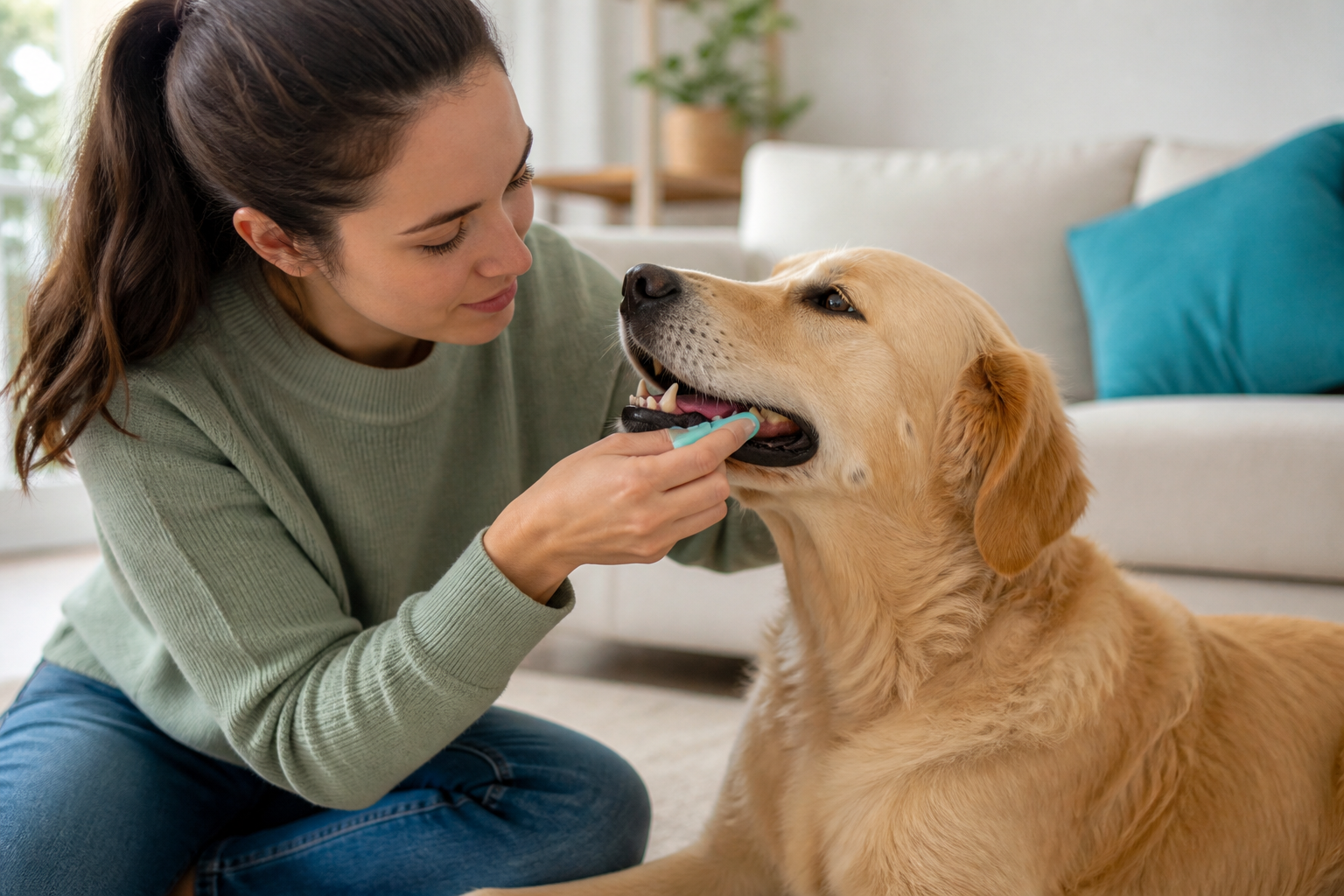
- Finger Brushes: These are small silicone caps that fit over your pointer finger. They offer more control and are often less intimidating for dogs who are new to brushing.
- Child’s Soft Toothbrush: If you have a small dog, a very soft toothbrush made for human toddlers can work well.
You can find toothbrushes, oral care products, and other wellness supplies in our dog health collection.
Vet Tip: If your dog has red gums or loose teeth, consult your veterinarian before starting a brushing routine. Brushing an infected mouth can be very painful for your pet.
Step-by-Step Guide to Brushing Your Dog’s Teeth
If your dog is not used to having their mouth touched, do not expect to do a full cleaning on the first day. The goal is to make this a positive experience so your dog stays relaxed.
Step 1: Get them used to the taste. Put a small amount of pet toothpaste on your finger. Let your dog sniff and lick it off. Do this for a few days until they get excited when they see the tube.
Step 2: Touch the teeth and gums. Gently lift your dog's lip and rub your finger over their teeth. You do not need to use a brush yet. This gets them used to the sensation of having their mouth handled.
Step 3: Introduce the brush. Put some toothpaste on the brush or finger cap. Let them lick the paste off the bristles. Gently brush just the large canine teeth in the front.
Step 4: Reach the back teeth. Most plaque and tartar build up on the outside of the upper molars in the back. Gently slide the brush along the cheek to reach these areas. You do not usually need to brush the inside surface of the teeth because the dog's tongue does a decent job of cleaning that area.
Step 5: Reward and praise. Always end the session with a treat or a favorite game. You want your dog to think that getting their teeth cleaned is the best part of their day.
Key Takeaway: Aim for a 45-degree angle at the gum line and use small, circular motions for the best results.
Using Dental Chews and Treats
Brushing is the gold standard, but we know it is not always easy. Some dogs are very resistant to having their mouths touched. In these cases, dental chews can be a helpful supplement. These treats are designed to be hard or rubbery so that as the dog chews, the treat scrapes against the tooth surface.
When choosing a dental chew, look for the VOHC (Veterinary Oral Health Council) seal. This seal means the product has been tested and proven to reduce plaque or tartar by a certain percentage. Our collection at BaxterBoo includes many trusted brands like Greenies that carry this seal. You can browse our selection of Greenies products.
It is important to remember that dental chews add calories to your dog's diet. If you give a chew every day, you might need to slightly reduce their meal portions to prevent weight gain. Always supervise your dog when they are eating a hard chew to ensure they do not swallow large chunks. You can also explore our dog dental chews and treats for additional options.
The Role of Dental Toys
Toys can also help get your dog's teeth clean while they play. Many rubber toys, like those made by Kong, have ridges or nubs designed to massage the gums and scrape the teeth. Cotton rope toys can act like a very basic form of dental floss as the dog chews on the fibers.
If your dog is a "power chewer," be careful with very hard toys. Items like cow hooves, antlers, or hard plastic bones can actually cause teeth to fracture. A good rule of thumb is that if you cannot indent the toy with your thumbnail, it might be too hard for your dog’s teeth. Our KONG dog toys include options designed for chewing and play.
- Look for toys with "dental" or "orthodontic" in the name.
- Avoid toys that are small enough to be swallowed.
- Replace toys once they become frayed or damaged.
Water Additives and Dental Wipes
For dogs that simply will not tolerate a brush, water additives and dental wipes are the next best thing. Water additives are liquids you pour into your dog's water bowl. They contain enzymes or ingredients like chlorhexidine that help kill bacteria in the mouth. This is an easy way to freshen breath and slow down plaque buildup.
Dental wipes are textured pads that you wrap around your finger. They are pre-soaked in a cleaning solution. While they do not reach into the crevices as well as a brush, they are excellent for removing the daily film of plaque from the flat surfaces of the teeth. They are often a great starting point for puppies or senior dogs.
Diet and Nutrition for Dental Health
What your dog eats can impact their oral health. There is a long-standing debate about whether dry food is better for teeth than wet food. While the crunch of kibble provides a tiny bit of scraping action, most standard kibbles shatter too easily to provide much benefit.
However, there are specific prescription dental diets formulated to stay in contact with the tooth longer. These kibbles are often larger and have a fibrous texture that scrubs the tooth as the dog bites down. If your dog has a history of severe dental issues, your vet might recommend one of these diets.
Our BaxterBoo pharmacy carries a variety of FDA-approved medications and prescription diets through our partnership with Pet's Choice. If your vet prescribes a specific dental food, you can often find it through our pet pharmacy. These diets are specifically engineered to manage oral bacteria and slow the progression of periodontal disease.
Bottom line: While standard kibble is better than wet food for teeth, it is not a replacement for brushing or professional care.
Professional Dental Cleanings
Even with the best home care, most dogs will eventually need a professional dental cleaning. This is very similar to what humans get at the dentist, but with one major difference: dogs require general anesthesia.
Why Anesthesia Is Necessary
It is impossible to safely perform a deep cleaning on a dog while they are awake. A professional cleaning involves scaling below the gum line. This is where the most dangerous bacteria live. If a dog moves during this process, the sharp tools could cause serious injury. Anesthesia also allows the vet to take dental X-rays. Since 60 percent of a dog's tooth is hidden under the gum line, X-rays are the only way to find painful abscesses or rotting roots.
The Cleaning Process
- Pre-anesthetic Bloodwork: Your vet will check your dog's liver and kidney function to ensure they can safely handle the anesthesia.
- Scaling: The vet uses ultrasonic and hand scalers to remove tartar from all surfaces of the teeth.
- Polishing: Scaling creates microscopic scratches on the enamel. Polishing smooths these out so plaque cannot easily stick to them.
- Probing: The vet checks for "pockets" in the gums that indicate bone loss.
- Extractions: If a tooth is dead, broken, or infected, the vet will remove it to prevent further pain.
Signs Your Dog Needs to See a Dentist
You should check your dog's mouth at least once a week. Some signs of dental disease are obvious, while others are subtle. If you notice any of the following, schedule a vet visit soon.
- Foul Breath: A slight "doggy" smell is normal, but a truly stinky or rot-like odor is a sign of infection.
- Discolored Teeth: Healthy teeth should be white. Yellow or brown buildup indicates tartar.
- Bleeding Gums: You might see blood on a chew toy or in the water bowl.
- Difficulty Eating: If your dog drops food or only chews on one side of their mouth, they may be in pain.
- Pawing at the Face: This can indicate a toothache or something stuck in the teeth.
- Swelling: Any lumps on the gums or swelling under the eye can indicate a tooth root abscess.
Caring for the Senior Dog’s Mouth
Senior dogs are at a much higher risk for dental disease. Years of plaque buildup can lead to chronic inflammation. This inflammation does not just stay in the mouth. Bacteria from the gums can enter the bloodstream and travel to the heart, kidneys, and liver. This can lead to endocarditis or chronic kidney disease.
Many owners are afraid of anesthesia for older dogs. However, age is not a disease. Most healthy senior dogs can handle anesthesia well if they have proper monitoring and pre-surgical screening. Leaving a painful, infected mouth untreated is often a much bigger risk to a senior dog's quality of life than the cleaning itself.
- Increase the frequency of home checks for seniors.
- Consider softer dental chews if they have missing teeth.
- Use water additives to provide passive protection.
Establishing a Routine
The hardest part of getting your dog's teeth clean is staying consistent. It helps to link brushing to something you already do every day. Maybe you brush your dog's teeth right after you brush your own at night. Or perhaps they get their dental chew every morning after their walk.
If you have a new puppy, start now. Puppies lose their baby teeth between four and six months of age. Starting a routine early means they will be completely comfortable with the process by the time their permanent adult teeth come in.
Vet Tip: Never use baking soda to clean a dog's teeth. It has a high alkaline content that can upset your dog’s stomach if swallowed.
Summary of Home Dental Care
To keep your dog's smile bright, you need a multi-layered approach. No single product will do all the work. By combining mechanical cleaning with chemical help, you provide the best defense against disease.
- Daily: Brushing with enzymatic pet toothpaste.
- Daily: VOHC-approved dental chew or toy.
- Weekly: Mouth inspection for redness, swelling, or bad odors.
- Yearly: Professional exam and cleaning by a veterinarian.
Conclusion
Getting your dog's teeth clean is about much more than just fresh breath. It is a vital part of their overall health and longevity. By committing to a daily routine of brushing and using the right tools, you can prevent the pain and complications of periodontal disease. We have been helping pet owners find the best products for their animals since 2006. Whether you need a finger brush for a wiggly puppy or a specialized dental toy for a powerful chewer, we are here to support your pet's wellness journey. Remember that your veterinarian is your best partner in oral health. They can provide the professional cleanings and X-rays that keep your dog's mouth healthy for years to come.
Bottom line: Consistent home care combined with professional checkups is the only way to truly keep your dog's teeth clean.
To get started on your dog's new oral health routine, check out our full range of dental care products. You can even set up an Autoship order for your favorite dental chews and toothpaste to ensure you never run out.
FAQ
Can I use human toothpaste on my dog?
No, you should never use human toothpaste for your dog. Many human pastes contain xylitol, which is a sweetener that is highly toxic to dogs and can cause liver failure or dangerous drops in blood sugar. Human toothpaste also contains foaming agents and fluoride that are not meant to be swallowed, which can lead to upset stomachs or toxicity in pets.
How often do I really need to brush my dog’s teeth?
Ideally, you should brush your dog’s teeth every single day to prevent the buildup of plaque. Plaque begins to harden into tartar within 48 to 72 hours, so brushing at least three times a week is the minimum required to make a difference. If you cannot brush daily, supplementing with dental chews and water additives can help fill the gaps.
My dog hates the toothbrush, what can I do?
If your dog resists a standard brush, try starting with a silicone finger brush or even a piece of gauze wrapped around your finger. These options are less intimidating and give you more control. You can also focus on using enzymatic toothpastes that work chemically to break down plaque, or rely more heavily on dental wipes and VOHC-approved chews while you slowly work on desensitizing them to the brush.
Are dental chews as good as brushing?
Dental chews are a great supplement, but they are not a complete replacement for manual brushing. Brushing allows you to reach the gum line and the crevices between teeth more effectively than a chew can. While chews help scrape the flat surfaces of the teeth, they often don't clean the areas where periodontal disease most commonly begins. Use them together for the best results.






