Save 15% on your 1st Autoship learn more

 Email us
 Live Chat
 FAQs
FAQs





Introduction
You are relaxing on the sofa with your favorite feline friend when you notice something unusual. As you run your hand down their back, a cloud of tiny white flakes appears on their glossy fur. It looks like a dusting of flour or salt, and it stands out vividly against their coat. While it might look like a simple cosmetic issue, these flakes often tell a story about your cat's internal health or environment.
At BaxterBoo, we know that seeing changes in your pet's appearance can be a bit worrying. This guide covers everything from the environmental triggers of dry skin to the underlying medical conditions that might be causing those stubborn flakes. We will provide practical steps to help your cat regain a soft, healthy coat. Identifying the root cause is the most important step in choosing the right remedy for your pet.
Understanding the Difference Between Dander and Dandruff
Before you can address the flakes, it is helpful to know exactly what you are looking at. Many pet owners use the terms dander and dandruff interchangeably, but they are quite different in the world of feline health.
Dander consists of microscopic skin cells that all cats shed naturally as part of their normal biological processes. You cannot see individual pieces of dander with the naked eye. It is perfectly normal and actually a sign of healthy skin renewal. Dander is often what triggers allergies in humans because it carries a specific protein from the cat's saliva.
Dandruff, on the other hand, consists of much larger flakes of dead skin. These are visible to you when you brush your cat or when they rub against the furniture. While dander is a constant and healthy occurrence, dandruff is a sign that the skin is shedding too quickly or that the cat is unable to remove the dead cells through grooming.
Quick Answer: Cat dandruff is the presence of visible white flakes of dead skin on a cat's fur or bedding. It is usually caused by dry skin, an inability to groom properly, or underlying health issues like allergies or parasites.
Common Causes of Cat Dandruff
To get rid of the flakes for good, you must understand why they are appearing in the first place. Feline skin is a sensitive organ that reacts quickly to changes in diet, weather, and physical health.
Lack of Proper Grooming
Cats are famous for their cleanliness. They typically spend a large portion of their day grooming themselves with their sandpaper-like tongues. This process removes dead skin cells before they can accumulate into visible dandruff. If a cat stops grooming or cannot reach certain areas, those flakes will start to build up.
Obesity is a leading cause of grooming issues. If a cat is overweight, they often cannot reach the middle of their back or the base of their tail. This is why you will often see a concentration of dandruff in those specific spots on a heavier cat. Similarly, senior cats with arthritis may find it painful to twist and turn to clean themselves.
Environmental Factors and Dry Air
Just like humans, cats can suffer from dry skin during the winter months. When you turn on the heater in your home, the humidity levels drop significantly. This dry indoor air pulls moisture out of your cat's skin. This leads to irritation, itchiness, and a flaky coat. Hairless breeds or cats with very thin coats are particularly susceptible to these environmental changes.
Nutrition and Hydration
The quality of a cat's skin is often a reflection of what is in their bowl. Cats require specific nutrients to maintain the moisture barrier of their skin. If their diet is low in essential fatty acids, the skin can become brittle and prone to flaking.
Dehydration also plays a significant role. Many cats have a low thirst drive and do not drink enough water from a bowl. If they eat a diet consisting only of dry kibble, they may live in a state of mild, chronic dehydration. This shows up on their skin as dry, dull fur and plenty of dandruff. Explore our cat food category when considering food options for your cat.
External Parasites
Fleas and mites are common culprits. There is a specific type of mite called Cheyletiella that is often referred to as walking dandruff. These mites are large enough to be seen moving under the skin scales, which makes it look like the dandruff is literally walking across your cat.
Key Takeaway: Dandruff is a symptom rather than a primary disease. Addressing it requires looking at your cat's weight, their mobility, their diet, and their environment.
How to Get Rid of Dandruff Through Better Grooming
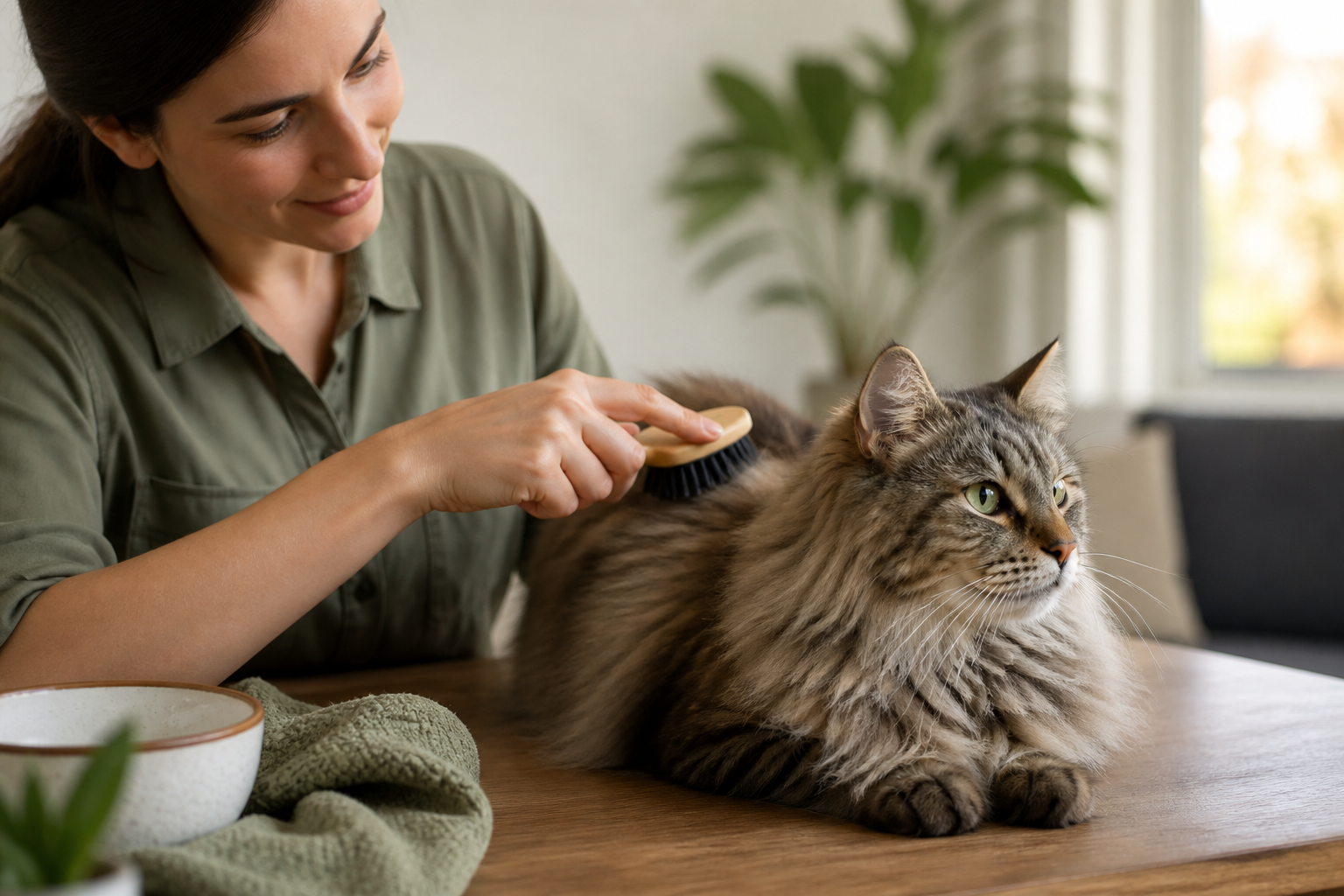
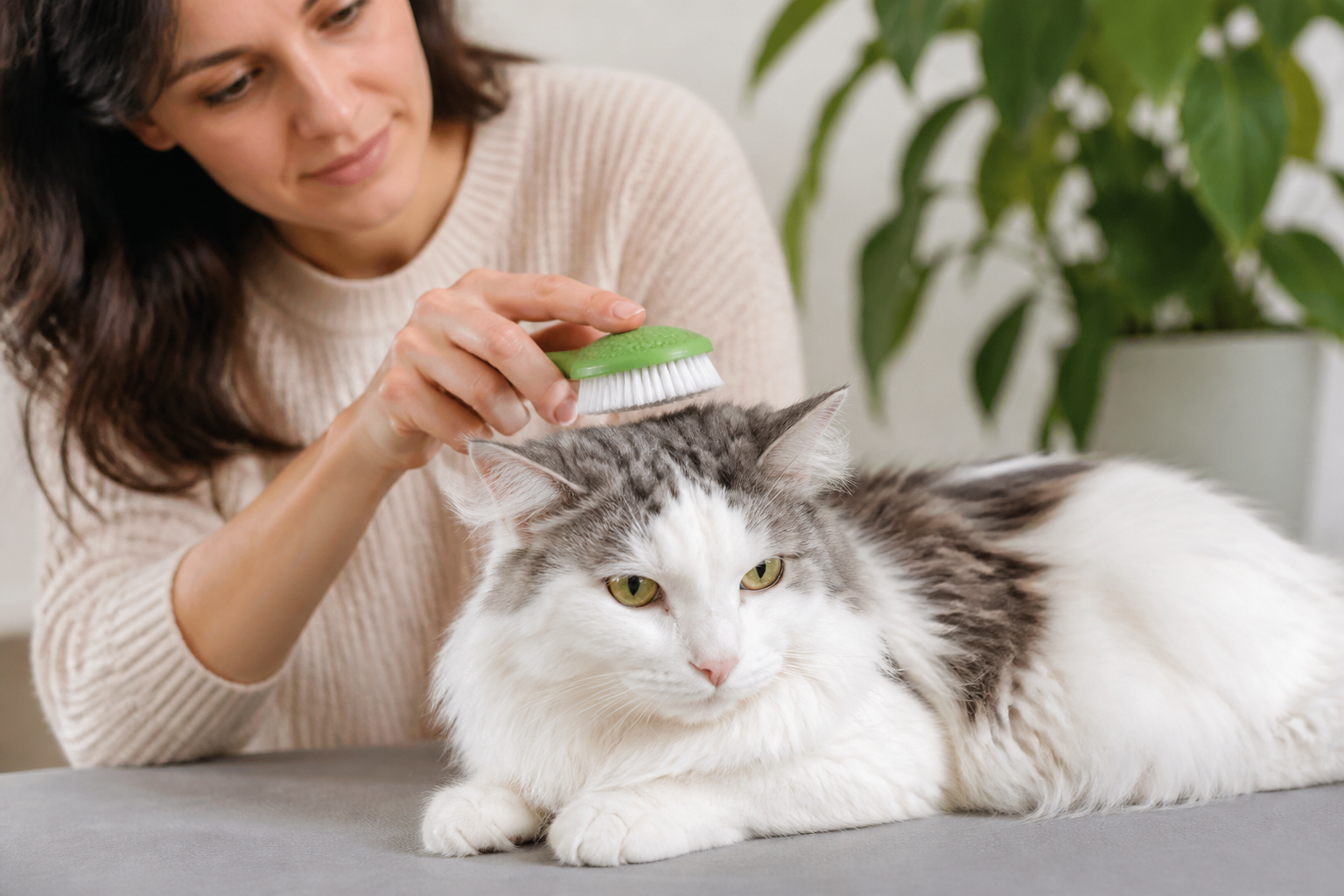
If your cat has a clean bill of health from the vet but still has some flakes, a more rigorous grooming routine is usually the first line of defense. Helping your cat manage their coat can significantly reduce the amount of visible dandruff. Browse our cat grooming supplies for brushes, combs, wipes, and other grooming tools.
Step 1: Choose the right tools. / Use a soft-bristled brush or a rubber grooming mitt to gently massage the skin. This stimulates blood flow and helps distribute natural oils across the coat.
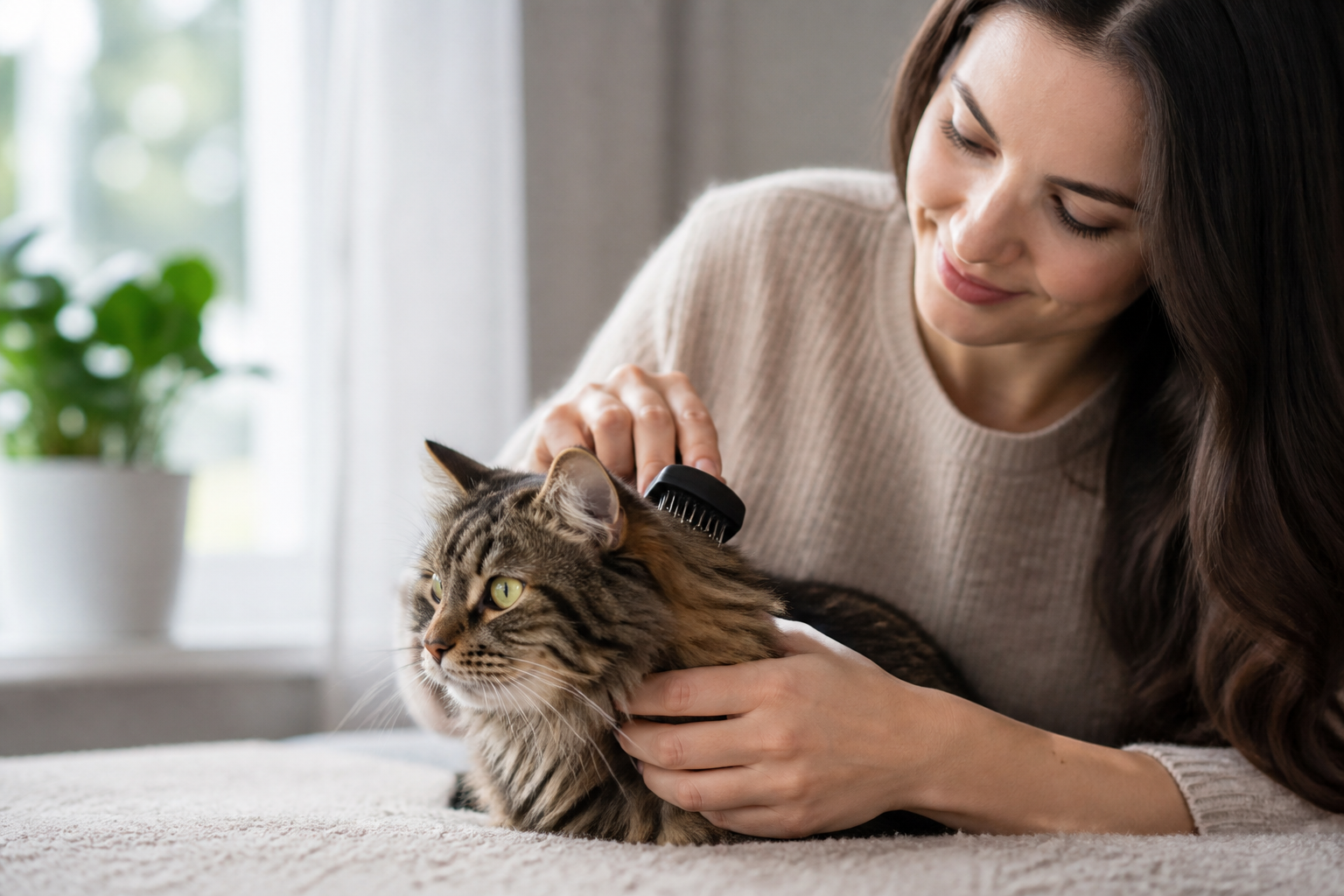
Step 2: Establish a routine. / Brush your cat daily if they have long hair, or twice a week for short-haired cats. Consistency is more effective than one long, stressful grooming session.
Step 3: Target the hard-to-reach areas. / Focus your attention on the lower back and the base of the tail where dandruff tends to congregate. Be gentle, as these areas can be sensitive if the skin is already dry.
Step 4: Use cat-safe wipes. / If your cat is older or overweight and cannot groom themselves, use a damp cloth or specialized pet wipes to remove the flakes. This mimics the action of their tongue without the stress of a full bath.
A tool such as the U-Groom Combo Brush for Dogs and Cats can help you work through the coat gently while distributing natural oils.
Vet Tip: If your cat's skin is red, inflamed, or has open sores, stop grooming that area and consult your veterinarian. These symptoms may indicate an infection or a severe allergic reaction that requires medical treatment rather than just brushing.
Using Nutrition to Support Skin Health
Improving what your cat eats is one of the most effective ways to manage skin health from the inside out. High-quality food provides the building blocks for a healthy moisture barrier.
The Importance of Essential Fatty Acids
Omega-3 and Omega-6 fatty acids are vital for skin health. These fats help to reduce inflammation and keep the skin cells plump and hydrated. Many premium cat foods, such as those from Farmina or Royal Canin, are formulated with specific ratios of these fats to support coat quality. You can also talk to your vet about adding a fish oil supplement to your cat's meals.
Hydration and Wet Food
If your cat has chronic dandruff, consider increasing the amount of wet food in their diet. Canned food has a much higher water content than kibble. This helps hydrate the skin from within. You can also try using a pet water fountain. Many cats prefer running water over a still bowl, which encourages them to drink more throughout the day.
For repeat food orders, our Autoship programme can help you maintain a consistent feeding routine.
Dealing with Parasites and Walking Dandruff
When dandruff is caused by parasites, grooming and diet changes will not be enough. You must eliminate the pests to stop the flaking. Fleas and mites cause intense itching, which leads to scratching and further skin damage.
Our pharmacy carries FDA-approved flea and tick preventives through our partnership with Pet's Choice. Options like Frontline or NexGard can help clear up infestations that cause skin irritation. If you suspect walking dandruff, your vet will need to perform a skin scraping to confirm the presence of mites before prescribing the correct medication. You can browse our cat flea and tick collection for available preventive products.
For additional guidance, read our article about flea and tick prevention products.
Note: Never use human dandruff shampoos on your cat. Many human products contain zinc pyrithione or coal tar, which can be toxic to cats if they lick their fur after a bath. Always use products specifically formulated for felines.
Health Conditions That Cause Flaky Skin
Sometimes dandruff is a secondary symptom of a more serious internal health problem. If you have tried grooming and diet changes and the flakes persist, it is time to look deeper.
- Allergies: Cats can be allergic to dust, pollen, or specific proteins in their food. This often manifests as itchy, flaky skin.
- Hyperthyroidism: This common condition in older cats can cause the skin to become thin and the coat to look unkempt and greasy with dandruff.
- Diabetes: Dehydration associated with diabetes often leads to very dry skin.
- Skin Infections: Bacterial or fungal infections like ringworm can cause circular patches of hair loss and heavy scaling.
If your cat is showing other signs of being unwell, such as a change in appetite or lethargy, a trip to the vet is mandatory. They can run blood work or skin tests to rule out these conditions. For cats diagnosed with specific health issues, we offer prescription pet foods through our pet pharmacy partnership to help manage their condition.
Environmental Fixes for Dry Skin
If your cat's dandruff only appears when the temperature drops, the culprit is likely the air in your home. You can make a few simple adjustments to your environment to help your cat's skin stay hydrated.
A humidifier is one of the best investments for a home with a flaky cat. Placing a humidifier in the room where your cat spends the most time can prevent their skin from drying out. You should also ensure that your cat's bed is not directly next to a heating vent, as the constant flow of hot, dry air will quickly strip the moisture from their coat.
Practical Steps for Long-Term Maintenance
Keeping dandruff away requires a combination of good habits and high-quality products. It is much easier to prevent dry skin than it is to treat a severe case of flaking and irritation.
- Monitor Weight: Keep your cat at a healthy weight so they can groom their entire body.
- Year-Round Prevention: Use flea and tick prevention every month, even for indoor cats.
- Routine Brushing: Make grooming a positive bonding experience rather than a chore.
- Check Ingredients: Avoid foods with excessive fillers and look for named animal proteins and healthy fats.
Bottom line: Most cases of cat dandruff can be managed with better hydration, regular brushing, and high-quality nutrition.
Conclusion
Managing cat dandruff is about more than just aesthetics. It is about ensuring your cat is comfortable and healthy. By addressing the environment, improving nutrition, and keeping up with a regular grooming schedule, you can help your cat maintain a coat that is soft, shiny, and flake-free. Remember that a sudden increase in dandruff or the presence of other symptoms like itching or hair loss should always prompt a visit to the veterinarian for a professional diagnosis.
We are here to help you every step of the way with our expertly curated selection of foods, supplements, and grooming gear. You can trust BaxterBoo to provide the supplies you need to keep your pet feeling their best. For ongoing health needs or prescription diets, be sure to visit our pharmacy section for convenient home delivery.
FAQ
Is cat dandruff the same thing as dander?
No, they are different. Dander consists of microscopic skin cells that all cats shed naturally, while dandruff consists of larger, visible white flakes. All cats have dander, but visible dandruff usually indicates an underlying issue like dry skin or a lack of grooming.
Can I get rid of cat dandruff by giving my cat a bath?
Bathing a cat can sometimes help remove flakes, but it can also dry out the skin further if done too often or with the wrong shampoo. It is usually better to use a moist grooming wipe or a specialized cat-safe moisturizing spray unless your veterinarian specifically recommends a medicated bath.
What is the best food for a cat with dandruff?
Foods rich in Omega-3 and Omega-6 fatty acids are excellent for skin health. Switching to a high-quality wet food can also help by increasing your cat's overall hydration levels. Many owners find that adding a small amount of fish oil to their cat's diet helps reduce flaking over time.
Why does my cat only have dandruff on their lower back?
This is usually a sign that your cat cannot reach that area to groom themselves. It is common in cats that are overweight or those suffering from arthritis or spinal stiffness. Regular brushing in that specific spot can help clear the buildup of dead skin cells.