Save 15% on your 1st Autoship learn more

 Email us
 Live Chat
 FAQs
FAQs





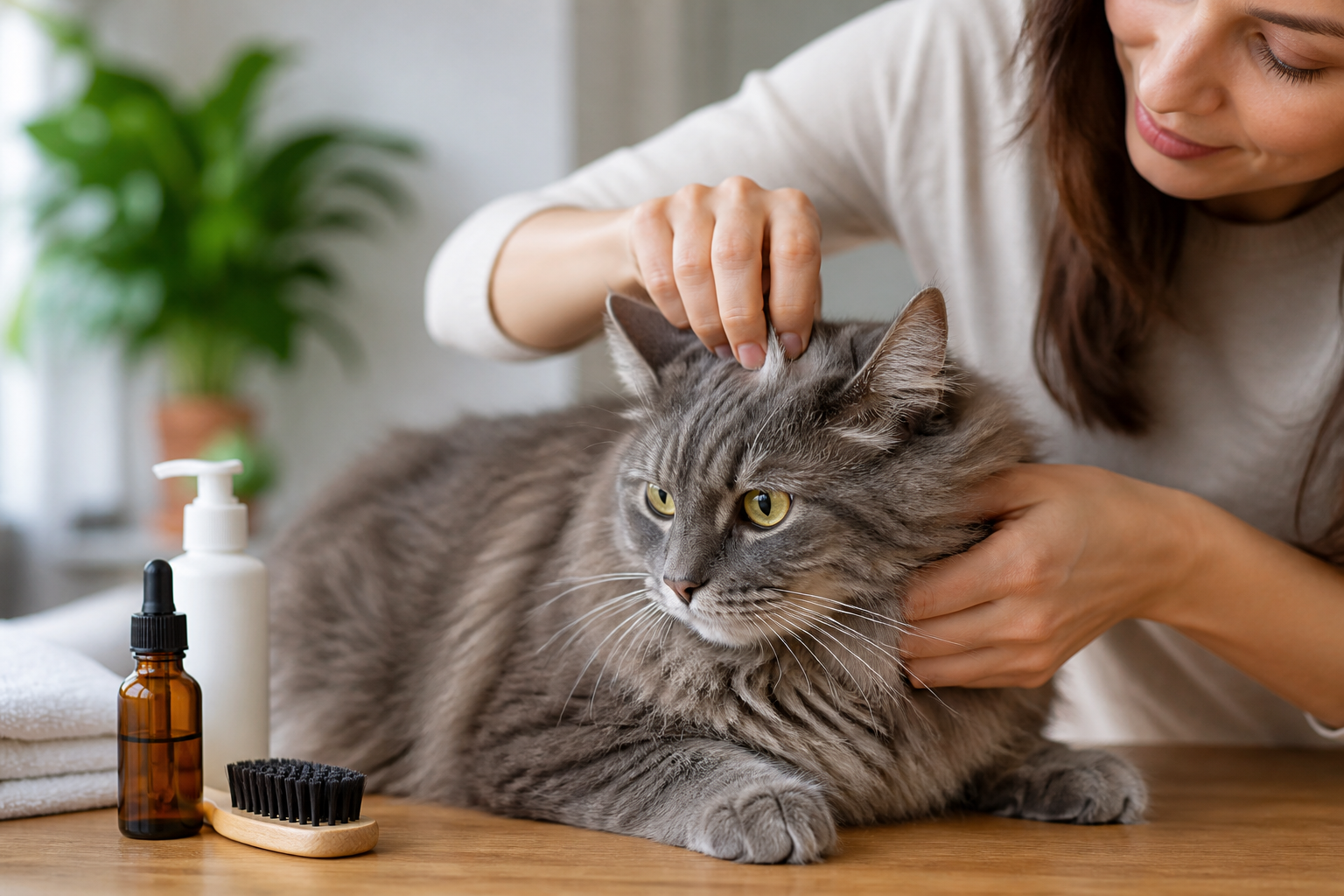
Introduction
You are relaxing on the sofa with your cat when you notice small white flakes scattered across their glossy fur. As you pet them, the flakes seem to multiply. While a few specks might not seem like a major concern, cat dandruff is often a signal that your feline friend needs a little extra attention. At BaxterBoo, we know that a healthy coat starts from the inside out. This guide will walk you through why these flakes appear and how you can restore your cat's skin to its healthy state. We will cover everything from simple grooming changes to when you need to call your veterinarian. Our goal is to help you understand the root causes and find the right solutions for your pet.
Quick Answer: To get rid of cat dandruff, start by increasing your grooming frequency with a soft brush and adding omega-3 fatty acids to their diet. If the flakes are accompanied by itching or redness, consult your vet to rule out parasites or skin infections.
Understanding Cat Dandruff vs. Dander
Many pet owners use the terms dander and dandruff as if they mean the same thing. They are actually quite different. Understanding this distinction is the first step in addressing the white flakes you see on your cat's back.
Dander is a normal part of being a cat. It consists of microscopic skin cells that all healthy cats shed. These cells are so small that you usually cannot see them with the naked eye. Dander is what typically triggers allergies in humans because it carries proteins from the cat's saliva. Every cat produces dander regardless of their skin health.
Dandruff refers to much larger flakes of dead skin that have clumped together. These flakes are visible on the fur or on the furniture where your cat sleeps. While dander is healthy and normal, dandruff is a sign of an issue. It often indicates that the skin is too dry, too oily, or irritated by an external factor.
How to Identify True Dandruff
If you see white specks, look closely at your cat's skin. True dandruff often appears as dry, flaky scales. In some cases, the skin might look red or feel slightly greasy to the touch. If you see black specks instead of white ones, you might be looking at flea dirt rather than skin flakes.
Key Takeaway: Dander is microscopic and normal for all cats. Dandruff is visible, flaky, and suggests an underlying skin or health issue.
Common Causes of Cat Dandruff
To learn how to get rid of dandruff on cat coats, you must first identify why it is happening. Feline skin is sensitive and reacts quickly to changes in the environment or internal health.
Environmental Factors
Low humidity is one of the most frequent causes of dry skin in cats. This is especially common in the winter months when heaters are running. Forced air heat strips moisture from the environment. This dries out your cat's epidermis and leads to flaking.
Nutritional Deficiencies
A cat's skin and coat require specific nutrients to stay supple. Omega-3 and omega-6 fatty acids are essential for maintaining the skin barrier. If a cat eats low-quality food that lacks these healthy fats, their skin may become brittle and dry. Dehydration also plays a role. Cats often have a low thirst drive. If they only eat dry kibble and do not drink enough water, their skin is often the first place to show signs of dehydration.
Difficulty Grooming
Cats are famous for their grooming habits. They spend a large portion of their day cleaning themselves. This process naturally removes dead skin cells before they can clump into dandruff. If a cat stops grooming, flakes build up quickly.
Obesity is a major hurdle for many cats. If a cat is overweight, they literally cannot reach their middle or lower back. This is why dandruff is often most prominent near the base of the tail on heavier cats. Senior cats with arthritis also struggle. The pain of bending and stretching can make a full grooming session impossible.
External Parasites
Certain mites can cause a condition known as walking dandruff. These tiny parasites move under the skin scales, making the dandruff appear to be moving on its own. Fleas and lice can also cause enough irritation and scratching to create visible skin flakes.
The Role of Grooming in Removing Dandruff
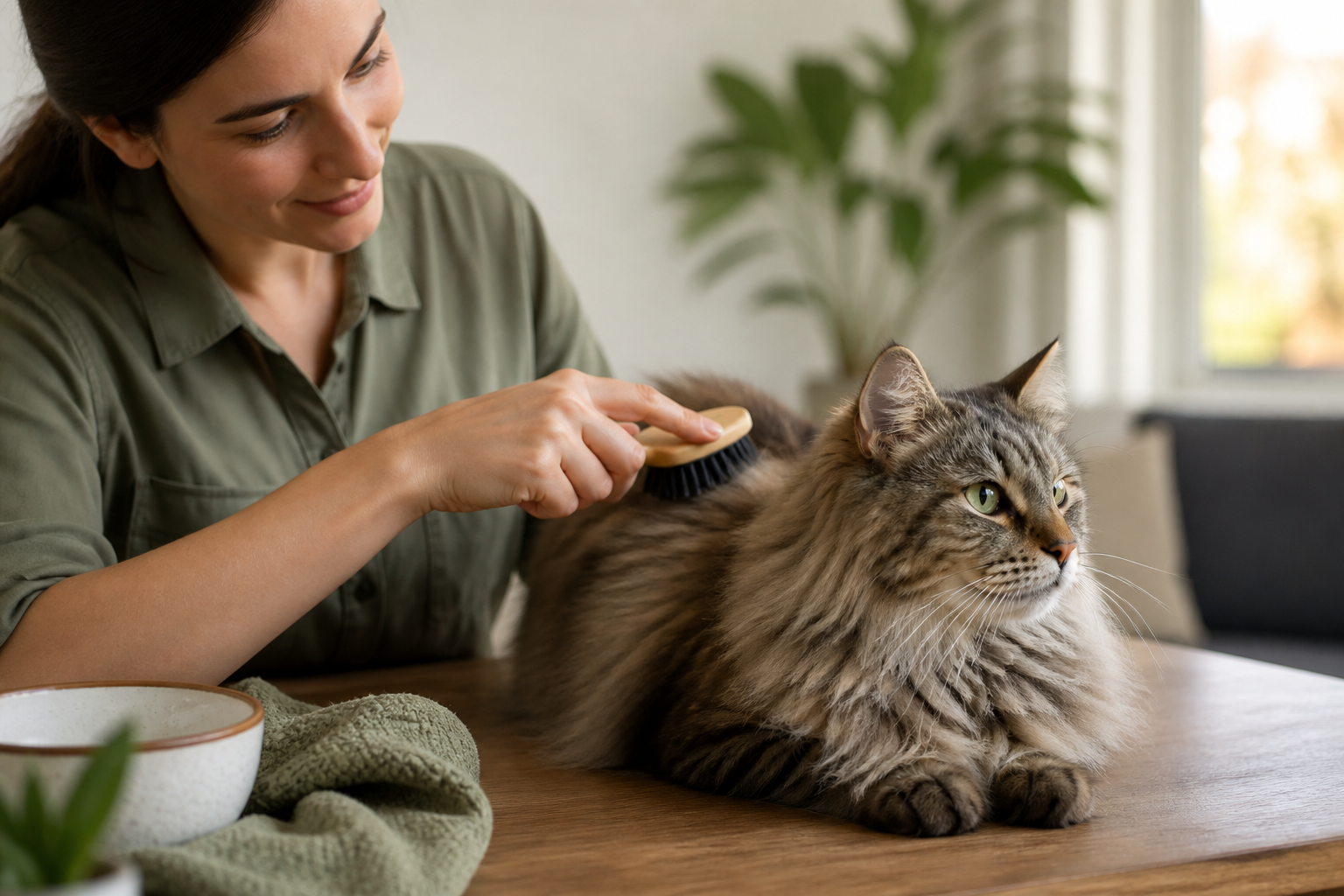
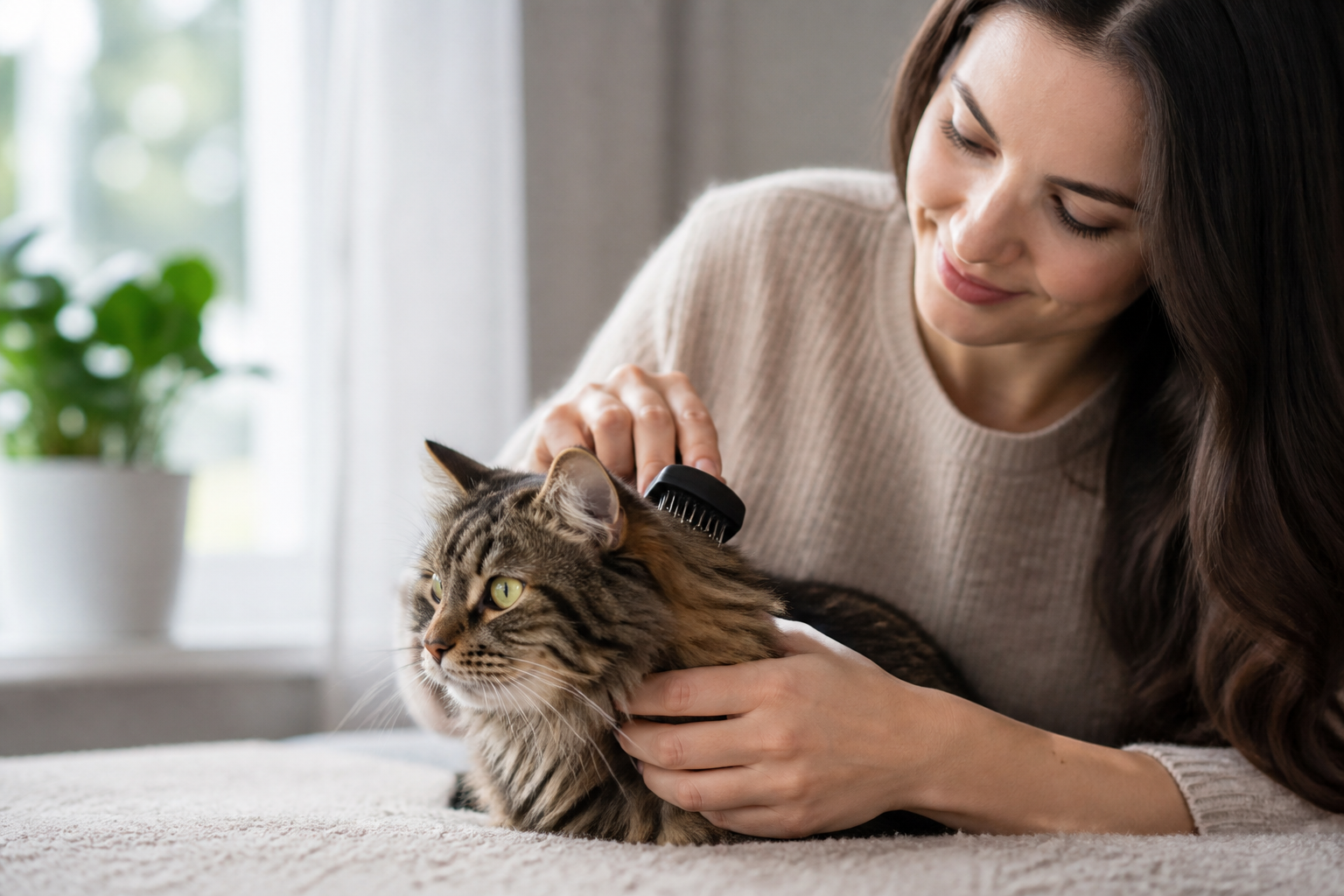
Regular brushing is the most immediate way to get rid of cat dandruff. It does more than just move the hair around. Brushing stimulates the blood flow to the surface of the skin. This encourages the production of natural oils that keep the coat shiny and the skin hydrated.
For brushes, combs, grooming wipes, and other supplies, explore our cat grooming collection.
Step 1: Choose the right tool. / For cats with dandruff, a soft bristle brush or a grooming glove is often better than a harsh metal comb. You want to stimulate the skin without scratching it.
Step 2: Brush in the direction of hair growth. / Use long, gentle strokes. Focus on the areas where your cat cannot reach, such as the base of the tail and the center of the back.
Step 3: Keep sessions short. / If your cat is not used to regular grooming, start with just five minutes a day. Follow up with a healthy treat to create a positive association.
Step 4: Wipe the coat. / Use a damp, pet-safe grooming wipe after brushing. This helps pick up the loose flakes you have disturbed so they do not just settle back onto the fur.
Vet Tip: If your cat has stopped grooming themselves, it is important to find out why. While you can help by brushing them, an underlying issue like dental pain or arthritis may be the cause. Schedule a checkup to ensure they are not in discomfort.
Improving Nutrition and Hydration
What your cat eats directly impacts the quality of their skin. If you are struggling with persistent flakes, it might be time to look at the ingredient label on your cat food. You can compare moisture-rich options in our cat food selection.
High-Quality Proteins and Fats
Look for foods that list a specific meat source as the first ingredient. Brands like Farmina, Orijen, or Acana focus on high-protein recipes that support overall wellness. To target dandruff specifically, consider adding a supplement. Fish oil or krill oil capsules are packed with omega-3 fatty acids. These supplements help repair the skin barrier and reduce inflammation.
The Importance of Wet Food
Many cats live in a state of mild, chronic dehydration. Switching at least part of their diet to wet food can make a massive difference. Brands like Tiki Cat or Fussie Cat offer high-moisture options that help hydrate the skin from the inside out. If your cat refuses wet food, try adding a splash of water or plain bone broth to their dry kibble.
Water Fountains
Some cats are picky about their water source. They often prefer running water over a stagnant bowl. A pet water fountain can encourage more frequent drinking. This helps keep the entire body, including the skin, properly hydrated.
Bottom line: A combination of moisture-rich food and omega fatty acid supplements is often the fastest way to resolve diet-related dandruff.
When to Use the BaxterBoo Pharmacy
In some cases, home remedies like brushing and better food are not enough. If your cat’s dandruff is caused by an underlying medical condition or a parasitic infestation, you will need professional medical intervention.
Our pharmacy provides access to FDA-approved medications through our partnership with Pet's Choice. This is a vital resource for owners managing chronic conditions. If your vet determines that your cat's dandruff is a symptom of an allergy, they may prescribe a specific medicated shampoo or an oral medication. You can explore our pet pharmacy for prescription-related care.
Prescription Diets
Some cats require a specialized diet to manage skin sensitivities. Brands like Royal Canin and Farmina Vet Life offer prescription formulas designed for cats with severe skin issues or obesity. These foods are formulated to provide high levels of skin-supporting nutrients while addressing the root cause of the flaking. You can easily fulfill these prescriptions through our pharmacy once your vet provides the authorization.
Parasite Protection
If mites or fleas are the cause of the dandruff, you need a strong preventative. We carry trusted brands like Frontline and NexGard. For conditions like walking dandruff, your vet might prescribe a specific topical treatment. Using a consistent flea and tick preventative year-round is one of the best ways to keep your cat's skin healthy and flake-free. Review our cat flea and tick products for available options.
For additional guidance, read our guide to flea and tick prevention.
Managing the Home Environment
If your cat's skin only gets flaky during the winter, the problem is likely environmental. You can take several steps to make your home more comfortable for your pet's skin.
Humidifiers
A small humidifier placed in the room where your cat spends the most time can work wonders. Aim for a humidity level between 40 and 50 percent. This prevents the air from pulling moisture out of your cat's skin.
Stress Reduction
Stress can manifest in many ways in cats, including skin changes. A stressed cat might over-groom one area or stop grooming altogether. Both behaviors lead to skin issues. If there have been recent changes in your home, consider using calming aids. Pheromone diffusers from brands like Jackson Galaxy can help create a more relaxed environment.
Cleaning Bedding
Dandruff flakes and oils can accumulate on your cat's favorite sleeping spots. Wash their bedding once a week in hot water with a fragrance-free detergent. This prevents old flakes and potential allergens from irritating the skin further.
When to See a Veterinarian
While most cat dandruff is a minor cosmetic issue, it can occasionally signal a serious problem. You should monitor your cat closely for any other changes in behavior or appearance.
Contact your veterinarian if you notice any of the following:
- Extreme itching or constant scratching
- Red, inflamed, or bleeding skin
- Patches of hair loss or thinning fur
- A foul odor coming from the skin or ears
- Changes in appetite or litter box habits
- Lethargy or hiding
Dandruff can sometimes be a secondary symptom of systemic diseases like diabetes or hyperthyroidism. These conditions require a professional diagnosis through blood work. A vet can also perform a skin scraping to look for microscopic mites that are not visible to the eye.
Vet Tip: Never use human dandruff shampoos on a cat. Many of these products contain zinc or salicylic acid, which can be toxic if your cat licks their fur after the bath. Always use products specifically formulated for feline pH levels.
Maintaining a Flake-Free Future
Once you have successfully cleared up the flakes, the goal is to prevent them from coming back. Consistency is the secret to a healthy feline coat.
Maintain a regular schedule for brushing, especially if you have a long-haired cat or a senior pet. Keep up with monthly parasite preventatives, even for indoor-only cats. Fleas can easily hitch a ride into your home on your clothing or other pets.
Lastly, stay current with your pet's wellness exams. Detecting a weight issue or an early stage of arthritis allows you to intervene before it impacts your cat's ability to groom. We are here to support you in every stage of this journey, from the first sign of flakes to long-term health management.
By combining high-quality nutrition with a dedicated grooming routine, you can keep your cat's coat soft, shiny, and free of dandruff.
Summary of Care Steps
| Method | Action | Expected Result |
|---|---|---|
| Grooming | Daily brushing with a soft brush | Removes dead cells and spreads natural oils |
| Nutrition | Add Omega-3 fatty acids | Strengthens the skin barrier from within |
| Hydration | Switch to wet food or use a fountain | Improves overall skin elasticity and health |
| Environment | Use a humidifier in dry months | Prevents the air from drying out the skin |
| Medical | Use prescription treatments via pharmacy | Resolves parasite or infection-related issues |
Key Takeaway: Cat dandruff is a manageable symptom. With a focus on hydration, nutrition, and regular grooming, most cats will see an improvement in their skin quality within a few weeks.
Conclusion
Getting rid of cat dandruff requires a thoughtful approach to your pet's daily routine. Most cases respond well to simple changes like increased brushing and better hydration. However, it is always important to remember that skin is a reflection of internal health. If your cat's dandruff is persistent or accompanied by discomfort, your veterinarian is your best resource for a diagnosis. Our team at BaxterBoo is committed to providing the supplies you need for a healthy home, whether that is premium food or prescription medications through our pharmacy.
Bottom line: Start with a gentle grooming routine and a high-quality diet. If you suspect an underlying health issue, visit our pharmacy section to learn more about how we can help you fulfill your vet's prescriptions.
FAQ
Is cat dandruff the same thing as fleas?
No, cat dandruff is made of white skin flakes, while flea dirt looks like small black specks of pepper. If you see black specks, your cat likely has fleas, which requires a specific parasite treatment. You can find many effective flea preventatives in our cat flea and tick collection to address this issue.
Can I use human lotion on my cat’s dry skin?
You should never use human lotions or creams on your cat unless specifically instructed by a veterinarian. Cats groom themselves by licking, and many human skin products contain ingredients that are toxic if ingested. Stick to pet-safe balms or oils recommended by a professional.
Why does my cat only have dandruff near their tail?
Dandruff near the base of the tail is often a sign that a cat cannot reach that area to groom. This is very common in cats that are overweight or those suffering from arthritis. Helping your cat with daily brushing in these hard-to-reach spots can significantly reduce the buildup of flakes.
How long does it take for cat dandruff to go away?
If the cause is environmental or nutritional, you should see an improvement within two to four weeks of making changes. If the dandruff is caused by a medical condition or parasites, it will usually resolve once the underlying treatment is completed. Consistency with grooming and supplements is essential for seeing lasting results.