
 Save 15% on your 1st Autoship learn more

 Email us
 Live Chat
 FAQs
FAQs





Introduction
You lean in for a happy morning nuzzle only to be met with a cloud of breath that smells like a damp basement. Most dog owners have experienced this moment. While we often joke about "dog breath," a foul odor is usually the first sign of dental disease. At BaxterBoo, we see how much a healthy mouth changes a dog's quality of life. Oral health is about more than just white teeth. It is about preventing pain and protecting internal organs from bacteria. This post will cover everything from daily brushing techniques and specialized diets to the best chew toys for scrubbing away plaque. We want to give you the practical tools needed to build a sustainable home routine. A proactive approach today can prevent expensive and stressful veterinary procedures later.
Quick Answer: The most effective way to keep a dog’s teeth clean is daily brushing with pet-safe enzymatic toothpaste. You can support this routine with VOHC-approved dental treats, water additives, and professional veterinary cleanings to remove tartar below the gumline.
The Importance of Oral Hygiene for Dogs
Many pet owners do not realize that dental care is a cornerstone of overall wellness. By age three, the majority of dogs show some signs of periodontal disease. This condition starts as a thin film of bacteria called plaque. If you do not remove plaque within 24 to 48 hours, it hardens into tartar. Tartar is a cement-like substance that you cannot brush away at home.
When tartar builds up along the gumline, it creates a pocket where bacteria thrive. This leads to gingivitis, which is the inflammation of the gums. If left alone, the infection can travel deeper. It eventually destroys the bone and tissues that hold the teeth in place. This process is often silent. Dogs are notorious for hiding mouth pain. They may continue to eat even with loose teeth or abscesses.
The danger is not limited to the mouth. Bacteria from infected gums can enter the bloodstream. From there, it can travel to the heart, liver, and kidneys. Long-term dental disease is a known risk factor for heart valve issues and chronic kidney disease. Keeping the mouth clean is one of the best ways to extend your dog's lifespan. For additional guidance, read our tips for recognizing signs of bad teeth in dogs.
Brushing Your Dog’s Teeth at Home
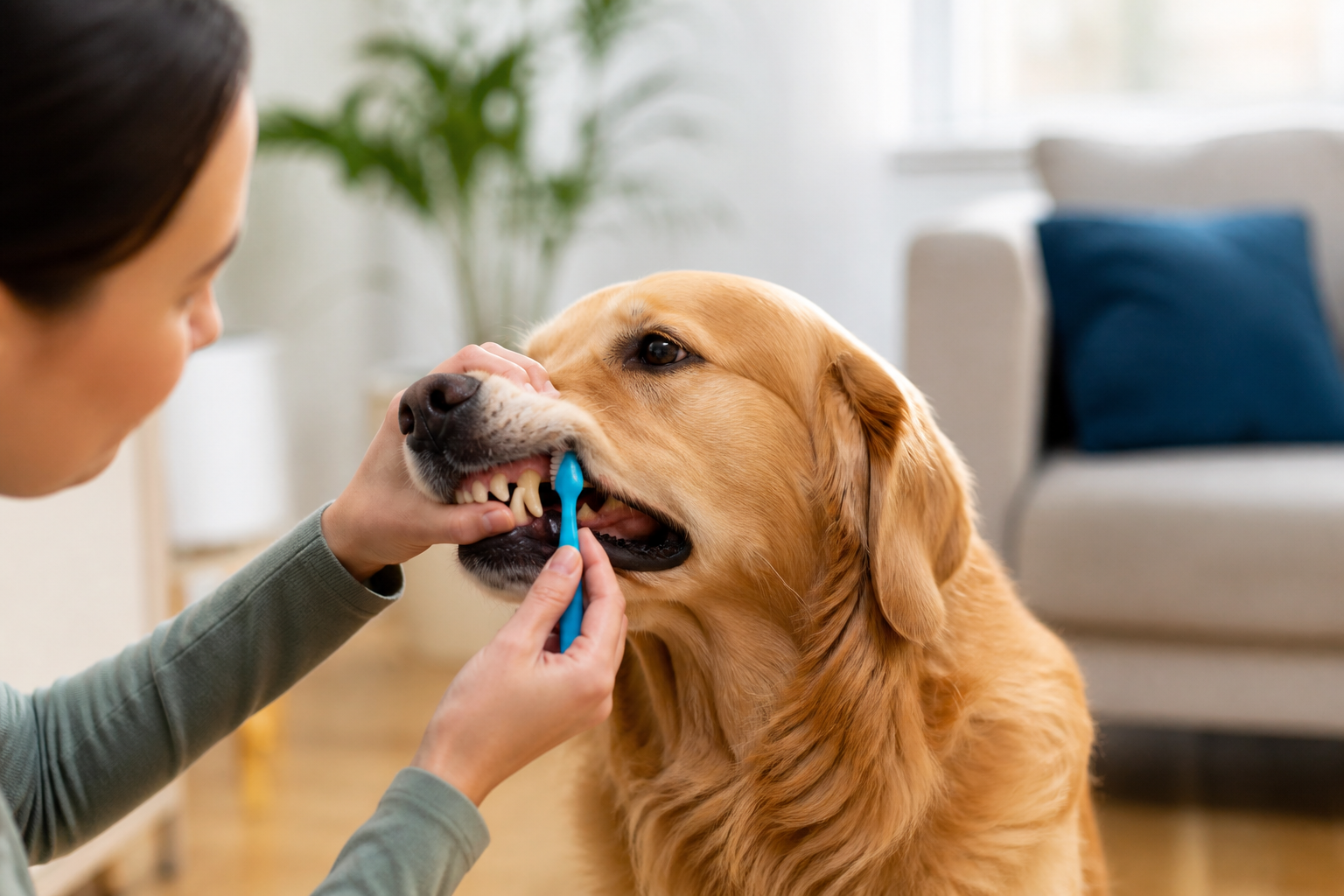
Brushing is the gold standard for oral care. No treat or toy can match the effectiveness of a toothbrush. The mechanical action of the bristles breaks up the biofilm of plaque before it mineralizes. We recommend aiming for a daily session, though three times a week is a great starting point for busy owners. You can find brushes, toothpaste, and other supplies in our dog dental care collection.
Choosing the Right Tools
Never use human toothpaste for your dog. Our toothpaste contains foaming agents and fluoride that can upset a dog's stomach. Many human brands also contain xylitol. This is an artificial sweetener that is highly toxic to dogs. Pet-specific toothpaste is enzymatic. This means it uses proteins to break down bacteria even after you stop brushing. These pastes come in flavors like poultry, beef, or peanut butter to make the experience more enjoyable. One option is Virbac C.E.T. Enzymatic Pet Toothpaste for Dogs and Cats - Poultry.
The type of brush you choose depends on your dog's size and comfort level.
- Standard pet toothbrushes: These have long handles and angled heads to reach the back molars.
- Finger brushes: These are small silicone caps that fit over your fingertip. They offer more control and are less intimidating for puppies.
- Dual-headed brushes: These allow you to clean the top and sides of the teeth at the same time.
How to Introduce Brushing
Do not expect to do a full cleaning on the first day. You need to build trust. Start by letting your dog lick a small amount of toothpaste off your finger. Once they like the taste, begin rubbing your finger along their gums.
Step 1: Get your dog used to mouth handling. / Gently lift their lips for a few seconds every day.
Step 2: Introduce the paste. / Let them lick the enzymatic paste to associate the flavor with a reward.
Step 3: Try the brush. / Use a circular motion on the outside surfaces of the upper teeth.
Step 4: Focus on the molars. / The back teeth usually accumulate the most tartar.
Vet Tip: Most tartar accumulates on the outside of the teeth. If your dog resists, focus your energy on the cheek side of the upper molars. This is where the salivary glands are located and where plaque builds up fastest.
Dental Treats and Chews
Treats are a popular way to supplement a brushing routine. However, not all chews are created equal. The most effective options have a specific texture that allows the tooth to sink into the treat. This creates a scrubbing action against the surface of the enamel. Greenies dental dog chews are one option to consider.
The VOHC Seal of Approval
When shopping for dental treats, look for the Veterinary Oral Health Council (VOHC) seal. This independent organization reviews data from clinical trials. A product only earns the seal if it proves it can reduce plaque or tartar by at least 20 percent. Brands like Greenies are well known for meeting these standards.
Mechanical vs. Chemical Action
Some dental chews work purely through mechanical friction. Others include chemical ingredients like sodium hexametaphosphate. This ingredient helps prevent minerals in the saliva from bonding to plaque. This dual approach is very effective for dogs that do not tolerate brushing well. For more ideas, explore our dog dental treats and oral care products.
Key Takeaway: Dental treats should supplement brushing, not replace it. Always supervise your dog when they are eating a chew to prevent choking or the swallowing of large pieces.
Using Toys for Dental Health
Playtime can double as a cleaning session if you choose the right toys. Certain materials are better at massaging gums and scraping teeth than others. Rubber toys with ridges, nubs, or "dental tracks" are excellent. As your dog gnaws on the toy, the rubber bumps rub against the teeth.
Cotton rope toys can also act like a form of floss. The fibers can slide between the teeth to remove food particles. You must inspect rope toys regularly. If the fibers become frayed, your dog might swallow them. This can lead to dangerous intestinal blockages.
Avoid toys that are too hard. A good rule of thumb is the "fingernail test." If you cannot make a small indent in the toy with your fingernail, it is likely too hard. Items like elk antlers, dried hooves, and real bones are common causes of fractured teeth. These fractures are painful and often require the tooth to be extracted.
Bottom line: Stick to flexible rubber or nylon toys designed for chewing to keep teeth safe while cleaning them.
Specialized Dental Diets
For dogs prone to rapid tartar buildup, a change in diet may be necessary. Standard kibble is often too small or brittle to provide dental benefits. It usually shatters as soon as the dog bites it. Specialized dental diets use a different technology.
These kibbles are much larger. They have a fibrous matrix that does not shatter. Instead, the tooth sinks into the piece, and the fibers scrub the tooth surface as the dog chews. These diets also contain minerals that bind to calcium in the saliva. This keeps the calcium from hardening into tartar on the teeth.
Accessing Prescription Diets
Some of the most effective dental foods are only available with a veterinary prescription. Brands like Royal Canin Vet Life and Hill's Prescription Diet offer these specialized formulas. Our pet pharmacy carries FDA-approved prescription pet foods through our partnership with Pet's Choice. If your veterinarian recommends a dental diet for your dog, you can easily manage those refills through us.
Key Takeaway: Prescription dental diets are formulated for long-term use and provide complete nutrition while managing oral health.
Water Additives and Oral Sprays
If you have a dog that will not let you near their mouth, water additives are a stress-free option. These are liquid solutions that you pour into your dog's daily water bowl. They are usually tasteless and odorless so they do not discourage drinking. Our dog dental care selection includes water additives and oral care products for different routines.
Most additives contain enzymes or zinc gluconate. These ingredients help kill the bacteria that cause bad breath and plaque. While they are not as effective as brushing, they are a great "hands-off" way to reduce the overall bacterial load in the mouth. Oral sprays work similarly but are applied directly to the teeth and gums. These are helpful for a quick breath refresh after a meal.
The Role of Professional Cleanings
No matter how well you brush at home, most dogs will eventually need a professional cleaning. This is similar to why humans go to the dentist even if we brush twice a day. A veterinarian can reach the areas that are impossible to see at home. You can also review our pet dental care tips for more ways to support your dog's routine between veterinary visits.
Why Anesthesia is Necessary
A real dental cleaning must be done under general anesthesia. Some companies offer "anesthesia-free" cleanings, but these are purely cosmetic. They only scrape the tartar off the visible part of the tooth. They cannot clean the most important area: the space under the gumline.
Without anesthesia, a vet cannot take X-rays. Since 60 percent of a dog's tooth is below the gumline, X-rays are the only way to find hidden abscesses or rotting roots. Anesthesia also allows the vet to use ultrasonic scalers and polishers safely. This prevents the dog from feeling pain or moving during the delicate procedure.
Frequency of Cleanings
The frequency of professional cleanings depends on your dog's breed and genetics. Small breeds, such as Pugs and Chihuahuas, have crowded mouths. This causes food and bacteria to get trapped easily. They may need a professional cleaning every year. Larger breeds might only need one every few years if they have a good home routine.
Vet Tip: Schedule an annual wellness exam to have your dog's mouth evaluated. Your vet can tell you when the transition from "mild plaque" to "needed cleaning" has occurred.
Identifying Signs of Dental Pain
Because dogs are stoic, they often suffer in silence. It is up to us to look for the subtle red flags that indicate a problem. You should check your dog's mouth at least once a month for changes.
Watch for these signs of dental distress:
- Persistent bad breath that does not go away with brushing.
- Red, swollen, or bleeding gums.
- Discolored teeth (brown or yellow crust).
- Dropping food while eating or chewing on only one side of the mouth.
- Pawing at the face or rubbing the mouth against furniture.
- Loss of appetite or refusing hard treats.
- Blood found on chew toys or in the water bowl.
If you notice any of these symptoms, it is time for a veterinary visit. Do not try to scrape tartar off yourself. You can easily damage the enamel or cause an infection to flare up.
Building a Consistent Routine
The best dental plan is the one you can actually stick to. You do not have to do everything at once. Start with one small change and build from there. For example, start by adding a water additive this week. Next week, try introducing a dental treat once a day.
Steps to a Clean Mouth
Step 1: Schedule a vet checkup. / Ensure your dog doesn't have existing painful conditions before you start brushing.
Step 2: Choose your primary method. / Whether it is brushing or a dental diet, make it the core of your routine.
Step 3: Add secondary support. / Use toys and water additives to fill the gaps.
Step 4: Monitor progress. / Take photos of your dog's teeth to see if your efforts are reducing the yellowing over time.
Bottom line: Consistency is more important than perfection. Brushing even twice a week is significantly better than not brushing at all.
Conclusion
Helping your dog maintain a clean mouth is one of the most rewarding things you can do as a pet owner. It reduces the risk of systemic disease and ensures your dog can eat comfortably well into their senior years. While brushing remains the most effective tool, we know every dog is different. By combining high-quality treats, the right chew toys, and professional veterinary care, you can tackle plaque from every angle. Our pharmacy and wide selection of dental products are here to support you in this journey.
Check out our full collection of dental care products to find the perfect fit for your dog's routine. Consider signing up for our Autoship programme to ensure you never run out of the treats and toothpaste your dog needs to stay healthy.
FAQ
How often should I brush my dog's teeth?
You should ideally brush your dog's teeth every day to prevent plaque from hardening into tartar. If a daily schedule is not possible, aim for at least three times per week. Consistent brushing is the only way to effectively remove the biofilm of bacteria before it mineralizes.
Can I use my own toothpaste on my dog?
No, you should never use human toothpaste on a dog. Human toothpaste contains ingredients like fluoride and sodium lauryl sulfate that can be toxic or cause stomach upset when swallowed. Many human brands also contain xylitol, which is life-threatening to dogs even in small amounts.
Do dental treats really work as well as brushing?
Dental treats are a helpful supplement, but they are not as effective as manual brushing. They work through mechanical friction and sometimes chemical additives to reduce plaque. While they help, they usually cannot reach the crevices or the gumline as effectively as the bristles of a toothbrush.
Why does my dog still have bad breath after I brush their teeth?
If your dog's breath remains foul after brushing, they may have an underlying issue like a tooth infection, an abscess, or advanced periodontal disease. It could also indicate an internal health problem involving the kidneys or digestive system. In these cases, you should consult your veterinarian for a professional oral exam and cleaning.






