
 Save 15% on your 1st Autoship learn more

 Email us
 Live Chat
 FAQs
FAQs





Introduction
You notice it the moment your dog leans in for a happy lick. That familiar "dog breath" has turned into a sharp, unpleasant odor that makes you turn away. Many owners assume bad breath is just a natural part of owning a dog, but it is actually one of the first signs of dental disease. At BaxterBoo, we know that staying on top of oral hygiene can feel like a chore, but it is one of the most important things you can do for your pet's longevity. Neglecting the mouth can lead to pain, tooth loss, and even systemic issues affecting the heart and kidneys. This article covers the most effective tools and habits to keep your dog's mouth fresh and healthy. A proactive approach today prevents expensive and stressful procedures later.
Quick Answer: The best way to keep a dog's teeth clean is a combination of daily brushing, dental chews, and professional veterinary cleanings. Brushing removes plaque before it hardens into tartar, while chews provide mechanical scrubbing for hard to reach areas.
The Importance of Preventative Dental Care
Dental health is about much more than a white smile. When bacteria build up in a dog's mouth, they form a sticky film called plaque. If you do not remove this film through brushing or chewing, it reacts with minerals in the saliva. This process turns plaque into tartar, which is a hard, brownish substance that sticks to the teeth.
Tartar is difficult to remove at home. It provides a perfect surface for more bacteria to grow. These bacteria eventually migrate under the gumline. This causes inflammation known as gingivitis. If left untreated, it progresses to periodontal disease. This condition destroys the bone and tissues that hold teeth in place.
The dangers are not limited to the mouth. Bacteria from infected gums can enter the bloodstream. From there, they can travel to major organs. Studies have linked chronic oral infections to heart valve damage and kidney disease. Keeping your dog's teeth clean is a full body health priority.
Step-by-Step Guide to Brushing Dog Teeth
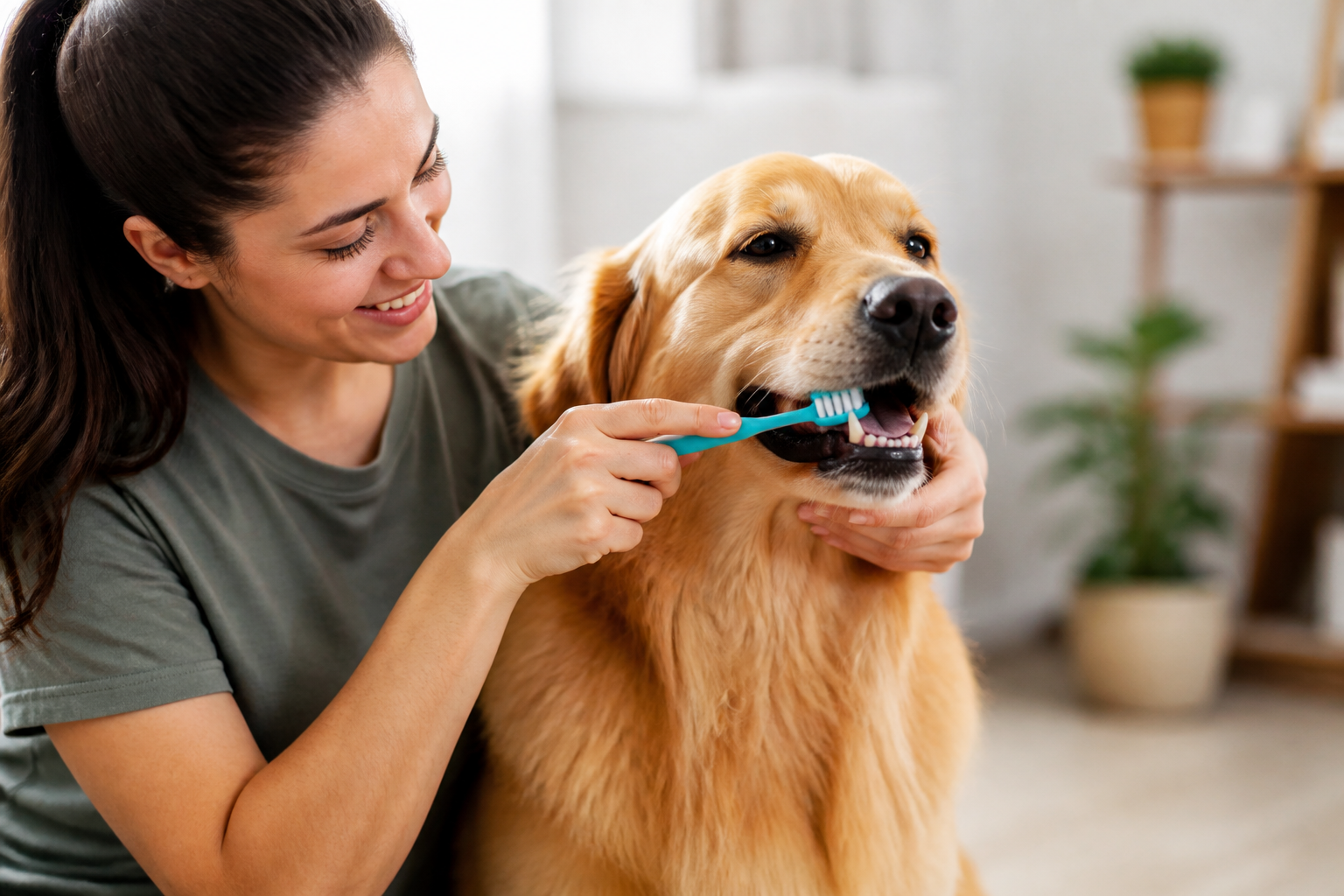
Brushing is the gold standard for oral care. It is the only way to effectively remove plaque from the gumline. While most dogs are not born loving a toothbrush, almost any dog can learn to tolerate it with patience.
Step 1: Choose the right tools.
Purchase a toothpaste made specifically for dogs, such as Virbac C.E.T. Enzymatic Pet Toothpaste. Never use human toothpaste. It often contains xylitol, which is toxic to dogs. It also contains foaming agents that can upset a dog's stomach. Dog pastes come in flavors like chicken, beef, or peanut butter to make the process more rewarding.
Step 2: Introduce the taste.
Let your dog lick a small amount of toothpaste off your finger. Do this for a few days without trying to brush. You want them to associate the paste with a treat.
Step 3: Get them used to mouth handling.
Gently lift your dog's lips. Rub your finger along their gums and teeth. This gets them comfortable with the sensation of someone touching their mouth.
Step 4: Introduce the brush.
You can use a standard dog toothbrush with a long handle or a silicone finger brush. Moisten the bristles and apply a small amount of paste. Gently brush the outside surfaces of the teeth in a circular motion.
Step 5: Focus on the molars.
The back teeth are where most tartar accumulates. You do not need to worry about brushing the inside surfaces of the teeth near the tongue. A dog's tongue does a decent job of cleaning those areas naturally.
Key Takeaway: Consistency is more important than perfection. Brushing two or three times a week is significantly better than not brushing at all.
Selecting Effective Dental Treats and Chews
Not every dog will sit still for a toothbrush. This is where dental treats and chews become valuable allies. These products work through mechanical action. As your dog gnaws on the treat, the texture scrapes against the tooth surface to rub away plaque.
When shopping at BaxterBoo, look for the Veterinary Oral Health Council (VOHC) Seal of Acceptance. This seal means the product has been through rigorous testing. It confirms that the treat actually reduces plaque or tartar by at least 20 percent. You can explore our dog dental and breath care collection for toothbrushes, chews, toothpaste, and other oral-care products.
Some popular options include:
- Dental sticks with ridges and nubs to reach between teeth.
- Enzymatic chews that use natural proteins to break down bacteria.
- Long lasting rubber toys designed to be stuffed with pet safe spreads.
- Nylon bones that stand up to aggressive chewers.
Be mindful of the calorie count in dental treats. Some can be quite high in fat. If you give your dog a dental chew every day, you may need to slightly reduce their meal portions to prevent weight gain.
For additional ideas, read our guide to dental chews for dogs.
Using Water Additives and Dental Powders
For owners with busy schedules or pets that are difficult to handle, water additives and food powders are excellent supplements. These are not a total replacement for brushing, but they provide an extra layer of protection.
Water additives are typically tasteless and odorless. You simply add a capful to your dog's water bowl every time you refill it. These solutions often contain enzymes or zinc gluconate. These ingredients help kill the bacteria that cause bad breath and plaque formation.
Dental powders work similarly but are sprinkled over your dog's food. Many of these powders contain a specific type of brown algae. This seaweed has been shown to change the chemistry of the saliva. It makes it harder for plaque to stick to the teeth. It also helps soften existing tartar over time. One example is ProDen PlaqueOff Powder Dog and Cat Teeth Care.
Vet Tip: If you notice your dog is suddenly drinking less water after you use an additive, stop using it immediately. Hydration is always the priority. Try a different brand or switch to a food powder instead.
The Role of Diet in Dental Health
What your dog eats every day impacts their oral environment. There is a long standing debate about whether dry kibble cleans teeth better than wet food. While the crunch of kibble provides some friction, most standard kibble is too small and brittle to do much cleaning. It often shatters before it can scrape the tooth.
However, specific dental diets are engineered differently. These are often available through a veterinarian. The kibble pieces are much larger. They have a fibrous texture that does not shatter. Instead, the tooth sinks into the kibble, allowing the fibers to scrub the tooth all the way to the gumline.
Our pharmacy carries a variety of these specialized foods through our partnership with Pet's Choice. Brands like Royal Canin, Hill's, and Farmina Vet Life offer formulas designed specifically for oral health. If your dog has a history of rapid tartar buildup, ask your vet if a prescription dental diet is right for them.
Foods to Support Oral Health
- Prescription dental kibble with "fiber matrix" technology.
- Raw vegetables like carrots or apple slices (without seeds).
- Foods with added probiotics to balance mouth bacteria.
Dental Toys and Enrichment
Playtime is a great opportunity to clean teeth. Certain toys are designed specifically to massage the gums and scrape away debris. Rope toys act like dental floss as the strands slide between the teeth. Rubber toys with deep grooves or "nubs" are also very effective.
You can increase the effectiveness of these toys by applying a bit of dog friendly toothpaste into the grooves. As your dog chews and tries to get the paste out, they are inadvertently brushing their own teeth. This is a perfect solution for dogs that are "head shy" or resistant to traditional brushing.
Bottom line: Interactive dental toys provide mental stimulation while simultaneously reducing the bacterial load in the mouth.
Professional Veterinary Cleanings
Even with the best home care, most dogs will eventually need a professional cleaning. Just as humans visit the dentist for a deep clean, dogs need a veterinarian to remove tartar from places a brush cannot reach.
A professional dental cleaning requires general anesthesia. This is the only way a veterinarian can safely scale the teeth and clean under the gumline. They will also take X-rays to check for issues below the surface, such as abscesses or bone loss.
The frequency of these cleanings depends on several factors:
- Breed: Small breeds like Pugs, Yorkies, and Chihuahuas have crowded mouths. This leads to faster buildup and more frequent cleaning needs.
- Age: Senior dogs often require more frequent checkups as their immune systems change.
- Genetics: Some dogs simply have "stickier" saliva that forms tartar faster than others.
Vet Tip: Always have your vet perform an oral exam during your dog's annual wellness visit. They can tell you exactly when it is time to schedule a professional cleaning before problems become severe.
For more information about warning signs, read how to recognize signs of bad teeth in dogs.
Recognizing Signs of Dental Trouble
It is important to look inside your dog's mouth regularly. Early detection of dental disease can save your dog from significant pain and save you from high surgical costs. If you notice any of the following symptoms, schedule a veterinary exam as soon as possible.
- Persistent bad breath that does not improve with brushing.
- Yellow or brown deposits on the teeth near the gums.
- Red, swollen, or bleeding gums.
- Difficulty eating or dropping food while chewing.
- Pawing at the face or rubbing the mouth on the carpet.
- Loose or missing teeth.
- Excessive drooling, sometimes tinged with blood.
Some dogs are very good at hiding pain. They may continue to eat even if they have a fractured tooth or a painful infection. Do not wait for them to stop eating before seeking help.
Special Considerations for Different Breeds
Not all dogs face the same dental challenges. Understanding your dog's specific risks helps you tailor their care routine.
Small and Toy Breeds
These dogs often suffer the most from dental issues. Because their mouths are so small, their teeth are often crowded or rotated. This creates many tiny crevices where food and bacteria get trapped. Many small dogs also retain their "baby teeth" longer than they should. This creates a double row of teeth that is nearly impossible to keep clean without veterinary intervention.
Brachycephalic Breeds
Dogs with flat faces, like Bulldogs or Boxers, often have misaligned jaws. This prevents their teeth from meeting correctly. Natural wear and tear do not happen as they should, leading to uneven tartar buildup.
Large and Working Breeds
While these dogs usually have better tooth spacing, they are at higher risk for fractured teeth. This often happens from chewing on items that are too hard, such as stones, thick bones, or heavy nylon toys. Always monitor their chewing habits to ensure they are not being too aggressive with their toys.
Building a Sustainable Routine
The best dental plan is the one you can actually stick to. You do not have to do everything at once. Start with one or two habits and build from there.
Step 1: Evaluation.
Check your dog's mouth. If there is already heavy brown tartar, start by scheduling a vet visit. You cannot brush away hardened tartar.
Step 2: Daily Maintenance.
Try to brush at least three times a week. On the off days, give a VOHC approved dental chew.
Step 3: Supplemental Support.
Add a water additive to their daily bowl. This takes seconds and provides constant bacterial protection.
Step 4: Regular Monitoring.
Once a month, do a "lip flip" to check for redness or new buildup. Keep track of any changes in their breath or eating habits.
Summary of Dental Care Methods
| Method | Effectiveness | Ease of Use | Primary Benefit |
|---|---|---|---|
| Brushing | Highest | Moderate/Difficult | Removes plaque at the gumline |
| Dental Chews | High | Very Easy | Mechanical scrubbing of molars |
| Water Additives | Moderate | Very Easy | Reduces overall mouth bacteria |
| Prescription Diet | High | Easy | Constant cleaning during meals |
| Dental Toys | Moderate | Easy | Gum massage and enrichment |
Key Takeaway: A multi modal approach is best. Use brushing for the front teeth and gums, chews for the back molars, and additives for total mouth health.
Finding the Right Products at BaxterBoo
We carry over 500 trusted brands to help you manage your dog's health from puppyhood through the senior years. Whether you need a specific toothbrush, a durable chew toy, or a VOHC approved treat, we have carefully selected our inventory to meet high standards. Our warehouse in Vernon Hills, Illinois, is stocked with everything from enzymatic toothpastes to dental rinses.
If your dog requires ongoing medication for oral infections or a prescription diet for periodontal management, our pharmacy is a convenient resource. Through our partnership with Pet's Choice, we provide FDA approved medications and specialized foods that ship right to your door. This integration makes it easier to manage chronic conditions without multiple trips to different stores.
To make your dental routine even easier, consider using our Autoship programme. You can set your favorite dental treats or water additives to arrive on a recurring schedule. This ensures you never run out and keeps your dog's routine consistent. Plus, you will save on your first order and receive a free MVP Gold membership for additional rewards.
Conclusion
Keeping your dog's teeth clean is a lifelong commitment that pays off in a happier, healthier pet. By combining regular brushing with effective chews and professional veterinary oversight, you can prevent the pain and complications of dental disease. Remember to watch for signs of trouble and act quickly if you notice changes in your dog's mouth.
- Start brushing early to get your dog used to the process.
- Always look for the VOHC seal on treats and chews.
- Never use human oral care products on your pet.
- Schedule annual dental exams with your veterinarian.
Bottom line: Preventative dental care is much more affordable and less painful than treating advanced periodontal disease.
If you are ready to start a new routine, browse our dog dental and breath care category for the latest in toothbrushes, pastes, and wipes. For those looking for long term savings on these essentials, joining the MVP Rewards programme allows you to earn up to 5% back on every purchase.
FAQ
Can I use baking soda to brush my dog's teeth?
While baking soda is not toxic, it has a very high salt content and an unpleasant taste. If your dog swallows too much, it can cause an upset stomach or electrolyte imbalances. It is much safer and more effective to use a flavored canine toothpaste that contains enzymes specifically designed to break down pet plaque.
How do I know if a dental chew is too hard for my dog?
A good rule of thumb is the "knee cap test" or the "thumbnail test." If you would not want to be hit in the knee with the object, it is likely too hard. Alternatively, if you cannot leave a small indentation in the chew with your thumbnail, it may be hard enough to fracture your dog's teeth. Always supervise your dog when they are trying a new type of chew.
Why does my dog's breath still smell after brushing?
If brushing does not improve your dog's breath, there may be an underlying issue. Odor can be caused by tartar trapped under the gumline, an infected tooth, or even internal health problems like kidney or liver issues. If bad breath persists despite good home care, you should consult your veterinarian for a professional oral exam.
My dog's gums bleed a little when I brush. Should I stop?
Small amounts of bleeding can be a sign of early gingivitis, similar to what humans experience when they start flossing after a long break. However, if the bleeding is heavy or the gums look very red and angry, you should stop and see a vet. This often indicates more advanced dental disease that requires a professional cleaning before you can resume home brushing safely.






