
 Save 15% on your 1st Autoship learn more

 Email us
 Live Chat
 FAQs
FAQs





Introduction
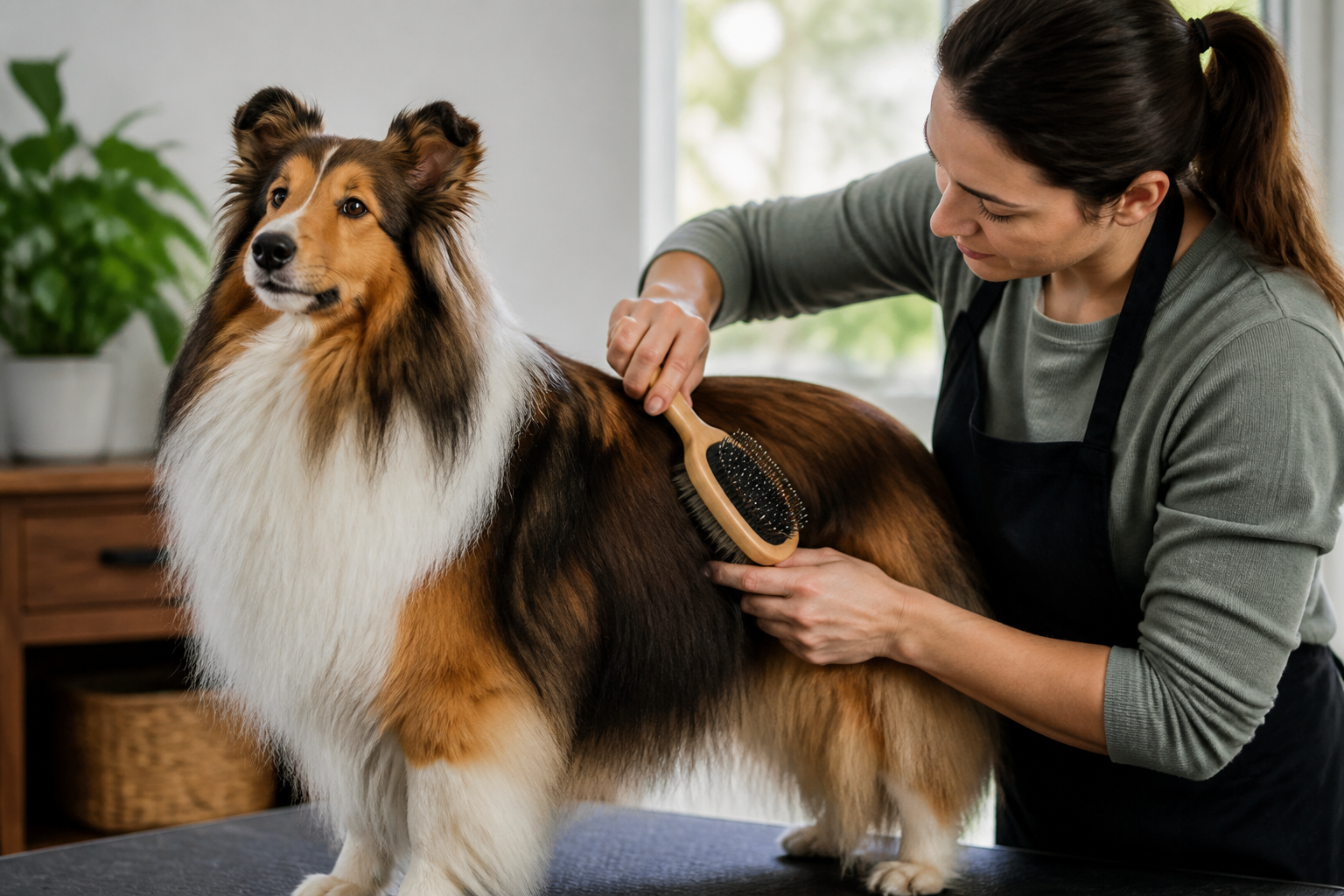
You run a brush over your dog and their coat looks fluffy and clean. However, when you run your fingers through their fur, you feel hard clumps right against the skin. This is the classic sign of surface brushing. It is a common frustration for owners of Doodles, Poodles, and double-coated breeds like Huskies or Golden Retrievers. Traditional brushing often misses the dense undercoat where tangles actually start. At BaxterBoo, we know that proper grooming is about more than just looks. It is about keeping your dog comfortable and their skin healthy. This guide covers the specific technique of line brushing to ensure you reach every layer of your dog's coat. You will learn the tools you need and the step-by-step process to prevent painful matting.
Quick Answer: Line brushing involves lifting sections of hair and brushing small "lines" of fur from the skin outward. It ensures you remove loose undercoat and tangles that surface brushing misses. This technique is essential for long-haired, curly, or double-coated dogs to prevent mats.
Why Surface Brushing Isn't Enough
Many pet owners spend twenty minutes brushing their dog only to be told by a professional groomer that the dog is matted. This happens because most standard brushes only slide over the top layer of guard hairs. The guard hairs are the long, stiff hairs that provide color and water resistance. Beneath them lies the undercoat, which is soft, downy, and prone to tangling.
When loose undercoat hair sheds, it gets trapped by the guard hairs. If it is not brushed out from the root, it begins to weave itself into the surrounding fur. This creates a knot. Over time, these knots tighten into mats that sit tight against the skin. Mats are more than an eyesore. They can trap moisture, lead to fungal infections, and pull painfully on the skin every time the dog moves. Line brushing is the only way to guarantee you are reaching that bottom layer.
The Essential Line Brushing Tool Kit
You do not need a professional grooming station to line brush at home. You do need the right tools for the job. Using the wrong brush can cause "brush burn" or simply fail to penetrate the coat. Start with our dog brushes and combs to find tools suited to your dog's coat.
The Slicker Brush
A slicker brush is the primary tool for line brushing. It features a flat or slightly curved head with rows of thin, hooked wire pins. These pins are designed to grab loose undercoat and pull it through the guard hairs. Look for a slicker brush with a comfortable handle, as line brushing takes a bit of time.
The Metal Greyhound Comb
A metal comb is your diagnostic tool. While the slicker brush does the heavy lifting, the comb tells you if you missed anything. The teeth of the comb should be long enough to reach the skin. We recommend a "greyhound" style comb, which usually has wider teeth on one end and finer teeth on the other.
Detangling or Conditioning Spray
Brushing dry hair can cause static and breakage. A light mist of grooming spray provides "slip." This helps the brush glide through tangles without snapping the hair shaft. It also helps soothe the skin during longer grooming sessions.
Key Takeaway: Proper line brushing requires a high-quality slicker brush to remove the undercoat and a metal comb to verify that the coat is tangle-free down to the skin.
How to Line Brush a Dog Step by Step
Line brushing is a systematic process. It is best to work in a specific order so you do not miss any spots. Most groomers start at the bottom of the dog and work their way up.
Step 1: Position the Dog
Place your dog on a stable surface. A grooming table is ideal, but a non-slip mat on a counter or the floor works well too. Make sure the area is well-lit so you can see the skin through the fur.
Step 2: Create Your First Line
Start at the bottom of one rear leg. Use your non-dominant hand to push the hair upward, exposing a horizontal "line" of skin. You should see the skin clearly between the hair you are holding up and the hair hanging down.
Step 3: Brush the Exposed Hair
Use the slicker brush to brush the small section of hanging hair downward, away from the skin. Use short, gentle strokes. Do not "dig" the pins into the skin. Instead, use a "pat and pull" motion. Move the brush toward the hair tips until the brush moves through without resistance.
Step 4: Check with the Comb
Once the slicker brush moves easily, take your metal comb. Insert it into the same section of hair right at the skin. Pull it gently through to the ends. If the comb catches, go back with the slicker brush.
Step 5: Move the Line
Once that small section is clear, drop a tiny bit of the hair you are holding in your hand. This creates a new line just above the one you finished. Repeat the brushing and combing process. Continue this until you have moved all the way up the leg, across the hip, and toward the spine.
Vet Tip: If you notice red, irritated skin or a hot spot while line brushing, stop immediately. Brushing over irritated skin can cause further trauma. If the skin looks broken or infected, consult your veterinarian for a proper diagnosis and treatment plan.
Managing High Friction Areas
Some parts of a dog's body are more prone to matting than others. These are usually areas where there is frequent movement or friction.
- Behind the ears: The hair here is often very fine and silky. It tangles easily when the dog scratches or when they wear a collar.
- The "armpits": Friction from walking causes the hair under the front legs to felt quickly.
- The sanitary area and hocks: These areas can get soiled or matted from sitting and movement.
- Under the collar or harness: The constant rubbing of fabric against fur is a recipe for deep mats.
When you reach these areas, use even smaller lines. Be extra gentle, as the skin in the armpits and behind the ears is very thin and sensitive.
Frequency and Coat Types
Not every dog needs to be line brushed every day. The frequency depends entirely on the coat type and the dog's lifestyle.
| Coat Type | Common Breeds | Frequency |
|---|---|---|
| Double Coat | Husky, German Shepherd, Aussie | 2-3 times per week |
| Curly/Wool Coat | Poodle, Bichon Frise | Daily to 3 times per week |
| Silky/Long Coat | Yorkie, Maltese, Shih Tzu | Daily |
| Wire Coat | Airedale, Westie | Weekly |
Dogs that spend a lot of time outdoors or swimming will need more frequent sessions. Water often acts as a catalyst for matting. If a dog with a thick undercoat gets wet and then air-dries without being brushed, the undercoat can "compact." This creates a solid layer of felt that is almost impossible to brush out.
Bottom line: Line brush your dog at least twice a week to stay ahead of the shedding cycle and prevent painful mats from forming.
Training Your Dog to Enjoy Grooming
Line brushing takes longer than a quick surface brush. It can take anywhere from thirty minutes to two hours depending on the size of the dog. Many dogs find it difficult to stand still for that long.
Start by keeping sessions short. Brush one leg and then stop. Give your dog a high-quality treat from our dog treats collection to create a positive association. Gradually increase the time as they become more comfortable.
If your dog is particularly anxious about grooming, you might consider calming supplements. Our pharmacy offers various options through our partnership with Pet's Choice, including prescription supports for pets with severe grooming anxiety. Always talk to your vet before starting a new supplement or medication for behavior.
Common Mistakes to Avoid
Even with the best intentions, it is easy to make mistakes that lead to an unhappy dog or a poor result.
Brushing a Wet Dog
Never line brush a dog that is soaking wet. Water causes the hair shaft to swell and makes tangles tighten. If you are giving your dog a bath, line brush them thoroughly before they get in the water. After the bath, blow-dry the hair and do a quick follow-up brush. For additional bathing guidance, read these dog bathing tips.
Using Too Much Pressure
The pins on a slicker brush are sharp. If you press too hard against the skin, you will cause "brush burn." This is a painful scraping of the skin that can lead to infections. Always use a light touch. If you can't get a knot out with gentle pressure, use a detangling spray or a specialized de-matting tool.
Skipping the Metal Comb
The slicker brush is great at fluffing the coat, but it can still skip over small knots. The metal comb is the only way to be 100% sure the coat is clear. If the comb cannot pass through from the skin to the tip, the job is not done.
The Role of Nutrition and Health in Coat Quality
A coat that mats excessively can sometimes be a sign of underlying health issues. If the hair is brittle, dry, or thinning, it will tangle much faster than a healthy, hydrated coat.
Proper nutrition is the foundation of coat health. Brands like Farmina, Orijen, and Open Farm provide high-quality fats and proteins that nourish the hair follicle. If your dog has food sensitivities, they may experience skin inflammation that makes grooming uncomfortable. For these cases, we carry prescription diets through our pharmacy partnership with Pet's Choice. These specialized foods are formulated to support the skin barrier and reduce the allergic response.
Key Takeaway: A healthy coat starts from the inside. High-quality food and supplements can make the hair more resilient and easier to manage during grooming.
When to See a Professional
Line brushing is great for maintenance, but it has its limits. If your dog is "pelted"—meaning the mats have formed a solid layer across large areas of the body—do not try to brush them out. Pulling on pelted fur is incredibly painful and can tear the skin.
In these cases, the safest option is to have a professional groomer shave the coat. This provides a "reset" for the skin and fur. Once the hair starts to grow back, you can begin your line brushing routine to keep it from matting again.
You should also see a vet if you notice:
- Pus or discharge from a matted area.
- A foul odor coming from the skin.
- Parasites like fleas or ticks trapped in the mats.
- Lumps or bumps that you discover during your grooming session.
Our pharmacy can assist with FDA-approved flea and tick preventatives like NexGard or Frontline to keep your pet's skin clear of pests.
Conclusion
Line brushing is the most effective way to keep your dog's coat healthy and mat-free. By working in systematic lines from the bottom up, you ensure that every layer of the undercoat is addressed. This technique prevents the pain of tight mats and the need for stressful "shave-downs" at the groomer. Remember to use a gentle touch and always verify your work with a metal comb. Keeping up with this routine builds a strong bond between you and your pet. It also gives you a regular opportunity to check their skin for any new health concerns. To get started, explore our full range of grooming supplies or learn more about caring for curly coats in this curly-haired dog grooming guide.
FAQ
Can I line brush a short-haired dog like a Lab?
Line brushing is generally not necessary for short-haired breeds with single coats. These dogs do not have the long guard hairs or dense undercoat that lead to the "stacking" of tangles. For a short-haired dog, a rubber curry brush or a simple bristle brush is usually enough to remove loose surface hair.
How do I know if my dog is matted or just has a thick undercoat?
A thick undercoat will feel dense but you should still be able to see the skin if you part the hair. A mat feels like a solid clump of felt or fabric. If you try to part the hair and cannot see the skin because the fur is woven together in a hard mass, your dog is matted.
Why does my dog's hair mat so quickly after a bath?
If you do not brush and dry the coat completely after a bath, the moisture causes the loose undercoat to shrink and tighten. This is known as "compacting." To prevent this, always line brush your dog before the bath and use a high-velocity dryer or a standard hair dryer on a cool setting afterward.
What should I do if my dog won't sit still for line brushing?
Break the grooming into very small sessions. Try brushing just one paw or one ear at a time while offering high-value treats. You can also use a "lick mat" smeared with peanut butter to keep them distracted while you work. If the dog is still highly stressed, consult your vet to rule out any underlying pain or to discuss calming options.






