
 Save 15% on your 1st Autoship learn more

 Email us
 Live Chat
 FAQs
FAQs





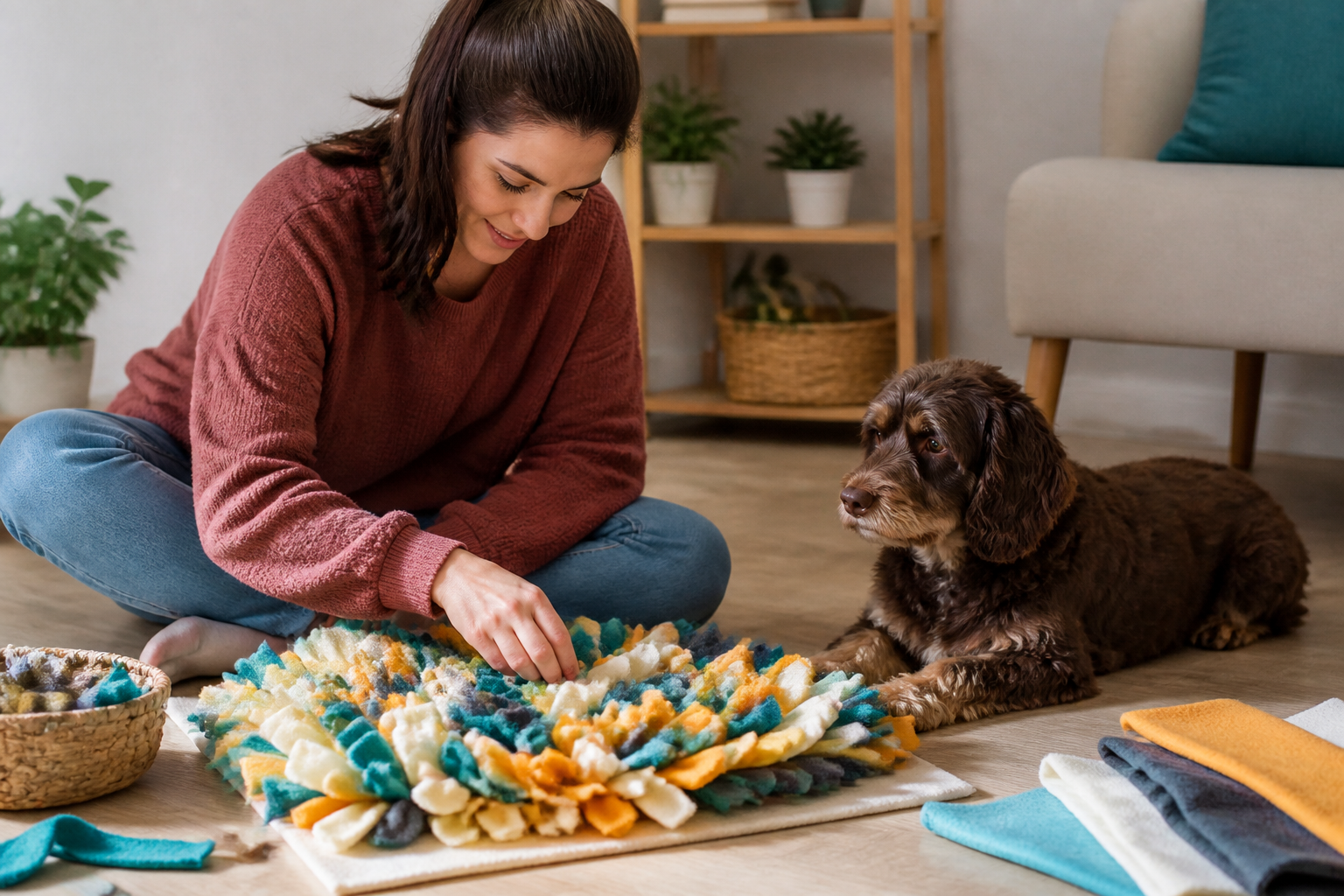
Introduction
You set the food bowl down and your dog inhales the entire meal in seconds. Perhaps you have a high-energy puppy who seems bored even after a long walk in the neighborhood. These common scenarios often lead pet owners to seek out mental stimulation tools. At BaxterBoo, we believe that a bored dog is a dog looking for trouble. One of the most effective ways to engage your dog's brain and slow down their eating is by using a snuffle mat. These simple tools tap into a dog's natural foraging instincts. This guide covers everything you need to create your own homemade version. We will explain the materials required and provide a detailed walkthrough of the assembly process. You will learn how to turn a few household items into a powerful tool for canine wellness.
Why Your Dog Needs a Snuffle Mat
Dogs experience the world primarily through their noses. A large portion of their brain is dedicated to processing scents. When a dog sniffs, it is not just a physical activity. It is a deep mental workout that can be more tiring than a mile-long walk. This is why enrichment toys are so valuable for modern pets. For more ideas, explore brain games and scent-based activities for dogs.
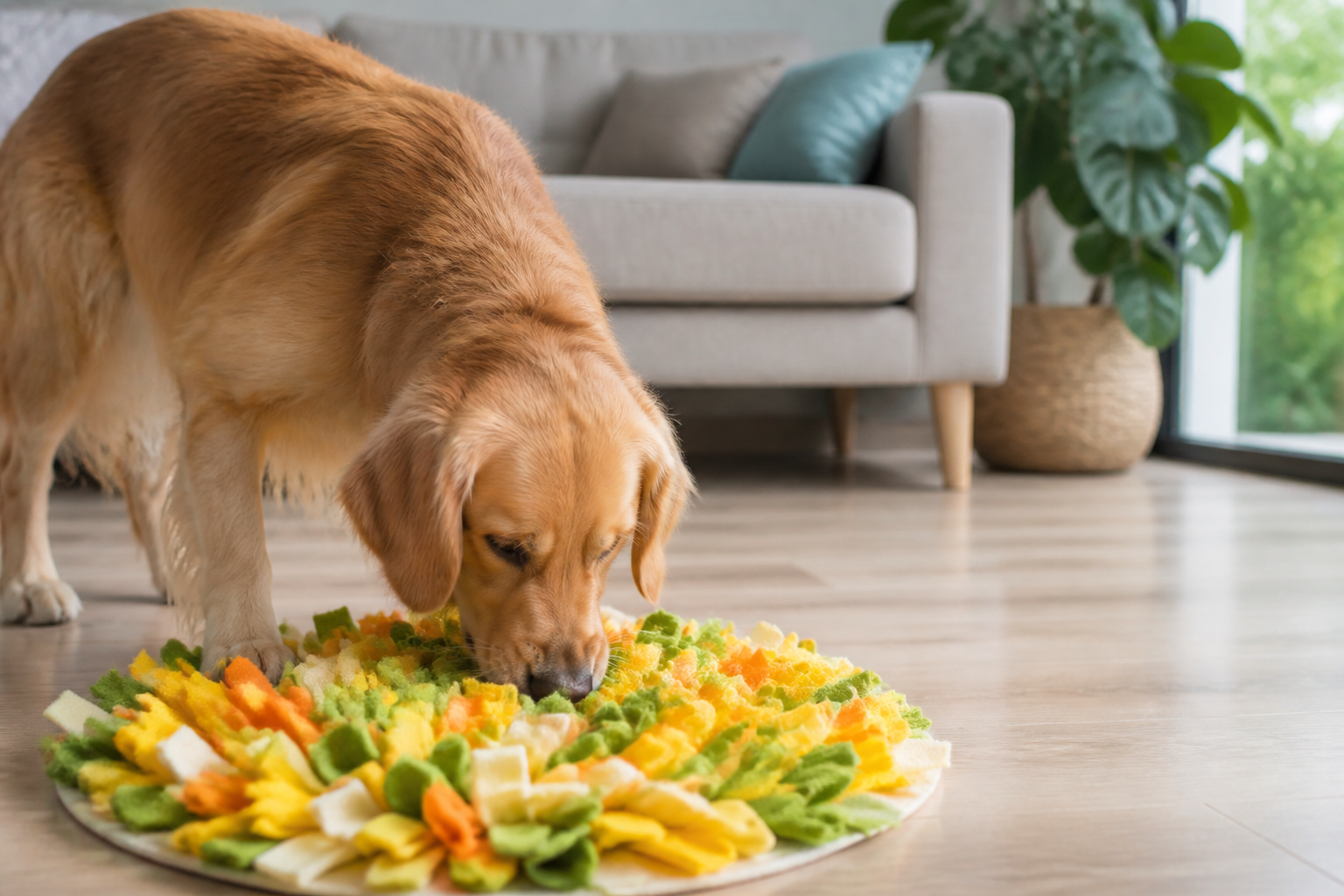
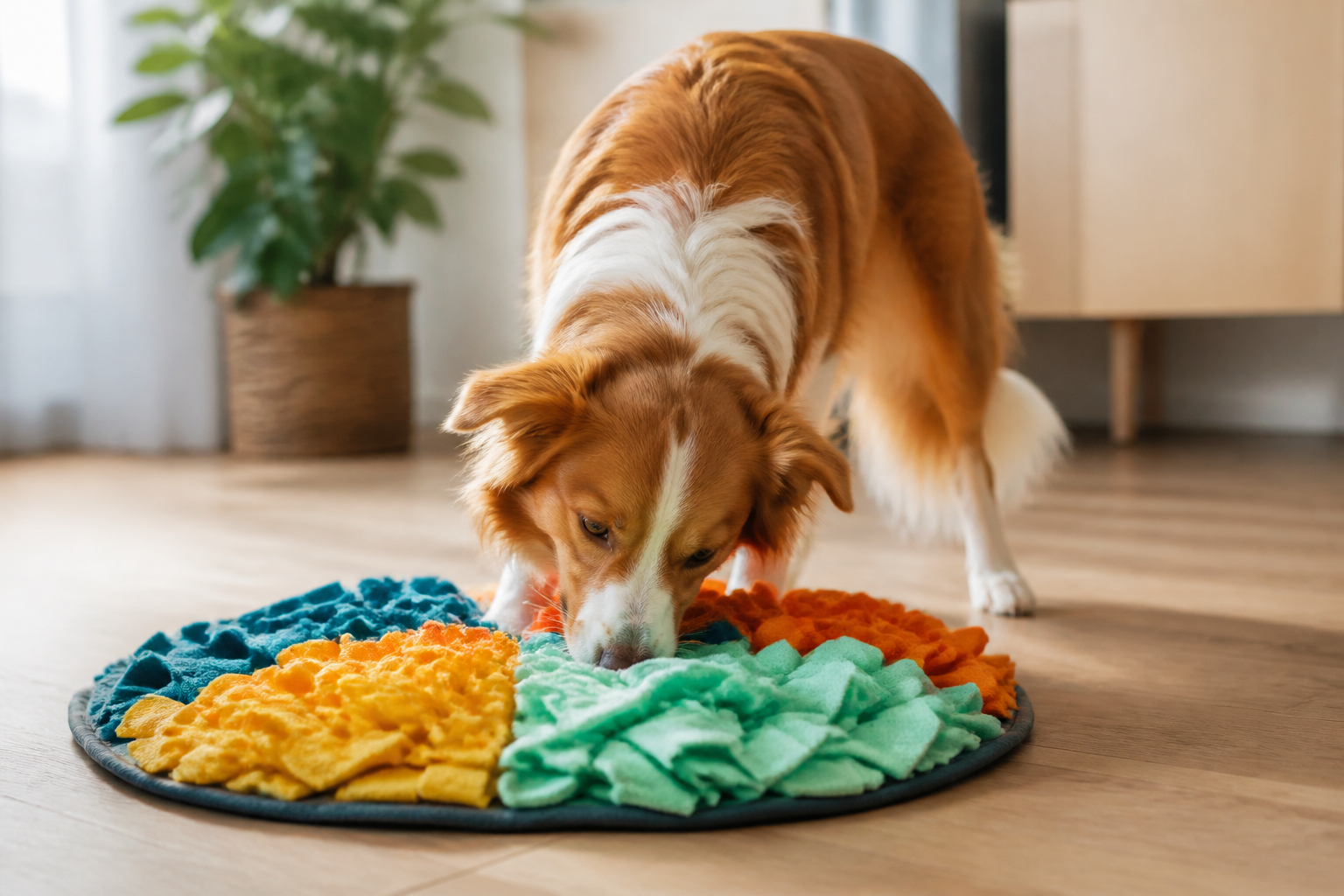
Most domestic dogs have their food delivered in a bowl. They do not have to work for it. This can lead to boredom and behavioral issues. A snuffle mat changes the dynamic. It forces the dog to use their nose to find small pieces of kibble or treats hidden within fabric strips. This mimics the way their ancestors would forage in the wild.
Quick Answer: A snuffle mat is an enrichment tool made of fabric strips tied to a sturdy base. It slows down fast eaters and provides mental stimulation by encouraging dogs to forage for hidden treats using their sense of smell.
Slowing down the eating process is a major benefit. Dogs that gulp their food can suffer from digestive upset or even dangerous conditions like bloat. By scattering their dinner across a mat, you extend mealtime from thirty seconds to ten minutes. This allows their brain to register that they are full. It also makes mealtime an engaging game rather than a race.
Interactive & Treat Dog Toys







Gathering Your DIY Supplies
You do not need to be an expert crafter to make a high-quality snuffle mat. The supplies are basic and can often be found at a local hardware or craft store. The most important factor is choosing materials that are safe and durable for your specific pet.
The Base
The base of your mat needs to be sturdy but flexible. A rubber sink mat is the most popular choice. These are usually found in the kitchen section of a department store. Look for a mat with holes that are large enough to thread fabric through but small enough that the mat remains stable.
Some owners prefer using a heavy-duty rubber floor mat or a plastic crate liner with holes. If you have a larger dog, you might want to zip-tie two sink mats together to create a bigger foraging surface. Ensure the material is non-toxic and has no sharp edges.
The Fabric
Fleece is the gold standard for snuffle mats. It is soft on a dog's nose and does not fray when you cut it. This is a critical safety feature. If you use a fabric that unravels, your dog might ingest long threads. Fleece also has a bit of stretch, which makes it easier to tie onto the base.
You will need about one to two yards of fleece depending on the size of your mat. You can use old fleece blankets or buy remnants from a craft shop. Many people choose two or three different colors to make the mat look attractive. Your dog will not care about the colors, but a bright mat can be a fun addition to your living room.
Tools for the Job
You will need a few basic tools to prepare the materials:
- Fabric scissors or a rotary cutter.
- A ruler or measuring tape.
- A permanent marker to mark your cutting lines.
- A steady surface to work on.
Note: While a rotary cutter and a self-healing mat make the process faster, simple scissors work perfectly well. Your dog will not notice if the strips are slightly uneven.
Step-by-Step Guide to Building the Mat
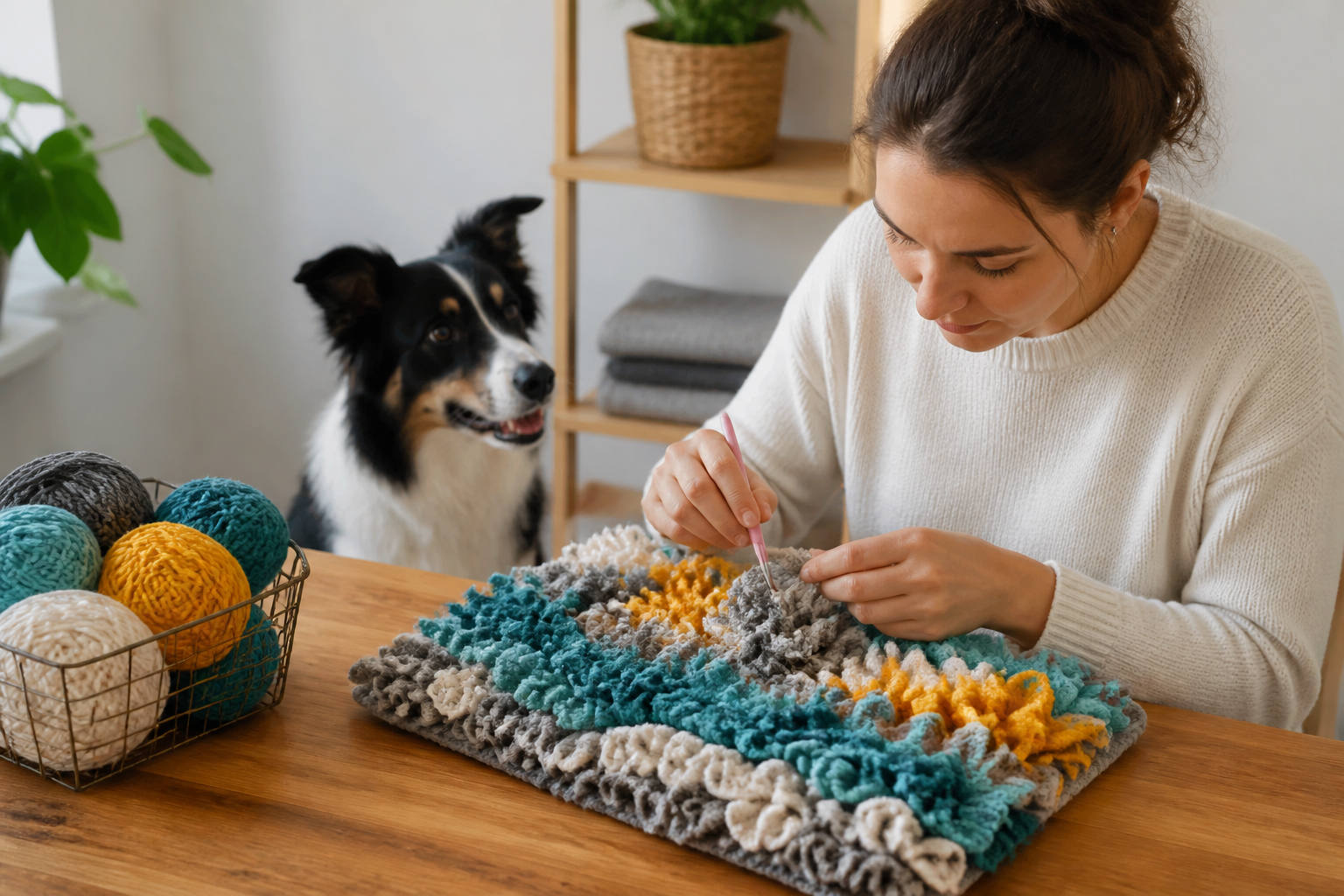
Once you have your supplies, it is time to assemble the mat. This is a repetitive process that is perfect to do while watching a movie. Expect the project to take between one and two hours.
Step 1: Prepare the Fabric Strips
Start by cutting your fleece into strips. The ideal size for most mats is one inch wide and six to eight inches long. If you have a very small dog, you can go a bit shorter. If you have a large dog with a big snout, longer strips will create deeper hiding spots.
If you are using a yard of fabric, cut it into long one-inch wide rows first. Then, go back and snip those rows into the shorter segments. You will need a lot of strips. A standard sink mat can require between 150 and 250 individual pieces of fleece to feel full and lush.
Step 2: Thread the First Row
Take one strip of fleece and thread it through two adjacent holes in your mat base. Pull both ends up so they are on the top side of the mat. Tie them once in a simple overhand knot. There is no need to double knot if you pull it tight. The friction of the fleece against the rubber will keep it secure.
Step 3: Fill the Horizontal Rows
Continue tying strips along the first horizontal row. You should have a strip tied between every pair of holes. Once the first row is done, move to the second row. Repeat the process until every horizontal connection on the mat has a fleece strip tied to it.
Step 4: Add the Vertical Strips
To make the mat truly dense, you should also tie strips vertically. Go back to the first row and tie a strip between a hole in row one and the corresponding hole in row two. This creates a cross-hatch pattern. This step is what makes the mat "fluffy" and creates the deep pockets where food can hide.
Step 5: The Final Inspection
Flip the mat over once you believe you are finished. Look for any large gaps in the rubber base where a treat could fall straight through to the floor. If you see a hole, add another strip. The goal is a dense forest of fleece that stands upright.
Key Takeaway: A successful snuffle mat requires density. By tying strips both horizontally and vertically across the rubber base, you create a complex environment that keeps your dog engaged for longer periods.
Introducing the Mat to Your Dog
The first time you give your dog the mat, they might be confused. Some dogs might try to pick the mat up and shake it to get the food out. Others might try to chew on the rubber base. It is important to supervise the first few sessions to ensure they use it correctly.
Start by making the game very easy. Sprinkle a few high-value treats on top of the fleece strips. Let your dog see you put them there. Once they understand that the mat contains food, you can start tucking the treats deeper into the fabric.
Eventually, you can transition to using their regular dry kibble. Brands like Stella & Chewy's or NutriSource make kibble that works well for this because the pieces are small and firm. Avoid using wet food or very greasy treats, as these will make the mat difficult to clean and could lead to bacterial growth. You can browse our dog treat selection for other options.
Vet Tip: Always supervise your dog when using a DIY snuffle mat. If your dog is a known "shredder" who likes to eat fabric or rubber, this may not be the right toy for them. If they swallow pieces of fleece, it can lead to an intestinal blockage that requires veterinary intervention.
Health Benefits: Slowing Down Fast Eaters
For many dogs, the snuffle mat is more than just a toy. It is a medical necessity. Rapid eating is a common behavior that can lead to significant health problems. When a dog eats too fast, they swallow a lot of air. This can lead to gas, discomfort, and a life-threatening condition called Gastric Dilatation-Volvulus, or bloat.
A snuffle mat serves as a natural slow feeder. Because the dog has to find each individual piece of kibble, they are forced to eat one bit at a time. This slower pace allows for better digestion and nutrient absorption.
Weight management is another area where these mats shine. If your dog is on a restricted diet, they may feel hungry or frustrated by their smaller portions. Using a snuffle mat for their meals makes the smaller amount of food feel more substantial. It provides the mental satisfaction of "the hunt," which can reduce begging and food-seeking behaviors.
For pets managing chronic weight issues, we often recommend specialized diets. Our pharmacy carries FDA-approved prescription pet foods through our partnership with Pet's Choice. If your veterinarian has prescribed a weight management diet like Farmina Vet Life, using it in a snuffle mat can be a helpful part of their overall wellness plan. Visit our pet pharmacy to explore available options.
Caring for Your Homemade Snuffle Mat
Because your dog will be drooling on the mat and food particles will get trapped in the fleece, you must clean it regularly. A dirty mat can harbor mold or bacteria.
Washing Instructions
One of the reasons we recommend a rubber sink mat and fleece is because they are generally washable. You can place the mat in a mesh laundry bag to protect your washing machine. Use a gentle, fragrance-free detergent. Avoid fabric softeners, as the strong scents can be overwhelming for a dog's sensitive nose.
Drying the Mat
Never put your snuffle mat in a hot dryer. The high heat can melt or warp the rubber base. Instead, squeeze out the excess water and hang it up to air dry. It may take a full day for the dense fleece to dry completely. Make sure it is bone dry before you hide food in it again to avoid mildew.
Bottom line: Regular cleaning ensures your dog's enrichment time stays hygienic and safe.
Advanced Enrichment Strategies
Once your dog is a pro at the basic snuffle mat, you can increase the difficulty. This keeps the activity fresh and continues to challenge their brain.
- Layering Scents: You can rub a very small amount of a safe, aromatic food (like a piece of dried liver) on some of the fleece strips without actually leaving the food there. This creates "false leads" that make the real treats harder to find.
- The Frozen Mat: If you use a plastic base and durable fabric, you can lightly mist the mat with water or low-sodium broth and freeze it for a few minutes. This makes the strips stiffer and changes the texture for the dog.
- Crate Training: A snuffle mat is an excellent tool for crate training. Giving your dog a mat filled with treats inside their crate helps them associate the space with positive, calming activities.
- Combining with Other Toys: You can place the snuffle mat at the end of an obstacle course or hide it in another room to add a physical exercise component to the mental workout. Browse our dog toys for more play ideas.
We offer a wide variety of supplemental tools for these activities. Our MVP Rewards program allows you to earn points on brands like Kong and Jackson Galaxy, which can be used alongside your DIY projects for a full enrichment routine.
Mental Health and Anxiety
Sniffing is a self-soothing behavior for dogs. When a dog focuses on a scent, their heart rate often lowers. This is why snuffle mats are frequently recommended for dogs with separation anxiety or those who are nervous during thunderstorms.
If your dog is particularly anxious, the focused task of foraging can provide a necessary distraction. It gives them a "job" to do, which can redirect their energy away from destructive behaviors like chewing furniture or excessive barking. For more enrichment ideas, see ways to keep dogs engaged with brain games.
For dogs with severe anxiety, a DIY mat is a great start, but they may need additional support. We provide access to calming supplements and prescription anxiety medications through our pharmacy and Pet's Choice partnership. Always consult with your veterinarian if your dog's anxiety seems unmanageable or if you are considering adding supplements to their routine.
Choosing the Right Treats
The success of your snuffle mat depends heavily on the "lure." If the treats aren't interesting, the dog won't work for them. However, you also have to be careful about calorie intake.
- Dry Kibble: Best for daily meals. Use high-quality brands like Acana or Orijen.
- Freeze-Dried Raw: Brands like Stella & Chewy's or Vital Essentials offer freeze-dried treats that are very aromatic but not messy.
- Crunchy Biscuits: Break them into small, pea-sized pieces to keep the game going longer.
- Dehydrated Veggies: Pieces of dried carrot or green beans can be a low-calorie option for dogs on a diet.
Vet Tip: Keep track of how many treats you are putting in the mat. It is easy to overfeed when using enrichment toys. Deduct the calories in the treats from your dog's daily meal portion to maintain a healthy weight.
Conclusion
Creating a DIY snuffle mat is a rewarding project that directly improves your dog's quality of life. It provides a healthy outlet for natural instincts and helps manage common issues like fast eating and boredom. By using simple materials like a sink mat and fleece, you can build a durable tool that lasts for years. At BaxterBoo, we have seen how much a little mental stimulation can change a dog's demeanor. Whether you are helping a senior dog stay sharp or keeping a puppy busy, the snuffle mat is a versatile solution. Once you have finished your project, consider signing up for our Autoship program to ensure you never run out of the healthy treats and kibble needed to keep the foraging games going.
FAQ
How long does it take to make a DIY snuffle mat?
For a beginner, it typically takes between one and two hours to cut the fabric and tie all the knots. The process is very simple but repetitive, so many owners prefer to do it while watching television or listening to a podcast. The time spent is well worth it, as a well-made mat can provide years of enrichment for your dog.
What is the best fabric to use for a snuffle mat?
Anti-pill fleece is the best choice because it does not fray when cut into strips. This prevents your dog from inhaling or swallowing loose threads, which can be a safety hazard. Fleece is also soft on the dog's nose and is durable enough to withstand regular washing in a standard laundry machine.
Can I wash a DIY snuffle mat in the machine?
Yes, most DIY snuffle mats made with a rubber sink mat and fleece can be machine washed on a gentle cycle. It is best to place the mat inside a pillowcase or a mesh laundry bag to protect the strips and your washing machine. Always air dry the mat afterward, as the high heat of a dryer can damage the rubber base.
Is a snuffle mat safe for all dogs?
While most dogs benefit from snuffle mats, they are not suitable for every pet. Dogs that are aggressive chewers or those that suffer from pica (a condition where they eat non-food items) should be closely supervised or may need to avoid fabric toys. If your dog starts to chew on the rubber base or tear off the fleece strips, you should remove the mat immediately to prevent them from swallowing the pieces.


- Site & Contents BaxterBoo.com. BaxterBoo is located in the United States.
- Privacy & Security
- Terms of Use
- Accessibility Statement
