
 Save 15% on your 1st Autoship learn more

 Email us
 Live Chat
 FAQs
FAQs





Introduction
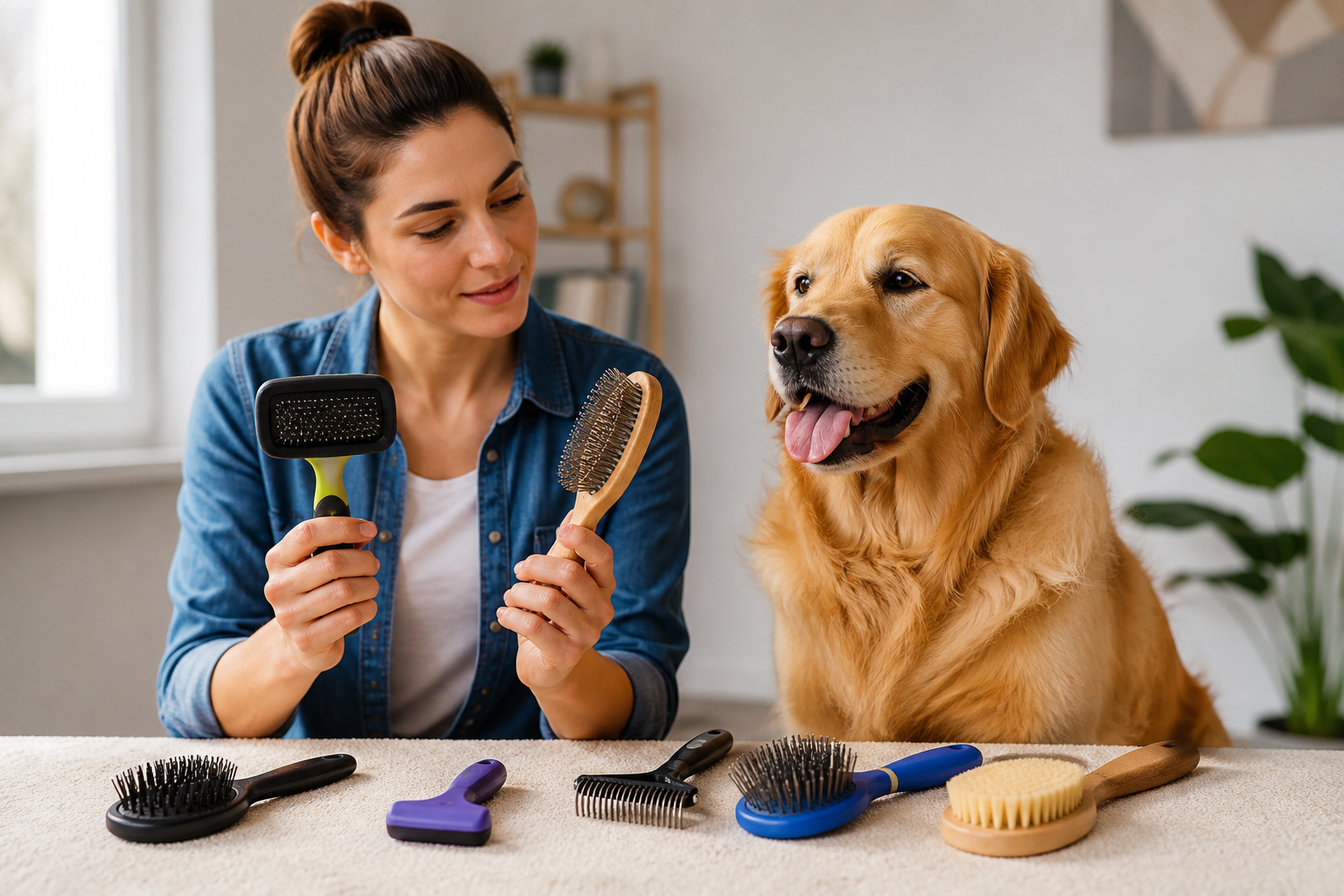
You are standing in the grooming aisle or scrolling through endless pages of pet supplies. You see brushes with metal pins, others with soft bristles, and some that look like miniature garden rakes. Your dog is at home with a coat that is either shedding all over the sofa or starting to form small knots behind the ears. It is easy to feel overwhelmed by the sheer variety of tools available today. At BaxterBoo, we know that the right brush does more than just make your dog look good. It prevents painful matting, removes allergens, and keeps their skin healthy by distributing natural oils. This guide will help you navigate the world of grooming tools to find the perfect match for your pup. Choosing the right brush is the first step toward a stress-free grooming routine that your dog actually enjoys.
Quick Answer: The best brush for your dog depends on their coat length and texture. Short-haired dogs thrive with bristle brushes or rubber mitts. Long-haired or curly breeds require slicker brushes and metal combs to prevent mats. Double-coated dogs need undercoat rakes to manage heavy shedding.
Understanding the Primary Types of Dog Brushes
Before you can choose the right tool, you need to understand what each brush is designed to do. Brushes are not one-size-fits-all items. Using a tool meant for a thick undercoat on a short-haired dog can cause skin irritation. Conversely, using a soft brush on a matted coat will do almost nothing to help your dog.
Slicker Brushes
Slicker brushes are perhaps the most common grooming tool. They feature a flat or slightly curved head covered with rows of fine, thin wire pins. These pins are usually angled slightly to help them grab onto loose hair and tangles without poking the skin.
These brushes are workhorses. They are excellent for removing mats and tangles in medium to long hair. They also work well on curly coats, such as those seen on Poodles or various Doodle mixes. When using a slicker brush, it is important to use a light touch. Pressing too hard can cause "brush burn," which is a painful scraping of the skin.
For a practical option, explore our dog brushes and combs.
Bristle Brushes
Bristle brushes look very similar to the brushes people use on their own hair. They consist of clusters of natural or synthetic bristles. These bristles are packed tightly together.
This type of brush is ideal for dogs with short, smooth coats. It does not reach deep into thick fur. Instead, it works on the surface to remove loose hair, dust, and dander. As you brush, the bristles stimulate the skin and help spread natural oils across the coat. This results in a healthy, glossy shine.
Pin Brushes
Pin brushes are another common sight in grooming kits. They usually have an oval shape and feature metal pins with rounded plastic or rubber tips. These tips are designed to be gentle on the skin.
While they look useful, pin brushes are often better as finishing tools. They are great for fluffing the coat after you have already removed the tangles with a slicker brush. They are also helpful for dogs with long, silky hair, like a Maltese or a Yorkie, as they are less likely to break the delicate hair strands.
Undercoat Rakes
An undercoat rake is a specialty tool. It looks like a small rake with one or two rows of metal tines. These tines are designed to reach through the topcoat and pull out the dead, fuzzy hair from the undercoat.
If you have a heavy shedder, this is the tool you need. It is specifically designed for double-coated breeds. It targets the hair that usually ends up on your carpets and clothes during the spring and autumn shedding seasons.
For another perspective on managing a double coat, read how Australian Shepherds shed.
Rubber Curry Brushes and Mitts
Rubber brushes or grooming mitts are made of soft, flexible material with rubber nubs. They are fantastic for dogs that are nervous about grooming. Because they feel like a massage, most dogs find them very relaxing.
These are best for short-haired breeds. They are also highly effective during bath time. You can use the rubber nubs to scrub shampoo deep into the coat and loosen dead hair while the dog is wet.
Key Takeaway: Matching the brush to the job is essential. Use slicker brushes for tangles, bristle brushes for shine, and rakes for heavy shedding.
How to Choose Based on Your Dog's Coat Type
The most important factor in your decision is the type of coat your dog has. Most breeds fall into one of five major categories. Understanding where your dog fits will narrow your choices immediately.
Short and Smooth Coats
Dogs like Boxers, Beagles, and Labradors have short hair that lies flat against the body. These dogs do not get mats, but they do shed. For these breeds, you want tools that focus on skin health and loose hair removal.
A rubber curry brush or a soft bristle brush is perfect here. You can also use a deshedding tool during peak shedding months. Since there is no thick fur to protect the skin, always choose tools with soft edges or rounded tips.
The Coastal Safari Short Hair Shedding Dog Comb is one option designed for removing loose fur from short to medium hair.
Double Coats
Breeds like Huskies, German Shepherds, and Golden Retrievers have a tough outer coat and a soft, thick undercoat. This undercoat is what keeps them warm, but it is also what causes most of the shedding issues.
You will need two main tools for a double coat. First, use an undercoat rake to pull out the dead fluff. Second, use a slicker brush to smooth the outer coat and remove any small tangles. Avoiding the undercoat during grooming will lead to "impacted" fur, which can trap moisture and cause skin infections.
Long and Silky Coats
Yorkshire Terriers and Afghan Hounds have hair that is very similar to human hair. It grows continuously and can tangle very easily. These coats require daily attention to stay beautiful.
A pin brush is excellent for daily maintenance because it is gentle on the long strands. However, you should also keep a metal comb on hand. A comb allows you to get right down to the skin to ensure no tiny knots are starting to form near the roots.
Curly and Wooly Coats
Poodles, Bichon Frises, and Doodles have hair that traps shed fur instead of letting it fall to the ground. This is why they are often called low-shedding dogs. However, that trapped hair will quickly turn into solid mats if it is not brushed out.
A high-quality slicker brush is non-negotiable for these breeds. You need a brush that can penetrate the curls to pull out the loose hair trapped inside. Following up with a metal comb is the best way to check your work. If the comb can slide through the hair from root to tip, you have successfully cleared the mats.
For more guidance, read how to groom a curly-haired dog.
Wire-Haired Coats
Terriers like the Schnauzer or the Border Terrier have a rough, wiry outer coat. This coat is designed to be weather-resistant and tough.
A slicker brush and a metal comb are the best tools for home maintenance. While professional groomers often use a technique called "hand-stripping" for show dogs, regular brushing with a slicker brush will keep a pet's coat tidy and healthy.
Vet Tip: If you notice your dog has persistent itchy skin, redness, or a dull coat, it could be a sign of underlying allergies or nutritional gaps. We recommend consulting your veterinarian to rule out medical issues. Our dog pharmacy offers prescription medications and diets through our pharmacy services when appropriate.
Specialized Tools for Difficult Jobs
Sometimes a standard brush is not enough. If you are dealing with specific problems like severe matting or seasonal "blowouts," you might need to add specialized items to your grooming kit.
Metal Grooming Combs
Every dog owner should own a simple metal comb. They are often called "greyhound combs." One side usually has wider teeth, while the other has fine teeth. These are the ultimate "truth-tellers" in grooming. Even if a coat looks smooth, a comb will find the hidden knots that a brush might skip over.
Deshedding Tools
Deshedding tools are different from standard brushes. They often feature a fine-toothed metal blade that reaches deep into the coat to grab loose undercoat hair. Brands like Kong and other trusted names we carry at BaxterBoo offer various styles. Use these tools sparingly—usually once a week—to avoid damaging the healthy topcoat.
Mat Rakes or Splitters
If your dog already has a hard knot or mat, do not try to pull it out with a standard brush. This will be very painful for your dog. A mat rake has sharpened blades that gently cut through the knot, making it easier to brush out without pulling the skin.
For difficult knots, our dematting and tangle-splitting tools can help you find a tool suited to the job.
Bottom line: A metal comb is the most underrated but essential tool for every dog owner to ensure a completely tangle-free coat.
Step-by-Step: How to Introduce a New Brush
If your dog is not used to being brushed, they might be scared of a new tool. It is important to make the experience positive from the very beginning.
Step 1: Let them investigate. / Place the brush on the floor and let your dog sniff it. Give them a treat when they show curiosity.
Step 2: Use the back of the brush. / Rub the smooth back of the brush against their side. This lets them feel the pressure without the sensation of the bristles.
Step 3: Keep sessions short. / Brush for only one or two minutes at first. Always end the session with a high-value treat or praise.
Step 4: Focus on easy areas. / Start with the back or sides. Avoid sensitive areas like the belly, ears, or tail until your dog is completely comfortable.
Step 5: Increase duration gradually. / Slowly add a minute to each session until you can brush the whole dog in one sitting.
Maintaining Your Grooming Tools
A good brush can last for years if you take care of it. Dirty brushes can actually spread bacteria or skin irritations back onto your dog.
- Remove hair after every use. Use a comb or your fingers to clear the bristles.
- Wash the brush periodically. Use warm water and a tiny bit of dog shampoo.
- Check for damage. If the wire pins on a slicker brush become bent or sharp, replace the brush immediately to avoid scratching your dog.
- Store in a dry place. Metal pins can rust if left in a damp mudroom or bathroom.
For bath-related grooming tips, including brushing after bathing, read these dog bathing dos and don'ts.
When to Seek Professional Help
While home grooming is important, there are times when you should put the brush down and call a professional. At BaxterBoo, we want you to feel confident in your care, but safety always comes first.
If your dog has mats that are tight against the skin, do not try to cut them out with scissors. A dog's skin is very thin and can easily be snipped. A professional groomer has the tools to safely shave under the mats. You should also seek professional help if your dog becomes aggressive or extremely stressed during grooming.
Additionally, if you notice any unusual lumps, sores, or parasites like ticks while brushing, a trip to the vet is necessary. For ongoing skin issues or flea and tick prevention, our dog pharmacy can provide prescription medications when appropriate.
Final Considerations for Your Purchase
Choosing the right brush is a small investment that pays off in your dog's comfort and your home's cleanliness. Remember to consider the handle as well as the bristles. An ergonomic, non-slip handle will make the process much easier on your hands, especially if you have a large dog that takes a long time to brush.
At BaxterBoo, we have carefully selected our dog grooming supplies to include only the brands we trust for our own pets. Whether you need a simple bristle brush for a puppy or a heavy-duty rake for a senior dog, we have options that fit your needs.
Key Takeaway: Proper grooming is a combination of the right tools, consistent timing, and a gentle touch.
Conclusion
Finding the perfect brush for your dog does not have to be a guessing game. By identifying your dog's coat type and selecting the tool designed for that specific texture, you ensure a healthier skin and a shinier coat. Regular grooming sessions are also a wonderful time to bond with your pet and check for any health changes.
- Identify the coat type: short, double, silky, curly, or wire.
- Match the tool: slicker for tangles, rake for undercoat, bristle for shine.
- Use a metal comb to check for hidden mats.
- Keep sessions positive with treats and praise.
To get started on your grooming journey, explore our full collection of brushes and combs. You can also save on your favorite grooming supplies and pet essentials by signing up for our Autoship programme, which ensures you never run out of the tools you need to keep your dog looking their best.
FAQ
How often should I brush my dog?
Most dogs benefit from being brushed at least twice a week. Long-haired or double-coated breeds may need daily brushing, especially during shedding season, to prevent mats and keep hair off your furniture. Short-haired breeds can often go a week between sessions, but more frequent brushing will help keep their coat shiny and clean.
Why does my dog hate being brushed?
Your dog might have had a painful experience with a brush that pulled their skin or scratched them. It is also possible that they have hidden mats that are sensitive to the touch. Try using a softer brush, like a rubber curry mitt, and use plenty of treats to create a positive association with grooming.
Can I use a human hairbrush on my dog?
It is not recommended to use human brushes on pets. Human hairbrushes are generally not strong enough to penetrate a dog's thick coat and can cause static or hair breakage. Dog-specific brushes are designed to handle the density of fur and the sensitivity of canine skin, providing a much more effective and comfortable experience.
What should I do if I find a mat I can't brush out?
If a mat is small and not close to the skin, you can try using a conditioning spray to loosen it before gently working it out with a slicker brush. However, if the mat is large or tight against the skin, do not pull on it. It is safest to have a professional groomer remove it to avoid hurting your dog or damaging their skin.






