Save 15% on your 1st Autoship learn more

 Email us
 Live Chat
 FAQs
FAQs





Introduction
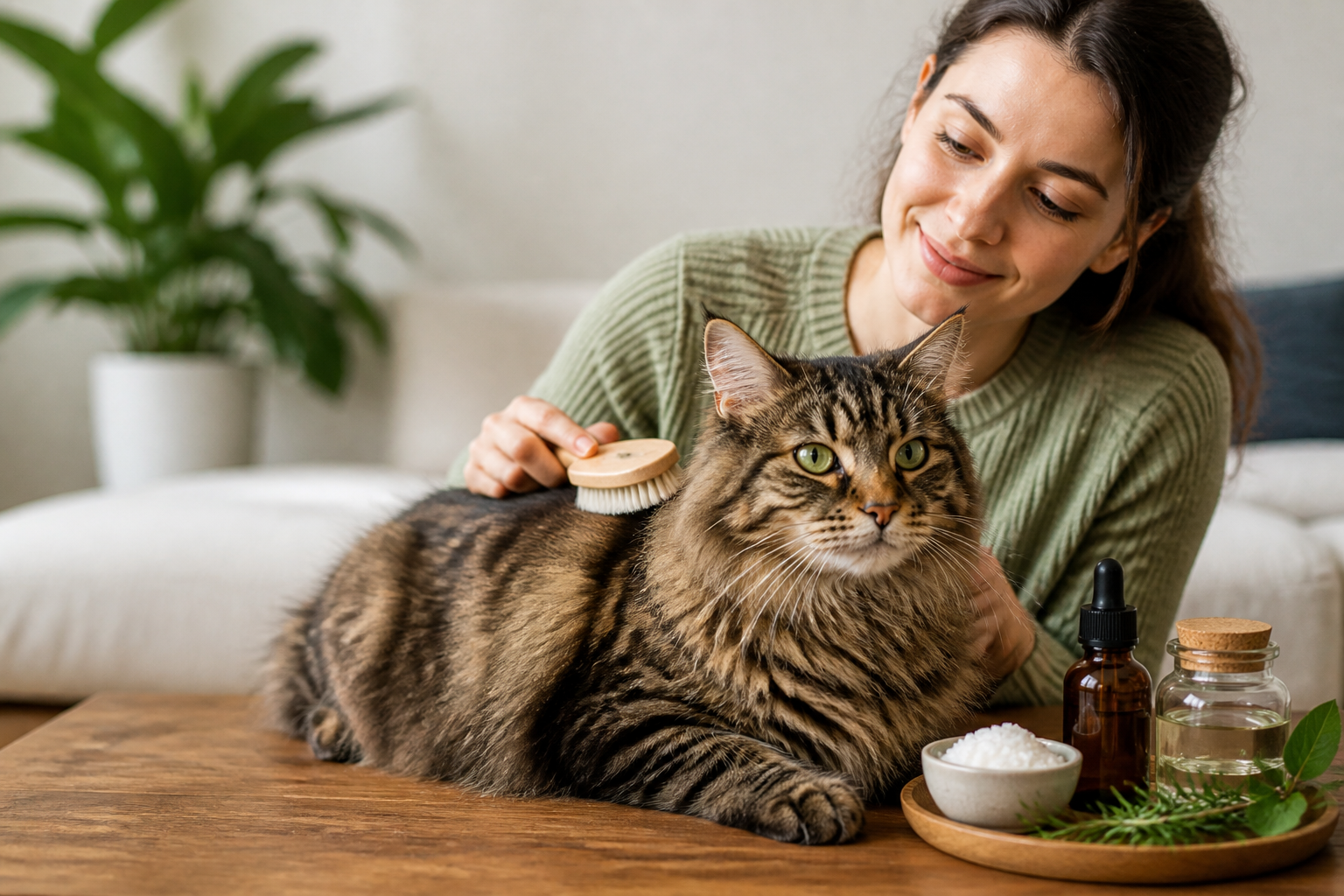
You are sitting on the sofa and your cat jumps up for some attention. As you run your hand down their back, you notice a flurry of small white flakes on their fur. It looks like a light dusting of snow against their coat. This is feline dandruff. It is a common issue that many pet owners face. At BaxterBoo, we understand that you want your cat to feel comfortable and look their best. This post covers the common causes of flaky skin and the natural steps you can take to manage it. We will look at grooming habits, diet changes, and environmental fixes. Our goal is to help you restore your cat's skin health through practical and gentle methods.
Understanding Feline Dandruff
Dandruff occurs when the outer layer of skin cells sheds too quickly. All cats shed skin cells. This is a normal part of their biological cycle. Usually, cats groom these cells away before you ever see them. When the process speeds up or grooming slows down, those cells clump together. These clumps become the visible white flakes you see on the surface of the fur.
It is important to distinguish between dander and dandruff. Dander consists of microscopic skin cells that all cats produce. It is usually invisible to the naked eye. Dandruff is the visible flake. While dander is a normal part of life, dandruff often signals that the skin is too dry or irritated.
Quick Answer: Cat dandruff is typically treated naturally by increasing hydration, improving diet quality, and regular brushing. Using a humidifier and adding Omega-3 supplements can also significantly reduce skin flakiness.
Common Natural Causes of Flaky Skin
Before you can treat the problem, you need to know why it is happening. Several environmental and lifestyle factors contribute to dry skin. Knowing these can help you choose the right natural approach.
Seasonal Changes and Dry Air
Just like humans, cats react to the weather. During the winter, indoor heating systems strip moisture from the air. This dry environment pulls moisture out of your cat's skin. This often leads to seasonal flaking that clears up in the spring.
Grooming Challenges
Cats are meticulous cleaners. If a cat stops grooming, dandruff will build up quickly. This often happens in specific areas like the lower back or the base of the tail. Older cats with arthritis may find it painful to reach these spots. Overweight cats might simply be unable to reach certain parts of their body.
Nutritional Gaps
The skin is the largest organ of the body. It requires specific nutrients to stay supple. If a diet is low in essential fatty acids, the skin barrier weakens. This allows moisture to escape and leads to a dull, flaky coat.
The Role of Hydration and Diet
What your cat eats directly impacts the quality of their skin. Many cats live in a state of mild dehydration. This is especially true for those that only eat dry kibble. Cats have a low thirst drive and naturally get moisture from their prey in the wild.
Moving Toward Wet Food
Adding wet food to the diet is one of the simplest natural remedies. Canned food has a much higher water content than dry kibble. This extra hydration helps moisturize the skin from the inside out. We carry a wide variety of premium options in our wet cat food collection, including brands like Tiki Cat and Weruva that focus on high moisture levels.
Better Water Access
Some cats are picky about how they drink. They may not like standing water in a bowl. A pet water fountain can encourage more frequent drinking. The moving water stays fresh and appeals to their natural instincts. Increasing water intake is a foundational step in treating skin issues.
Key Takeaway: Hydration is the foundation of skin health. Increasing water intake through wet food and fountains helps the skin maintain its natural moisture barrier.
Essential Fatty Acids and Supplements
If a high quality diet is not enough, supplements can provide a concentrated boost. Omega-3 and Omega-6 fatty acids are vital for skin health. They help reduce inflammation and keep the skin cells tightly packed. Options such as Zesty Paws Wild Alaskan Salmon Oil can be considered as part of a broader skin and coat routine.
Choosing the Right Supplement
Fish oil is the most common source of these healthy fats. Salmon oil or pollock oil can be drizzled directly over their food. Most cats enjoy the taste, making it an easy addition to their routine. Brands like Zesty Paws or Honest Paws offer high quality oils that are easy to dose.
Benefits of Omega-3s
- Reduces skin inflammation and itching.
- Strengthens the skin's protective barrier.
- Improves the overall shine and softness of the coat.
- Supports joint health in senior cats.
Natural Grooming Techniques
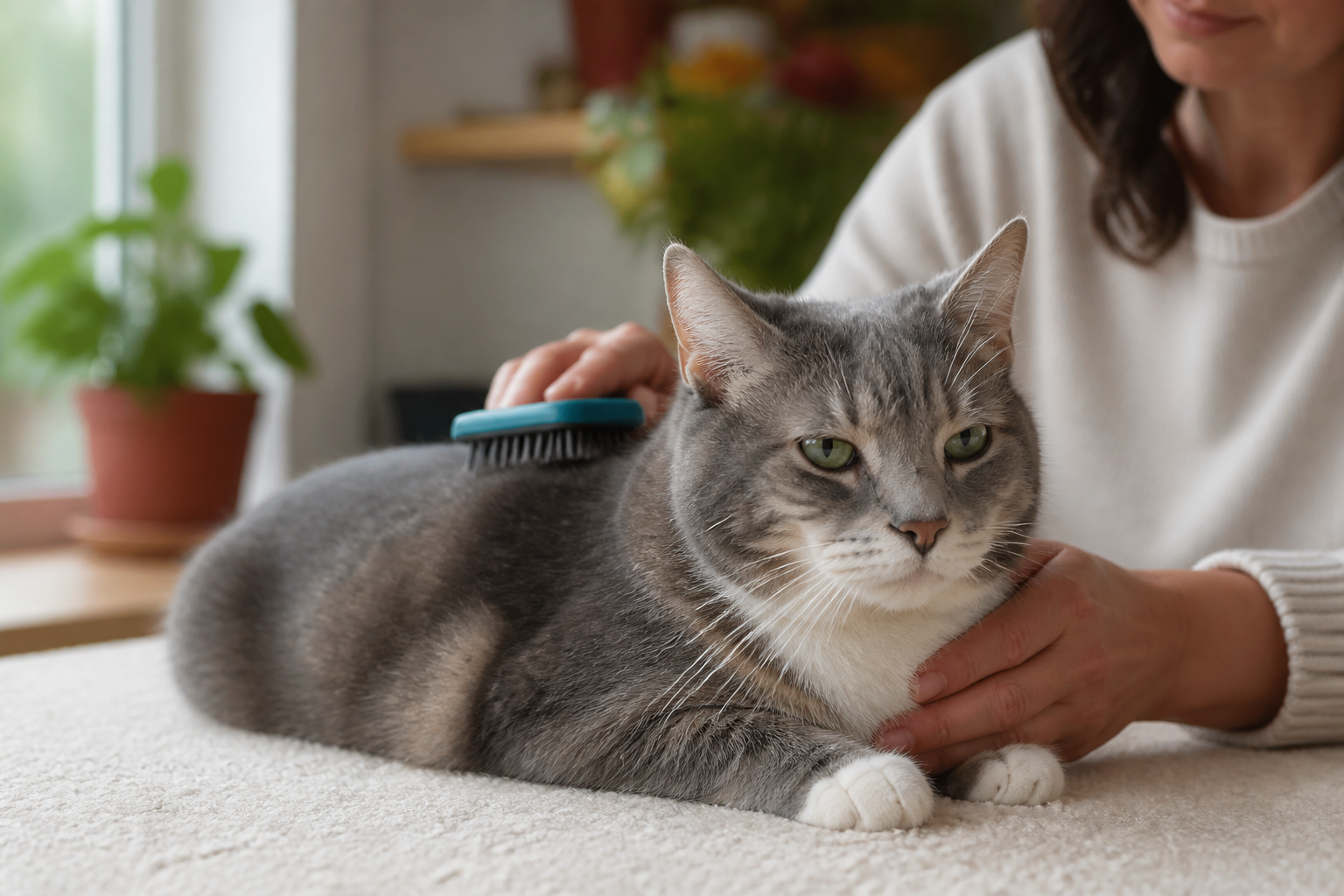
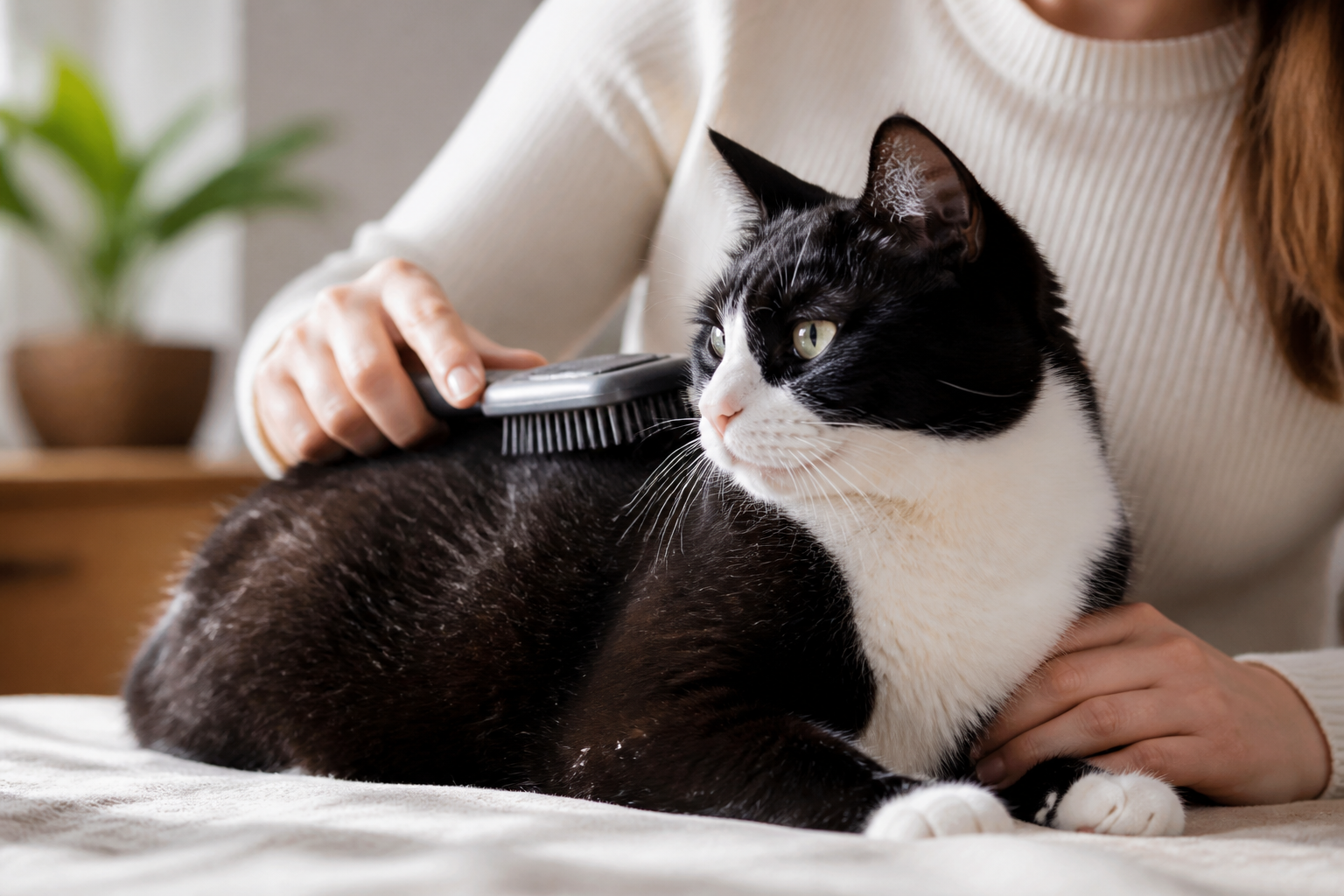
Brushing is more than just a way to bond with your cat. It is a vital tool for managing dandruff. When you brush your cat, you are manually removing dead skin cells and loose fur. This prevents the flakes from accumulating. Explore our cat grooming supplies for brushes, combs, shampoos, and other grooming tools.
Distributing Natural Oils
Your cat's skin produces natural oils called sebum. Brushing helps spread these oils from the skin down the hair shaft. This provides a natural protective coating for the fur. It also keeps the skin underneath from becoming too dry.
Selecting the Right Brush
Use a soft bristle brush or a grooming mitt for cats with sensitive skin. These tools are gentle and do not irritate the skin further. For cats with thick undercoats, a slicker brush can help remove trapped debris. Regular brushing sessions of five to ten minutes can make a massive difference.
Vet Tip: If your cat has a sudden increase in dandruff along with bald patches or red sores, consult your veterinarian. These symptoms could indicate an underlying medical condition like an allergy or infection.
Improving the Home Environment
You can treat the skin directly, but you should also look at the air in your home. If your house is very dry, your cat's skin will continue to lose moisture. This is a common battle during the cold winter months in Illinois and beyond.
Using a Humidifier
Placing a humidifier in the room where your cat spends the most time can help. It adds moisture back into the air. This prevents the skin from drying out in the first place. This is a simple, non-invasive way to support your cat's comfort.
Avoiding Harsh Chemicals
Sometimes, "natural" dandruff is actually a reaction to household cleaners. Strong perfumes or harsh chemicals in floor cleaners can irritate a cat's skin. Switch to pet-safe, scent-free cleaning products. This reduces the toxic load on your cat's system and can calm skin irritation.
When to Consider the BaxterBoo Pharmacy
Sometimes natural remedies like brushing and humidifiers are not enough. If the dandruff is caused by an underlying medical issue, your vet may prescribe a specific treatment. Issues like flea dermatitis or fungal infections require medical intervention.
Our cat pharmacy offers prescription products through our partnership with Pet's Choice. This includes prescription skin treatments and specialized diets. If your vet determines that your cat needs a prescription food like Royal Canin or Farmina Vet Life, we can help fulfill that order. These diets are formulated to manage specific health conditions that manifest as skin problems.
Potential Medical Causes
- Parasites: Fleas and mites can cause intense itching and flaking.
- Allergies: Some cats are allergic to specific proteins or environmental triggers.
- Fungal Infections: Ringworm can cause circular patches of hair loss and dandruff.
- Systemic Disease: Kidney issues or diabetes can affect coat quality.
Step-by-Step Transition to Flake-Free Skin
If you are ready to start a natural treatment plan, follow these steps. Do not change everything at once. This allows you to see what is actually working for your cat.
Step 1: Increase hydration. / Start by adding a small amount of wet food to their daily meals.
Step 2: Introduce a supplement. / Add a high quality fish oil to their food once a day.
Step 3: Begin a brushing routine. / Brush your cat for five minutes every evening to distribute oils.
Step 4: Monitor the environment. / Use a humidifier during dry months and switch to pet-safe cleaners.
Step 5: Consult your vet. / If flakes persist after a month, schedule a check-up to rule out medical issues.
Bathing and Topical Treatments
Most cats do not need regular baths. In fact, bathing a cat too often can strip away the oils they need. However, a gentle bath with a moisturizing shampoo can sometimes help.
Choosing a Natural Shampoo
Look for shampoos that contain oatmeal or aloe vera. These ingredients are known for their soothing properties. Avoid any products with artificial fragrances or dyes. Always ensure the product is specifically labeled for cats. Dog shampoos can sometimes contain ingredients that are toxic to felines. For gentle grooming ideas, read our guide to cat whisker care and grooming.
Spot Treatments
For small areas of dry skin, you can use a tiny amount of organic coconut oil. It is safe if they lick it and can provide a moisture boost to ears or elbows. Only use a small amount to avoid making the fur greasy.
Addressing Weight and Mobility
If your cat is overweight, their dandruff is often a physical limitation. They simply cannot reach their back to clean it. This leads to a thick buildup of flakes and grease.
Weight Management
Helping your cat reach a healthy weight is a long-term natural solution for dandruff. This involves portion control and increased play. We offer many interactive cat toys that can get a sedentary cat moving. For cats that need extra help, a weight management food may be necessary.
Supporting Senior Joints
Senior cats often stop grooming because of arthritis. If it hurts to twist their body, they will skip the grooming session. Providing joint supplements like Cosequin can improve their mobility. When they feel better, they are more likely to keep themselves clean.
Bottom line: Natural dandruff treatment is a holistic process that involves diet, environment, and physical care.
Conclusion
Treating cat dandruff naturally requires a bit of patience and a consistent routine. By focusing on hydration, regular brushing, and a high quality diet, you can solve most minor cases of flaking. Remember to keep an eye on your cat's overall behavior. If the dandruff comes with itching or lethargy, it is time for a veterinary visit.
Our team at BaxterBoo is here to support you with the best supplies for your cat's wellness. From premium food to specialized grooming tools, we have what you need to keep their coat shining. You can even save on your regular skin care supplies by using our Autoship programme. This ensures you never run out of the supplements or food your cat relies on for healthy skin.
- Brush your cat daily to remove flakes and distribute oils.
- Add moisture to their diet with wet food and fresh water.
- Use Omega-3 supplements to strengthen the skin barrier.
- Consult our pharmacy for prescription needs after a vet visit.
FAQ
Can I use human dandruff shampoo on my cat?
No, you should never use human dandruff shampoo on a cat. These products often contain ingredients like zinc pyrithione or selenium sulfide. These chemicals can be toxic if your cat licks their fur after the bath. Human skin also has a different pH level than cat skin. Using human products can cause severe irritation or even chemical burns on a feline.
Does coconut oil help with cat dandruff?
Coconut oil can be a helpful topical treatment for small areas of dry skin. It contains medium-chain fatty acids that provide moisture and have mild antimicrobial properties. However, it should be used sparingly. If you apply too much, your cat will lick it off, which might lead to an upset stomach. It is best used as a spot treatment rather than a full-body application.
Why does my cat only have dandruff on their lower back?
The lower back and base of the tail are common spots for dandruff because they are the hardest for a cat to reach. If a cat is overweight or has stiff joints from arthritis, they cannot groom these areas effectively. This leads to a buildup of dead skin and natural oils. Regular brushing by the owner is usually necessary to keep these specific areas flake-free.
Is cat dandruff always a sign of dry skin?
While dry skin is the most common cause, dandruff can also be a sign of other issues. It can indicate a lack of grooming, an allergic reaction, or a parasitic infestation like mites. In some cases, it can be a secondary symptom of a more serious internal health condition. If natural remedies do not improve the flakes within a few weeks, a vet visit is the best course of action.