
 Save 15% on your 1st Autoship learn more

 Email us
 Live Chat
 FAQs
FAQs





Introduction
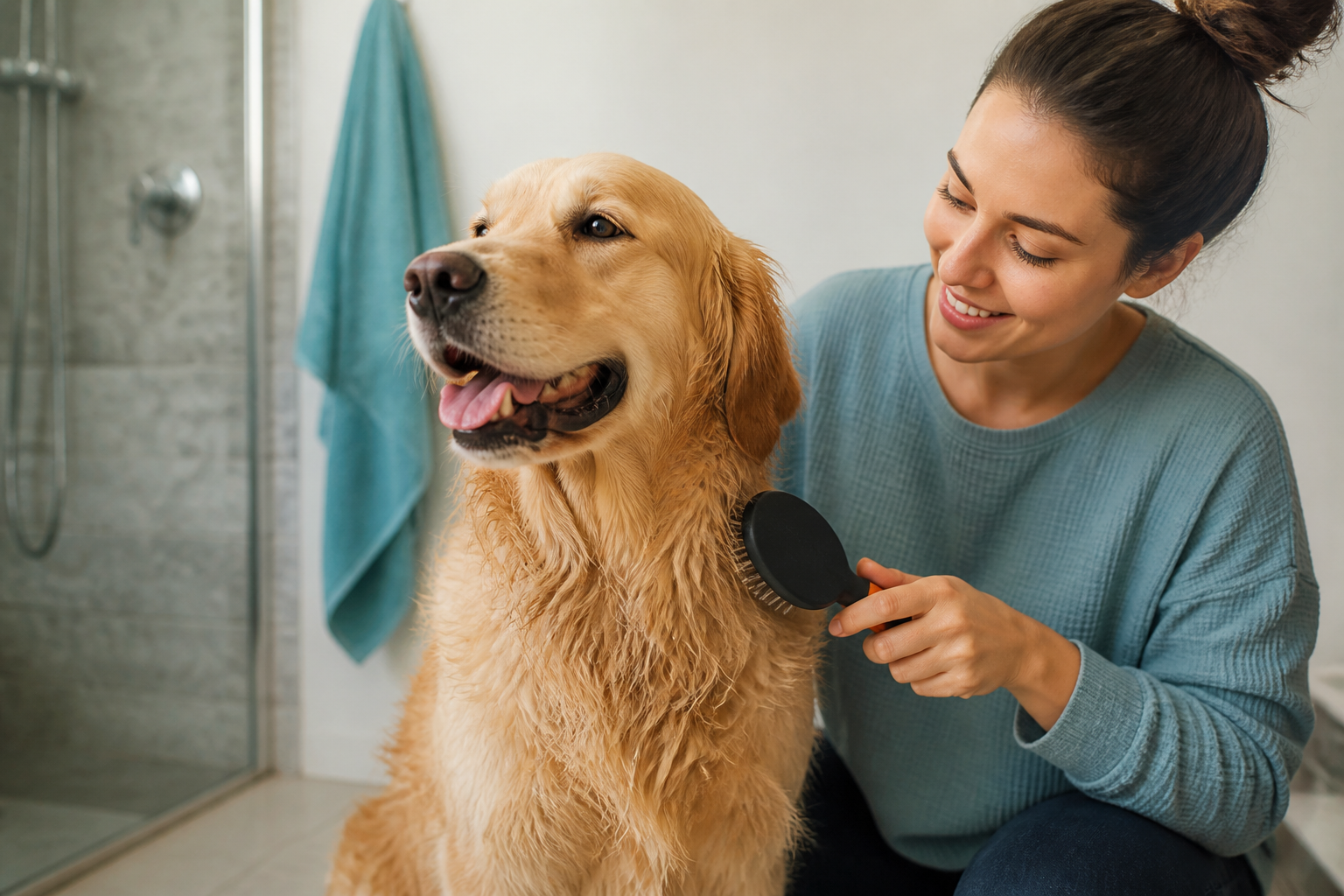
You are standing in the bathroom with a brush in one hand and a damp, slightly grumpy dog in the other. You might wonder if you should finish the blowout first or start working through those tangles while the fur is still heavy with water. It is a common dilemma for pet parents who want to keep their dogs looking sharp without causing unnecessary pain. At BaxterBoo, we hear this question frequently from owners of everything from fluffy Poodles to sleek Labradors. The truth is that the right answer depends on your dog's coat type and the products you have on hand. Brushing at the wrong time can lead to broken hair, skin irritation, or a very frustrated pet. This article covers the science behind hair strength and the best practices for grooming your dog at home.
Quick Answer: It is generally best to brush a dog when the coat is slightly damp and lubricated with a grooming spray or conditioner. Brushing a bone-dry coat often causes static and breakage, while brushing a soaking wet coat without any product can lead to hair stretching and snapping.
The Science of Your Dog’s Hair
To understand when to brush, you have to look at how water changes hair. A dog's coat is made of keratin proteins held together by different types of bonds. Hydrogen bonds are the ones most affected by water. When your dog gets wet, these bonds break. This makes the hair more elastic and flexible, but it also makes it weaker.
When hair is saturated with water, the outer layer or cuticle swells. This swelling makes the hair strand more vulnerable to damage from the metal pins of a brush. If you pull a brush through soaking wet hair that has no lubrication, the hair can stretch far beyond its normal length. Eventually, it snaps. This leaves the coat looking frizzy and damaged over time.
On the other hand, a bone-dry coat has its own set of problems. Dry hair is prone to static electricity. When you pull a brush through dry fur, the friction creates a static charge. This causes the individual hairs to repel each other and stand up. It also makes the hair more brittle. Brushing a dry coat without any moisture can lead to microscopic tears in the hair shaft.
The Dangers of Brushing a Bone-Dry Coat
Many owners think that brushing a dog while they are relaxing on the rug is the easiest way to handle grooming. However, pros often call this "dry brushing," and it is rarely recommended for long-haired or curly-haired breeds. Here are the primary reasons to avoid it:
- Increased Breakage: Without any moisture, the hair has no "slip." The brush catches on every tiny snag, often breaking the hair rather than detangling it.
- Static and Tangling: Static electricity makes the hair fly around and eventually tangle more easily after the grooming session is over.
- Skin Irritation: A dry brush can be more abrasive against the skin. This can lead to "brush burn," which is a red, irritated rash caused by the pins scraping the surface of the skin.
- Pain for the Pet: Because the brush does not glide, it tugs more on the hair follicles. This makes the dog associate grooming with discomfort.
Key Takeaway: Always use some form of moisture, such as a leave-in conditioner or a simple grooming spray, before you put a brush to your dog's coat. This protects the hair shaft and makes the process more comfortable.
When Wet Brushing Is the Best Choice
Wet brushing is a technique often used by professional groomers during the bathing process. It does not mean brushing a dog that just jumped out of a lake. It refers to brushing while the dog is coated in a high-quality conditioner or after they have been lightly towel-dried and sprayed with a detangler.
The Benefits of Conditioned Brushing
When you apply a conditioner in the tub, it smooths down the hair cuticles. This provides the lubrication needed for a comb or brush to slide through tangles. This is especially helpful for dogs with thick undercoats or long, silky hair.
Brushing during the conditioning phase helps distribute the product evenly from the skin to the tips of the hair. This ensures that the skin receives the moisturizing benefits of the conditioner. It also helps to lift away loose undercoat that would otherwise end up on your furniture.
Brushing Damp Hair
Most experts recommend the "damp" stage for the best results. After the bath, gently towel-dry your dog. While the hair is still cool and slightly moist, apply a grooming spray. This is the optimal window. The hair is flexible enough to detangle but not so water-heavy that it is at its weakest point.
For additional bathing and detangling guidance, read our guide to bathing your dog.
Exceptions to the Rule: When Dry Is Better
The Dirty Dog Scenario
If your dog is covered in dried mud or sand, do not wet them down immediately. Water can turn mud into a paste that cements tangles together. In this case, it is better to use a slicker brush or a shedding blade on the dry coat to remove the bulk of the debris. Once the heavy dirt is gone, you can proceed to the bath.
Extreme Matting
If a dog is severely matted, adding water can actually make the mats tighter. Hair shrinks as it dries. If a mat gets wet and then air-dries, it can tighten against the skin like a knot of rope. This can be very painful and even cut off circulation to the skin. For a heavily matted dog, it is often safer to work on the mats while they are dry using a specialized de-matting tool or to seek professional help.
Vet Tip: If your dog has severe matting that is tight against the skin, do not try to cut it out with scissors. It is very easy to accidentally cut the skin. If the mats are widespread, consult a veterinarian or a professional groomer to discuss a "reset" shave to prevent skin infections.
How Coat Type Changes the Rules
Every dog is different. A rule that applies to a Golden Retriever might not work for a Beagle.
Curly and Wavy Coats (Poodles, Doodles)
These breeds should almost never be brushed bone-dry. Their hair is prone to extreme frizz and breakage. Always use a detangling spray. For these dogs, brushing during the blow-drying process, known as "line brushing," is the gold standard for a fluffy, knot-free look.
Learn more about caring for curly coats with our guide to grooming a curly-haired dog.
Double Coats (Huskies, Shepherds, Pomeranians)
These dogs have a soft undercoat and a tougher outer coat. Brushing them dry is common for daily maintenance, but a "wet-dry" approach during deshedding season is highly effective. Using a high-velocity dryer on a damp, conditioned coat helps blow the dead undercoat out so you don't have to pull it out with a brush.
Silky Drop Coats (Yorkies, Shih Tzus)
These coats are very similar to human hair. They are very fragile when wet. For these breeds, wait until the hair is about 80 percent dry before doing your final brush-out. Use a soft pin brush to avoid snapping the fine strands.
Short, Smooth Coats (Boxers, Labs)
These dogs are the easiest. You can use a rubber curry brush while they are covered in shampoo to help loosen dead hair. Once they are dry, a quick pass with a soft bristle brush is usually enough.
Step-by-Step: The Safest Grooming Routine
Follow this process to keep your dog's coat healthy and their experience positive.
Step 1: Perform a pre-bath check. / Run your fingers through the coat to find any large mats. If you find any, use a de-matting spray and a wide-tooth comb to gently loosen them before the hair gets wet.
Step 2: Bathe with a quality shampoo. / Thoroughly wet the dog and apply a shampoo suited for their skin type. Rinse completely until the water runs clear. Residual soap can cause itching and dull the coat.
Step 3: Apply conditioner. / Even short-haired dogs benefit from a light conditioner. For long-haired breeds, leave the conditioner on for three to five minutes. Use a wide-tooth comb or a wet-rated brush to distribute the product while in the tub.
Step 4: Towel-dry gently. / Do not rub the dog vigorously with a towel, as this creates new tangles. Instead, pat the coat and squeeze the hair to absorb moisture.
Step 5: Apply a grooming spray. / Mist the dog with a leave-in conditioner or detangler. This provides a final layer of protection against the heat of the dryer and the friction of the brush.
Step 6: Finish with the brush and dryer. / Use your brush while you dry the hair on a low-heat setting. This ensures the coat dries straight and smooth rather than curly and prone to matting.
Choosing the Right Tools
The "wet or dry" debate also depends on the tools you use. Not every brush is safe for wet hair. You can compare options in our dog brushes and combs collection.
| Brush Type | Best Used On | Notes |
|---|---|---|
| Slicker Brush | Dry or Damp Coat | Great for removing loose undercoat. Use gently to avoid scratching the skin. |
| Pin Brush | Damp Coat | Perfect for long-haired breeds. Look for rounded ends on the pins. |
| Rubber Curry Brush | Wet (In the bath) | Ideal for short-haired dogs to massage the skin and remove dead hair. |
| Wide-Tooth Comb | Wet with Conditioner | The safest way to find and work through small tangles in the tub. |
| Bristle Brush | Dry Coat | Best for finishing a coat and adding shine to short-haired breeds. |
Skin Health and the Pharmacy Connection
The condition of your dog's coat is often a reflection of their skin health. If you notice that your dog's skin is red, flaky, or has a strange odor during grooming, it may be time for a closer look. Constant tangling can sometimes be caused by dry, unhealthy skin that produces brittle hair.
In some cases, your veterinarian may recommend a medicated shampoo or a specific topical treatment for allergies or skin infections. Our pharmacy at BaxterBoo carries a wide range of FDA-approved medications and prescription shampoos through our partnership with Pet's Choice. Whether your dog needs help with seasonal allergies or a chronic skin condition, having access to the right medical supplies is just as important as having the right brush.
You can also explore our dog skin and coat care selection for grooming products intended for coat-care routines.
Vet Tip: If your dog is constantly itchy or has "hot spots," regular brushing won't fix the underlying issue. Consult your vet to see if a prescription-strength topical or an oral allergy medication is necessary to keep them comfortable.
Common Myths About Dog Brushing
There are many misconceptions about how often and when to brush. Let's clear up a few of the most common ones.
Myth 1: Brushing a wet dog causes permanent damage.
This is only true if you are brushing a soaking wet dog with no conditioner or detangling spray. When used with the right products, wet brushing is actually safer for many coat types than brushing a bone-dry, brittle coat.
Myth 2: You don't need to brush short-haired dogs.
While they don't get mats, short-haired dogs still shed. Brushing them regularly removes dead hair and skin cells. This keeps their coat shiny and reduces the amount of fur on your carpet. It also helps distribute natural oils across the skin.
Myth 3: More pressure equals better results.
Some owners think they need to push the brush deep into the coat to get results. This often leads to "brush burn." It is better to work in small sections, lifting the hair and brushing from the skin outward with a light, repetitive motion.
Myth 4: Shampooing is enough to clean the coat.
Shampoo is designed to strip away dirt and oils. If you don't replace those oils with a conditioner, the hair becomes "high friction." This means the strands will catch on each other and form knots much faster than they would if the coat were properly conditioned.
Keeping Your Dog Comfortable
Grooming should be a bonding experience, not a battle. If your dog is terrified of the brush, it might be because of past experiences with tugging and pulling. By switching to a damp-brushing routine with plenty of lubrication, you can significantly reduce the "ouch factor."
Always pair grooming with positive reinforcement. Give your dog a small treat for standing still or for letting you brush a difficult area like the belly or the "trousers" on the back legs. If you find a particularly tough knot, do not yank on it. Hold the base of the hair near the skin so the tugging doesn't pull on the dog's nerves, and slowly tease the knot apart.
Bottom line: For most dogs, brushing a slightly damp coat that has been treated with conditioner or grooming spray is the safest way to prevent breakage and keep the skin healthy.
Conclusion
Managing your dog's coat does not have to be a guessing game. While the "dry" method is okay for quick daily touch-ups on certain breeds, the "wet-damp" method with proper lubrication is almost always superior for the long-term health of the hair. By using the right tools and products, you protect the hair's elasticity and prevent the static that leads to future tangles. We carry a wide variety of grooming tools at BaxterBoo to help you maintain your dog's coat at home, from professional-grade pin brushes to gentle rubber curries. Remember to keep an eye on the skin underneath the fur, and if you ever see signs of irritation or infection, check our pharmacy section or speak with your veterinarian.
For shampoos, conditioners, and detangling products, browse our dog shampoo and conditioner category.
FAQ
Is it okay to brush my dog right after a bath?
It is best to wait until your dog is lightly towel-dried and damp rather than dripping wet. Brushing hair when it is completely saturated with water makes it more prone to stretching and snapping. Always apply a detangling spray or leave-in conditioner before you begin brushing a post-bath coat.
What happens if I brush my dog's fur when it is completely dry?
Brushing a bone-dry coat can cause static electricity and hair breakage. The friction of the brush against dry hair can create microscopic damage to the hair shaft, making it appear dull over time. It can also be more painful for the dog because the brush does not glide through the fur as easily.
Should I brush out mats before or after a bath?
You should try to loosen large mats before the bath using a detangling spray and a comb. If a mat gets wet and then dries, it can tighten significantly, making it much harder to remove. However, for small tangles, brushing while the dog is covered in conditioner during the bath is very effective.
Can I use human hair conditioner on my dog for wet brushing?
You should avoid using human products on dogs because the pH balance of a dog's skin is much different than ours. Human conditioners can be too acidic for a dog's skin, leading to dryness, irritation, or even yeast overgrowth. Always choose a conditioner specifically formulated for canine skin and coat needs.






