
 Save 15% on your 1st Autoship learn more

 Email us
 Live Chat
 FAQs
FAQs





Introduction
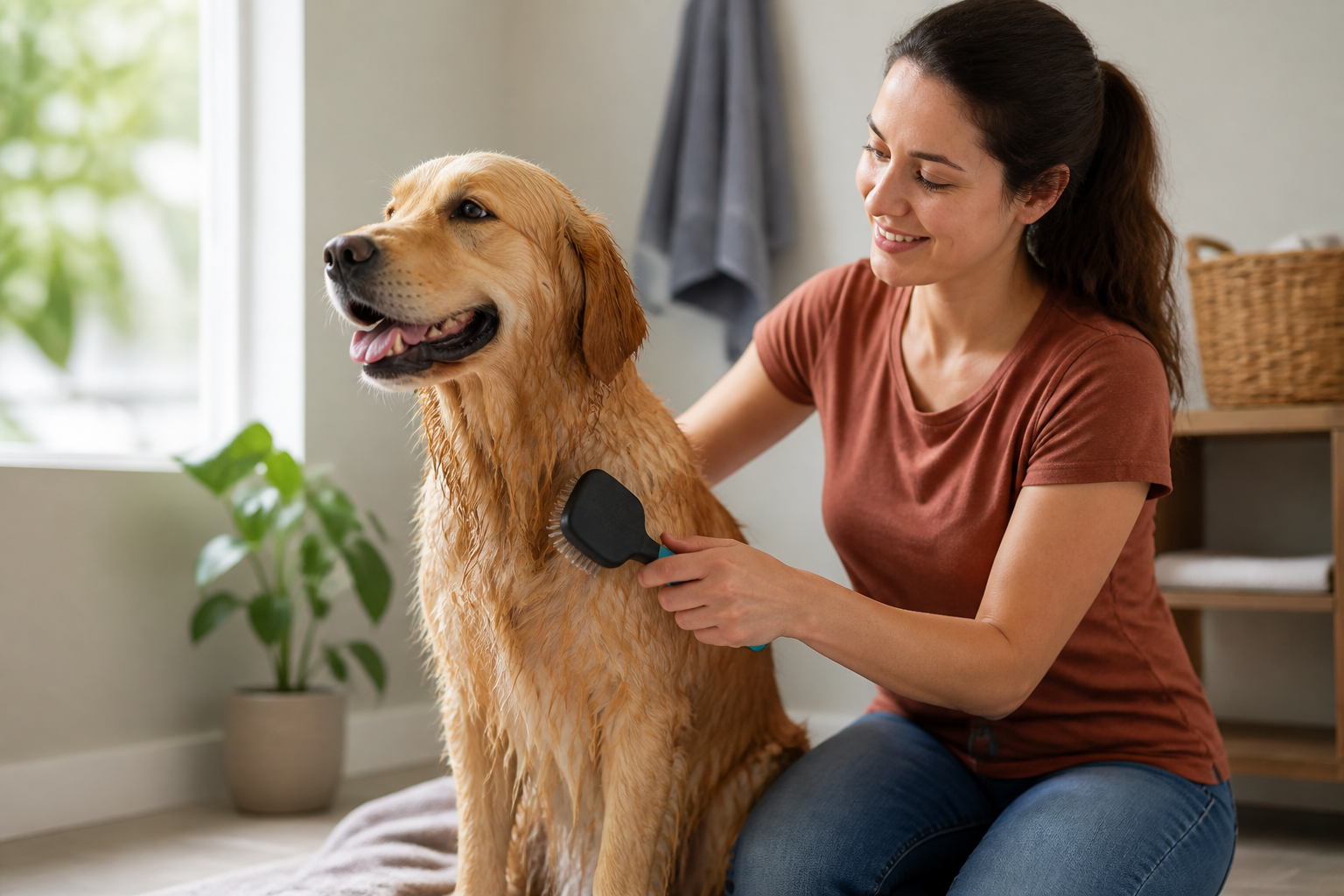
You are standing in the bathroom with a damp, shivering dog after a bath, wondering if you should reach for the brush now or wait for their fur to dry. Perhaps you are looking at a dusty coat after a long hike and debating whether to mist it down before tackling those tangles. At BaxterBoo, we help pet parents navigate these daily grooming dilemmas with practical advice from people who truly understand animal care. The choice between brushing wet or dry is not just a matter of convenience. It directly impacts the health of your dog’s skin and the structural integrity of their hair. This guide will explain why "bone dry" is rarely the right answer and how to use moisture to protect your dog’s coat. You will learn the specific techniques that professionals use to prevent breakage and keep grooming sessions pain-free.
Quick Answer: It is generally better to brush a dog when the coat is damp and lubricated with a conditioner or grooming spray. Brushing a bone-dry coat causes static and hair breakage, while brushing a soaking-wet coat without product can stretch and snap the fragile hair shafts.
The Science of Wet vs. Dry Hair
To understand why moisture matters, we have to look at the structure of a single strand of dog hair. Hair is made of a protein called keratin. These strands are held together by different types of bonds, including hydrogen bonds. These bonds are responsible for the strength and shape of the hair. When hair gets wet, water molecules move into the hair shaft and temporarily break these hydrogen bonds. This makes the hair more elastic and stretchy.
When hair is in this stretchy, wet state, it is also at its weakest. If you pull a brush through dripping wet hair that has no lubrication, the hair can stretch far beyond its normal limit before snapping. This leads to frayed ends and a frizzy appearance once the coat dries. However, when the hair is dry, the cuticles or the outer scales of the hair shaft are often rough and prone to snagging against each other. This creates friction and static.
The goal is to find a balance. By using a small amount of moisture or a conditioning product, you smooth down those outer cuticles. This allows the brush to glide through without the "stretch and snap" effect of soaking water or the "snag and pull" effect of total dryness.
The Risks of Brushing a Bone-Dry Coat
Many pet owners prefer dry brushing because it seems cleaner. You do not have to worry about soggy towels or a wet dog running through the house. However, brushing a completely dry coat can be quite hard on your dog. Without any lubrication, the bristles of a brush or the pins of a comb create significant friction.
This friction leads to static electricity. If you have ever seen your dog’s hair stand on end during a grooming session, you are seeing static in action. Static makes the hair more difficult to manage because it causes individual strands to repel each other while simultaneously attracting dust and dander. It can also make small knots tighten into larger mats.
Another concern is human health. When you brush a dry, dirty dog, you are releasing a cloud of allergens into the air. This includes dried saliva, dander, and dust. If anyone in your home suffers from allergies, dry brushing can trigger a reaction. Using a light misting of water or a grooming spray keeps these particles trapped in the coat or the brush rather than letting them float into your lungs.
Key Takeaway: Brushing dry hair increases friction and static, which leads to breakage and makes knots harder to remove. Always use at least a light mist of water or grooming spray to protect the hair shaft.
When Wet Brushing is the Best Choice
Wet brushing is most effective when it happens as part of the bathing process. Professional groomers often use this technique to "bulk de-shed" a dog. When a dog is in the tub and their coat is saturated with a high-quality conditioner, the hair becomes incredibly slippery. This is the ideal time to remove dead undercoat that would otherwise be difficult to reach.
Step 1: Thoroughly wet the dog and apply a gentle shampoo. Rinse completely to ensure all dirt and oils are gone.
Step 2: Apply a generous amount of conditioner. Look for products with natural ingredients that support skin health.
Step 3: While the conditioner is still in the coat, use a wide-toothed comb or a specialized wet-use brush to gently work through the fur.
Step 4: Start at the ends of the hair and work your way up to the skin to avoid tightening any existing mats.
Step 5: Rinse the conditioner out. You will notice that much of the shedding hair comes out easily in the water.
This method is particularly helpful for dogs with thick double coats, such as Shetland Sheepdogs or Huskies. The conditioner acts as a lubricant that allows the dead hair to slide out from the healthy topcoat without the need for heavy pulling.
For more bathing preparation tips, read our guide to bathing your dog.
The Middle Ground: The Damp Brushing Method
For daily maintenance between baths, you do not need to get your dog soaking wet. In fact, for most breeds, a "damp" brush is the gold standard. This involves using a grooming spray or a leave-in conditioner to lightly moisten the fur.
A quality grooming spray provides a "slip" that protects the hair. Think of it like using soap to get a tight ring off a finger. The lubricant makes the process smooth and painless. When you mist the coat, you are neutralizing static and smoothing the hair cuticle. This makes it much easier to separate tangles.
If you do not have a specialized spray, even a spray bottle with plain water is better than nothing. However, water alone does not provide the same lubrication as a conditioning spray. At BaxterBoo, we carry dog shampoo and conditioner products that can make this process easier for both you and your dog.
Best Practices for Different Coat Types
Not all dog coats react to moisture the same way. The "wet or dry" rule needs to be adjusted based on the texture of your dog’s fur.
Double Coated Dogs
Dogs like Golden Retrievers or Newfoundlands have a soft undercoat and a tougher outer coat. For these breeds, brushing while the coat is damp with conditioner is excellent for removing the undercoat. However, never leave a double-coated dog to air dry completely without brushing. If you do, the damp undercoat can clump together and form thick mats near the skin.
Curly and Wire Coats
Poodles, Doodles, and many Terriers have hair that can become a "frizz bomb" if brushed when bone-dry. For these dogs, brushing should always involve a leave-in spray. If you brush a Poodle dry, you will likely break the curls and create a massive puff of static-filled hair that tangles again almost immediately.
Drop Coats
Breeds with long, silky hair like Yorkies or Maltese have hair that is very similar to human hair. It is very fragile when soaking wet. For these dogs, the best time to brush is when the hair is about 80 percent dry or when it has been lightly misted with a detangling protein spray.
Vet Tip: If your dog has persistent skin irritation, redness, or a foul odor coming from the coat, consult your veterinarian before starting a heavy grooming routine. These could be signs of a fungal or bacterial infection that requires medicated treatment.
Essential Tools for Every Method
Choosing the right tool is just as important as deciding on the moisture level. If you are brushing a wet dog in the tub, you need a brush that can handle water without rusting or trapping mold.
- Pin Brushes: These are excellent for daily damp brushing. Look for pins with rounded ends to ensure they do not scratch the skin.
- Slicker Brushes: These are the workhorses of the grooming world. They are great for removing mats, but they should be used with caution on wet skin, as the skin is more sensitive when damp.
- Rubber Curry Brushes: These are perfect for short-haired dogs like Labradors. They can be used directly in the tub to massage the skin and pull out loose hair.
- Wide-Tooth Combs: These are the safest tool for wet detangling. They do not pull as much as a brush, which protects the elastic wet hair from snapping.
We stock several trusted brands like Kong and other professional-grade grooming supplies that are designed to work effectively on both wet and dry coats. Explore our dog brushes and combs to find tools suited to your dog’s coat.
Our selection also includes BASS Brushes grooming products for brushing, bathing, and coat maintenance.
Addressing Skin Health and Sensitivities
Grooming is not just about looks; it is a primary part of health management. During your brushing sessions, you should be looking for lumps, bumps, or skin changes. If your dog has dry, itchy skin, dry brushing will only make the problem worse by scraping away the skin's natural protective oils.
For dogs with allergies or chronic skin conditions, the moisture you use during brushing can actually be a delivery system for relief. Some grooming sprays contain soothing ingredients like oatmeal or aloe.
If your dog requires ongoing support for skin issues, our dog healthcare category provides products for ongoing wellness needs. Sometimes, a coat that is difficult to brush is a sign of an underlying nutritional deficiency or an allergy that needs professional diagnosis. Managing these conditions often makes the coat naturally more manageable and less prone to tangling.
Managing Serious Matting
One major exception to the "brush it wet" rule is a dog that is severely matted. Mats are like sponges. When they get wet, they absorb water and tighten as they dry. If your dog has tight clumps of hair that feel like felt, do not put them in the bath yet.
If you wet a heavily matted dog, the mats may become impossible to remove without shaving the dog down to the skin. In this specific case, you should use a specialized de-matting tool or a high-lubrication spray on the dry coat to try and break the mat apart before any water touches it. If the mats are too close to the skin, it is safest to see a professional groomer or your vet to avoid cutting the dog's delicate skin.
Bottom line: Water tightens existing mats, so always work out the worst tangles before a full bath.
The Importance of Drying After Wet Brushing
If you choose to brush your dog while they are wet or damp, the process is not finished until they are dry. Leaving a dog with a thick coat to air dry can lead to "hot spots" or bacterial skin infections. This is because the moisture stays trapped against the skin for too long.
After a wet brushing session in the tub, towel-dry your dog thoroughly by blotting, not rubbing. Rubbing with a towel can create new tangles. Once the excess water is gone, you can use a blow dryer on a cool setting while continuing to brush. This "force drying" helps to blow out any remaining loose hair and ensures that the coat dries straight and fluffy rather than clumped and wavy.
Conclusion
Deciding whether to brush your dog wet or dry depends on your goals. For deep de-shedding and cleaning, brushing in the tub with plenty of conditioner is unmatched. For daily maintenance, a light misting with a grooming spray provides the necessary protection to prevent breakage and static.
- Never brush a bone-dry coat if you want to avoid frizz and breakage.
- Use conditioner as a lubricant for wet brushing in the bath.
- Always blow dry thick coats to prevent skin irritation from trapped moisture.
- Invest in quality tools that match your dog’s specific coat type.
Taking these small steps will make grooming a bonding experience rather than a chore. If you find your dog’s coat is constantly tangling despite your best efforts, it might be time to look at their overall wellness. You can earn rewards on your grooming supplies and high-quality food through the MVP Rewards programme, helping you provide the best care for your dog throughout their life.
FAQ
Is it okay to brush a dog right after a bath?
It is okay to brush a dog after a bath, but only if you have used a conditioner or a leave-in detangling spray. Without these lubricants, the hair is in a weakened, elastic state and can easily snap or stretch. Brushing a damp, conditioned coat is actually one of the best ways to ensure a smooth, mat-free finish.
Why does my dog's hair feel rough after dry brushing?
The roughness is usually caused by the hair cuticles being lifted and damaged by friction. Without moisture to smooth the hair shaft, the brush can cause microscopic tears and split ends. This damage makes the hair feel coarse and makes it more likely to tangle again in the future.
Can I just use a spray bottle with water for brushing?
Plain water is better than nothing because it helps reduce static electricity and keeps dander from flying into the air. However, it does not provide the same lubrication as a grooming spray. For dogs with long hair or coats prone to matting, a dedicated grooming spray with conditioning agents will provide much better protection.
Should I brush my dog before or after a bath if they are matted?
You should always attempt to remove or loosen mats before a bath. Water causes the hair fibers in a mat to swell and then shrink as they dry, which often results in the mat tightening even closer to the skin. Work through the mats with a detangling spray on a dry or slightly damp coat before getting the dog fully wet.






