
 Save 15% on your 1st Autoship learn more

 Email us
 Live Chat
 FAQs
FAQs





Introduction
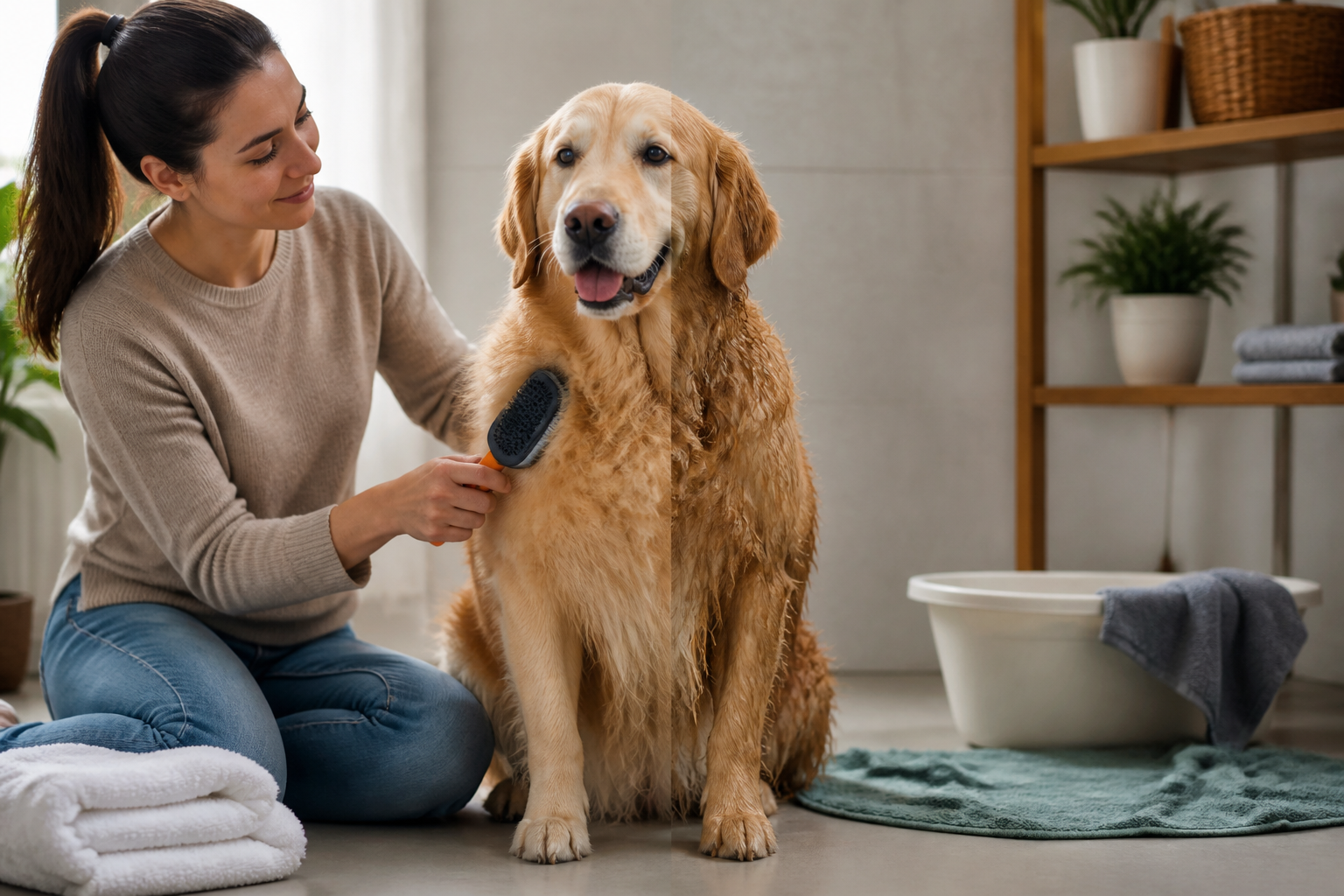
You are standing in the bathroom with a towel in one hand and a brush in the other. Your dog is shaking off water after a bath or perhaps a rainy walk. You want to get those tangles out before they turn into mats, but you wonder if you should wait. Brushing at the wrong time can lead to broken hair, irritated skin, and a very unhappy pet. It is a common dilemma for every pet owner who wants to maintain a healthy coat.
At BaxterBoo, we know that grooming is about more than just looking good. It is a vital part of your dog's overall health and comfort. This post covers the science of hair bonds, the risks of dry brushing, and why the "damp" method is often the professional secret to a beautiful coat. We will help you decide which approach fits your dog's specific coat type.
Quick Answer: For most dogs, brushing a completely dry coat leads to breakage and static. Brushing a soaking wet coat is also risky because hair is weakest when saturated. The best method is usually brushing a clean, damp coat that has been treated with a leave-in conditioner or grooming spray.
The Science of Your Dog's Hair
To understand why timing matters, you have to look at the structure of the hair itself. Dog hair is held together by three types of bonds: hydrogen, disulfide, and salt. These bonds determine the strength, shape, and elasticity of every strand. When you change the moisture level of the hair, you change how these bonds behave.
Hydrogen bonds are responsible for moisture retention. When hair gets wet, these bonds break. This makes the hair more elastic and stretchable. While that sounds good, it actually means the hair is at its weakest tensile state. If you pull too hard on saturated hair, it will stretch until it snaps rather than sliding through a brush.
Disulfide bonds are the strongest and provide the hair with its permanent shape. If these are damaged by harsh chemicals or excessive heat, the coat becomes frizzy and dull. Salt bonds are fragile and react to pH changes. This is why using a pH-balanced dog shampoo is much safer than using human products. When hair is dry, the cuticle (the outer layer) is closed and hard. This makes the hair structurally strong but less flexible.
Key Takeaway: Water changes the physical properties of hair. Wet hair is more elastic but prone to snapping. Dry hair is tougher but more brittle.
The Risks of Brushing a Dry Coat
Many owners reach for a brush while their dog is relaxing on the couch. While convenient, brushing a bone-dry coat has several downsides. The primary issue is friction. Without any lubrication, the metal pins or bristles of a brush scrape against the hair shaft. This can cause the outer cuticle to chip or lift.
Dry brushing also creates static electricity. This is especially true in the winter or in dry climates. Static causes individual hairs to stand up and wrap around each other. This leads to "micro-tangles" that eventually grow into full-blown mats. If your dog has a long or silky coat, dry brushing can feel like a series of tiny, painful tugs.
There is also the health factor for you. When you brush a dry, dirty coat, you release dander, dust, and dried saliva into the air. If you have allergies, this can trigger a reaction. Brushing a dry coat also makes it harder to remove trapped dirt. Instead of pulling the debris out, you might just be pushing it deeper toward the skin.
When Wet Brushing Is the Right Choice
Professional groomers often advocate for wet brushing, but there is a specific way to do it. You should never brush a dog that is just "dripping wet" without any product. The magic happens when you combine moisture with a high-quality conditioner.
When you apply conditioner to a wet coat, the product fills the gaps in the hair cuticle. It provides "slip." Lubrication allows the brush to glide through the hair without catching. For example, earthbath® Oatmeal & Aloe Conditioner - Fragrance Free is designed to detangle and moisturize a pet’s coat. Wet brushing during a bath is an excellent way to distribute conditioner evenly from the root to the tip. It ensures every strand is protected.
Benefits of the Wet Method:
- Reduced Breakage: The conditioner acts as a buffer between the brush and the hair.
- Faster Deshedding: Water and soap help loosen dead undercoat hair so it can be brushed away easily.
- Skin Stimulation: Brushing in the tub increases blood flow to the skin, which can promote healthier hair growth.
- Lymphatic Support: The gentle massage of a brush on a wet coat helps with lymphatic drainage and detoxification.
Vet Tip: If your dog has sensitive skin or chronic allergies, brushing during a medicated bath can help the treatment reach the skin more effectively. Always consult your veterinarian if you notice redness, sores, or excessive itching before starting a new grooming routine.
The "Damp" Golden Rule
If "bone dry" is too brittle and "sopping wet" is too weak, where is the sweet spot? For most breeds, the answer is damp. This is why many grooming experts recommend towel-drying your dog first. Once the hair is no longer dripping but still holds moisture, it is ready for the brush.
Using a grooming spray or leave-in conditioner is the best way to achieve this state without a full bath. These sprays provide the necessary lubrication to prevent static and breakage. They allow you to "wet brush" even on days when you aren't doing a full wash. This is particularly helpful for breeds with long, flowing coats like Afghan Hounds or Golden Retrievers. You can find sprays, conditioners, brushes, and other tools in our dog grooming supplies.
Why You Should Never Brush a Wet Mat
There is one major exception to the wet brushing rule: mats. If your dog has thick, tight clumps of hair, do not get them wet before addressing them. Water acts like a finishing agent for a mat. When a mat gets wet and then dries, the hair fibers shrink and tighten. This pulls the mat closer to the skin, making it much more difficult and painful to remove.
If you find a mat, you should treat it with a specialized detangling spray while the hair is dry. Work the knot apart with your fingers or a mat breaker tool before you ever head to the tub. Once the hair is free of knots, you can proceed with a bath and wet brushing.
Step-by-Step Mat Removal:
Step 1: Locate the mat. / Feel for the knot with your fingers to see how close it is to the skin.
Step 2: Apply a detangler. / Saturate the knot with a grooming spray and let it sit for two minutes.
Step 3: Pick it apart. / Use the end of a metal comb to gently pick at the edges of the mat rather than pulling the whole clump.
Step 4: Brush through. / Once the knot is loose, use a slicker brush to smooth the area.
Bottom line: Water tightens existing mats, so always detangle before the bath.
Tailoring the Method to Coat Types
Not every dog needs the same approach. At BaxterBoo, we carry supplies for every breed, and we know that a Greyhound’s needs are very different from a Poodle’s.
Short and Smooth Coats
For breeds like Labradors, Beagles, or Boxers, dry brushing is usually perfectly fine. Their hair is short and sturdy. A rubber curry brush or a soft bristle brush works well on dry hair to remove loose fur and distribute natural oils. You do not necessarily need to wet these dogs down to get a good result.
Double Coats
Huskies, Shepherds, and Pomeranians have a dense undercoat. Brushing them while they are damp after a bath is incredibly effective. The moisture helps the "blown" undercoat slide out. If you try to brush a dry, blowing coat, you might find the hair gets stuck in the topcoat, causing discomfort.
Silky and Long Coats
Yorkies, Shih Tzus, and Spaniels should almost never be brushed bone-dry. Their hair is more like human hair and is very prone to split ends. A light mist of grooming spray is essential every time you pick up a brush. This keeps the coat shiny and prevents the dreaded static flyaways.
Curly and Wire Coats
Poodles and Doodles often benefit from wet brushing during the conditioning phase of a bath. This helps define the curls and ensures the skin stays hydrated. Wire-haired breeds like Terriers are often "stripped" rather than brushed, but a damp brush-through can help maintain the texture of their furnishings. For more guidance, read our guide to grooming curly-haired dogs.
Choosing the Right Tools for the Job
The debate between wet and dry brushing also depends on what you have in your hand. Using the wrong brush at the wrong time can cause skin irritation, often called brush burn. Browse our dog brushes and combs to compare tools for different coat types.
- Slicker Brushes: These are great for removing mats and loose hair. They work well on dry or damp hair but should be used with a light touch on wet skin. We recommend brands like Kong for durable grooming tools.
- Pin Brushes: These are the best choice for long-haired dogs. The long pins reach through the coat to the skin. They are ideal for wet brushing because they glide through the hair without catching as much as a slicker might.
- Undercoat Rakes: These are strictly for double-coated breeds. They are most effective when the coat is damp and the hair follicles are relaxed from the warmth of a bath.
- Metal Combs: These are "finishing" tools. Use them at the very end of your grooming session to ensure you haven't missed any small knots.
For a specific slicker option, consider the Master Grooming Tools Ergonomic Slicker Dog and Cat Brush. The Master Grooming Tools collection also includes dematting tools, combs, and undercoat rakes.
Key Takeaway: Match your tool to your dog's coat and the moisture level. Pin brushes are safer for wet, fragile hair, while slickers are better for dry deshedding.
The Role of the Bathing Routine
A good grooming session starts in the tub. If you want to make brushing easier, you have to focus on the wash. We see many owners make the mistake of scrubbing the hair in circles. This creates massive tangles. Instead, you should massage the shampoo and conditioner into the coat in a downward motion, following the direction of hair growth.
Once the conditioner is on, this is your window for wet brushing. Use a wide-toothed comb or a pin brush to work the product through. This saves you hours of work later. After the bath, pat the dog dry with a towel. Do not rub vigorously. Then, use a high-velocity dryer if your dog tolerates it. The air from the dryer will push the remaining dead hair out, making the final brush-through a breeze. For additional bath guidance, see these dog-bathing dos and don’ts.
Skin Health and Professional Support
Sometimes, the condition of your dog's coat is a reflection of what is happening inside. If your dog's hair is extremely brittle, or if their skin is constantly flaky regardless of how you brush, there may be an underlying issue. This could range from nutritional deficiencies to environmental allergies.
For dogs with chronic skin conditions, your veterinarian might prescribe specific medicated shampoos or topical treatments. Our pharmacy offers FDA-approved medications and prescription pet foods through our pharmacy partners. These products can help manage the root cause of coat issues, such as allergies or thyroid imbalances. A prescription diet high in Omega-3 fatty acids can also transform a dry, brittle coat into a resilient one that handles brushing much better.
Vet Tip: If you notice your dog has "hot spots," thinning hair, or a foul odor from the skin, stop brushing and see a vet. Brushing over irritated skin can spread bacteria and cause significant pain.
Conclusion
Brushing your dog is a bonding experience that keeps them comfortable and your home cleaner. While dry brushing is fine for quick maintenance on short-haired breeds, most dogs benefit from the "damp" method. By using a grooming spray or brushing during the conditioning phase of a bath, you protect the hair bonds and prevent painful breakage. Remember to always tackle mats before they get wet, and choose the right brush for your dog's specific coat type.
- Always detangle mats while the coat is dry.
- Use a grooming spray for daily brushing to prevent static and friction.
- Wet brush only when the coat is saturated with a high-quality conditioner.
- Keep sessions short and reward your dog with treats to keep it a positive experience.
If you are looking to upgrade your grooming kit or need a specialized conditioner, we are here to help. Check out our selection of grooming supplies and consider signing up for the MVP Rewards programme to earn points on every purchase.
Bottom line: A lubricated coat is a protected coat. Whether you use a spray or a bath, never let the brush face a dry, brittle hair shaft alone.
FAQ
Is it okay to brush my dog after a bath?
Yes, it is actually one of the best times to brush, provided you have used a conditioner and the hair is not dripping wet. Brushing a damp, conditioned coat helps remove loose undercoat and prevents mats from forming as the hair dries. Just be sure to use a gentle touch, as wet hair is more prone to stretching.
Why does my dog's hair break when I brush it dry?
When hair is completely dry, the cuticle is hard and brittle. Without any moisture or grooming spray to provide "slip," the brush creates high friction that can snap the hair shafts. This is especially common in long-haired or silky-coated breeds.
Can I use human hair conditioner on my dog for wet brushing?
You should avoid human products because dogs have a different skin pH than humans. Human conditioners are often too acidic for a dog's skin, which can lead to irritation, dryness, and even infections. Always use a pH-balanced conditioner specifically formulated for canines.
How do I stop my dog's hair from getting static when I brush?
Static is caused by friction on a dry coat. To stop it, lightly mist your dog with a detangling spray or a leave-in conditioner before you start brushing. This adds a layer of moisture that neutralizes the static charge and makes the process much more comfortable for your pet.






