Save 15% on your 1st Autoship learn more

 Email us
 Live Chat
 FAQs
FAQs





Introduction
You are relaxing on the sofa with your cat when the light hits their coat just right. Instead of a sleek, glossy shine, you notice a dusting of white flakes across their back and tail. It is a common moment for many pet owners. While cats are famous for their grooming habits, sometimes they need a little extra help to keep their skin healthy. Using a cat dandruff comb is one of the simplest ways to manage these flakes at home. At BaxterBoo, we have helped thousands of owners find the right grooming tools since 2006. This guide covers how to choose the right comb, the best techniques for flake removal, and when those flakes might signal a need for a trip to the veterinarian. Understanding the relationship between grooming and skin health is the first step toward a flake free home.
Understanding Feline Dandruff
Dandruff in cats is technically known as seborrhea. It happens when the sebaceous glands in the skin produce too much oil, or when the skin cells turn over too quickly. While every cat produces dander, which is microscopic dead skin, dandruff consists of visible flakes that get trapped in the fur. It is usually most noticeable on cats with dark coats.
There are two main types of seborrhea. Dry seborrhea results in the classic white, dusty flakes. Oily seborrhea creates greasy skin and yellowish clumps that may have a slight odor. Most cats deal with the dry version, especially during winter months when indoor heating strips moisture from the air.
Quick Answer: A cat dandruff comb helps remove dead skin cells and loose fur while distributing natural oils. It is an effective tool for managing mild flaking and improving coat texture through regular exfoliation.
Using a comb does more than just move the flakes around. It stimulates the skin and encourages the production of natural oils that act as a barrier. If your cat has stopped grooming effectively due to age or weight, a comb becomes a necessary substitute for their tongue.
The Best Types of Cat Dandruff Combs
Not every brush is designed to handle skin flakes. Some brushes only tackle the top coat, while others are too harsh for sensitive skin. Selecting the right tool depends on your cat's coat length and the sensitivity of their skin. You can compare options in our cat grooming collection.
Fine Tooth Metal Combs
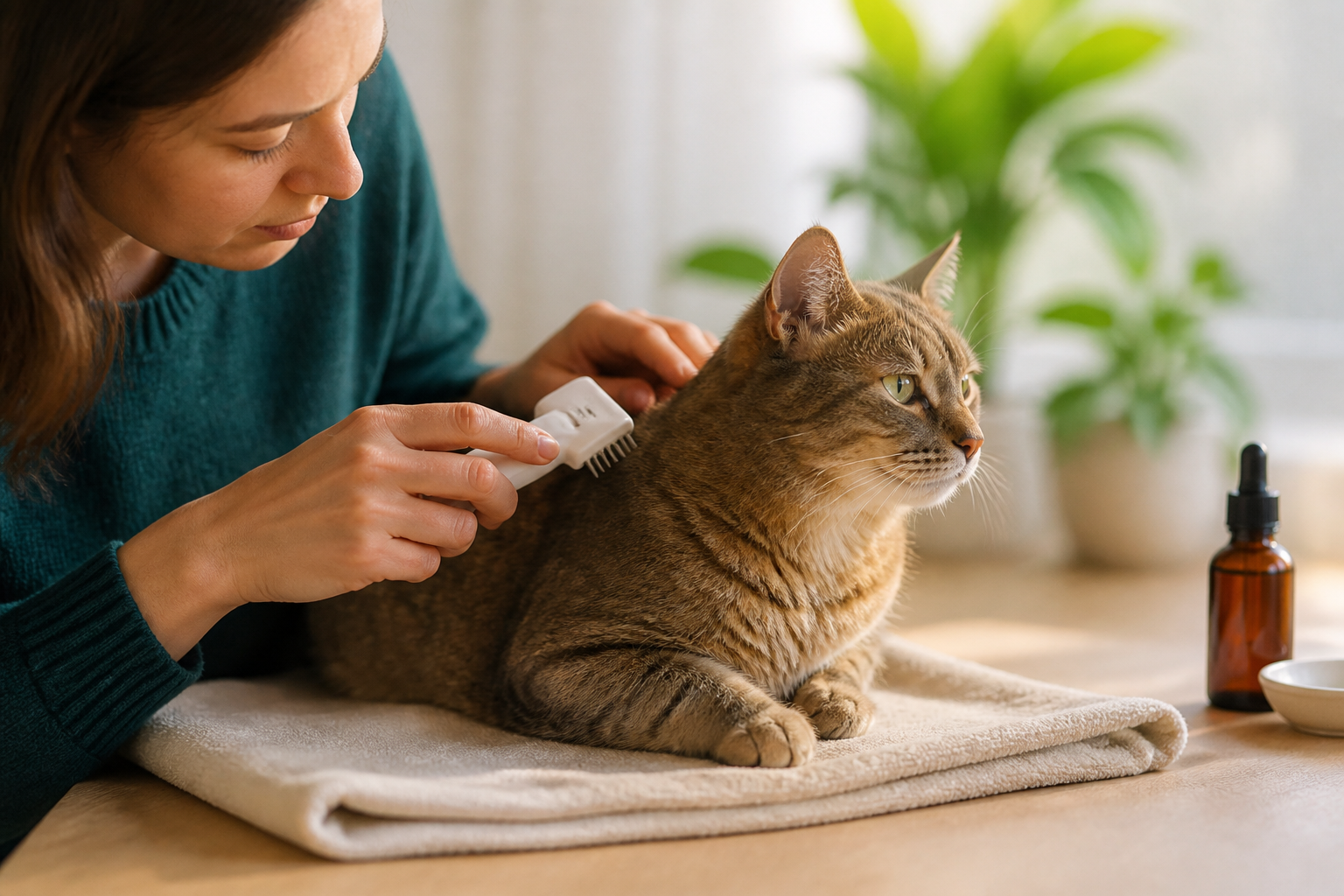
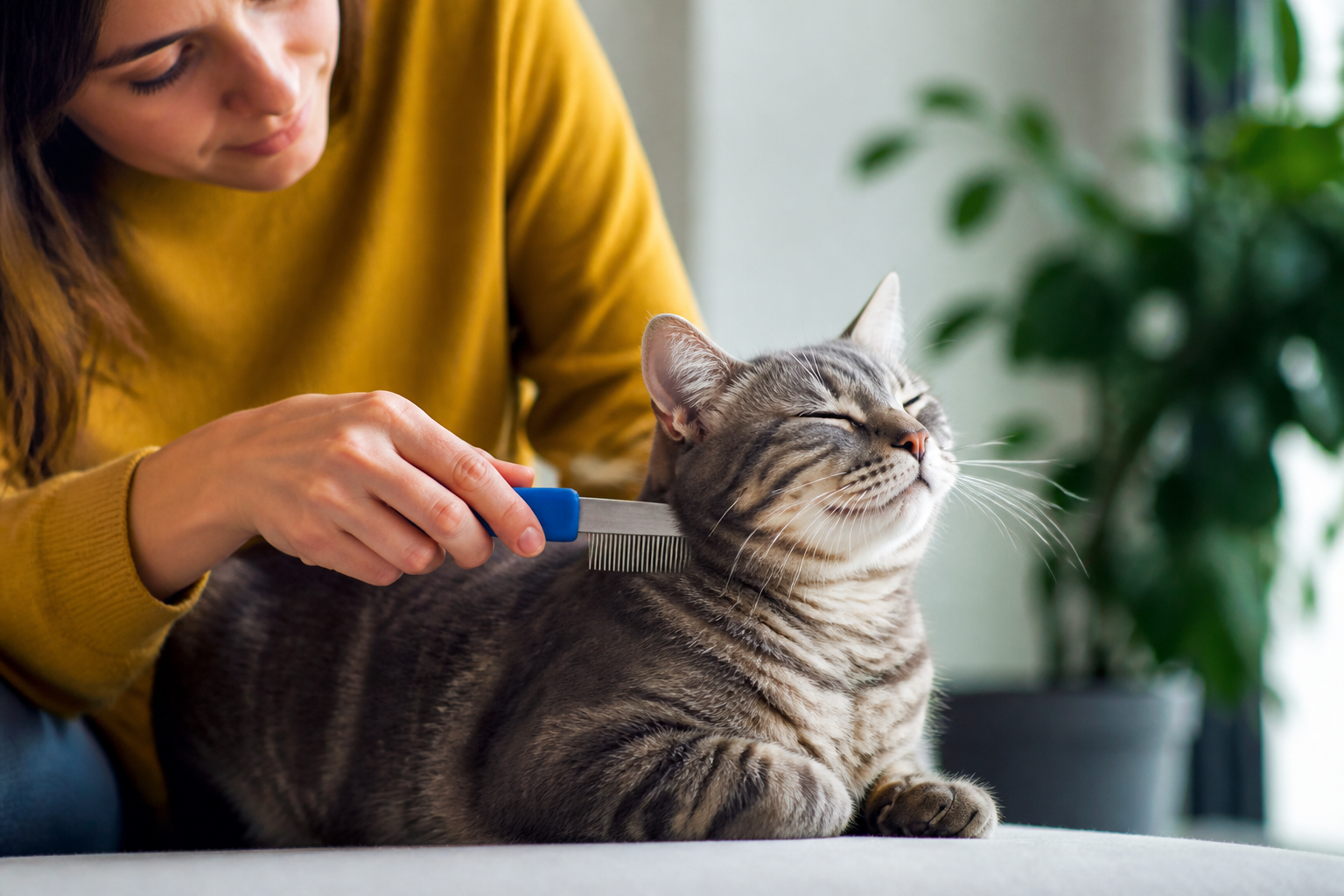
Often sold as flea combs, these are the most effective tools for physically removing dandruff. The teeth are spaced very closely together. This allows the comb to grab tiny flakes that a standard brush would miss. Because the teeth are metal, they reach all the way down to the skin surface. We recommend looking for a comb with rounded tips to ensure you do not scratch the skin. The U-Groom Contoured Grip Flea Comb for Dogs and Cats is one option designed to remove debris with tightly spaced stainless steel pins.
Rubber Grooming Tools
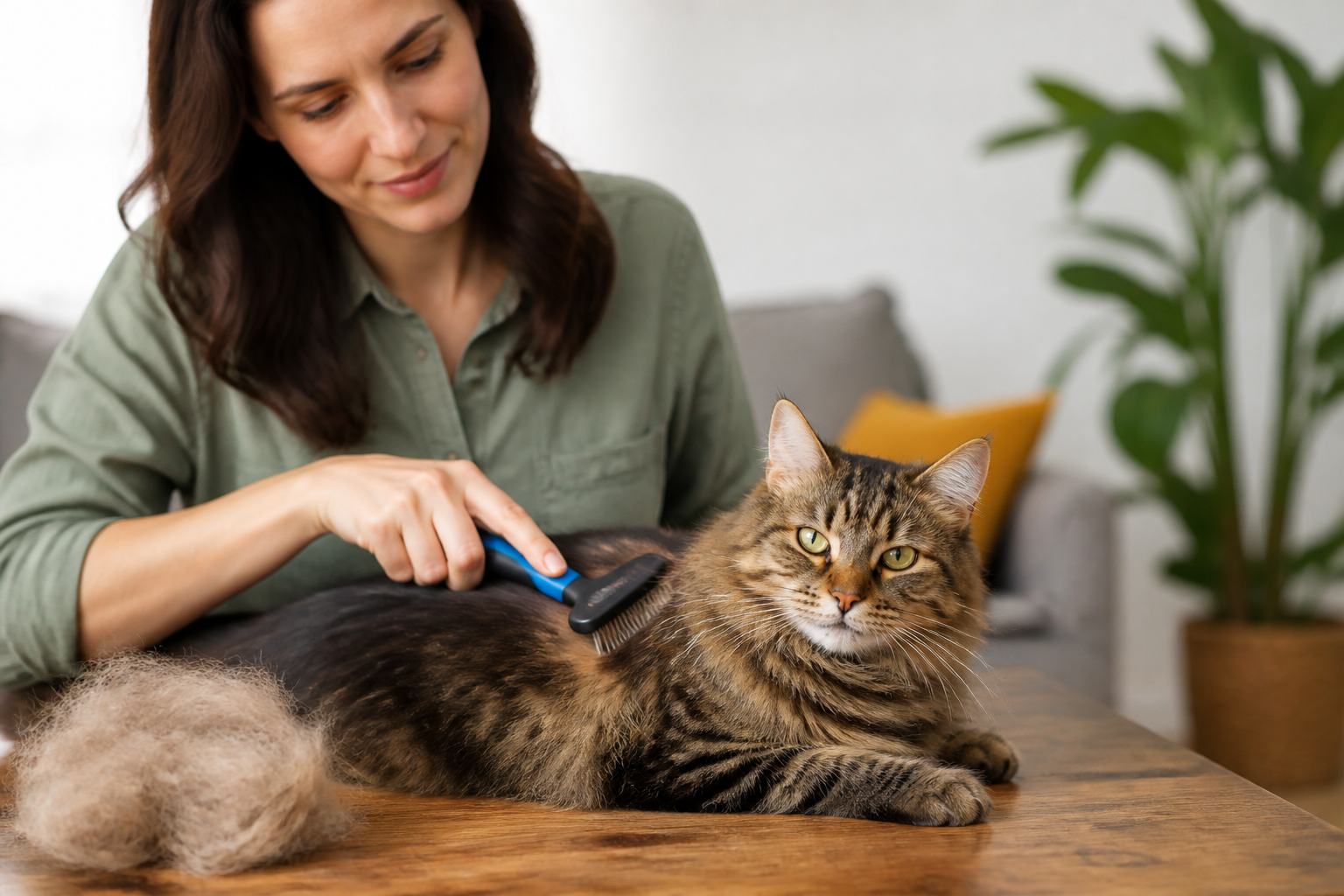
Brands like Kong make rubber brushes that are excellent for cats with sensitive skin. The rubber "teeth" act like a magnet for loose hair and flakes. These tools provide a massage-like experience that most cats find very relaxing. The friction from the rubber helps pull up dead skin cells without the risk of irritation.
Boar Bristle Brushes
A soft bristle brush is best for finishing a grooming session. While it won't lift deep flakes as well as a metal comb, it is perfect for distributing oils. Once you have used a cat dandruff comb to loosen the debris, the bristle brush smooths the coat and adds shine.
Key Takeaway: Use a fine-tooth metal comb for deep flake removal and a rubber or bristle brush for skin stimulation and oil distribution.
How to Use a Cat Dandruff Comb Properly
Grooming a cat with dandruff requires a gentle touch. If the skin is already dry or irritated, rough brushing can make the problem worse. You want to exfoliate the skin without causing redness or discomfort.
Step 1: Inspect the skin. / Before you start, part the fur and look for redness, sores, or signs of parasites like fleas. If the skin looks inflamed, stop and talk to your vet.
Step 2: Start at the head. / Work in the direction of hair growth. Start at the base of the ears and move toward the tail. Use short, gentle strokes.
Step 3: Focus on the lower back. / The base of the tail and the lower spine are the most common areas for dandruff. Cats often have a harder time reaching these spots during their own grooming routine.
Step 4: Clean the comb frequently. / As the comb fills with flakes and loose hair, wipe it with a damp cloth. This prevents you from just moving the debris to another part of the coat.
Vet Tip: If your cat's dandruff is accompanied by intense itching, hair loss, or red patches, please consult your veterinarian. These can be signs of allergies, fungal infections like ringworm, or parasites that require medical treatment.
Why Your Cat Might Have Dandruff
A comb is a great management tool, but it is also important to understand the "why" behind the flakes. Many factors contribute to skin health.
- Environment: Low humidity is a primary cause. If your skin feels dry in the winter, your cat's skin likely does too.
- Obesity: Overweight cats cannot reach their middle or lower back to groom. This leads to a buildup of oils and dead skin.
- Arthritis: Senior cats may find the twisting and turning of grooming painful.
- Nutrition: A lack of Omega-3 fatty acids can lead to a dull, flaky coat. High-quality foods from brands like Stella & Chewy's or Open Farm often include these essential fats.
- Dehydration: Cats are notorious for not drinking enough water, which impacts skin elasticity.
Our pharmacy carries a variety of supplements that support skin and coat health. Through our partnership with Pet's Choice, we offer both over the counter options and prescription strength fatty acid supplements. If a dietary change is needed, we also carry prescription diets through our cat pharmacy to manage specific health conditions that may manifest as skin issues.
Beyond the Comb: Managing Skin Health
While regular sessions with a cat dandruff comb are helpful, a holistic approach works best. You can support your cat's skin from the inside out and by changing their environment.
Adding moisture to the air is one of the most effective steps you can take. Running a humidifier in the room where your cat sleeps most often can significantly reduce winter flaking. You should also ensure they have multiple sources of fresh water. Some cats prefer a fountain, which encourages them to drink more.
Dietary supplements are another useful tool. Fish oil or flaxseed oil can be added to their meals. These provide the building blocks for a healthy skin barrier. We carry several brands of skin and coat supplements, including Zesty Paws and Honest Paws, which are formulated specifically for feline needs. For more guidance, read our pet supplement guide.
Bottom line: A combination of regular grooming, environmental humidity, and proper nutrition is the best way to eliminate cat dandruff for good.
Dealing with "Walking Dandruff"
There is a specific type of flake that requires more than just a comb. Cheyletiella mites are often called "walking dandruff." If you look closely at the flakes and see them moving, your cat likely has a mite infestation. This is a contagious condition that can spread to other pets and even humans.
If you suspect mites, a cat dandruff comb will not solve the problem. You will need a medicated treatment. Our pharmacy provides FDA-approved flea, tick, and mite preventives that can clear up these infestations. Since these often require a prescription, you should visit your vet for a formal diagnosis first. Our partnership with Pet's Choice makes it easy to get these medications delivered right to your door in Vernon Hills or anywhere else in the country. You can also review flea and tick prevention options for additional information.
When to Seek Professional Help
Most cases of cat dandruff are harmless, but skin health is often a mirror of internal health. If you notice a sudden change in your cat's coat, it is worth paying attention.
Common red flags include:
- Patchy hair loss or "moth-eaten" appearance.
- A greasy feel to the fur even after combing.
- Open sores or scabs.
- Frequent scratching or biting at the skin.
- A change in appetite or energy levels.
Conditions like hyperthyroidism or diabetes can sometimes cause changes in skin and coat quality. Your vet can run blood work to rule these out. If your vet does prescribe a specific medicated shampoo or a prescription diet like Royal Canin or Farmina Vet Life, you can find those through our pharmacy services.
Tips for a Stress Free Grooming Session
Many cats are wary of combs. If your cat isn't used to being brushed, you need to build trust slowly.
- Keep it short: Start with just sixty seconds of combing.
- Offer rewards: Use high-value treats like Churu or Greenies to create a positive association.
- Choose the right time: Groom your cat when they are already relaxed or sleepy.
- Watch body language: If their tail starts twitching or their ears go back, stop immediately.
Regular grooming is a great way to bond with your pet. It allows you to check for lumps, bumps, or hidden injuries while keeping their coat looking its best.
Why Order Your Grooming Gear From Us
We know that you have many choices for pet supplies. At BaxterBoo, we pride ourselves on being more than just a website. We are a real team operating a warehouse superstore. We handpick every product we carry, from the simplest cat dandruff comb to the most advanced mobility aids.
Our MVP Rewards program allows you to earn up to 5% back on every purchase, making it more affordable to keep your pet healthy. If you find a product your cat loves, our Autoship program ensures you never run out, and you will save on your first order. We have been in business since 2006 because we treat every customer like a neighbor.
Summary of Effective Grooming
Managing cat dandruff is a marathon, not a sprint. Consistency is the most important factor. Using a cat dandruff comb once a month won't do much, but a five-minute session every other day can make a massive difference.
- Select a fine-tooth comb for deep cleaning.
- Use a rubber brush for massage and oil stimulation.
- Check for underlying causes like dry air or diet.
- Monitor for signs of mites or infections.
- Consult a vet for persistent or severe skin issues.
A healthy coat starts with healthy skin. By using the right tools and keeping a close eye on your cat's well-being, you can keep them comfortable and flake free year-round.
Conclusion
Finding white flakes on your cat does not have to be a cause for alarm. With a high-quality cat dandruff comb and a bit of patience, you can manage most cases of dry skin at home. Remember to be gentle and focus on the areas your cat cannot reach. If the problem persists, or if you notice signs of irritation, our pharmacy and the experts at Pet's Choice are here to help with medicated solutions. Taking the time to groom your cat today ensures a happier, healthier pet tomorrow. For the best selection of grooming tools, visit our cat grooming collection and find the perfect match for your feline friend.
FAQ
Can I use a human dandruff shampoo on my cat?
No, you should never use human shampoos on cats. Human skin has a different pH level than feline skin, and many human dandruff shampoos contain ingredients like zinc pyrithione or salicylic acid that can be toxic if a cat licks their fur. Always use a shampoo specifically formulated for cats, or better yet, stick to dry grooming with a comb unless a vet advises otherwise.
How often should I use a dandruff comb on my cat?
For a cat with active dandruff, daily grooming sessions of three to five minutes are ideal. This frequency helps remove flakes before they build up and keeps the skin stimulated. Once the dandruff is under control, you can move to a maintenance schedule of two to three times per week to keep the coat healthy and prevent future flakes.
Why does my cat get more dandruff in the winter?
Winter dandruff is usually caused by low humidity. When you turn on your heater, it dries out the air inside your home, which in turn sucks moisture out of your cat's skin. This makes the skin brittle and more likely to flake off. Using a humidifier and adding a skin and coat supplement can help combat these seasonal changes.
Is cat dandruff the same thing as flea dirt?
No, they are very different. Dandruff is white or clear and consists of dead skin cells. Flea dirt is actually flea excrement and looks like tiny specks of black pepper. If you are unsure which one you are seeing, place the debris on a wet white paper towel. If it turns reddish-brown, it is flea dirt (digested blood), and you should look into flea treatments through our cat pharmacy.