Save 15% on your 1st Autoship learn more

 Email us
 Live Chat
 FAQs
FAQs





Introduction
You are petting your cat and notice a dusting of white flakes along their lower back. Your first instinct might be to reach for the bottle of Head & Shoulders in your shower. It works for humans, so it should work for a cat, right? Unfortunately, using human dandruff shampoo on a cat is one of the most dangerous grooming mistakes a pet owner can make.
At BaxterBoo, we talk to cat owners every day who are looking for ways to keep their pets comfortable and their coats shiny. While those flakes are often just a sign of dry skin, they can also signal underlying health issues that need more than a quick wash. This post covers why human products are off-limits, what causes feline flakes, and how to safely restore your cat’s skin health.
Quick Answer: No, you should never use human dandruff shampoo on a cat. Many human formulas contain ingredients like zinc pyrithione or coal tar that are toxic to felines if absorbed through the skin or ingested during grooming.
Why Human Dandruff Shampoo is Dangerous for Cats
The primary reason you cannot use human dandruff products on cats is toxicity. Cats are unique because they groom themselves constantly. Anything you put on their skin will eventually end up in their mouth. Human shampoos are formulated for the human scalp, which has a very different pH level and thickness than feline skin.
Most human dandruff shampoos rely on active ingredients like zinc pyrithione, selenium sulfide, or salicylic acid. While these are safe for us, they can cause severe reactions in cats. Zinc pyrithione can lead to zinc toxicity, resulting in vomiting, lethargy, and even damage to red blood cells.
The pH Balance Problem
Human skin is quite acidic, usually sitting at a pH of around 5.5. Cat skin is much closer to neutral, often ranging between 6.2 and 7.2. Using an acidic human shampoo strips away the natural lipid barrier on a cat’s skin. Instead of fixing the dandruff, it often makes the skin even more irritated, leading to more flakes and potential infections.
Toxic Ingredients to Avoid
If you are looking at a bottle and wondering if it is safe, look for these specific ingredients. None of these should ever touch your cat.
- Zinc Pyrithione: Common in most drugstore dandruff brands.
- Coal Tar: Found in heavy-duty medicated shampoos. It is highly toxic to cats.
- Selenium Sulfide: Used to treat seborrhea in humans but dangerous for pets.
- Essential Oils: Some "natural" human shampoos use tea tree or peppermint oil. These are toxic to a cat’s liver.
Key Takeaway: Human dandruff shampoos are formulated for a different pH and contain chemicals that are toxic to cats when licked or absorbed.
Identifying the Cause of Your Cat’s Dandruff
Before you try any treatment, you need to know why the flakes are there in the first place. Feline dandruff is rarely its own condition. It is almost always a symptom of something else going on with your cat’s body or environment.
Grooming Limitations and Obesity
If you notice dandruff primarily on the lower back or near the base of the tail, your cat might simply be unable to reach those spots. This is common in overweight cats who cannot physically contort themselves enough to groom their rear. Senior cats with arthritis also struggle with this. When a cat stops grooming an area, dead skin cells and natural oils build up, eventually flaking off as dandruff.
For guidance related to healthy weight management, read how to help your indoor cat lose weight.
Dietary Deficiencies
Healthy skin starts with good nutrition. If your cat’s diet is low in essential fatty acids, their skin will be the first thing to suffer. Omega-3 and Omega-6 fatty acids are crucial for maintaining the skin's moisture barrier. Without them, the skin becomes brittle and prone to flaking.
You can explore our cat skin and coat health collection when looking for products that support your cat’s skin and coat routine.
Environmental Dryness
Just like people, cats get "winter skin." When the heater runs all day, it pulls moisture out of the air. This arid environment dries out the coat. You may notice the dandruff appearing only during the colder months and disappearing in the spring.
Medical Concerns and Parasites
Sometimes what looks like dandruff is actually something else entirely. "Walking dandruff" is a common name for Cheyletiella mites. These tiny parasites look like white flakes but actually move around on the skin.
Vet Tip: If the flakes on your cat appear to be moving, or if you notice redness, hair loss, or a foul odor, schedule a visit with your veterinarian immediately. These symptoms often point to parasites or fungal infections like ringworm that require professional treatment.
Safe Alternatives for Treating Feline Dandruff
Since human shampoo is out of the question, you need a solution designed specifically for feline biology. The good news is that there are many safe, effective ways to clear up flakes without a stressful bath.
Waterless Shampoos and Foams
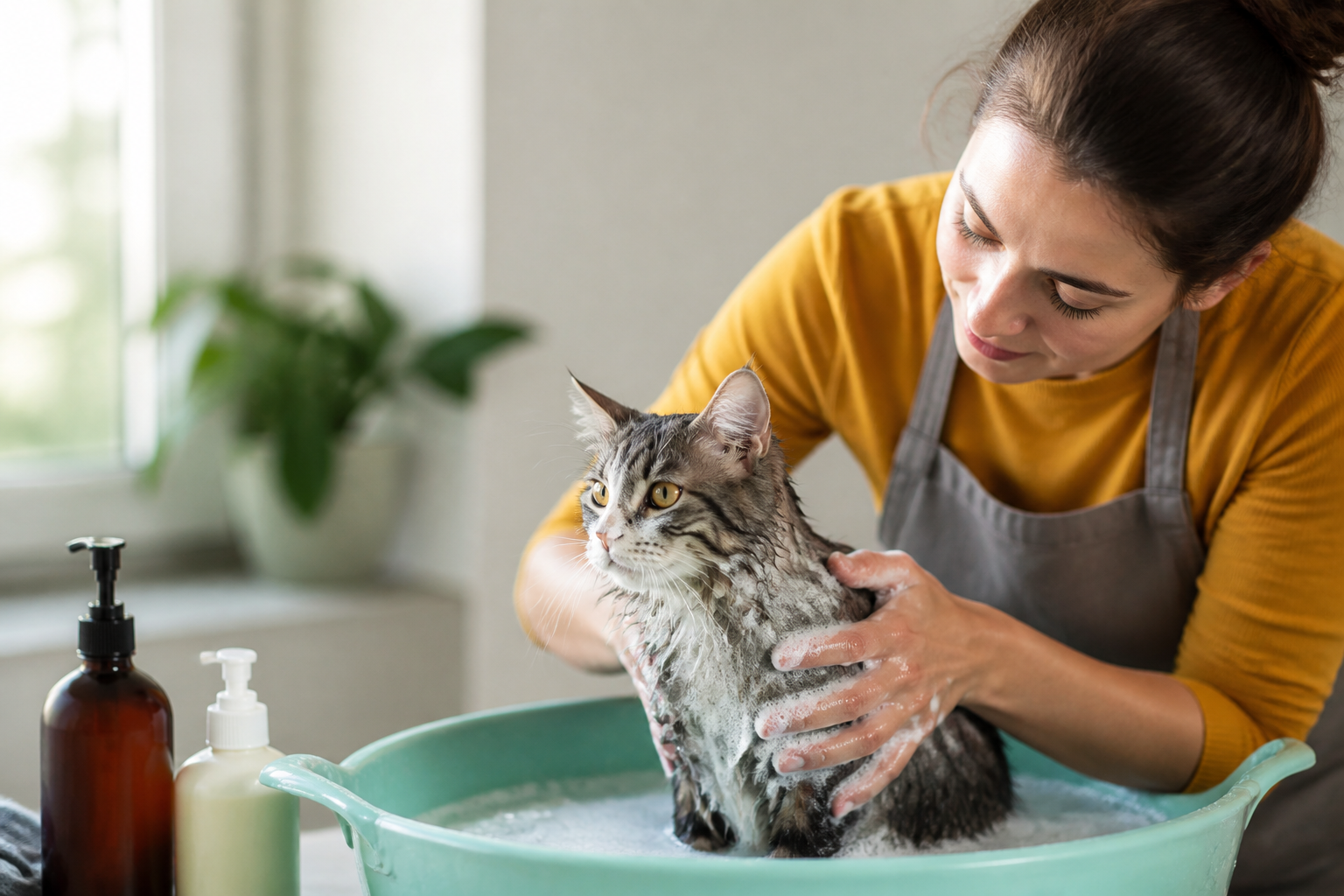
Most cats despise being submerged in water. Using a traditional wet shampoo can be a traumatic experience for both of you. Waterless shampoos are a fantastic alternative. These are usually foams that you massage into the fur and then towel off. They break down excess oils and lift away dead skin cells without the need for a bathtub.
For a no-rinse option, consider Pure and Natural Pet Waterless Foaming Cat Shampoo.
Oatmeal and Aloe Formulas
If your cat actually needs a bath, look for a feline-specific shampoo that uses colloidal oatmeal. Oatmeal is known for its ability to lock in moisture and soothe itchy skin. Aloe vera is another great ingredient for calming inflammation. Ensure the product is labeled "soap-free" to prevent further drying of the skin.
You can browse our cat grooming supplies for shampoos, wipes, brushes, and other grooming essentials.
Medicated Washes from the Pharmacy
For more persistent issues, your vet might recommend a medicated shampoo. These are different from human medicated products because they use pet-safe concentrations of active ingredients like chlorhexidine or miconazole. Our pharmacy carries FDA-approved treatments and prescription-strength shampoos through our partnership with Pet's Choice. If your vet writes a prescription for a medicated wash, we can help you get exactly what your cat needs.
Explore our pet pharmacy for cats when your veterinarian recommends prescription support.
Bottom line: Stick to products labeled specifically for cats to ensure the pH is correct and the ingredients are non-toxic.
How to Improve Skin Health from the Inside Out
Topical treatments like shampoos only address the flakes on the surface. To stop dandruff from coming back, you have to support the skin from the inside.
Step 1: Introduce Omega-3 Supplements.
Adding a high-quality fish oil or salmon oil to your cat’s food can make a massive difference. These essential fatty acids help repair the skin's lipid barrier. You will usually see a shinier, flake-free coat within four to six weeks.
Step 2: Increase Hydration.
Cats have a naturally low thirst drive. If they are slightly dehydrated, their skin will show it. Try incorporating more wet food into their diet or using a pet water fountain to encourage them to drink more.
Step 3: Add a Humidifier.
If your home feels dry during the winter, a cool-mist humidifier in the room where your cat sleeps can help. This keeps the skin from losing moisture to the air.
Step 4: Regular Brushing.
Daily brushing is the most effective way to prevent dandruff. It stimulates blood flow to the skin and helps distribute natural oils across the entire coat. For senior or overweight cats, you act as their primary groomer for those hard-to-reach spots.
For more general feline wellness ideas, read how to build a healthy feline immune system.
A Better Grooming Routine
Grooming is not just about keeping your cat looking good. It is a vital part of their health maintenance. If your cat has dandruff, you may need to adjust your current routine.
- Choose the Right Brush: Use a soft slicker brush or a rubber grooming mitt. These are gentle on the skin while still being effective at removing loose fur and flakes.
- Be Gentle: If the skin is already irritated, do not scrub hard. Use long, slow strokes in the direction of hair growth.
- Wipe Down: For cats who cannot groom themselves well, use feline-safe grooming wipes between brushings. This removes saliva and dander that can trigger human allergies.
We carry a wide selection of grooming tools at BaxterBoo that are designed specifically for different coat types. Whether you have a long-haired Persian or a sleek shorthair, the right tool makes the process easier for everyone.
When to Consult Your Veterinarian
While occasional dry skin is normal, persistent dandruff should not be ignored. A vet visit is necessary to rule out systemic issues like diabetes or hyperthyroidism, which can both cause poor coat quality.
If your cat is also experiencing any of the following, do not wait:
- Intense itching or scratching that breaks the skin.
- Bald patches or thinning fur.
- Red, inflamed, or bleeding skin.
- A greasy, "off-smelling" coat.
- Lethargy or changes in appetite.
Your vet can perform a skin scraping to check for mites or fungus. If the issue is related to an allergy, they can help you identify the trigger, whether it is a food ingredient or something in the environment like dust or pollen.
Key Takeaway: Chronic dandruff is often a sign of an internal health issue. Always consult a professional if home remedies do not show results within a few weeks.
Summary of Safe Care for Feline Dandruff
Caring for a cat with dandruff does not require a chemistry degree, but it does require the right products. Avoid the temptation to use human shampoos, as the risks of toxicity and skin damage are far too high. Instead, focus on gentle grooming, proper nutrition, and cat-safe topical solutions.
- Never use human dandruff shampoo.
- Identify if obesity or arthritis is preventing your cat from grooming.
- Boost skin health with Omega-3 fatty acid supplements.
- Use waterless foam shampoos for stress-free cleaning.
- Consult a vet if you see moving flakes, redness, or hair loss.
If you are ready to start a better skin care routine for your cat, our cat grooming supplies and our pet pharmacy are great places to find safe, expert-vetted options. For those who want to stay stocked up on supplements and grooming wipes, our Autoship programme offers a convenient way to save while keeping your pet comfortable.
FAQ
Can I use Head & Shoulders on my cat if I rinse it off quickly?
No. You should never use Head & Shoulders or any human dandruff shampoo on a cat. The toxic ingredients can be absorbed through the skin almost instantly, and even a tiny amount of residue left behind can be ingested when the cat grooms themselves later.
Why is my cat getting dandruff all of a sudden?
A sudden onset of dandruff is often linked to environmental changes, such as dry winter air, or a change in diet. However, it can also be a sign of a new parasite infestation like mites or fleas. If the dandruff appears suddenly along with itching, it is best to check with a veterinarian.
Is baby shampoo safe for a cat with dandruff?
While baby shampoo is less toxic than human dandruff shampoo, it is still not ideal. It has a pH balanced for human skin, which is more acidic than a cat’s skin. For a one-time emergency wash, it may be okay, but for treating dandruff, a cat-specific oatmeal shampoo is much safer and more effective.
Does coconut oil help with cat dandruff?
Coconut oil can be used topically on very small dry patches, but it is not a complete solution. It often makes the coat greasy and can cause stomach upset if the cat licks it off. Using a fish oil supplement in their food is a much more effective way to moisturize the skin from the inside out.