Save 15% on your 1st Autoship learn more

 Email us
 Live Chat
 FAQs
FAQs





Introduction
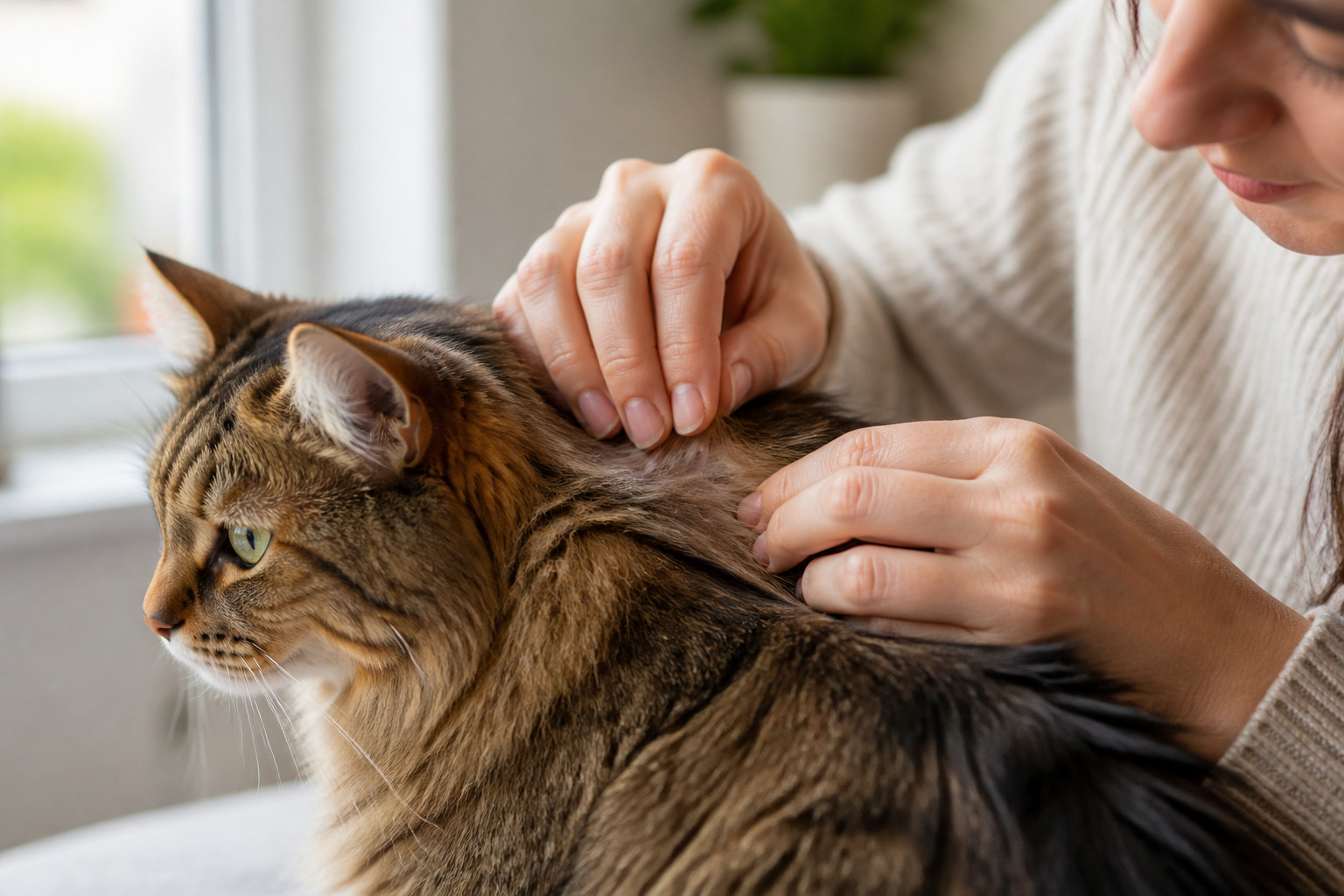
You are relaxing on the sofa with your cat when you notice a dusting of white flecks across their back. At first, you might think it is just a bit of dust or lint. As you pet them, you realize these flakes are coming from the skin itself. Finding your cat having dandruff can be a confusing moment for any pet owner. While a few flakes are sometimes normal, a sudden increase often signals that your cat needs a little extra help with their skin health or overall wellness.
At BaxterBoo, we know that your cat's coat is a direct reflection of their internal health. This guide will help you understand why these flakes appear and how to tell the difference between normal shedding and a medical issue. We will cover environmental triggers, nutritional needs, and when it is time to visit the veterinarian. Our goal is to give you the practical steps needed to get your cat's coat back to its soft, glossy best.
Feline Dandruff Versus Normal Skin Dander
It is easy to get these two terms confused, but they are quite different. Every cat produces dander. This consists of microscopic skin cells that shed naturally as the skin renews itself. You generally cannot see dander with the naked eye. It is the protein on this dander that often triggers allergies in humans.
Dandruff is different because the flakes are large enough to see. These are visible clusters of dead skin cells that have clumped together. If you see white or gray flecks sitting on top of the fur, you are looking at dandruff. It often appears most prominently along the spine and near the base of the tail.
Quick Answer: Cat dandruff consists of visible white flakes of dead skin, while dander is microscopic and normal. If you see visible flakes, it often indicates a grooming issue, dry environment, or an underlying health condition that needs attention.
Why Is Your Cat Having Dandruff?
Several factors can lead to a flaky coat. Some are simple fixes, while others require a deeper look at your cat’s lifestyle or health.
Mobility and Grooming Challenges
Cats are famously clean animals. They spend a significant portion of their day grooming. This process removes dead skin cells and distributes natural oils across the fur. If a cat stops grooming effectively, those dead skin cells build up and turn into dandruff.
Obesity is a common reason for this. If a cat is carrying extra weight, they simply cannot reach every part of their body. The lower back and the base of the tail are usually the first areas to show flakes. Similarly, senior cats often suffer from arthritis or joint stiffness. This makes the twisting and reaching required for grooming painful. If your older cat has flakes, it might be because they physically cannot reach their back anymore.
For grooming tools that can help remove loose hair and skin, browse our cat grooming supplies.
Environmental and Seasonal Impacts
Just like humans, cats can react to the air around them. During the winter months, indoor heating systems strip the moisture from the air. This dry environment can cause a cat’s skin to lose hydration, leading to irritation and flakiness. If the dandruff only appears when the furnace is running, the environment is a likely culprit.
Nutritional Deficiencies
Skin is the largest organ of the body. It requires a lot of nutrients to stay healthy. If a cat’s diet is low in essential fatty acids, their skin is often the first place to show signs of trouble. Omega-3 and Omega-6 fatty acids are crucial for maintaining the moisture barrier of the skin. Without them, the skin becomes brittle and prone to flaking.
A balanced diet is an important part of everyday care, so explore our cat food selection when reviewing your cat’s nutritional routine.
Parasites and Skin Infections
External parasites are a common cause of sudden skin changes. Fleas and mites can cause significant irritation. There is a specific mite called Cheyletiella that causes a condition known as walking dandruff. These mites are large enough to see moving under the skin flakes, giving the appearance that the dandruff is walking.
Fungal infections like ringworm can also cause scaling and flakes. These conditions usually come with other signs like redness, hair loss, or intense itching. If you suspect parasites, we recommend checking your cat's skin closely and consulting your vet for a proper diagnosis.
Key Takeaway: Dandruff is rarely a standalone problem. It is usually a symptom of another issue: such as a lack of mobility, a dry home, or a gap in the cat's daily nutrition.
When Flaky Skin Becomes a Medical Concern
While a few flakes might just mean your cat needs a good brushing, some symptoms suggest a more serious underlying condition. The skin and coat are excellent indicators of how the rest of the body is functioning.
You should contact your veterinarian if you notice any of the following alongside the dandruff:
- Redness or inflammation on the skin surface.
- Bald patches or thinning hair.
- Persistent itching or over-grooming in specific spots.
- Greasy or foul-smelling fur.
- Visible parasites like fleas or mites.
- Changes in thirst, appetite, or litter box habits.
Internal issues like hyperthyroidism, diabetes, or kidney disease can change the way a cat’s skin behaves. In these cases, the dandruff is just one small part of a larger health picture. Your vet can perform blood work to rule out these systemic conditions.
For prescription support when recommended by your veterinarian, visit our cat pharmacy.
Vet Tip: If your cat is older and suddenly stops grooming, do not assume it is just laziness. Joint pain or internal illness often causes these changes. A vet visit is the best way to ensure your senior cat is comfortable and healthy.
Comparison of Common Skin Flake Causes
| Cause | Appearance of Flakes | Associated Symptoms |
|---|---|---|
| Dry Air | Small, fine white flecks | No itching, occurs in winter |
| Obesity | Large flakes on lower back | Greasy fur in hard-to-reach spots |
| Mites | Thick scaling, "moving" flakes | Intense itching, crusty skin |
| Poor Nutrition | Dull coat, widespread flakes | Excessive shedding, thin fur |
| Allergies | Flakes with redness | Itching, ear infections, licking paws |
Practical Solutions for Managing Flaky Skin
Once you have consulted your vet to rule out serious illness, you can take several steps at home to support your cat's skin health.
Establishing a Brushing Routine
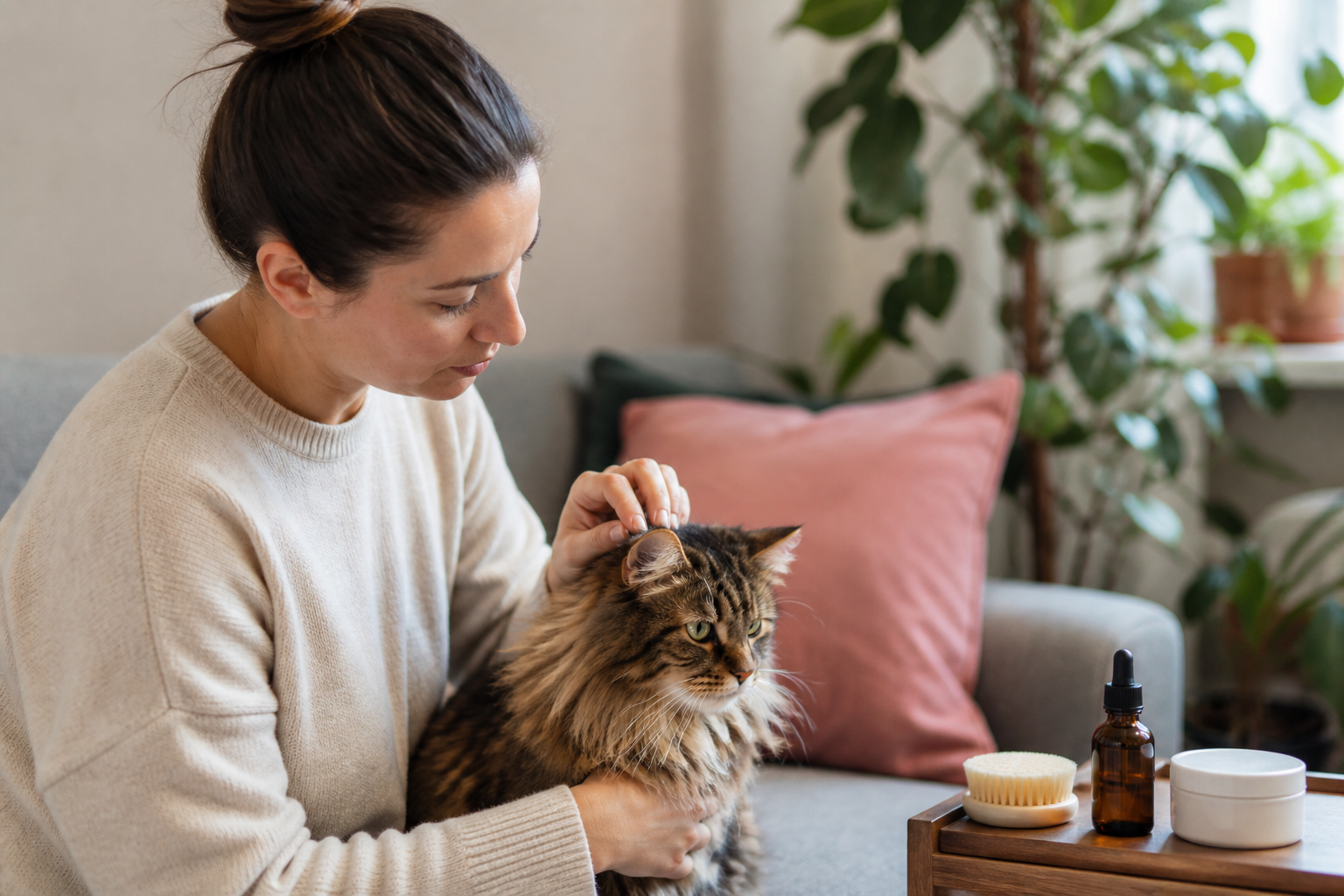
Brushing is the most effective way to manage dandruff caused by poor grooming. It manually removes dead skin and hair that the cat is missing. More importantly, it stimulates the skin and helps spread the natural oils that keep the coat shiny.
Step 1: Choose the right tool. / For short-haired cats, a soft bristle brush or a rubber grooming mitt works well. For long-haired cats, a metal comb or a slicker brush is necessary to reach the undercoat.
Step 2: Start slowly. / If your cat is not used to being brushed, keep the sessions short. Focus on the areas where the dandruff is most visible, usually the lower back.
Step 3: Make it a positive experience. / Use treats or praise to reward your cat. This helps them associate grooming with comfort rather than stress.
Improving Nutrition and Hydration
Quality food is the foundation of healthy skin. Look for diets that include high-quality proteins and specific supplements for skin and coat health. Brands like Farmina, NutriSource, and Open Farm often include balanced levels of Omega fatty acids.
Hydration also plays a major role. Cats have a low thirst drive and often live in a state of mild dehydration. This can dry out the skin from the inside out. Consider adding wet food to your cat's diet or using a pet water fountain to encourage more drinking.
Managing the Home Environment
If dry air is the problem, a humidifier can make a world of difference. Placing one in the room where your cat spends the most time will help keep their skin from drying out. You should also ensure your cat is staying away from direct heat sources, like lying right on top of a floor vent, which can aggravate dry skin.
Pharmacy and Prescription Support
Sometimes, home remedies and high-quality food are not enough. If your cat has a skin infection, severe allergies, or parasites, they may need medical intervention. Our pharmacy at BaxterBoo offers a wide range of FDA-approved medications and prescription pet foods to help manage these conditions.
Through our partnership with Pet's Choice, we can fulfill prescriptions for:
- Flea and tick preventives like Frontline or NexGard.
- Medicated shampoos for fungal or bacterial infections.
- Prescription diets formulated for skin sensitivities, such as Farmina Vet Life.
- Allergy medications and supplements.
If your vet determines that your cat's dandruff is linked to a medical condition, having your prescriptions delivered through our pet pharmacy is a convenient way to stay on top of their care. This ensures your pet gets the exact treatment they need without the hassle of extra trips to the clinic.
Bottom line: Managing dandruff is a combination of daily grooming, proper nutrition, and medical support when necessary.
The Role of Supplements
In addition to a balanced diet, specific supplements can provide an extra boost. Fish oil is one of the most common recommendations for flaky skin. It is rich in EPA and DHA, which help reduce inflammation and improve the skin's moisture barrier.
We carry trusted brands like Zesty Paws and Honest Paws that offer easy-to-administer oils and chews. Always talk to your vet before starting a new supplement, especially if your cat is already on a prescription diet or medication. They can help you determine the right amount for your cat's specific weight and health status.
For additional wellness products, see our cat healthcare category.
Weight Management for Better Grooming
If your cat's dandruff is caused by obesity, weight loss is the long-term solution. When a cat returns to a healthy weight, they regain the flexibility needed to groom their entire body. This naturally eliminates the buildup of dead skin.
For more guidance on supporting a healthy feline weight, read how to help your indoor cat lose weight.
We suggest working with your vet to create a safe weight loss plan. This usually involves:
- Measuring every meal exactly to avoid overfeeding.
- Increasing play sessions with interactive toys.
- Switching to a high-protein, lower-calorie food.
- Using puzzle feeders to slow down eating.
As your cat becomes more mobile, you will likely see a significant improvement in the quality of their coat. In the meantime, you must be their "surrogate groomer" by brushing the areas they cannot reach.
Keeping Your Cat Comfortable
Dandruff is often itchy. A cat with flaky skin might spend their day feeling restless or uncomfortable. Beyond the flakes, look for signs of skin tension or twitching along the back. This can indicate that the skin is tight and dry.
Avoid using human dandruff shampoos on your cat. Many of these contain ingredients like zinc or coal tar that are toxic to felines. Always stick to products specifically formulated for cats. If your cat's skin is very sensitive, a waterless foam shampoo can be a great way to clean the coat without the stress of a full bath.
For low-stress cleanup options, browse our waterless cat grooming products.
Key Takeaway: Your cat’s comfort is the priority. Removing the flakes through grooming provides immediate relief, while diet and environment provide long-term health.
Using Autoship for Consistent Care
The best way to prevent dandruff from returning is consistency. Whether it is a specific skin-support food, a monthly flea preventive, or a daily supplement, staying on a routine matters. Our Autoship program helps you stay consistent while saving you money.
When you sign up for Autoship, you get a discount on your first order and a free MVP Gold membership. This ensures you never run out of the supplies your cat needs to keep their skin healthy. It is one less thing for you to worry about, and your cat gets the benefit of uninterrupted care.
Conclusion
Finding dandruff on your cat is a sign to slow down and look at their overall wellness. Whether the cause is a dry winter house, a bit of extra weight, or a need for better nutrition, most cases are very manageable. By staying on top of grooming and providing a high-quality diet, you can help your cat maintain a coat that is as healthy as it is beautiful.
Remember to keep an eye out for any signs of discomfort or illness. If the flakes are accompanied by itching or behavior changes, your vet is your best resource for a diagnosis. For all your grooming tools, skin-supporting foods, and pharmacy needs, we are here to help. Taking these steps today will ensure your cat feels their best from the inside out.
Next Step: Browse our cat grooming and skin-support products or check out our pharmacy for cats for vet-approved solutions for your cat's skin health.
FAQ
Is it normal for my cat to have a little bit of dandruff?
A very small amount of flaking can be normal, especially during seasonal changes when the air gets dry. However, if the flakes are persistent, getting worse, or making the coat look dull, it usually indicates an underlying issue. It is always a good idea to increase brushing and check your cat's diet if you notice visible flakes.
Can I use human dandruff shampoo on my cat?
No, you should never use human dandruff products on a cat. Many human shampoos contain chemicals and medications that are safe for us but highly toxic to pets if licked or absorbed through the skin. Always use a shampoo specifically labeled for feline use, and consult your vet before using any medicated products.
Why does my cat only have dandruff on their lower back?
The lower back and base of the tail are the most common spots for dandruff because they are the hardest for a cat to reach. If a cat is overweight or has arthritis, they may stop grooming these areas entirely. This leads to a buildup of dead skin cells and oils, which eventually turn into visible dandruff flakes.
Will changing my cat's food help with their dandruff?
In many cases, yes. A high-quality food rich in Omega-3 and Omega-6 fatty acids can significantly improve skin health and reduce flakiness. If your cat has a food allergy, switching to a limited-ingredient or prescription diet through our pharmacy can also help clear up skin irritation and dandruff.