
 Save 15% on your 1st Autoship learn more

 Email us
 Live Chat
 FAQs





Introduction
Petting your cat is usually a relaxing experience. It is much less enjoyable when your hand comes away feeling sticky or covered in white flakes. If you notice your cat is greasy and has dandruff, it is a clear sign that their skin health is out of balance. At BaxterBoo, we talk to many cat owners who are concerned about sudden changes in coat texture and appearance. This condition, often called seborrhoea, can stem from simple grooming issues or more complex internal health changes. We want to help you understand why this happens and how to get your cat back to feeling soft and clean. This article covers the primary causes of oily skin, the difference between normal shedding and dandruff, and the practical steps you can take to support your cat’s recovery.
Quick Answer: Greasy fur and dandruff in cats are usually caused by an overproduction of skin oils called sebum. This can happen because of underlying health issues like arthritis, obesity, or skin infections that prevent a cat from grooming effectively.
Understanding Feline Seborrhoea
When a cat has oily skin and dandruff at the same time, vets call it seborrhoea. Specifically, it is often seborrhoea oleosa, which refers to the greasy version of the condition. All cats have sebaceous glands in their skin. These glands produce sebum, a natural oil that keeps the skin hydrated and the fur waterproof.
Under normal conditions, you do not even notice this oil. Your cat spreads it evenly across their body during their daily grooming sessions. However, when the skin becomes irritated or the cat stops grooming, the sebum builds up. This leads to a coat that feels tacky or oily to the touch. The excess oil can trap dead skin cells, which then clump together and form the visible white flakes we call dandruff.
Cat Skin & Coat Care












The Difference Between Dander and Dandruff
It is helpful to know the difference between these two terms. Every cat has dander. Dander consists of microscopic pieces of dry skin that shed naturally as part of the skin’s regeneration process. Because dander is so small, you cannot see it with the naked eye. It is also the primary carrier of the Fel d 1 protein, which is what causes allergies in humans.
Dandruff is different. It is visible. If you see white specks that look like grains of salt or larger flakes on your cat’s back, that is dandruff. While a few occasional flakes are not a crisis, a sudden increase in dandruff usually indicates an underlying problem.
Key Takeaway: Dander is microscopic and normal for all cats, while dandruff consists of visible flakes that often signal an issue with skin health or grooming habits.
Why Your Cat Might Be Greasy
There are several reasons why a cat might develop an oily coat. These range from environmental factors to serious internal health conditions.
Reduced Grooming Habits
The most common cause of a greasy cat is a lack of grooming. Cats are famously clean animals, but several things can make it hard for them to reach every spot.
- Obesity: If a cat is overweight, they literally cannot reach their back, rump, or tail. These areas quickly become greasy and flaky.
- Arthritis: Senior cats often develop stiff joints. Bending and twisting to clean their fur can become painful.
- Dental Pain: If a cat has a toothache or gum disease, the act of using their tongue and mouth to groom becomes a source of discomfort.
For additional context on grooming changes in older cats, read our guide to arthritis care for cats.
Internal Health Conditions
Sometimes the skin reflects what is happening inside the body. Endocrine disorders like hyperthyroidism or diabetes can change the way a cat's skin produces oil. When a cat is systemically unwell, they often lose interest in self care. This leads to a dull, oily, and unkempt appearance.
Environmental Factors and Stress
Dry air in the winter can sap moisture from the skin. To compensate, the body may overproduce oil, leading to a greasy feeling. Stress can also play a role. When a cat is anxious, their physiological response can lead to sudden "shedding" of flakes, which is a common sight during vet visits.
The Problem of Walking Dandruff
There is a specific type of dandruff that every owner should know about. It is caused by a mite called Cheyletiella. This condition is nicknamed walking dandruff because if you look closely at the white flakes, you might actually see them moving.
These mites are highly contagious and can spread to other pets and even humans. If you suspect your cat has mites, you need a specific treatment plan from your veterinarian. Our cat pharmacy carries many parasite preventives that can help clear up these types of infestations quickly.
Vet Tip: If you notice that your cat’s dandruff seems to be moving or if they are scratching excessively, consult your veterinarian immediately. They can perform a skin scraping to check for mites or other parasites that require prescription strength treatment.
How to Help Your Cat at Home
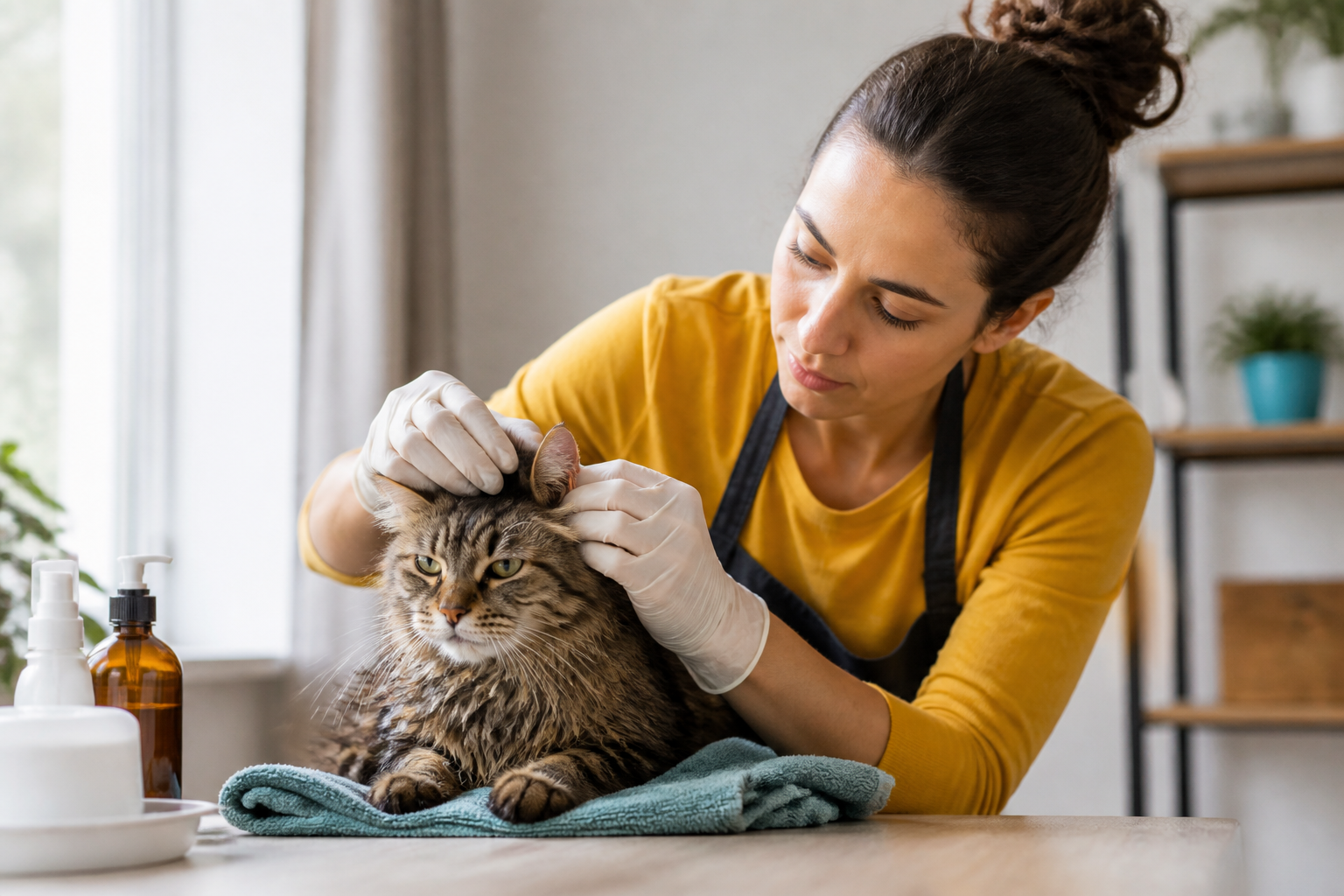
Once your vet has ruled out serious medical conditions, you can take steps to improve your cat’s coat at home. Helping them with the physical labor of grooming is usually the first step.
Start a Brushing Routine
If your cat cannot reach certain areas, you must do it for them. Daily brushing helps distribute the natural oils across the hair shaft and removes dead skin cells before they can turn into dandruff. For greasy coats, use a brush that can reach through the undercoat.
Use Waterless Shampoos or Wipes
Most cats hate baths, and traditional bathing can sometimes dry out the skin even more. Instead, try using grooming wipes or a waterless foam shampoo. These products are designed to break up excess oil and remove flakes without the stress of a full bath.
Explore our cat grooming supplies for brushes, wipes, shampoos, and other coat-care essentials.
Improve Indoor Humidity
If you live in a dry climate or the heater is running constantly, consider a humidifier. Adding moisture to the air can prevent the skin from drying out and signaling the sebaceous glands to overproduce oil.
- Step 1: Identify the greasiest areas, usually the base of the tail and the lower back.
- Step 2: Use a cat-safe grooming wipe to gently lift away excess oil and surface flakes.
- Step 3: Brush the area thoroughly to ensure the skin can breathe.
- Step 4: Repeat this process every other day until the coat texture improves.
For quick cleanups between baths, consider waterless cat grooming products.
Nutrition and Supplements for Skin Health
What your cat eats directly impacts the quality of their fur. A diet low in essential fatty acids can lead to brittle hair and flaky skin.
Omega-3 Fatty Acids
Supplements containing fish oil or other Omega-3 sources are excellent for skin health. These fats help support the skin's moisture barrier and can reduce inflammation. Brands like Zesty Paws or Honest Paws offer feline-friendly options that are easy to add to wet food.
You can browse our cat healthcare options for supplements and other wellness products.
High Quality Protein
Hair is made mostly of protein. If a cat's diet is lacking in high quality animal protein, their coat will be the first thing to suffer. Look for foods where the first ingredient is a specific meat, such as chicken or salmon.
Browse our cat food collection when reviewing food options for your cat.
Key Takeaway: Proper nutrition and supplemental Omega-3 fatty acids are the building blocks of a healthy, flake free coat.
Using the BaxterBoo Pharmacy for Skin Support
If your cat’s greasy skin is caused by a medical issue like a fungal infection or a thyroid imbalance, home grooming is not enough. Your veterinarian might prescribe a medicated shampoo or a specific prescription diet to manage the condition.
Our pharmacy provides a reliable way to get these medications delivered to your door. We carry FDA-approved medications and prescription pet foods specifically formulated for skin and coat issues. If your vet recommends a product like Farmina Vet Life for weight management or a prescription flea preventive, we can help you fulfill that order easily.
When to Seek Veterinary Care
You should not ignore a greasy coat if it persists. While it might seem like a cosmetic issue, it is often a symptom of something else.
Watch for these red flags:
- Significant weight loss or gain
- A foul smell coming from the skin
- Red, raw, or irritated patches under the fur
- Thinning hair or bald spots
- Changes in thirst or litter box habits
If your cat shows any of these signs, a vet visit is necessary. They may perform blood work to check for internal diseases or skin cytology to look for yeast or bacteria.
Bottom line: Greasy fur is a signal from your cat's body that something is wrong, and a veterinary checkup is the best way to find the root cause.
Conclusion
A greasy cat with dandruff is usually a cat that needs a little extra help. Whether the issue is a lack of grooming due to age or weight, or an internal health change that requires medical attention, there are plenty of ways to restore their coat. Regular brushing, high quality nutrition, and the right topical products can make a massive difference. We are committed to helping you find the best solutions for your pet's wellness. For ongoing support, our pharmacy offers a range of prescription options to address the more serious causes of skin distress.
If you are ready to start a new skin care routine for your cat, consider signing up for our Autoship program. It is a great way to save on the food and supplements your cat needs to stay shiny and healthy, and it includes a free MVP Rewards membership for extra rewards.
FAQ
Is it normal for an older cat to get greasy and have dandruff?
It is common but not necessarily normal. As cats age, they often develop arthritis or dental issues that make grooming difficult. This leads to a buildup of oil and flakes. If your senior cat is struggling, you should help them with daily brushing and consult your vet about pain management or mobility support.
Can I use human dandruff shampoo on my cat?
No, you should never use human dandruff shampoo on a cat. These products often contain ingredients that are toxic to felines if ingested during self grooming. Human skin also has a different pH level than cat skin. Always use products specifically formulated for cats to avoid causing further irritation or chemical burns.
Will a bath fix my cat’s greasy fur and flakes?
A bath might provide a temporary fix, but it rarely solves the underlying problem. If the grease is caused by a medical condition or poor grooming habits, it will return quickly. Additionally, the stress of a bath can sometimes make skin conditions worse. It is better to identify the cause and use gentle grooming wipes or waterless shampoos instead.
Does my cat have dandruff because of their food?
It is very possible. A diet that lacks essential fatty acids or high quality protein can lead to poor skin health. Some cats also have food sensitivities that manifest as skin irritation and flaking. Switching to a premium, balanced cat food or adding an Omega-3 supplement often helps clear up minor cases of dandruff.






- Site & Contents BaxterBoo.com. BaxterBoo is located in the United States.
- Privacy & Security
- Terms of Use
- Accessibility Statement
