Save 15% on your 1st Autoship learn more

 Email us
 Live Chat
 FAQs
FAQs





Introduction
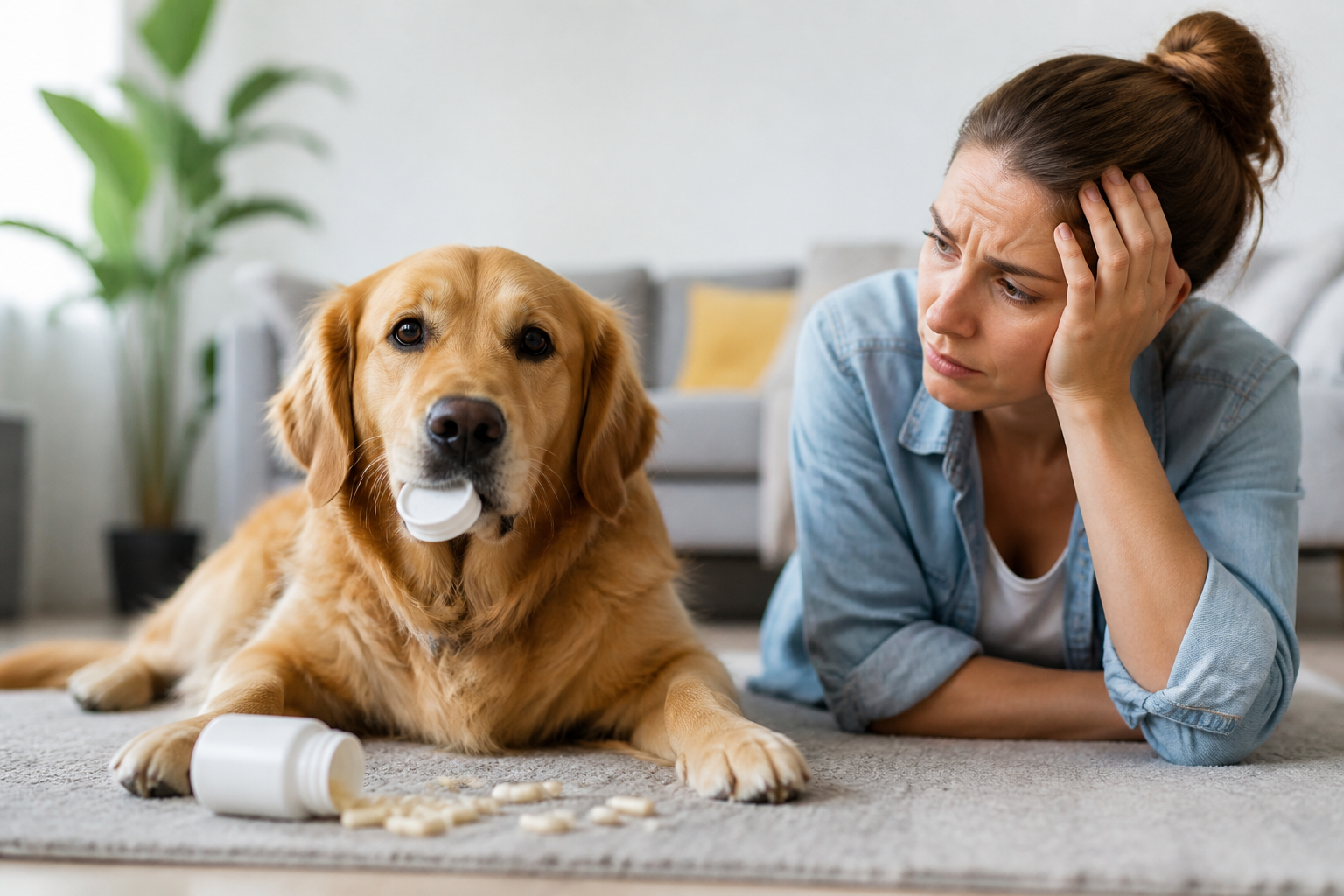
It is a familiar scene for many pet owners. You walk into the room to find an empty bottle on the floor or a chewed-up blister pack. If your dog just ate your probiotics, your heart probably skipped a beat. We at BaxterBoo have helped countless pet parents navigate these "uh-oh" moments since 2006. While probiotics are generally beneficial bacteria, a sudden large dose designed for a human can cause some issues for a canine companion.
This post will guide you through the immediate steps you should take. We will cover the specific ingredients to watch for, common symptoms of a probiotic overdose, and how the canine microbiome differs from our own. Understanding the risks helps you stay calm and act quickly to support your dog.
Quick Answer: In most cases, a dog eating human probiotics will experience mild digestive upset like gas or diarrhea. However, you must check the label immediately for toxic ingredients like xylitol or chocolate coatings, which require an emergency vet visit.
Check the Ingredient Label Immediately
The most important step is to find the packaging your dog just destroyed. While the bacteria themselves are rarely life-threatening, the inactive ingredients in human supplements can be dangerous. Many human chewable probiotics or gummies use sweeteners to make them palatable.
Look specifically for xylitol. This is an artificial sweetener often listed as birch sugar or wood sugar. It is extremely toxic to dogs and causes a rapid drop in blood sugar and potential liver failure. If the label mentions xylitol, do not wait for symptoms. Call your veterinarian or an animal poison control center immediately.
You should also check for chocolate coatings or high levels of caffeine if the supplement was part of a "wellness" stack. Some human probiotics are also dairy-based. Since many dogs are lactose intolerant, a large dose of a dairy-based probiotic might lead to more significant vomiting or diarrhea than a powder-based version.
Critical Ingredients to Watch For
- Xylitol (Birch Sugar): Highly toxic. Causes seizures and liver failure.
- Chocolate: Can cause heart racing and tremors.
- Raisin or Fruit Extracts: Some "whole food" probiotics include grape or raisin extracts which are toxic to kidneys.
- Iron: If the probiotic is part of a multivitamin, high iron levels can be poisonous.
Understanding the Probiotic "Overdose"
Can a dog truly overdose on probiotics? In the traditional sense of toxicity, the answer is usually no. Probiotics are live, beneficial bacteria. When a dog eats too many, it essentially causes a massive "bloom" of bacteria in their gut. This overwhelms the natural balance of their digestive tract.
This imbalance usually leads to a temporary condition called dysbiosis. The body tries to flush out the excess bacteria, which results in the digestive symptoms you see. For a healthy adult dog, this is often a short-lived event. However, for a small puppy or a senior dog with a compromised immune system, the reaction can be more intense.
Key Takeaway: A probiotic overdose is rarely a toxic event but rather a massive disruption of the gut ecosystem that leads to temporary digestive distress.
Common Symptoms to Watch For
If your dog ate a significant amount of probiotics, you will likely see signs within a few hours. The bacteria are active, and they will begin interacting with the dog's existing gut flora almost immediately.
Monitor your dog for these common signs:
- Increased Gas: You might hear a lot of stomach gurgling or notice a sudden increase in flatulence.
- Loose Stool or Diarrhea: This is the most common symptom as the body works to regulate the gut.
- Bloating: The abdomen may feel tight or look slightly distended.
- Lethargy: Your dog might seem a bit "off" or tired as their body deals with the inflammation.
- Nausea: This often looks like excessive lip licking or drooling.
If your dog is vomiting repeatedly or seems to be in significant pain, these are not typical probiotic reactions. These symptoms could indicate a reaction to an inactive ingredient or a more serious underlying issue.
Human Probiotics vs. Dog Probiotics
You might wonder why you cannot just share your supplements with your dog regularly. The canine digestive system is quite different from the human one. Dogs have a much more acidic stomach environment. This is a natural defense mechanism that allows them to handle the bacteria found in raw meat or the things they find in the yard.
Because of this acidity, many human probiotics never even make it to the dog's intestines. They are destroyed by stomach acid before they can do any good. Conversely, some human strains are far more concentrated than what a dog needs. A single human capsule might contain 20 billion CFUs (Colony Forming Units), while a dog-specific chew might only have 1 to 3 billion.
The strains matter too. While some bacteria like Lactobacillus acidophilus are found in both, dogs benefit more from specific strains like Bacillus coagulans or Enterococcus faecium. These have been studied for their ability to survive the canine gut and support the immune system where it lives: in the gut lining.
Why Quality Pet Formulations Matter
- pH Stability: Formulated to survive the high acidity of a dog's stomach.
- Targeted Strains: Includes bacteria specifically beneficial for canine gut health.
- Safety: Free from xylitol and other human-grade additives that harm dogs.
- Flavoring: Usually flavored with beef or chicken, making them easier to give than a human pill.
Steps to Take in the Next 24 Hours
If you have confirmed there are no toxic ingredients like xylitol, your main goal is comfort and monitoring. The digestive upset will likely peak and then fade as the bacteria pass through the system.
Step 1: Fast or simplify the diet. If your dog is experiencing diarrhea, you may want to skip one meal or provide a very small portion of bland food. Plain white rice and boiled chicken can help settle the stomach.
Step 2: Ensure plenty of fresh water. Diarrhea can lead to dehydration quickly. Make sure your dog has access to clean water at all times. If they are not drinking, you can add a little low-sodium chicken broth to the bowl to encourage them.
Step 3: Track the number of doses. If you talk to your vet, they will want to know exactly how many milligrams or CFUs your dog ingested. Count the remaining pills in the bottle to get an accurate estimate.
Step 4: Monitor behavior and stool. Keep a close eye on your dog's energy levels. If the diarrhea persists for more than 48 hours, or if you see blood in the stool, it is time for a professional evaluation.
Vet Tip: If your dog has a history of Pancreatitis or Inflammatory Bowel Disease, even a non-toxic probiotic "overdose" can trigger a flare-up. In these cases, it is best to contact your vet immediately for a preventative plan.
When to Contact the Veterinarian
While most cases end with a few extra trips outside, some situations require professional help. Do not hesitate to call your clinic if you are unsure. It is always better to get a professional opinion than to wait until a small problem becomes a crisis.
You should seek veterinary care if:
- The supplement contained xylitol, chocolate, or unknown herbal extracts.
- Your dog is a puppy or a very small breed, as they dehydrate much faster.
- There is persistent vomiting that prevents the dog from keeping water down.
- Your dog shows signs of an allergic reaction, such as facial swelling or hives.
- The dog is on other medications that might interact with the supplement.
If your dog manages a chronic condition that requires specific dietary management, our pet pharmacy can help. We offer a variety of prescription pet foods and FDA-approved medications through our pharmacy. Sometimes, a massive gut disruption requires a specialized prescription diet to get things back on track.
Supporting Your Dog's Long-Term Gut Health
Once the initial "overdose" has passed, you might realize your dog actually could benefit from a probiotic. They can be wonderful for managing seasonal allergies, supporting the immune system, and improving stool quality. However, you should use products designed for their species.
We carry a wide selection of trusted brands like Zesty Paws, Honest Paws, and Greenies that offer probiotics specifically for dogs. These come in tasty chews or powders that are easy to measure. This prevents the "guesswork" of trying to split a human pill and ensures your dog is getting the right strains for their body.
When you choose a pet-specific supplement, look for the NASC (National Animal Supplement Council) seal. This indicates the product has met strict quality standards for labeling and manufacturing. We take pride in curating these high-quality options for our community.
Bottom line: Human probiotics are not a substitute for canine-specific supplements and can cause significant distress if eaten in large quantities.
Managing Recovery with Proper Nutrition
As your dog recovers, focus on rebuilding a healthy microbiome slowly. You might be tempted to start a dog probiotic right away to "fix" the issue, but it is often better to let the system calm down for a few days first.
When you do decide to introduce a daily probiotic, start with a half dose for the first week. This allows the gut to adjust without causing a second round of gas or loose stools. Many of our customers use our Autoship program for their dog's supplements. This ensures you never run out and your dog stays on a consistent schedule, which is key for gut health.
If your dog is a "counter surfer" who likes to find supplements, consider moving all medications and vitamins to a high shelf or a locked cabinet. Even "safe" supplements can cause a mess and a stressful night if your dog decides to treat the whole bottle as a snack.
Conclusion
Finding that your dog ate your probiotics is stressful, but in the absence of toxic sweeteners like xylitol, the outcome is usually just a temporary stomach ache. Check the label, monitor your dog's symptoms, and keep them hydrated. If you notice anything unusual, your veterinarian is your best resource for ensuring a full recovery.
To help maintain your dog's health safely, explore our curated selection of pet-specific supplements.
- Check out our Hip & Joint Care for senior support.
- Browse our Anxiety & Calming section for pets who get stressed during recovery.
- Visit our dog probiotic selection for species-specific options.
Key Takeaway: Always prioritize dog-specific supplements to avoid the risks of human additives and ensure the bacteria actually reach your dog's gut effectively.
FAQ
Is a human probiotic toxic to dogs?
The probiotic bacteria themselves are usually not toxic, but human supplements often contain ingredients that are. Sweeteners like xylitol, certain flavorings, or coatings can be very dangerous for dogs. Always check the full ingredient list for these hidden toxins before assuming your dog will be fine.
What should I do if my dog ate a whole bottle of probiotics?
First, check the label for xylitol or other toxic ingredients. If those are present, take your dog to an emergency vet immediately. If the ingredients are safe, monitor your dog for vomiting and severe diarrhea, and provide plenty of fresh water to prevent dehydration.
Can probiotics cause diarrhea in dogs?
Yes, an overdose of probiotics often causes diarrhea because the sudden influx of bacteria disrupts the natural balance of the gut. The body responds by trying to flush the excess bacteria out. This usually resolves within 24 to 48 hours once the supplement has passed through the system.
How are dog probiotics different from human ones?
Dog probiotics are formulated with specific bacterial strains that can survive a dog's highly acidic stomach. They are also dosed appropriately for a dog's weight and are free from human-specific additives like xylitol. Using a pet-specific product ensures the supplement is both safe and effective for their unique biology.