Save 15% on your 1st Autoship learn more

 Email us
 Live Chat
 FAQs
FAQs





Introduction
You probably know the sound of a gurgling canine stomach all too well. Maybe your dog is suddenly gassy, or you are dealing with the aftermath of loose stools after a weekend of boarding. These moments are common for pet owners, but they often signal that the delicate balance of bacteria in your dog's gut is out of alignment. At BaxterBoo, we have helped pet parents navigate these digestive hurdles since 2006 by providing high quality supplements and expert guidance. Probiotics are one of the most effective tools for restoring that balance and supporting overall wellness. This article covers how these beneficial bacteria work, which specific strains you should look for, and our top product recommendations to keep your dog feeling their best.
What Are Probiotics for Dogs?
Probiotics are living, beneficial microorganisms that live in your dog's gastrointestinal tract. People often refer to them as "friendly bacteria" because they perform several essential tasks. They help break down food, produce vital nutrients like B vitamins, and keep harmful bacteria from taking over.
A dog's gut is home to billions of these microbes, collectively known as the microbiome. When this system is healthy, your dog's digestion is regular and their immune system is strong. In fact, roughly 70 percent of a dog's immune system is located in the gut. This makes the microbiome the first line of defense against pathogens and environmental stressors.
The Role of Prebiotics
You will often see the word "prebiotics" on supplement labels. These are not the same as probiotics. Prebiotics are types of fiber that act as a food source for the beneficial bacteria. Think of probiotics as the "good bugs" and prebiotics as the "fuel" that helps them grow and thrive. Using them together is often more effective than using either one alone. For more guidance on choosing supplements, explore our dog digestive health collection.
Quick Answer: Probiotics are live, beneficial bacteria that support a dog's digestion and immune system. They help restore balance in the gut microbiome after it has been disrupted by stress, illness, or diet changes.
When Your Dog Might Need a Probiotic
There are several specific situations where a probiotic supplement can make a significant difference. If your dog is healthy, their body might maintain a good balance on its own. However, certain triggers can cause the "bad" bacteria to outnumber the "good," leading to digestive upset.
Common reasons to start a probiotic include:
- Antibiotic Treatment: Antibiotics are designed to kill harmful bacteria, but they often kill the beneficial bacteria too. This frequently leads to "antibiotic-associated diarrhea."
- Dietary Changes: If you switch your dog's food too quickly, their gut may struggle to adapt.
- Stressful Events: Travel, boarding, moving to a new home, or even a trip to the vet can cause stress. This stress physically alters the environment in the gut.
- Aging: Senior dogs often have less efficient digestive systems and may benefit from daily microbiome support.
- Chronic Issues: Dogs with ongoing gas, bad breath, or sensitive stomachs often find relief with consistent probiotic use.
For additional ideas about feeding dogs with digestive sensitivities, read our guide to diets for dogs with sensitive stomachs.
Vet Tip: If your dog has severe, bloody, or persistent diarrhea, skip the supplements and call your veterinarian immediately. Probiotics are excellent for support, but they are not a substitute for a medical diagnosis when a pet is seriously ill.
Key Probiotic Strains to Look For
Not all probiotics are created equal. Different strains of bacteria perform different jobs. When you are looking at a label, you want to see specific names rather than a generic term like "beneficial bacteria." Here are some of the most researched and recommended strains for dogs.
Enterococcus faecium
This is one of the most common strains found in veterinary-recommended probiotics like Purina Pro Plan FortiFlora. It is particularly effective at shortening the duration of diarrhea caused by stress or sudden diet changes. It helps firm up stools and encourages the growth of other beneficial microbes.
Bifidobacterium longum (BL999)
This strain is often referred to as a "psychobiotic" because of its impact on the brain-gut axis. Research has shown that Bifidobacterium longum can help reduce anxious behaviors. Dogs taking this strain may bark less, show less pacing, and appear more relaxed during stressful events.
Lactobacillus acidophilus
This is a staple in many multi-strain formulas. It is well-known for improving stool quality and frequency. It also plays a role in supporting the immune system by maintaining the proper acidity levels in the digestive tract, which makes it harder for harmful bacteria to survive.
Bacillus coagulans
This strain is unique because it is "spore-forming." This means it has a natural protective coating that helps it survive the harsh, acidic environment of a dog's stomach. It is very stable and excellent for supporting overall digestive health.
Key Takeaway: Look for products that list specific strains and the number of "Colony Forming Units" (CFUs). A range of 1 to 10 billion CFUs per day is standard for most dogs.
Recommended Probiotics for Dog Owners
We carefully curate our selection at BaxterBoo to ensure every supplement meets high quality standards. Based on veterinary research and customer feedback, these are some of the most trusted options. You can compare available formulas in our probiotic collection.
Purina Pro Plan FortiFlora
FortiFlora is the most recommended probiotic by veterinarians in the United States. It contains a guaranteed level of Enterococcus faecium and is highly palatable. Most dogs love the taste, which makes it a great "appetite stimulant" if your dog is feeling a bit picky due to a stomach ache.
- Form: Powder or chewable tablets.
- Best for: Diarrhea, stress, and general immune support.
- Note: If you want both prebiotics and probiotics, look for the "SA" (Synbiotic Action) version.
Nutramax Proviable-DC
Nutramax is a leader in the pet supplement industry. Nutramax Proviable-DC contains seven different strains of bacteria, providing a very broad range of support. It also includes prebiotics to help those bacteria colonize the gut effectively.
- Form: Capsules (can be opened and sprinkled on food).
- Best for: Long-term digestive health and recovering from antibiotic use.
VetriScience Probiotics
VetriScience offers several options, including the popular "Vetri Mega Probiotic." This is a dairy-free formula which is ideal for dogs with food sensitivities. They also offer "Fast Balance GI Paste," which is designed for rapid response during acute bouts of loose stool.
Zesty Paws Probiotic Bites
For owners who want a supplement that feels like a treat, Zesty Paws is a top choice. These soft chews contain a six-strain probiotic blend along with pumpkin and papaya to support fiber intake.
- Form: Soft chews.
- Best for: Daily maintenance and picky eaters.
How to Choose the Right Form
The best probiotic is the one your dog will actually take. Because these are live organisms, you have to be mindful of how you store and administer them.
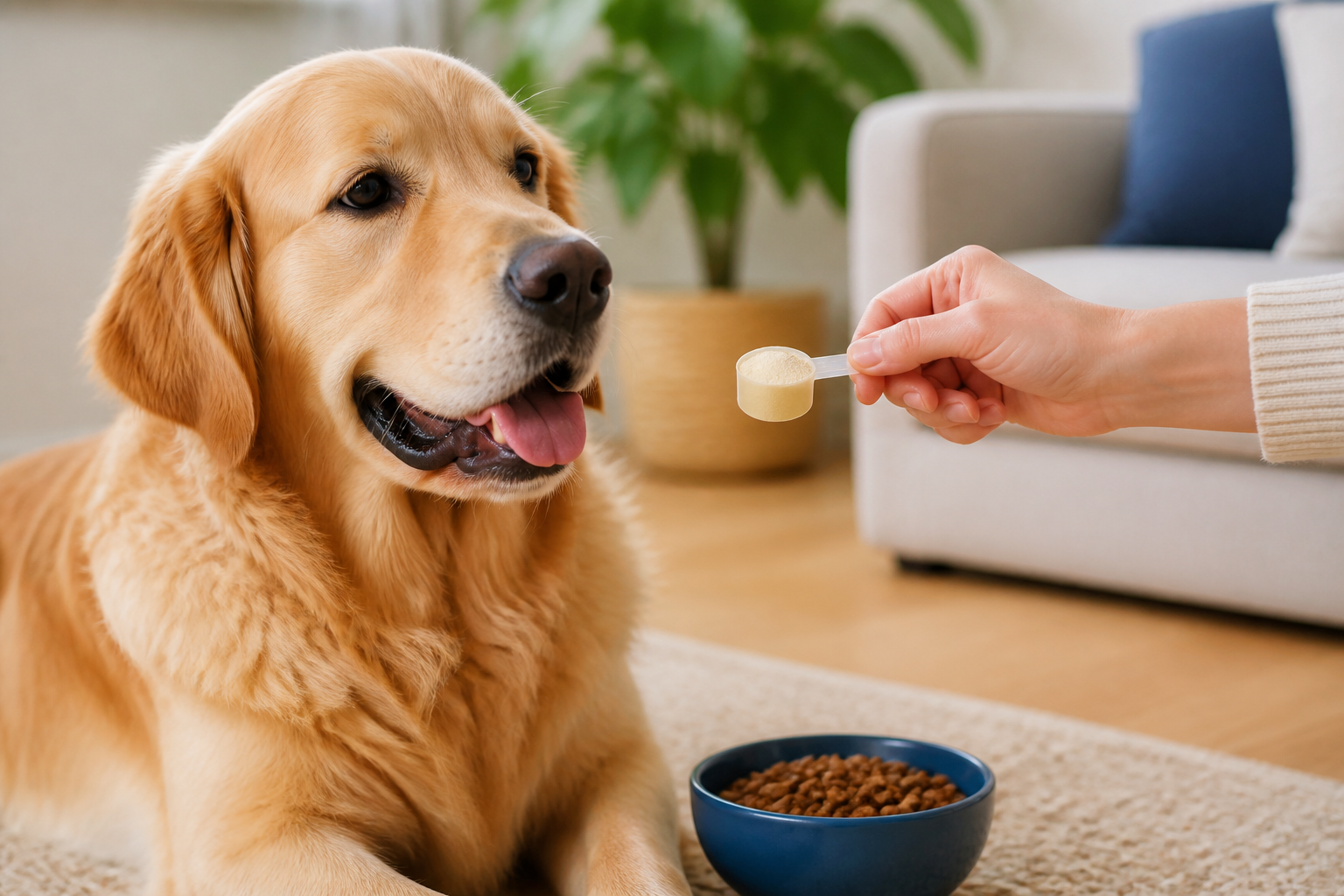
- Powders: These are usually very shelf-stable. You can easily mix them into wet food or sprinkle them over kibble. Many powders are flavored with liver or yeast to make them more appealing.
- Soft Chews: These are the most convenient for many owners. They do not require mixing and can be given as a reward. However, they sometimes contain more binders and flavorings, so check the label if your dog has allergies.
- Capsules: These protect the bacteria well. You can give them whole or open them to sprinkle the contents. This is a good option for multi-pet households where you want to be precise with dosing.
- Pastes: These are usually reserved for acute issues. They come in a syringe for easy dosing and often contain extra ingredients like kaolin or pectin to help firm up stools quickly.
For broader supplement-selection advice, see our pet supplement guide.
Bottom line: Select a form that fits your daily routine and your dog's palate to ensure they get their dose every single day.
Managing Complex Health Needs
Sometimes, a standard probiotic supplement is not enough. If your dog suffers from chronic conditions like Inflammatory Bowel Disease (IBD), severe allergies, or recurring urinary tract infections, they may require more intensive support.
Our pet pharmacy offers a wide range of FDA-approved medications and prescription pet foods to manage these ongoing conditions. Through our partnership with Pet's Choice, we provide access to prescription diets from brands like Farmina Vet Life and Royal Canin. These diets are often formulated with specific prebiotic fibers and specialized proteins that work alongside probiotics to soothe a damaged gut.
If your veterinarian has prescribed a specific medication or diet for your dog's digestive health, you can easily fulfill those needs through our pharmacy services. This ensures your pet gets the exact medical care they need while you benefit from the convenience of home delivery.
For another perspective on digestive upset and diet changes, read our guide to dry food and diarrhea in dogs.
Tips for Introducing Probiotics
When you start a new supplement, it is best to go slow. While probiotics are very safe, a sudden influx of new bacteria can sometimes cause temporary gas or a slight change in stool consistency for the first day or two.
Step 1: Check the expiration date. / Probiotics are live organisms and will lose their potency over time. Always ensure the product is fresh.
Step 2: Start with a half dose. / If your dog has a sensitive stomach, give a smaller amount for the first two days to let their system adjust.
Step 3: Monitor the results. / Keep an eye on your dog's stool quality and energy levels. You should notice an improvement in digestion within a few days to two weeks.
Step 4: Store correctly. / Some probiotics require refrigeration to stay alive. Others are shelf-stable but should be kept away from heat and moisture.
Summary of Probiotic Benefits
Probiotics are more than just a fix for a "runny tummy." They are a foundational part of a preventative health routine. By maintaining a healthy microbiome, you are supporting your dog's ability to absorb nutrients, fight off infections, and even manage stress.
- Digestive Comfort: Reduces gas, bloating, and irregular stools.
- Immune Strength: Helps the body defend against pathogens.
- Skin and Coat Health: A healthy gut can lead to less itching and a shinier coat.
- Behavioral Support: Specific strains help calm the nervous system.
Key Takeaway: Probiotics are a safe, effective, and versatile tool for supporting your dog through every life stage, from puppyhood to the senior years.
Conclusion
Finding the right recommended probiotics for dog health does not have to be a guessing game. By focusing on high quality strains like Enterococcus faecium and Bifidobacterium longum, you can target your dog's specific needs with confidence. Whether you choose a powder, a soft chew, or a capsule, consistency is the key to seeing real results. Remember that while supplements are excellent for daily support, chronic or severe symptoms should always be discussed with your veterinarian. For those managing more complex health journeys, our pharmacy and prescription diet options are here to provide professional-grade care. We invite you to explore our dog healthcare category to find the perfect probiotic for your furry friend.
FAQ
Can I give my dog human probiotics?
While some human probiotics are safe, it is better to use a product formulated specifically for dogs. Canine digestive tracts have different pH levels and unique bacterial needs. Some human supplements also contain sweeteners like xylitol, which is highly toxic to dogs.
How long does it take for probiotics to work?
For acute issues like diarrhea, you may see an improvement within 24 to 48 hours. For chronic issues like skin allergies or anxiety, it often takes three to four weeks of daily use to see the full benefits.
Are there any side effects to giving my dog probiotics?
Side effects are rare and usually very mild. Some dogs may experience temporary gas, bloating, or a slight change in stool consistency when they first start the supplement. These symptoms typically resolve on their own within a few days.
Can puppies take probiotics?
Yes, probiotics are generally safe for puppies once they have been weaned. They can be especially helpful for puppies experiencing the stress of moving to a new home or transitioning from their mother's milk to solid puppy food.