
 Save 15% on your 1st Autoship learn more

 Email us
 Live Chat
 FAQs
FAQs





Introduction
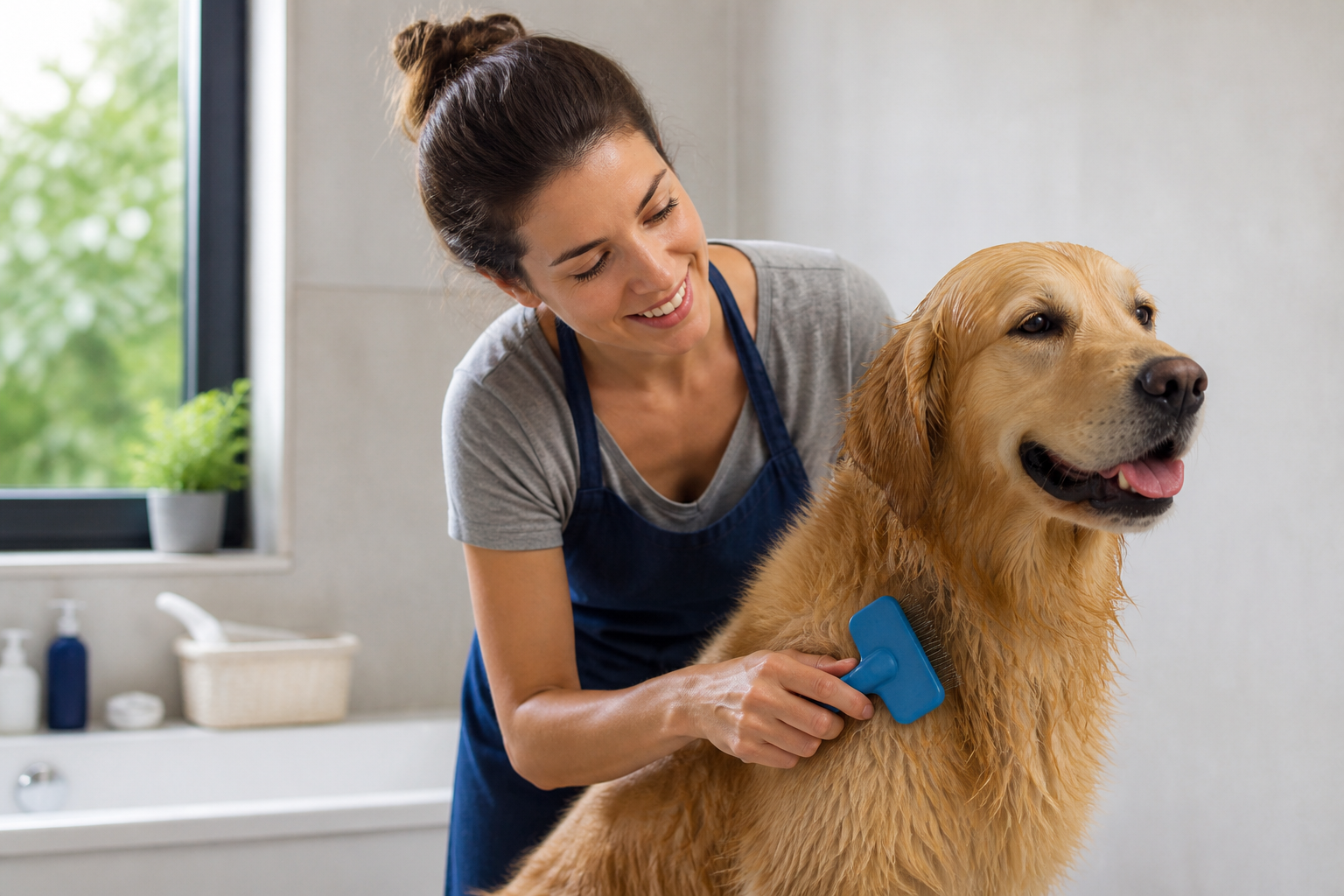
You have just finished bath time. Your dog is shaking water all over the bathroom, and the "wet dog smell" is filling the air. As you reach for the towel, you might wonder if now is the right time to pull out the brush. It seems logical to comb through the hair while it is wet, much like humans do after a shower. However, the rules for canine coats are very different from human hair. At BaxterBoo, we have helped pet owners navigate grooming routines since 2006. We know that the timing of your brushing session can be the difference between a fluffy, happy pup and a painful, matted mess. This post covers the science of hair elasticity, the risks of wet brushing, and the specific routine you should follow to keep your dog's coat healthy. Using the right order of operations will make bath day easier for both you and your dog.
Quick Answer: You should brush your dog before the bath to remove tangles and after the bath once the coat is completely dry. Brushing while the hair is wet can stretch the hair shafts and cause skin irritation or pain for your dog.
Why Brushing Before the Bath is Non-Negotiable
The most important rule of dog grooming is to never let a mat get wet. If your dog has tangles or small knots, adding water acts like a tightening agent. Think of a piece of wool that shrinks and felt's together when washed. Dog hair behaves in a similar way. When a knot gets wet, the hair fibers swell and then contract as they dry. This locks the tangle into a hard mat that is often impossible to brush out without cutting it.
Brushing a dry coat allows you to find these problem areas before they become permanent. It also serves a practical purpose for your plumbing. Dogs shed a significant amount of fur during a bath. If you do not brush out the loose undercoat beforehand, that fur ends up in your drain. A thorough pre-bath brush removes the "dead" hair that is already sitting loose in the coat. This makes the washing process much more efficient. You can find suitable tools in our dog brushes and combs collection.
The Tangle-to-Mat Pipeline
A tangle is simply a few hairs wrapped around each other. A mat is a dense clump of hair that has become woven together, often including dirt, skin oils, and loose fur. When you skip the pre-bath brush, you are essentially washing the debris into those tangles. The shampoo may not even reach the skin through a dense knot. This leaves your dog still dirty underneath the surface.
Removing Loose Fur
For double-coated breeds like Huskies or Golden Retrievers, the amount of loose undercoat can be staggering. If this fur is not removed while dry, it becomes a heavy, soggy blanket that takes hours to dry. Brushing first helps thin out the coat so that the water and shampoo can actually penetrate to the skin where the real cleaning happens. Learn more about managing a thick undercoat in this guide to Australian Shepherd shedding.
The Risks of Brushing a Wet Dog
It is tempting to brush a dog while they are damp to help the drying process move along. However, for most coat types, this is a mistake that can damage the hair and the skin. Dog hair is at its weakest when it is saturated with water.
Hair Elasticity and Breakage
When hair is wet, it becomes more elastic. This sounds like a good thing, but it actually means the hair can be stretched beyond its breaking point. When you pull a brush through wet fur, you are likely stretching the hair shafts. This leads to fraying and breakage. Over time, this makes the coat look dull and frizzy. Damaged hair also tangles much faster than healthy, smooth hair, creating a cycle of constant matting.
Skin Sensitivity
A dog's skin is much thinner than human skin. When the skin is wet, it becomes even more soft and prone to irritation. The bristles of a slicker brush or the teeth of a metal comb can easily scrape or "burn" the skin if it is damp. This causes redness, discomfort, and a dog that will eventually hide when they see the grooming tools come out.
Key Takeaway: Always complete a full brush-through on a dry coat before the dog enters the tub. This prevents knots from tightening and protects the hair from stretching or breaking while wet.
When It Is Okay to Brush a Wet Dog
While the general rule is to wait for a dry coat, there are two specific exceptions where wet brushing is acceptable. This usually depends on the coat type and the tools you are using.
Short-Haired Breeds
Dogs with very short, smooth coats, such as Boxers, Labradors, or Beagles, do not have the same matting risks as long-haired dogs. For these breeds, using a rubber curry brush or a grooming mitt during the bath can be very helpful. These tools do not pull on the hair. Instead, they massage the skin and help loosen dead fur so it can be rinsed away. Brands like Kong make rubber brushes that are specifically designed for use in the water. The KONG Zoom Groom Natural Rubber Dog Grooming Brush is among the options available in our grooming collection.
Using Conditioner as a Tool
If your dog has a long or curly coat that is already slightly tangled, some professional groomers suggest brushing while the dog is covered in heavy conditioner. The conditioner provides "slip," which allows the brush to glide through the hair without the usual friction. However, this should only be done with a wide-toothed comb or a specialized wet-brush. It still requires a very gentle hand to avoid pulling on the skin.
The Post-Bath Finishing Brush
Once the bath is over, your dog needs to be completely dry before the final brushing begins. This is the stage where you ensure the coat is free of any new tangles and that the hair is laying correctly. For additional bath-day guidance, read these dos and don'ts for bathing your dog.
The Importance of a Dry Coat
A coat that is "mostly dry" is still a wet coat in terms of hair strength. You should wait until you can run your hands through the fur and feel no moisture at the skin level. If you use a high-velocity dryer, the air will naturally separate the hairs for you. If you are towel drying and air drying, the hair may clump together. The post-bath brush breaks up these clumps and gives the coat its volume back.
Tools for the Final Finish
After the coat is dry, a stainless steel comb is your best friend. While a slicker brush makes the top layer look good, a comb checks the "roots." Run the comb gently from the skin outward. If it snags, you have a hidden tangle that needs attention. This final check is what prevents mats from forming in the days following the bath.
Vet Tip: If your dog's skin appears red, flaky, or irritated after a bath, it may be a reaction to the shampoo or a sign of an underlying allergy. Consult your veterinarian if the irritation persists or if your dog is scratching excessively. Our dog skin and coat care collection includes products for maintaining your dog's grooming routine.
Step-by-Step Bath Day Routine
To get the best results, follow this specific order every time you wash your dog. This routine is designed to minimize stress for the dog and maximize the health of the coat.
Step 1: Perform a thorough dry brush.
Use a slicker brush to remove loose fur and a comb to check for hidden tangles. If you find a mat, work it out with your fingers and a detangling spray before proceeding.
Step 2: Bathe using downward motions.
When applying shampoo, do not rub the coat in circles. This creates "friction knots" that turn into mats. Instead, massage the shampoo into the coat in the direction the hair grows.
Step 3: Rinse until the water runs clear.
Leftover soap residue is a leading cause of skin irritation. Rinse your dog twice as long as you think you need to. Pay close attention to the armpits, belly, and between the toes.
Step 4: Towel dry by blotting.
Do not rub your dog vigorously with a towel. Blot and squeeze the hair to remove excess water. Rubbing creates tangles in long-haired breeds.
Step 5: Dry the coat completely.
Use a hair dryer on a cool setting or a dedicated pet dryer. Make sure the hair near the skin is dry, not just the tips.
Step 6: The final brush and comb check.
Once dry, brush the coat again to remove any hair that loosened during the washing process. Finish with a comb check to ensure no new tangles formed during the drying stage.
Handling Specific Coat Types
Not every dog is the same. The way you handle a Poodle's curls will differ from how you manage a German Shepherd's thick undercoat.
Double-Coated Dogs
Breeds like Aussies, Shepherds, and Newfoundlands have a soft undercoat and a tougher topcoat. For these dogs, the pre-bath brush is about "deshedding." If you do not remove that undercoat, the shampoo will get trapped in the fur and will be almost impossible to rinse out. This can lead to hot spots and fungal infections on the skin.
Curly and Wavy Coats
Doodles, Poodles, and Bichons have hair that never stops growing. Their curls trap loose fur, which causes mats to form very quickly. For these breeds, the "line brushing" technique is essential before the bath. This involves parting the hair and brushing one small section at a time to ensure you are reaching the skin. For more coat-specific advice, see how to groom a dog with curly hair.
Silky Coats
Yorkies and Maltese have hair that is very similar to human hair. It is fine and easily broken. For these dogs, using a high-quality conditioner is vital. You should still brush them dry, but you must be incredibly gentle to avoid snapping the thin hair strands.
Bottom line: The more complex the coat, the more important it is to brush before any water touches the dog.
Common Mistakes to Avoid
Many well-meaning pet owners make simple errors that lead to a "shave down" at the professional groomer later. Being aware of these common pitfalls will save you time and money.
One of the biggest mistakes is assuming that a bath will "wash out" a mat. It will not. Water only makes a mat tighter. Another mistake is using human shampoo. A dog's skin pH is much different than ours. Using your shampoo can strip their natural oils and leave their coat brittle and more prone to tangling. Choose from our dog shampoo and conditioner selection instead.
Another frequent error is neglecting the "friction areas." These are the spots where the dog's harness or collar rubs against the fur: the neck, the armpits, and the backs of the legs. These areas often have the worst tangles. Always check these spots with a comb before the bath begins.
Finally, do not forget the ears. Water in the ear canal can lead to painful infections. To prevent this, you can place a large cotton ball gently in the opening of each ear during the bath. Just remember to remove them as soon as you are done.
Health Considerations and Skin Care
Grooming is about more than just looking handsome. It is a vital part of your dog's health. During your pre-bath brushing session, take the time to feel for lumps, bumps, or parasites like fleas and ticks. It is much easier to see these issues when the hair is dry and being parted by a brush.
Shampoo Residue
If you notice your dog is itchy after a bath, it might not be an allergy. It is often simply leftover soap. When the coat is not brushed well before the bath, the soap gets trapped in the dense fur and stays there. As it dries, it irritates the skin. This is why the "rinse and rinse again" rule is so important.
Ear and Paw Health
Bath time is a great opportunity to check your dog's paws for cracked pads or long hair between the toes. Trimming that hair can prevent burrs and mud from sticking to their feet. If you notice a foul smell from the ears or excessive brown discharge, do not try to clean deep into the canal yourself. This is a sign of an infection that needs a veterinarian's attention.
At BaxterBoo, we carry a wide range of dog grooming supplies, from high-quality slicker brushes to soothing oatmeal shampoos. If your dog has a persistent skin issue that requires more than just a standard wash, our pharmacy can help with prescription-strength options.
Conclusion
Brushing your dog after a bath is a great way to finish a grooming session, but it should never be the first time you pick up the brush that day. By brushing a dry coat first, you protect the hair from damage and prevent mats from tightening into permanent knots. Once the bath is finished and the coat is 100% dry, a final brush-through will leave your dog looking and feeling their best. Remember to work in the direction of hair growth, use the right tools for your dog's specific coat type, and always keep the experience positive with plenty of treats. This routine keeps the skin healthy, the coat shiny, and the bond between you and your pup stronger than ever. For all your grooming needs, we invite you to explore our collection of brushes, shears, and shampoos.
FAQ
Is it better to brush a dog wet or dry?
It is almost always better to brush a dog when their coat is dry. Wet hair is more elastic and prone to stretching and breaking, which damages the coat's texture. Additionally, water causes existing tangles to tighten into mats, making them much harder to remove safely without hurting the dog.
What happens if I brush my dog while they are wet?
If you brush a dog while the hair is wet, you risk pulling the hair out by the root or snapping the hair shafts. This can be very painful for the dog and may lead to "brush burn" or skin irritation. For long-haired breeds, wet brushing often creates more tangles than it removes because the wet fibers cling to each other.
How do I dry my dog so I can brush them faster?
The fastest way to dry a dog is with a high-velocity pet dryer, which blows the water off the coat rather than using heat. If you are at home, blot the coat thoroughly with a microfiber towel to absorb as much moisture as possible. Avoid rubbing the hair in circles with the towel, as this creates new knots that will be difficult to brush out later.
Should I brush my dog before the bath?
Yes, brushing before the bath is the most important step in the grooming process. It removes loose fur that would otherwise clog your drain and, more importantly, it identifies and removes tangles before they get wet. Once a knot gets wet and then dries, it often becomes a permanent mat that must be clipped out.






