
 Save 15% on your 1st Autoship learn more

 Email us
 Live Chat
 FAQs
FAQs





Introduction
You are standing in the bathroom with a dog who clearly needs a wash. Perhaps they rolled in something outside or they simply have that telltale "doggy" smell. Before you turn on the faucet, you might wonder if you should grab the brush first or just get the cleaning over with. At BaxterBoo, we have helped thousands of pet owners navigate the routine of home grooming. We know that the order of operations matters more than most people think.
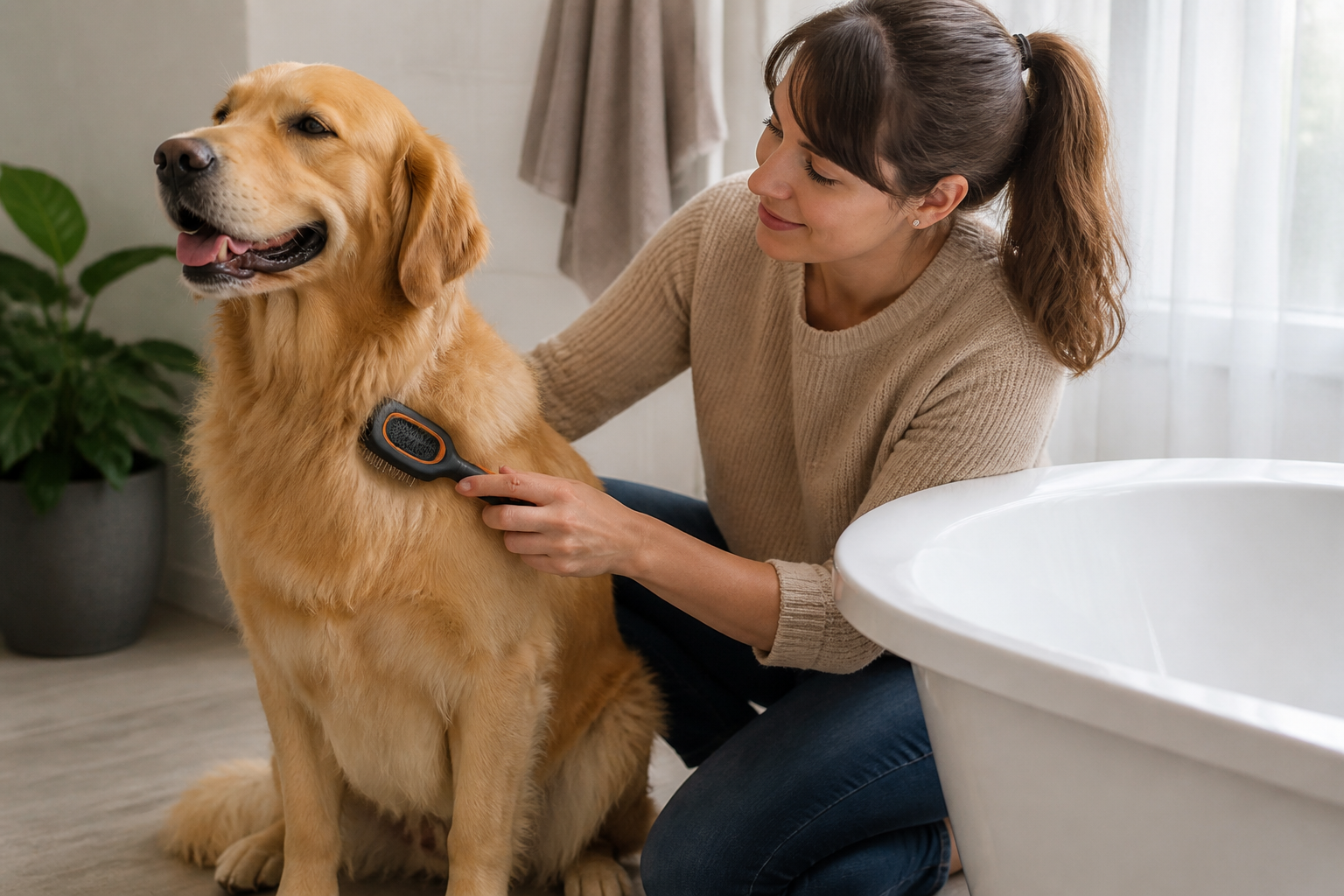
The short answer is that you should almost always brush your dog before the bath. Brushing a dry coat allows you to remove loose fur and debris before water complicates the process. If you skip this step, you risk turning small tangles into permanent mats. This post covers why the "brush first" rule is so important and how to handle different coat types during bath time. Explore our dog grooming supplies for tools that can help make bath day easier.
Quick Answer: Yes, you should always brush your dog before a bath. Water causes existing tangles and mats to tighten and shrink, making them much harder and more painful to remove once the coat is wet.
Why Water and Tangles Do Not Mix
Many people assume that water and shampoo will help lubricate the hair and make tangles slide right out. In reality, the opposite is true for most dog coats. When hair gets wet, the individual strands swell and become more prone to sticking together. If there is already a knot or a "snarl" in the fur, the water acts like a tightening agent.
As the dog dries, those wet tangles shrink. This creates a tight, solid mass of hair known as a mat. Mats sit close to the skin and can pull painfully whenever your dog moves. Brushing these out after a bath is often impossible without causing significant distress to your pet. By brushing while the coat is completely dry, you can separate those fibers before the water has a chance to lock them together.
Dirt and grit also play a role. If your dog is dusty or sandy, that debris acts like sandpaper against the hair. Brushing a dry, dirty dog helps flick away that surface grit. If you add water first, that dirt turns into a muddy paste that can become trapped deep within the coat. For additional bathing guidance, read our tips for bathing your dog.
The Science of the Wet Coat
The structure of a dog's hair is different from human hair. Many breeds have a "cuticle" or a scaly outer layer on each hair strand. When the hair is dirty or wet, these scales can lift and hook onto nearby hairs. This is how a few loose strands quickly turn into a felted mat.
When you scrub a dog in the tub, you naturally create friction. Most owners use a circular motion to work the shampoo into a lather. If the coat is not brushed out first, this circular scrubbing actually twists the hair together. You are essentially "nesting" the tangles deeper into the fur.
Key Takeaway: Brushing before the bath removes the "anchor" hairs that cause mats to form during the washing and drying process.
The Comb Test Every Owner Should Know
A common mistake is thinking a dog is "brushed out" just because the surface looks smooth. A slicker brush can often glide over the top layer of fur while leaving knots hidden underneath. Before you commit to the bath, you should perform what professional groomers call the comb test.
Take a metal finishing comb and run it through the coat from the skin outward. Start at the head and work your way back to the tail. Pay close attention to high-friction areas. These include behind the ears, the "armpits" of the front legs, the belly, and the base of the tail. If the comb catches, you have a hidden tangle that needs attention before the dog gets wet.
Step 1: Use a slicker brush to loosen the top layer of dead fur.
Step 2: Work in small sections, especially on long-haired breeds.
Step 3: Follow up with a stainless steel comb to ensure you can reach the skin.
Step 4: Only when the comb passes through easily should you start the water.
For more options, browse our dog brushes, combs, and clippers.
Handling Different Coat Types
Not every dog needs the same level of preparation. The urgency of the "brush before bath" rule depends heavily on what kind of hair your dog has.
Double-Coated Breeds
Dogs like Golden Retrievers, Huskies, and German Shepherds have a soft undercoat and a tougher outer coat. The undercoat is what sheds. If you bathe these dogs without brushing, the dead undercoat will clump together like wet wool. This can lead to "hot spots" or skin infections because the thick, wet hair cannot dry properly against the skin.
Curly and Wavy Coats
Doodles, Poodles, and Bichon Frises have hair that grows constantly. These coats are highly prone to matting. For these breeds, the pre-bath brush is non-negotiable. Water will turn a Poodle's wavy hair into a tight knot almost instantly. Our guide to grooming curly-haired dogs covers additional brushing and combing considerations.
Short-Haired Breeds
If you have a Lab, a Beagle, or a Boxer, you might think you can skip the brush. While these dogs do not mat, they do shed significantly. Brushing a short-haired dog before the bath removes a massive amount of loose hair that would otherwise clog your drain. It also helps the shampoo reach the skin more effectively.
Table: Brushing Priority by Coat Type
| Coat Type | Matting Risk | Why Brush Before? | Tool Recommendation |
|---|---|---|---|
| Short/Smooth | Low | Reduces shedding in the tub | Rubber curry brush |
| Double Coat | Medium | Prevents "wool" clumping | Undercoat rake |
| Long/Silky | High | Prevents "cemented" knots | Pin brush and comb |
| Curly/Wavy | Very High | Prevents painful matting | Slicker brush and comb |
When Brushing Before a Bath is a Bad Idea
There is one major exception to this rule. If your dog is already severely matted, do not try to brush those mats out at home before a bath. When mats are tight against the skin, pulling on them with a brush can cause skin tears or bruising.
If you can feel hard, solid "pelts" of fur, your dog likely needs a professional groomer or a veterinarian to shave the mats off safely. Attempting to brush these out or wash them will only increase the dog's pain.
Vet Tip: If your dog's skin is red, irritated, or has a strong odor beneath a mat, do not attempt to groom it yourself. Consult a veterinarian to ensure there is no underlying skin infection or parasite issue that needs medical treatment.
Tools You Will Need
To do the job right, you need more than just a standard human hairbrush. Our warehouse team sees many different grooming tools come through BaxterBoo, and we always recommend a specific kit for bath day.
- Slicker Brush: This is the workhorse of dog grooming. It has fine wire bristles that grab loose hair and break up small tangles.
- Metal Finishing Comb: This is your "truth teller." It finds the knots the brush missed.
- Rubber Curry Brush: Best for short-haired dogs. It massages the skin and pulls out loose "dead" hair.
- Undercoat Rake: Essential for heavy shedders to pull out the fuzzy underlayer before it gets wet.
The Master Grooming Tools Ergonomic Slicker Dog and Cat Brush is one option available in our grooming collection.
The Role of Skin Health and the Pharmacy
The condition of your dog's skin often dictates how easy it is to brush them. If a dog has dry, flaky skin or allergies, their coat may be more brittle and prone to breaking. Brushing becomes much harder when the hair is unhealthy.
This is where a holistic approach to grooming comes in. We often talk to customers about managing their pet's skin health from the inside out. Our pharmacy offers FDA-approved medications and prescription diets through our partnership with Pet's Choice. These products are vital for dogs with chronic skin conditions or severe allergies that lead to poor coat quality. You can browse our pet pharmacy when your veterinarian recommends prescription care.
If your dog is constantly itchy or has "yeasty" smelling skin, a regular shampoo might not be enough. You may need a prescription medicated wash from the pharmacy to calm the inflammation before a regular grooming routine can be established. Always consult your vet if you notice persistent scratching or hair loss.
The Step-by-Step Bath Day Routine
To make the process as smooth as possible, follow this specific order. This routine ensures the coat stays healthy and the dog stays comfortable.
Step 1: Check for mats. Use your fingers to feel for any hard clumps. If the coat is clear, proceed.
Step 2: Brush the dry coat. Spend five to ten minutes removing loose fur.
Step 3: The comb test. Run a metal comb through the entire body.
Step 4: Protect the ears. Place a large cotton ball in each ear to keep water out.
Step 5: The wash. Use warm water and a dog-specific shampoo. Avoid circular scrubbing. Use long, sweeping motions in the direction of hair growth.
Step 6: Rinse thoroughly. Leftover soap residue can cause itching and matting.
Step 7: Dry the dog. Use a towel to squeeze water out rather than rubbing vigorously.
Step 8: The final brush. Once the dog is 100% dry, brush one more time to fluff the coat and remove any hair loosened by the wash.
For shampoo and conditioner options, visit our dog shampoo and conditioner collection.
Bottom line: A bath is a two-part process that begins and ends with a brush.
Common Brushing Mistakes to Avoid
Even if you know you should brush before the bath, how you brush matters. Avoid these common pitfalls to keep your dog's coat in top shape.
- Brushing only the top: Many owners stop when the top layer looks good. You must reach the skin to prevent "base matting."
- Ignoring the "hot spots": Tangles love to hide in the friction points. Spend extra time on the chest and behind the ears.
- Using the wrong brush: A soft bristle brush will do nothing for a Husky. Match the tool to the coat type.
- Starting with the bath: Never let the water be the first thing that touches a dirty, tangled dog.
Dealing with "Bath Anxiety" During Brushing
Some dogs associate the brush with the bath. If your dog starts shaking or hiding as soon as the brush comes out, they may have developed "bath anxiety." You can help break this association by brushing your dog on days when no bath is planned.
Give high-value treats during the pre-bath brush. Make it a calm, low-stress activity. If the dog is relaxed during the brushing phase, they are much more likely to remain calm once they get into the tub.
Managing the Mess
One of the biggest benefits of the pre-bath brush is keeping your house clean. If you take a shedding dog directly into the shower, you will end up with a bathroom covered in wet, sticky fur. This fur is difficult to wipe off walls and even harder to clear from a drain.
By brushing your dog outside or in a dedicated grooming area first, you capture the majority of that hair in the brush. It is much easier to throw a pile of dry fur into the trash than it is to snake a drain full of wet dog hair.
The Post-Bath Brush: The Final Touch
While the pre-bath brush is the most important for mat prevention, the post-bath brush is what makes the coat look its best. Once the dog is fully dry, a final pass with the brush separates the hairs and gives the coat that "fresh from the groomer" fluff.
This is also the best time to apply any leave-in conditioners or coat sprays. These products help repel dirt and keep the hair from tangling until the next bath day. If you have a double-coated dog, the post-bath brush will often catch a whole new layer of loose hair that was loosened by the warm water and shampoo.
Key Takeaway: Pre-bath brushing prevents problems. Post-bath brushing provides the polish.
When to See a Professional
Home grooming is a great way to save money and bond with your dog. However, there are limits to what most owners can handle. You should consider a professional groomer if:
- The mats are too tight to see the skin underneath.
- The dog becomes aggressive or extremely fearful during brushing.
- The coat is so thick that you cannot get it dry at home.
- You are unsure how to safely use grooming shears or clippers.
Professional groomers have high-velocity dryers that can blow out loose undercoat much more effectively than a home hairdryer. They also have the experience to handle "difficult" tangles without hurting the pet.
Summary of the Brushing Process
Keeping your dog's coat healthy is a cycle. Regular brushing between baths is the best way to ensure that bath day itself is a breeze. When you stay on top of the tangles, the "pre-bath brush" only takes a few minutes rather than an hour.
Remember that a clean coat starts with a dry brush. By removing the debris and separating the fibers before they get wet, you are protecting your dog's skin and making the washing process much more effective.
We are proud to be a resource for pet parents who want to do things the right way. At BaxterBoo, we believe that informed owners have happier, healthier pets. Whether you are visiting our warehouse in Illinois or ordering your grooming supplies online, our goal is to provide the tools and knowledge you need for a successful bath day.
Bottom line: Never add water to a tangled coat unless you want to turn those tangles into permanent mats.
FAQ
Can I brush my dog while they are covered in shampoo?
You can use a rubber curry brush on short-haired dogs during the bath to help work the shampoo in and pull out loose hair. However, for long-haired or curly dogs, you should avoid brushing while wet as it can stretch and damage the hair. Stick to a thorough dry brush before the water starts.
What if my dog has burrs or sticks in their fur?
Always remove large debris like burrs, twigs, or dried mud before the bath. Water can soften some plant matter, but it can also make the surrounding hair swell and lock the debris in place. Use a wide-tooth comb or your fingers to gently work these items out of the dry coat.
Does every dog need to be brushed before a bath?
While it is technically possible to skip it for a very short-haired dog with no shedding, it is still a good habit to keep. For any dog with hair longer than an inch, or any dog that sheds, brushing before a bath is essential to prevent mats and keep your plumbing clear of fur clogs.
Is it okay to let my dog air dry before the final brush?
For most dogs, air drying is fine, but you must ensure they are 100% dry before you do the final finishing brush. If you brush a "damp" dog, you might accidentally create new tangles. For breeds with very thick or curly coats, using a blow dryer on a cool setting is often better to ensure the hair stays straight and mat-free.






