
 Save 15% on your 1st Autoship learn more

 Email us
 Live Chat
 FAQs
FAQs





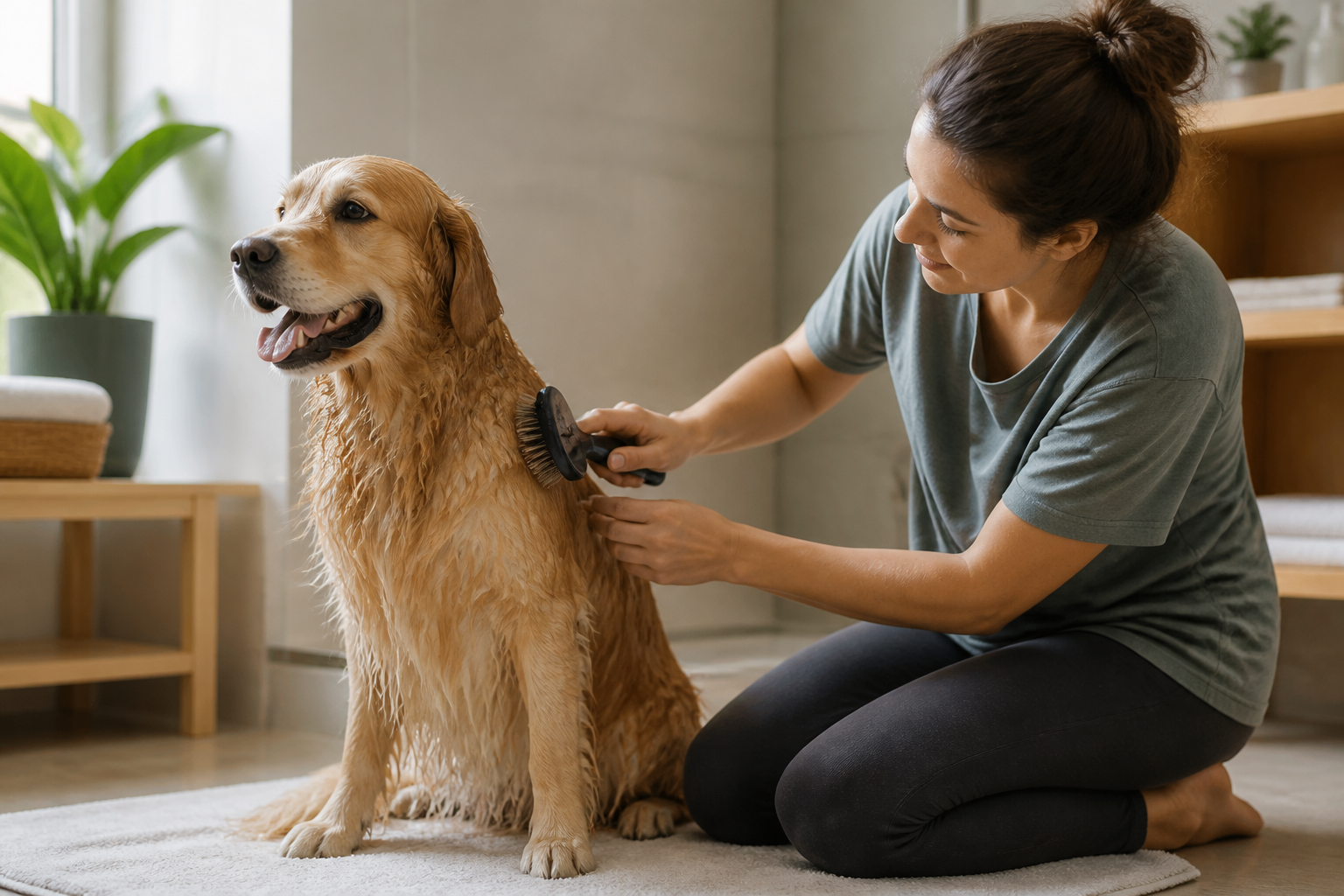
Introduction
You have finally finished the struggle of bath time. Your dog is shaking water all over the bathroom. You are standing there with a towel in one hand and a brush in the other. You might wonder if you should start brushing now or wait until the fur is dry. Getting the timing right is the difference between a soft, fluffy coat and a painful session with tangled mats. At BaxterBoo, we have helped thousands of pet parents navigate these everyday grooming questions since 2006. This guide covers why the order of brushing matters for your dog's skin health and coat texture. We will also look at how to handle different coat types and when to reach for specific tools. You will learn the best way to keep your dog comfortable while maintaining a professional look at home.
Quick Answer: You should generally brush your dog both before and after a bath. Brushing before removes mats that tighten in water, while brushing after the coat is dry helps remove loosened fur and fluffs the hair.
The Importance of the Pre-Bath Brush
Many pet owners skip the most important step: brushing before the water even starts running. This is a mistake that can lead to significant discomfort for your dog. When hair gets wet, the cuticles on the hair shaft can expand. If there are already tangles or loose clumps of fur, the water and soap act like a glue. As the hair dries, these tangles shrink and tighten into hard mats. These mats pull on the skin and can cause sores or hot spots.
Brushing a dry, dirty dog helps clear out loose debris. You might find dried mud, small burrs, or loose undercoat that would otherwise clog your drain. Removing this "dead" hair first allows the shampoo to actually reach the skin. If you wash a dog with a thick, unbrushed undercoat, the soap might just sit on top of the fur. You end up with a dog that looks clean on the outside but is still dirty and itchy underneath.
Brushing before the bath also gives you a chance to check the skin. You can look for ticks, flea dirt, or unusual lumps that might be hidden by thick fur. If your dog has a skin condition or persistent itching, this is the time to notice it. Our dog pharmacy offers FDA-approved treatments and prescription shampoos through our partnership with Pet's Choice. Noticing a skin issue before the bath allows you to use the right medicated product recommended by your veterinarian.
Why Brushing While Soaking Wet Is Risky
A common question is whether you should brush while the dog is still dripping wet. For most breeds, the answer is no. Hair is at its weakest and most elastic state when it is saturated with water. Brushing soaking wet hair can cause the strands to stretch and snap. This leads to split ends and a frizzy coat texture over time. It can also be very painful for the dog because the brush does not glide through wet hair as easily as dry hair.
There is one major exception to this rule. If your dog has very curly hair, like a Poodle or a Bichon Frise, some groomers use a technique called wet brushing with a lot of conditioner. This is usually done while the dog is still in the tub. The conditioner provides "slip," which allows a wide-tooth comb or a soft brush to move through the curls without pulling. For almost every other coat type, wait until the hair is at least damp or fully dry.
If you try to brush a wet double coat, you will often find that the brush gets stuck. The moisture makes the undercoat heavy and clumped. Instead of removing the hair, you might end up scraping the skin with the brush pins. This can lead to "brush burn," which is a painful irritation similar to a rug burn. Always aim for a gentle experience to keep your dog from fearing the grooming process.
The Role of the Drying Phase
The period between the bath and the final brush is critical. How you dry your dog determines how much work you have to do with the brush later. Most people start by towel drying. Instead of rubbing the towel vigorously back and forth, try a patting or squeezing motion. Rubbing the fur in circles can actually create new tangles and knots. You want to remove as much moisture as possible without disturbing the direction of the hair growth.
If your dog is comfortable with a blow dryer, this is a great time to help the coat along. A high-velocity dryer specifically made for pets is better than a human hair dryer. Human dryers can get too hot and burn a dog's sensitive skin. A pet dryer uses high air volume to "blow" the water off the coat. This also helps blow out any remaining loose hair that the bath loosened up.
As you dry the dog, you can begin a light brush. This is often called "line drying" or "fluff drying." You dry one section of hair while gently brushing it in the direction you want it to lay. This prevents the hair from drying in clumps. It also gives the coat that professional, salon-finished look. If you notice any small tangles forming during the drying process, a quick spray of a leave-in conditioner for dogs can help the brush slide through.
Key Takeaway: Brushing during or after the drying process prevents the coat from "setting" into messy clumps and helps you catch hair that the bath loosened but did not wash away.
A Step-By-Step Bath and Brush Routine
To get the best results, follow a consistent order of operations. This routine ensures your dog stays comfortable and your home stays as fur-free as possible.
Step 1: Perform a thorough dry brush / Use a slicker brush or a metal comb to remove all existing mats and loose undercoat.
Step 2: Check the skin and ears / Look for any signs of irritation or parasites before the water starts.
Step 3: Bath with appropriate shampoo / Use warm water and a shampoo formulated for dogs, focusing on the skin rather than just the fur.
Step 4: Apply conditioner / This is especially important for long-haired breeds to help prevent future tangles.
Step 5: Towel dry gently / Squeeze the water out rather than rubbing the coat.
Step 6: Blow dry on a low heat setting / Use your fingers or a brush to keep the hair moving as it dries.
Step 7: The final finishing brush / Once the dog is 100 percent dry, do a full pass with a brush to fluff the coat and remove the last bits of shed hair.
Understanding Different Coat Types
Not every dog requires the same brushing schedule after a bath. A Labrador has very different needs than a Shih Tzu. Understanding your dog's specific coat type will help you decide how much effort to put into the post-bath brush.
Short and Smooth Coats
Dogs like Boxers, Beagles, and Labradors have short hair that lies close to the skin. You still need to brush them before the bath to remove loose fur. After the bath, these dogs usually dry very quickly. A simple pass with a rubber curry brush or a grooming mitt while they are damp can help pull out any "dead" hair the bath loosened. You do not need to worry much about mats, but the post-bath brush helps distribute natural oils for a shiny finish.
Double Coats
Breeds like Huskies, Golden Retrievers, and German Shepherds have a soft undercoat and a tougher top coat. These dogs shed the most during and after a bath. The "after" brush is vital for these breeds. You will likely find that even after a thorough bath, your dog is still dropping clumps of fur. This is because the warm water helps the skin release the dead undercoat. Brushing once the dog is dry will save your vacuum cleaner a lot of work.
Long or Silky Coats
Yorkies, Malteses, and Spaniels have hair that grows continuously. This hair is prone to tangling. For these dogs, the post-bath brush is about aesthetics and comfort. If you let a Yorkie air dry without brushing, the hair may dry in "strings." Brushing while drying ensures the coat stays silky and smooth. If your dog's coat is particularly long, consider using a pin brush without the little balls on the ends of the pins, as these can snag and break silky hair.
Curly or Wire Coats
Poodles and Doodles have hair that traps shed fur rather than letting it fall to the floor. If you do not brush these dogs after a bath, that trapped fur will quickly turn into mats. Wire-haired breeds like certain Terriers have a different texture that can become frizzy. Brushing these breeds while they are almost dry helps maintain the correct coat structure.
Choosing the Right Grooming Tools
Your success depends heavily on the tools you keep in your grooming kit. We recommend having at least two or three different types of brushes to handle the different stages of the bath.
- Slicker Brushes: These have fine, short wires close together. They are perfect for removing mats before the bath and fluffing the coat afterward.
- Rubber Curry Brushes: These are great for short-haired dogs. They massage the skin and pull out loose hair during the bath.
- Undercoat Rakes: These have long, metal teeth designed to reach through the top coat. Use these on double-coated dogs before the bath to clear out the heavy lifting.
- Metal Combs: A "Greyhound" style comb is essential for checking your work. If the comb can slide from the skin to the tips of the hair without snagging, you have done a great job.
At BaxterBoo, we curate a wide range of these tools from trusted brands in our dog grooming collection. Using the right tool makes the job faster and reduces the chance of hurting your dog. If you find that your dog's skin is often red or irritated after brushing, you might be using a brush that is too stiff for their skin type.
Vet Tip: If your dog has persistent skin redness, hair loss, or a foul odor even after a bath, consult your veterinarian. These can be signs of fungal or bacterial infections that require prescription topicals or oral medications from a licensed pharmacy.
Maintaining the Bond Through Grooming
Grooming is about more than just cleanliness. It is a time for you and your dog to connect. Many dogs feel vulnerable during a bath. The brushing session afterward can be a calming way to end the experience. Use a soft voice and offer small treats throughout the process. If your dog is particularly anxious, you do not have to do the entire brush at once. You can brush the back and sides, take a break for a few minutes, and then finish the legs and tail.
We have found that dogs who are brushed regularly since puppyhood view the brush as a form of affection. It mimics the grooming behavior seen in packs. If you stay calm and patient, your dog will eventually learn to relax. This makes life much easier for you and for any professional groomers you might visit in the future.
When to Seek Professional Help
While most pet owners can handle the "brush-bath-brush" routine at home, there are times when it is best to call in a professional. If your dog is severely matted, do not try to bath them. Remember that water will only make those mats tighter. A professional groomer has the tools and expertise to safely remove mats without cutting the skin.
You should also consider a professional if your dog has extreme anxiety or aggression during grooming. It is not worth risking an injury to yourself or your pet. Professional groomers also handle tasks that many owners find difficult, such as expressing anal glands or deep-cleaning the ears.
Even if you use a professional groomer every few months, you still need to maintain the coat at home. Brushing your dog once or twice a week keeps the coat in good condition between appointments. This prevents the "shave down" that often happens when a dog arrives at the groomer with too many tangles to save.
Healthy Skin Starts From Within
A shiny coat is often a reflection of internal health. If you are brushing and bathing correctly but your dog still has a dull, brittle coat, it might be time to look at their nutrition. High-quality fats, like Omega-3 and Omega-6 fatty acids, are essential for skin elasticity and hair strength.
We carry several premium food brands and supplements that focus on skin and coat health. If your dog has specific allergies that affect their skin, your vet might recommend a prescription diet. Our partnership with Pet's Choice allows you to easily order these prescription foods and have them delivered alongside your regular treats and toys. Keeping the skin healthy from the inside makes the external grooming process much smoother.
Bottom line: A healthy coat starts with good nutrition and is maintained by a consistent routine of brushing before and after every bath.
Keeping Your Tools Clean
To make your post-bath brush effective, your tools must be clean. Brushing a clean, freshly washed dog with a dirty, hair-filled brush is counterproductive. You are simply putting old dander and oils back onto the clean fur.
After every grooming session, remove all the hair from your brushes. Once a month, wash your plastic and metal tools in warm, soapy water. Ensure they are completely dry before storing them to prevent rust on metal pins. Clean tools glide through the hair more easily and last much longer. This small step in maintenance ensures that every bath ends with a truly clean pet.
Common Mistakes to Avoid
Even experienced pet owners can fall into bad habits. One of the most frequent mistakes is using human shampoo. The pH level of a dog's skin is much more alkaline than human skin. Human shampoo can strip the protective acid mantle, leaving the dog vulnerable to bacteria and viruses. Always use a dedicated dog shampoo. For additional bathing guidance, read our guide to the dos and don'ts of bathing your dog.
Another mistake is neglecting the "hidden" areas during the post-bath brush. People often brush the back and sides but forget the armpits, the back of the thighs, and behind the ears. These are the areas where friction occurs, making them the most likely spots for mats to form. Be sure to do a thorough check of these friction points every time you brush.
Finally, do not rush the drying process. If you put a harness or a collar on a dog that is still slightly damp, it can cause "collar sores" or matting under the straps. Ensure your dog is completely dry before letting them go back to their usual activities. This keeps the skin healthy and the coat smelling fresh for a longer period.
Conclusion
Brushing your dog after a bath is a vital step for a healthy, tangle-free coat. While you should always brush before the bath to remove mats, the post-bath brush is what gives your dog that finished, soft feel. By waiting until the coat is dry or nearly dry, you protect the hair from breakage and ensure your dog remains comfortable. We at BaxterBoo are committed to providing you with the knowledge and products needed to make grooming a success. Whether you need a new slicker brush or a medicated shampoo from our dog shampoo and conditioner collection, we are here to support your pet care journey.
- Always brush before the bath to prevent mats from tightening.
- Avoid brushing soaking wet hair to prevent snapping and split ends.
- Use a patting motion with towels instead of vigorous rubbing.
- Choose the right tools, like slicker brushes or rubber curries, based on coat type.
- Maintain skin health through a mix of proper grooming and quality nutrition.
Key Takeaway: The "brush-bath-brush" method is the gold standard for home grooming, ensuring a clean dog, a healthy coat, and a happier pet.
FAQ
Is it okay to brush my dog while they are still wet?
For most dogs, it is better to wait until the hair is damp or fully dry because wet hair is fragile and prone to stretching or breaking. Brushing soaking wet fur can also be painful as the brush does not glide easily. The only common exception is for very curly breeds when using a lot of conditioner to provide "slip."
What happens if I don't brush my dog before a bath?
If you skip the pre-bath brush, any existing tangles or mats will likely tighten when they get wet and then dry. This can make them nearly impossible to remove without cutting the hair. Additionally, loose fur that isn't brushed out can trap shampoo against the skin, leading to irritation or a "wet dog" smell that lingers.
How do I get the "salon look" at home after a bath?
To get a professional finish, use a blow dryer on a low or cool setting while gently brushing the hair in the direction you want it to lay. This technique, called fluff drying, prevents the coat from drying in flat or messy clumps. Finish with a metal comb to ensure you have reached all the way down to the skin.
My dog hates being brushed after a bath; what should I do?
Make the experience more positive by using high-value treats and keeping sessions short. You can also try using a leave-in detangling spray to make the brush move more smoothly, which reduces pulling. If the noise of a blow dryer is the problem, let the dog air dry most of the way before doing a final, gentle brush-out.






