
 Save 15% on your 1st Autoship learn more

 Email us
 Live Chat
 FAQs
FAQs





Introduction
You are standing in front of the bathtub with a pup who smells like a swamp or looks like they rolled in a dust cloud. The temptation is to jump straight to the water and soap to get the job done quickly. However, the order of your grooming routine is the most important factor in keeping your pet’s coat healthy and tangle-free. At BaxterBoo, we often talk to owners who find that their dog is more matted after a bath than before. This usually happens because a critical step was skipped before the water started running.
This post covers why you should always reach for the brush before the shampoo, the science behind how water affects tangles, and the best tools for the job. We will also look at how to handle different coat types and when to seek help for skin issues. Brushing before a bath is the best way to ensure your dog ends up clean, fluffy, and comfortable.
Quick Answer: Yes, you should always brush your dog before a bath. Brushing removes loose hair and debris while preventing existing tangles from tightening into permanent mats when they get wet.
The Problem with Washing a Tangled Coat
Many pet owners assume that water and conditioner will help loosen knots. In reality, the opposite is usually true. When hair gets wet, the shafts can swell and the cuticles can hook onto each other. If there is already a tangle or a small knot in the fur, the water acts like a glue that sets the knot in place. As the hair dries, it shrinks and tightens.
What started as a small, manageable tangle can turn into a hard mat that sits tight against the skin. These mats are not just an aesthetic issue. They pull on the skin, causing discomfort and preventing air from reaching the surface. This lack of airflow can lead to "hot spots" or bacterial infections. By brushing before the bath, you ensure that the hair is separated and free to move, allowing the shampoo to reach the skin and the water to rinse away completely.
Why Pre-Bath Brushing Saves Time and Money
Brushing your dog before they get into the tub is not just about preventing mats. It is also a practical way to protect your home and your grooming tools. If you have ever noticed a massive amount of hair clogging your shower drain, you are seeing the result of skipping the pre-bath brush.
Removing the dead undercoat and loose hair while the dog is dry keeps that fur out of your plumbing. It also makes your shampoo more effective. When a coat is thick with loose, dead hair, the shampoo gets trapped in that top layer. You end up using more product and doing more work for a less-than-clean result.
Using your grooming tools on a dry, brushed coat also extends the life of your equipment. Professional groomers know that running clippers or high-end scissors through a dirty, knotted coat dulls the blades quickly. At home, you will find that your brushes and combs work much better when they are not fighting through a mix of wet hair and old debris.
Vet Tip: If your dog has a persistent skin odor or frequent itching even after a bath, they may have an underlying condition like a yeast infection or allergies. Consult your veterinarian to see if a medicated shampoo from our pet pharmacy is necessary.
Choosing the Right Tools for the Job
You cannot effectively prepare a coat for a bath with the wrong equipment. Different breeds require different approaches to ensure every layer of the fur is clear of tangles. Our team at BaxterBoo handpicks grooming supplies that serve specific needs for various coat textures. Explore our dog grooming supplies when you are building your at-home routine.
The Slicker Brush
A slicker brush is the workhorse of the grooming world. It features fine, short wires placed close together on a flat or curved base. These wires are designed to reach through the topcoat and grab loose hair from the undercoat. It is the best tool for removing the initial layers of shed hair before a bath.
The Stainless Steel Comb
While a brush makes the coat look smooth on top, a stainless steel comb is the only way to be sure there are no hidden knots. Professional groomers call this "the comb test." After you think you have finished brushing, run a medium-tooth comb through the fur. If it catches, you still have a tangle that needs attention before the water hits.
The Undercoat Rake
For double-coated breeds like Golden Retrievers, Huskies, or Shepherds, an undercoat rake is essential. These tools have long tines that penetrate deep into the heavy undercoat to pull out the "wool" that tends to clump when wet. Our dog brushes and combs include options for brushing, deshedding, and working through different coat types.
A Step-By-Step Guide to Pre-Bath Brushing
Follow this routine to prepare your dog for the most successful bath possible. Taking these steps will make the washing and drying process much faster.
Step 1: Start with a calm dog. / Ensure your dog is relaxed before you begin. If they are full of energy, a quick walk or play session can help them sit still for the brushing.
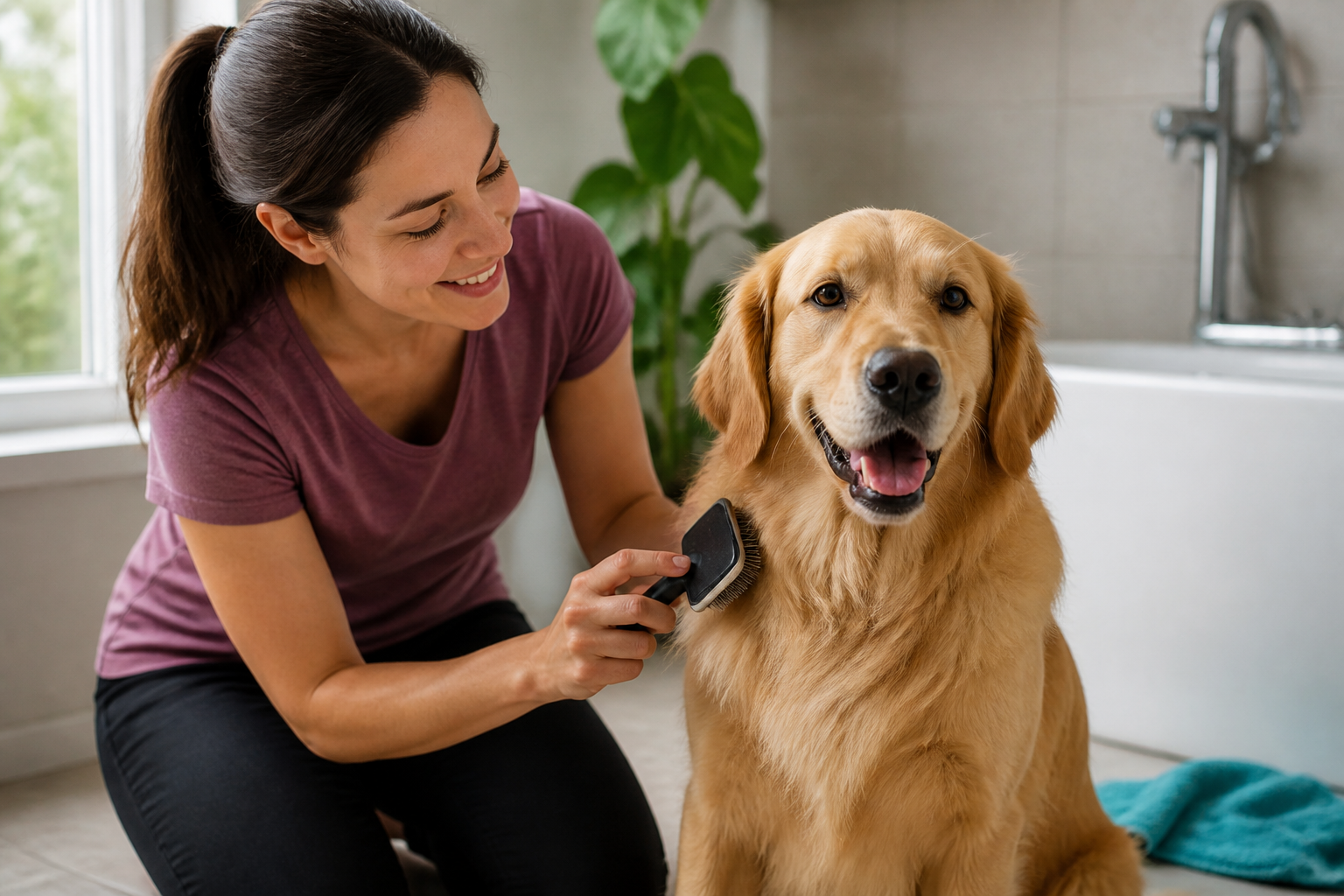
Step 2: Use a slicker brush in sections. / Work from the tail toward the head or vice versa. Lift the hair and brush from the skin outward in small, gentle strokes. This ensures you are not just "skimming" the top of the coat.
Step 3: Pay attention to high-friction areas. / Tangles usually hide behind the ears, in the armpits, on the back of the legs, and around the collar area. Spend extra time making sure these spots are completely clear.
Step 4: Perform the comb test. / Run a metal comb through the entire coat. If the comb glides from the skin to the tips of the hair without snagging, your dog is ready for the tub.
Step 5: Check the skin. / While brushing, look for any red spots, bumps, or signs of fleas. This is the best time to notice changes in your dog's skin health.
Understanding Different Coat Types
Not every dog needs the same level of preparation. The risk of matting during a bath depends heavily on the type of hair your dog has.
Long and Silky Coats
Breeds like Yorkies or Maltese have hair that is very similar to human hair. It is prone to tangling and breaking. Brushing before a bath is non-negotiable for these dogs. If you wash a silky coat that has knots, you may end up having to cut the knots out later, which ruins the look of the coat.
Curly and Wavy Coats
Poodles and Doodles are the most at risk for "cementing" mats during a bath. Their curly hair traps shed fur instead of letting it fall to the ground. This trapped fur creates a web-like structure. When water is added, that web tightens. If you own a curly-coated dog, you must be extremely diligent with the metal comb before bathing.
Double Coats
Dogs with a soft undercoat and a coarse topcoat (like Labradors or Newfoundlands) shed a lot. If you do not brush them first, the bath will be a mess of floating fur. More importantly, it is very hard to get a double coat fully dry if it is full of dead hair. Damp undercoats can lead to skin irritation and a sour smell.
Short and Smooth Coats
Dogs like Boxers or Beagles are the exception to the rule. While they still benefit from a quick brush to remove loose hair and dander, they are not at risk for matting. A rubber curry brush is often enough to prepare these dogs for a bath.
Key Takeaway: The longer and curlier the hair, the more critical the pre-bath brush becomes. For Doodles and Poodles, skipping this step often leads to painful mats that require professional shaving.
The Danger of Brushing Wet Fur
There is a common misconception that brushing a dog while they are wet is a good way to save time. Unless you are using a specific "wet brush" or a high-quality conditioner designed for this purpose, you should avoid it.
Hair is at its weakest when it is wet. It stretches more than dry hair, which makes it more likely to snap or break. Brushing wet hair can also be quite painful for the dog. The brush can "grab" the wet strands and pull on the skin with more force than it would on dry fur.
The only time a professional might brush during the bath is when the dog is fully saturated in a heavy-duty conditioner. The conditioner provides "slip," allowing the tool to move through the hair without friction. For home grooming, it is much safer to do the heavy work while the coat is dry and the finishing work after the coat is completely dry.
Proper Bathing Technique to Prevent New Tangles
Even if you brush your dog perfectly before the bath, your technique in the tub can create new problems. Many owners make the mistake of scrubbing their dog in a circular motion, similar to how we might wash our own hair.
For dogs with medium to long hair, circular scrubbing is a recipe for disaster. It twists the hair fibers together, creating "friction knots." Instead, apply the shampoo and massage it into the coat using a downward, smoothing motion. Follow the direction that the hair grows. This gets the dog clean without tangling the freshly brushed coat.
Rinsing is equally important. Leftover shampoo residue can make the hair feel tacky or sticky. This stickiness attracts dirt and makes the hair more likely to clump together as it dries. Rinse until the water runs completely clear, then rinse for another minute to be sure. For additional bathing guidance, read our tips for bathing your dog.
The Post-Bath Process: Drying and Finishing
Once the bath is over, the grooming process is not quite finished. How you dry your dog also impacts the health of their coat. Our bath and shower supplies can help you prepare for this part of the routine.
Avoid rubbing your dog vigorously with a towel. Much like circular scrubbing, this creates friction and tangles. Instead, use the towel to "blot" the water out of the coat. Squeeze the hair gently to remove excess moisture.
If your dog has a thick or long coat, a high-velocity dryer or a dedicated pet dryer is a great investment. Air drying can take hours for some breeds. The longer the hair stays damp, the more likely the dog is to roll around or scratch, creating new tangles.
Once the dog is 100% dry, perform one final brush-through. This removes any hair that was loosened during the washing process and gives the coat its finished, fluffy look.
Key Takeaway: A bath is not finished until the dog is dry and has been brushed one last time. This "finishing" brush is what gives the coat a professional look and ensures no new knots formed during the drying process.
When Grooming Touches Health: The BaxterBoo Pharmacy
Sometimes, the reason a dog needs a bath is more than just dirt. If your pet is struggling with skin infections, severe dandruff, or parasitic issues like fleas and ticks, grooming becomes a part of their medical care.
Our partnership with Pet's Choice allows us to offer a full pharmacy with FDA-approved medications and prescription diets. If your vet has prescribed a medicated shampoo for a skin condition, it is even more important to brush the coat first. Medicated shampoos often need to sit on the skin for 10 minutes to be effective. If the coat is matted, the medicine cannot reach the skin where it is needed.
We also carry a wide range of flea and tick preventives through our flea and tick collection. Regular grooming gives you the perfect opportunity to check for these pests. If you find evidence of fleas, a medicated bath followed by a long-term preventive is the best course of action. Always consult your veterinarian for a proper diagnosis before starting a treatment plan for skin conditions.
Building a Positive Routine
Grooming should be a bonding experience, not a chore that your dog fears. If your dog is nervous about the brush or the bath, take it slow. Start with very short sessions and provide plenty of praise.
Using high-value treats can change your dog's perspective on the grooming table. We carry a variety of healthy dog treats that are perfect for rewarding good behavior during a long brushing session. Over time, your dog will associate the brush with positive attention and rewards.
If you find that your dog’s coat is already severely matted, do not try to bathe them at home. The mats will only get worse. In these cases, it is best to visit a professional groomer who can safely remove the mats. Once the dog is "reset" with a fresh clip, you can start your new routine of brushing before every bath to keep the coat in top shape.
Conclusion
Brushing your dog before a bath is the single best thing you can do to maintain a healthy coat and a happy pet. It prevents painful mats, saves your plumbing from clogs, and ensures your grooming products actually work. By following a consistent routine of pre-brushing, gentle washing, and thorough drying, you can achieve professional-level results at home.
Whether you are looking for a high-quality slicker brush or need to fill a prescription for a medicated shampoo through our pharmacy, we have the expertise to help you care for your pet. Our warehouse in Vernon Hills and our online store carry over 500 trusted brands to support your dog's wellness journey. Remember to join the MVP Rewards programme to earn points on every grooming essential you buy.
Bottom line: Never add water to a matted coat; brush thoroughly first to ensure a clean, comfortable, and tangle-free dog.
FAQ
What happens if I forget to brush my dog before their bath?
If you skip the pre-bath brush, any existing loose hair will clump together and any small tangles will likely tighten into hard mats. This makes the post-bath drying and brushing process much more difficult and potentially painful for your dog. For long-haired or curly breeds, forgetting this step often results in having to cut or shave out knots that become impossible to remove once they have dried.
Can I just use a detangling spray instead of brushing before the bath?
Detangling sprays are excellent tools, but they are meant to be used in conjunction with a brush, not as a replacement for it. A spray can help provide "slip" to make brushing easier, but it will not physically remove the shed hair or debris from the coat. You should apply the detangling spray to the dry coat, then brush thoroughly before putting your dog in the tub.
Is it okay to brush my dog while they are still damp?
Generally, it is better to wait until the coat is fully dry before doing your final brush-through. Damp hair is more elastic and prone to breakage. If you must brush a damp coat, use a very wide-toothed comb or a brush designed specifically for wet hair, and be extremely gentle to avoid pulling on the skin. For most coats, the best results come from brushing when the hair is either bone-dry or fully saturated with conditioner.
Does my short-haired dog really need to be brushed before a bath?
While short-haired dogs like Pugs or Labradors won't get "matted" in the traditional sense, they still benefit from a pre-bath brush. Brushing removes the bulk of their loose, dead hair so it doesn't end up in your drain or clumped on their skin during the wash. It also helps loosen dander and dirt, allowing the shampoo to get the skin much cleaner. A rubber curry brush is perfect for this task on short-coated breeds.






