
 Save 15% on your 1st Autoship learn more

 Email us
 Live Chat
 FAQs
FAQs





Introduction
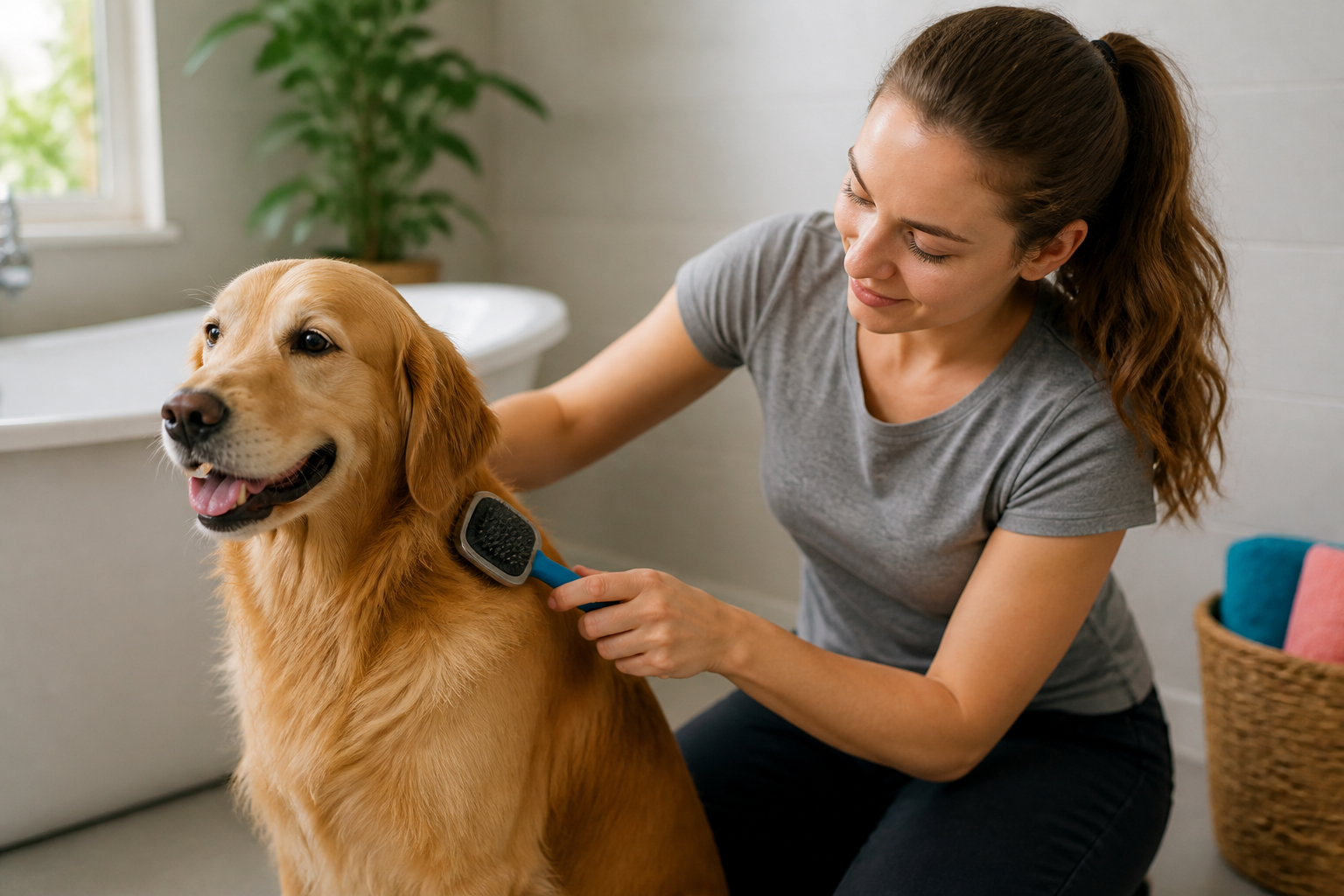
You are standing in front of the bathtub with a dog that smells a bit like a swamp. You have the shampoo ready and the towels stacked. But then you notice a few tangles around your dog’s ears and some loose fur tufts on their hips. You might wonder if you should just wash it all away or pick up a brush first.
At BaxterBoo, we talk to pet owners every day who want to make grooming less stressful for their dogs. The answer to this common question is a clear yes. You should almost always brush your dog before the water starts running. Brushing before a bath prevents painful mats and ensures the shampoo actually reaches the skin. This article covers why the pre-bath brush is a non-negotiable step for a healthy coat and a clean pet.
Quick Answer: Yes, you should brush your dog before bathing. Water can tighten existing tangles and knots, making them much harder to remove once the coat is wet. Brushing first removes loose fur and debris, allowing the shampoo to clean the skin more effectively.
The Science of Water and Tangled Fur
When dog hair gets wet, the structure of the hair shaft changes. Hair is porous and absorbs water, which causes the individual strands to swell. If those strands are already twisted together in a small knot, the swelling makes the knot tighten. As the hair dries, it shrinks back down, often locking that knot into a solid mass.
Professional groomers often compare washing a tangled dog to making felt. Friction from scrubbing with soap further entangles the loose hair with the healthy coat. If you skip the brush, you might end up with a clean dog that has permanent mats that must be shaved off. Removing loose hair while it is dry is much easier and more comfortable for your pet.
Key Takeaway: Water acts as a tightening agent for knots. Brushing while the coat is dry is the only way to ensure you are not accidentally creating permanent mats during the bath.
Why Brushing First Makes the Bath More Effective
A thick coat can act like an umbrella. If your dog has a dense undercoat or a lot of loose, dead hair, the water and shampoo might never reach the skin. You might spend ten minutes scrubbing only to find the skin is still dry and dirty underneath the surface.
Brushing opens up the coat. It removes the "dead" hair that is just sitting there, taking up space. Once that hair is gone, the water can penetrate all the way down to the surface of the skin. This is where the oils, dander, and odors live. If you want a dog that actually smells clean, you have to clear the path for the soap.
Essential Tools for Pre-Bath Grooming
Not every brush is right for every job. Using the wrong tool can irritate the skin or fail to reach the deep layers of the coat. We carry over 500 brands, and we have seen which tools work best for preparing a dog for the tub. You can explore our dog brushes and combs to find tools for different coat types.
- Slicker Brushes: These have fine, short wires close together. They are excellent for removing loose hair and breaking up surface tangles in medium to long coats.
- Undercoat Rakes: These are essential for double-coated breeds like Huskies or Golden Retrievers. They reach past the top coat to pull out the fuzzy undercoat that causes most of the shedding.
- Rubber Curry Brushes: These are perfect for short-haired breeds like Labs or Boxers. They massage the skin and pull up loose hair that would otherwise clog your drain.
- Stainless Steel Combs: This is your finishing tool. After brushing, run a comb through the coat. If it catches, you still have a knot that needs attention.
Vet Tip: If you find skin irritations, hot spots, or signs of fleas while brushing, consult your veterinarian before proceeding with the bath. Some medicated shampoos or flea treatments may be necessary, and our pet pharmacy offers options to discuss with your veterinarian.
The Dangers of "Washing In" a Mat
A mat is more than just a tangle. It is a dense clump of hair that has become woven together. When you apply shampoo to a mat, the soap gets trapped inside the clump. It is almost impossible to rinse soap out of a dense mat.
Leftover soap residue is a major cause of skin irritation. It can lead to "hot spots," which are painful, red, and weeping sores. By brushing before the bath, you ensure there are no hidden clumps where soap can hide. If you find a mat that is too tight to brush out, it is often safer to trim it out or see a professional before getting the dog wet.
How to Handle Different Coat Types
The rules for brushing change based on your dog's hair type. A short-haired dog might only need a two-minute brush, while a poodle mix could require thirty minutes of work before the bath.
Long and Curly Coats
Dogs like Poodles, Doodles, and Bichons have hair that grows constantly. This hair does not fall out on its own. Instead, it gets caught in the surrounding coat. You must be very thorough with these breeds. Use a slicker brush and then a comb to check your work near the skin.
Double-Coated Breeds
Huskies, German Shepherds, and Pomeranians have a soft undercoat and a coarse outer coat. The undercoat is what smells and sheds. Use an undercoat rake to thin out the loose fur. If you do not brush a double coat first, the wet fur will become a heavy, soggy mess that takes hours to dry.
Short and Smooth Coats
Even if your dog has very short hair, do not skip the brush. Use a rubber brush to stimulate the skin and remove "dead" hair. This reduces the amount of fur that ends up in your bathtub drain and all over your towels.
Checking for Health Issues During the Brush
The pre-bath brush is the perfect time to perform a "body scan" on your dog. Because you are moving through the hair in sections, you can see the skin clearly. This is a vital part of proactive pet health management.
Look for the following:
- Fleas and Ticks: Look for small moving bugs or "flea dirt," which looks like black pepper.
- Lumps and Bumps: Feel for any new growths under the skin.
- Redness or Flaking: This can indicate allergies or fungal infections.
- Sores or Scratches: These might need to be protected during the bath.
If you find signs of parasites or skin conditions, visit our flea and tick collection. We carry prescription and over-the-counter flea and tick protection. Ask your veterinarian which medications are appropriate for your dog’s needs.
Step-by-Step Pre-Bath Brushing Guide
Follow this routine to ensure your dog is perfectly prepped for their bath. This process keeps the dog calm and makes the actual washing much faster.
Step 1: Start with a calm dog. / Find a quiet spot where your dog feels secure. Give them a treat or a chew to keep them occupied while you work.
Step 2: Use a wide-tooth brush. / Work through the coat to remove surface dirt and loose fur. Start from the head and move toward the tail.
Step 3: Target the "friction zones." / Focus on areas where mats form most often. These include behind the ears, under the armpits, and where the collar sits.
Step 4: Use the comb test. / Run a metal comb through the coat. If it glides through without snagging, your dog is ready for the water.
Step 5: Reward your pet. / Make the connection between brushing and positive rewards. This makes future grooming sessions much easier.
Bottom line: A ten-minute pre-bath brush saves thirty minutes of struggling with a wet, tangled coat later.
When Should You Brush After the Bath?
While brushing before the bath is critical, the job is not done until the dog is dry. You should also brush your dog after they are completely dry. This helps separate the hair and removes any last bits of loose fur that the bath loosened up.
Never brush a soaking wet coat with a fine-toothed brush. Wet hair is more elastic and prone to snapping. This can cause "brush burn" or skin irritation. Towel dry your dog or use a blow dryer on a cool setting. Once the hair feels fluffy and dry, do one final pass with your slicker brush. This gives the coat that polished, professional look.
For more bathing guidance, read our article on dos and don'ts for bathing your dog.
Dealing with Shedding and the "Blow Out"
Many owners find that their dog sheds more right after a bath. This is normal. The warm water and the massaging action of the shampoo loosen up hair that was ready to fall out. This is why the post-bath brush is so satisfying.
If you use our Autoship program for your grooming supplies, you will always have the right deshedding tools on hand for these moments. Regular brushing combined with a high-quality bath can reduce the amount of fur in your home by up to 90 percent. It is the most effective way to manage a heavy shedder.
Why Quality Shampoo Matters
Once you have brushed your dog, the shampoo you choose is the next most important factor. Avoid human shampoos at all costs. A dog's skin has a different pH level than human skin. Human soap is too acidic and will strip away the natural oils your dog needs for a healthy coat.
We carry a wide variety of specialty shampoos for every need. Browse our dog shampoo and conditioner selection when you are ready to prepare for bath time.
- Oatmeal formulas: Great for soothing itchy or dry skin.
- Hypoallergenic options: Best for dogs with sensitive skin or known allergies.
- Deodorizing shampoos: For those dogs that love to roll in things they shouldn't.
- Medicated rinses: Available through our pharmacy for specific skin conditions.
Always rinse twice. Even if you think the soap is gone, rinse again. Leftover shampoo is the leading cause of post-bath itching.
Making Grooming a Positive Experience
Many dogs do not like the sound of running water or the feeling of being wet. If you rush through the brushing and jump straight into the bath, your dog might become anxious. Taking the time to brush them calmly first acts as a "buffer" period. It helps them relax before the main event.
Use plenty of praise. If your dog is particularly nervous, you can use a lick mat with some peanut butter to keep them distracted. At BaxterBoo, we believe that grooming should be a bonding experience, not a chore. The more consistent you are with the "brush then bathe" routine, the more your dog will trust the process.
The Role of Professional Grooming
While most pet owners can handle a bath and brush at home, some situations require a professional. If your dog is severely matted, do not try to bathe them at home. The mats will tighten and could cause the dog significant pain.
Professional groomers have high-velocity dryers that can literally blow the loose undercoat out of the hair. They also have the tools to safely remove mats that are close to the skin. If you are ever unsure about the condition of your dog's coat, consult a professional or your vet first.
Senior Dog Considerations
As dogs age, their skin becomes thinner and less elastic. They may also develop arthritis, making it uncomfortable to stand in a tub for long periods. For senior dogs, the pre-bath brush is even more important. It allows you to get them clean much faster, reducing the time they have to spend on their feet.
Be gentle with the brush. Use tools with rounded tips to avoid scratching their skin. If your senior dog has mobility issues, look into our Medical & Mobility section for aids that can make bath time safer, such as non-slip mats or lifting harnesses.
Summary of the Best Grooming Routine
To get the best results, stick to a consistent order of operations. This routine protects the skin, preserves the coat, and keeps your home cleaner.
- Step 1: Thoroughly brush the dry coat.
- Step 2: Check for skin issues and parasites.
- Step 3: Use a metal comb to ensure no knots remain.
- Step 4: Bathe with a dog-specific shampoo.
- Step 5: Rinse thoroughly, and then rinse again.
- Step 6: Dry the dog completely using towels or a cool dryer.
- Step 7: Finish with a final brush to fluff the coat.
Key Takeaway: The pre-bath brush is the foundation of a good grooming routine. Skipping it leads to tangles, skin irritation, and a less effective clean.
Final Thoughts on Pre-Bath Brushing
Brushing your dog before a bath is a simple habit that makes a massive difference in their health and comfort. It prevents the "felted" coat effect that occurs when wet knots tighten. It also ensures that the high-quality shampoos and conditioners you use actually reach the skin where they are needed most.
Whether you are managing a fluffy Poodle or a sleek Lab, taking those extra ten minutes to brush will save you hours of frustration later. If you find any skin concerns during your grooming session, remember that our pharmacy is here to help with appropriate treatments. Keeping your dog clean and comfortable is a team effort, and we are happy to be part of your pet care journey.
Check out our full collection of dog grooming products to find the perfect fit for your dog's coat type.
FAQ
What happens if I wash my dog without brushing first?
If your dog has any tangles or loose hair, the water will cause the hair to clump together and the knots to tighten. This can lead to painful mats that are difficult to remove without cutting or shaving. Additionally, the shampoo may not reach the skin through the layer of trapped dead fur, leaving your dog less clean than they should be.
Can I brush my dog while they are covered in shampoo?
For short-haired dogs, using a rubber curry brush during the shampooing phase can help massage the skin and pull up loose hair. However, for dogs with medium to long hair, you should avoid heavy brushing while wet. Wet hair is weak and stretches, which can lead to breakage and skin irritation.
Should I brush my dog if they are covered in mud?
If the mud is wet, it is often better to rinse the heavy debris off first with plain water. Once the coat is clean and fully dry, you can then perform a thorough brushing. Brushing wet mud into a dry coat can cause the dirt to penetrate deeper into the hair fibers and may irritate the skin.
How do I get a mat out if I forgot to brush before the bath?
If you find a mat after the bath, do not try to pull it apart while the hair is wet. Let the dog dry completely first. You can use a dedicated detangling spray to help lubricate the hair shafts, then gently work the mat apart with your fingers or the end of a metal comb before trying to brush it.






