
 Save 15% on your 1st Autoship learn more

 Email us
 Live Chat
 FAQs
FAQs





Introduction
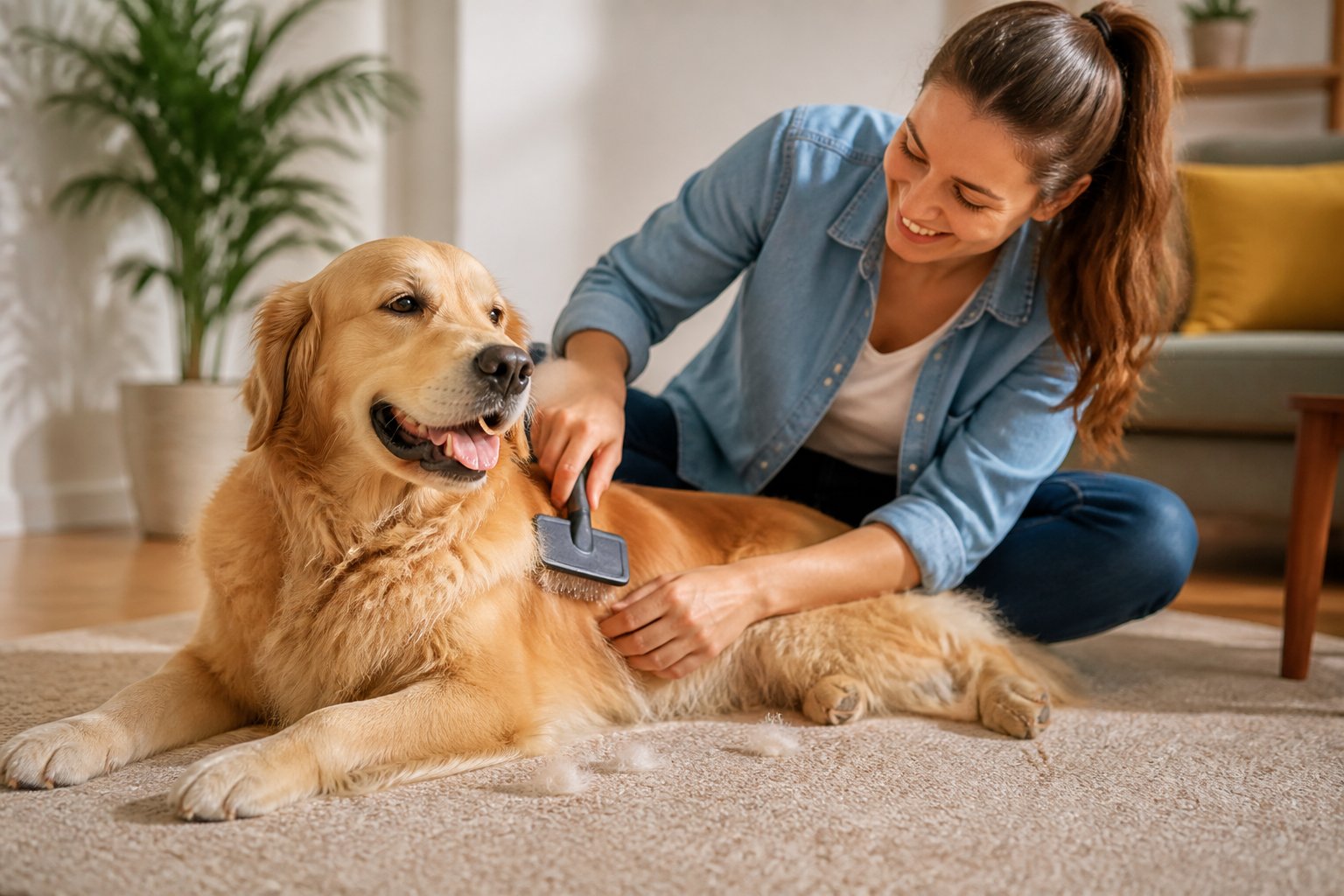
You are relaxing on the sofa when you notice a small tumbleweed of fur drifting across the hardwood floor. Or perhaps you reach down to scratch your dog behind the ears and feel a tight, hard knot in their coat that was not there yesterday. These are the moments when every pet owner asks themselves how often they should really be picking up a brush. At BaxterBoo, we know that grooming is about much more than just keeping your house clean or making your dog look like they just stepped out of a show ring.
This post covers the biological benefits of brushing, the specific tools needed for different coat types, and how to handle common grooming challenges. Brushing is a foundational part of preventative health care that supports skin health and emotional bonding. We will guide you through creating a routine that keeps your dog comfortable and your home a little less hairy.
Quick Answer: Every dog requires regular brushing regardless of their breed or coat length. Brushing removes dead hair, prevents painful skin matting, distributes natural oils, and allows you to check for hidden health issues like lumps or parasites.
The Biological Benefits of Regular Brushing
Brushing is often viewed as a cosmetic task, but it serves several vital biological functions. Your dog's skin is their largest organ. It acts as a primary barrier against the environment. When you brush your dog, you are actively supporting the health of this barrier.
The act of brushing stimulates the surface of the skin. This increases blood circulation to the hair follicles. Better circulation means more nutrients reach the skin and hair, which promotes a stronger and more resilient coat. It also helps move natural sebum across the hair shafts. Sebum is the oil produced by the skin that gives a coat its shine and provides a layer of protection against moisture and debris.
Temperature Regulation and Airflow
Many owners believe that a thick coat should be left alone in the winter to keep the dog warm. This is a common misconception. A coat that is packed with dead, trapped undercoat cannot effectively regulate temperature. For double-coated breeds, the undercoat acts as insulation. If that insulation becomes matted or excessively thick with dead fur, it loses its ability to trap air properly.
In the summer, a well-brushed coat allows air to circulate down to the skin. This helps keep the dog cool. If the dead hair is not removed, it forms a heavy blanket that traps heat and moisture. This can lead to overheating and skin infections. Regular brushing ensures the coat can do its job in every season.
Shedding Control and Home Cleanliness
While no brush can stop shedding entirely, regular sessions significantly reduce the amount of fur that ends up on your furniture. By manually removing dead hair with a tool, you control where that hair goes. It stays in the brush or a neat pile rather than spreading through your ventilation system. This is particularly helpful for families with mild allergies to pet dander, as brushing also removes dried skin cells.
Key Takeaway: Brushing is a year-round necessity that helps dogs regulate their body temperature and keeps their skin barrier functional and healthy.
Understanding Your Dog's Coat Type
Not all coats are created equal. Using the wrong tool or technique can be ineffective or even cause "brush burn," which is a painful skin irritation. At our warehouse in Vernon Hills, we see dogs of every shape and size, and we always recommend matching the tool to the specific hair texture.
Smooth Coats
Dogs like Boxers, Doberman Pinschers, and Great Danes have short, smooth coats that lie close to the body. These dogs shed, but they do not get traditional mats. For these breeds, the goal is to remove loose hair and skin flakes while massaging the skin. A rubber curry brush or a soft bristle brush is ideal. These tools are gentle and will not scratch the skin.
Double Coats
Breeds such as German Shepherds, Huskies, and Golden Retrievers have a soft undercoat and a tougher outer coat. They "blow" their coats twice a year, which means they lose massive amounts of fur in a short window. You will need an undercoat rake to reach through the top layer and pull out the loose fluff underneath. A slicker brush is also useful for finishing the look and removing surface debris.
Curly and Low-Shedding Coats
Poodles, Bichons, and Doodles have hair that grows continuously rather than fur that sheds at a certain length. Because the hair does not fall out on its own, it gets trapped in the curls. This leads to severe matting very quickly. These dogs require daily brushing with a slicker brush and a metal comb to ensure you are getting all the way down to the skin. For more guidance, read our guide on grooming dogs with curly hair.
Wire and Silky Coats
Wire-haired breeds like Schnauzers have a crisp outer layer that requires a slicker brush to prevent tangles. Silky coats, like those on Yorkies or Spaniels, are prone to fine knots. These dogs benefit from a pin brush, which has long metal bristles that can glide through the hair without breaking it.
Vet Tip: Always check the "friction zones" where mats form most often. These include the armpits, behind the ears, the groin area, and where the collar or harness sits against the body.
Essential Grooming Tools for Your Kit
Building a basic grooming kit does not have to be expensive. Having the right tool for the job makes the process faster and more comfortable for your dog. If the dog enjoys the feeling of the brush, they are much more likely to sit still for the duration of the session. You can explore our dog grooming supplies to find tools for different coat types.
- Slicker Brush: This has fine, short wires closely spaced together on a flat surface. It is the workhorse of the grooming world and is excellent for removing mats and tangles in most coat types.
- Pin Brush: Similar to a human hairbrush, these have longer metal pins with rounded ends. They are best for longer-haired dogs and help provide a finished, fluffy look.
- Bristle Brush: These use natural or synthetic bristles to smooth the coat and distribute oils. They are perfect for short-haired dogs or as a final step for long-haired breeds.
- Undercoat Rake: These have long, T-shaped metal teeth designed to dive deep into thick coats. They pull out dead undercoat without damaging the top layer of fur.
- Rubber Curry Brush: These are great for bath time or for short-haired dogs. The rubber nubs grab loose hair and feel like a massage to the dog.
- Metal Comb: Often called a "greyhound comb," this is the most important tool for checking your work. If the comb cannot pass through the hair, a mat is forming.
The Professional Debate: Brush Before or After the Bath?
There is often a debate among pet owners about whether to brush a dog before or after they get in the tub. The answer depends heavily on the condition of the coat. Most professionals recommend a thorough "pre-groom" before any water touches the dog.
When hair gets wet, it expands. As it dries, it contracts. If there are already knots or mats in the fur, the water will cause them to tighten significantly. This can turn a manageable tangle into a hard lump of felt that must be cut out. Brushing a dry dog also allows you to remove a large portion of the dirt and loose hair so the shampoo can reach the skin more effectively.
However, some groomers use a "wet-brushing" technique with high-quality conditioners. If a dog is clean and heavily conditioned, a brush can sometimes glide through more easily. For the average owner at home, the safest bet is to brush first. Always ensure the dog is completely dry before doing a final brush-out, as damp hair is more fragile and prone to breaking.
Step-by-Step Brushing Routine
Step 1: Inspect the skin. / Run your hands over the dog to feel for lumps, bumps, or sore spots that you should avoid with the brush.
Step 2: Apply a detangling spray. / Use a light mist of a conditioning spray to reduce static and help the brush glide through the hair.
Step 3: Work in sections. / Start at the rear of the dog and move forward. Brush in the direction of hair growth using short, gentle strokes.
Step 4: The "Line Brushing" technique. / For long-haired dogs, lift a section of hair and brush the hair underneath. This ensures you are reaching the skin and not just smoothing the top layer.
Step 5: Check with a comb. / Once you think you are finished, run a metal comb through the coat. If it catches, go back to that spot with your slicker brush.
Step 6: Reward your dog. / Give a high-value treat during and after the session to create a positive association with grooming.
Bottom line: Brushing before the bath prevents mats from tightening and ensures the skin gets properly cleaned during the wash.
Health Monitoring During Grooming
Brushing is your best opportunity to act as a health detective for your dog. Because you are touching every inch of their body, you can find issues that might otherwise go unnoticed for months. This is a critical part of preventative care.
While brushing, look for "flea dirt," which looks like small grains of black pepper. If these grains turn red when placed on a wet paper towel, your dog has fleas. You should also look for ticks, especially in the spring and autumn. If you find parasites, our flea and tick collection provides a variety of preventive options. Many of these options require a prescription from your veterinarian, but they are the most effective way to handle infestations. For additional prevention guidance, read our guide to flea and tick prevention products.
You should also keep an eye out for skin redness, hot spots, or unusual odors. A healthy dog should not have a pungent or "yeasty" smell. If you notice your dog is constantly itching or has flaky skin, they may be dealing with allergies or a skin infection.
When to See a Veterinarian
If you find a new lump, a persistent bald patch, or if the skin looks inflamed and raw, it is time for a professional opinion. Some skin conditions require medicated shampoos or prescription topical treatments. We carry a range of prescription pet foods and medications through our pet pharmacy that can support dogs with chronic skin allergies once your vet has provided a diagnosis.
Vet Tip: If your dog has sensitive skin or a history of allergies, talk to your vet about using a hypoallergenic or medicated grooming spray. Using the wrong scented product can sometimes trigger a flare-up of dermatitis.
Training Your Dog to Love Being Brushed
Not every dog starts out enjoying the grooming process. Some may be fearful of the tools, while others are simply too wiggly to stay still. The goal is to move slowly and keep the sessions short in the beginning.
Start by letting your dog sniff the brush while it is sitting on the floor. Give them a treat just for being near it. Then, try one or two gentle strokes on a less sensitive area, like the shoulder or back. Avoid the tail, paws, and face until the dog is more comfortable.
Using a distraction can be very helpful. A silicone lick mat smeared with peanut butter or plain yogurt can keep a dog occupied while you work on their hindquarters or underbelly. If the dog shows signs of stress, such as lip licking, yawning, or trying to walk away, stop the session. It is better to do five minutes of successful brushing than twenty minutes of a stressful struggle.
Managing Senior Dogs
Senior dogs require a more delicate touch. Their skin becomes thinner and less elastic as they age. They may also have arthritis, which makes standing for long periods or having their limbs moved uncomfortable. When brushing a senior dog, keep them lying down on a soft surface. Be extra cautious around bony prominences like the hips and elbows to avoid hitting the bone with a metal brush.
Key Takeaway: Patience and positive reinforcement are more effective than force. Short, daily sessions are better for training than one long, stressful session per week.
Seasonal Considerations for Brushing
Your grooming routine should change with the weather. In the spring and fall, most dogs go through a major shed. This is the biological process of swapping a heavy winter coat for a lighter summer one, or vice-versa. During these times, you may need to brush your dog every single day to keep up with the volume of hair.
In the winter, ice and salt can get trapped in the long hair between the paw pads. This leads to irritation and licking. Keeping the hair on the paws brushed out and trimmed can prevent "ice balls" from forming during walks. In the summer, keep a close eye on the belly and ears for grass seeds or burrs that can hook into the fur and work their way into the skin. For more seasonal care tips, see our complete dog paw care guide.
Environmental Impact of Brushing
When you brush your dog, you are also managing the environment inside your home. Loose hair acts as a magnet for dust, pollen, and other allergens. If your dog spends a lot of time outside, they are bringing these particles into your living space. Brushing helps remove these environmental triggers before they can settle into your carpets or upholstery.
For dogs that spend time in wooded areas, brushing is a mandatory safety check. It allows you to feel for ticks that have not yet attached. Because ticks can carry Lyme disease and other serious illnesses, finding them early is vital. If your dog is on a regular flea and tick preventive from our dog flea and tick selection, the parasites may die shortly after biting, but manual removal is still the fastest way to protect your pet and your family. You can also learn more about identifying and handling black ticks on dogs.
Common Mistakes to Avoid
One of the most common mistakes is "top-coating." This happens when an owner only brushes the very top layer of hair. While the dog looks smooth, a thick layer of matting can be forming right against the skin. This "pelted" hair can cut off blood flow and cause significant pain. Always use a comb to ensure you have reached the skin.
Another mistake is using too much pressure. Metal brushes can be sharp. If you press too hard, you can cause abrasions or "brush burn." Always test the brush on the back of your own hand first. If it feels scratchy or painful to you, it is too much pressure for your dog.
Finally, do not ignore the "hidden" spots. The hair inside the ears, around the base of the tail, and between the toes is very prone to matting. These areas are sensitive, but they need regular attention to stay healthy.
Bottom line: Consistency is the secret to an easy grooming routine. Five minutes of brushing every other day is much more effective than an hour-long session once a month.
Conclusion
Brushing your dog is a simple act that yields massive rewards for their health and happiness. It maintains the skin barrier, regulates body temperature, and provides a quiet moment for you to connect with your pet. Whether you are managing a heavy-shedding Husky or a curly-coated Poodle, the right tools and a gentle technique make all the difference.
- Regular brushing prevents painful mats and skin infections.
- Match your tools to your dog's specific coat type for the best results.
- Use grooming time to check for lumps, bumps, and parasites.
- Keep sessions positive with treats and short durations.
We invite you to explore our dog brushes and combs to find the perfect fit for your dog's coat. For pets with ongoing skin concerns or those needing prescription flea and tick protection, our pet pharmacy is here to help. Taking these small steps today ensures your dog stays comfortable and healthy for years to come.
FAQ
How often should I brush my dog?
The frequency depends on the coat type, but most dogs benefit from brushing at least two to three times a week. Long-haired or curly-coated breeds often require daily attention to prevent mats from forming. Short-haired breeds can usually get by with a weekly session to remove loose hair and shine the coat.
What should I do if my dog already has a large mat?
If the mat is small and not too close to the skin, you can try to gently pick it apart with your fingers or a metal comb after applying a detangling spray. Never use scissors to cut out a mat, as it is very easy to accidentally cut the dog's thin skin. If the matting is severe or tight against the skin, consult a professional groomer or your veterinarian for a safe shave-down. A coat mat and tangle splitter may also help with tough grooming jobs.
Does brushing help with my dog's allergies?
Brushing can help by removing environmental allergens like pollen, dust, and dander from the coat before they irritate the skin. However, if your dog has chronic skin allergies, they may need a specialized diet or prescription medication. Our pharmacy offers many of these treatments, including prescription diets from Farmina Vet Life, to help manage underlying health issues.
Can I over-brush my dog?
Yes, it is possible to over-brush, especially if you use a metal-bristled tool with too much pressure. This can cause "brush burn," which looks like red, irritated streaks on the skin. Always use a light touch and monitor the skin for any signs of redness or sensitivity during and after the grooming session.






